This colorful and refreshing pasta dish combines thin spaghetti with a variety of crisp garden vegetables. A tangy red wine vinaigrette ties everything together, making it an ideal side dish for outdoor gatherings.
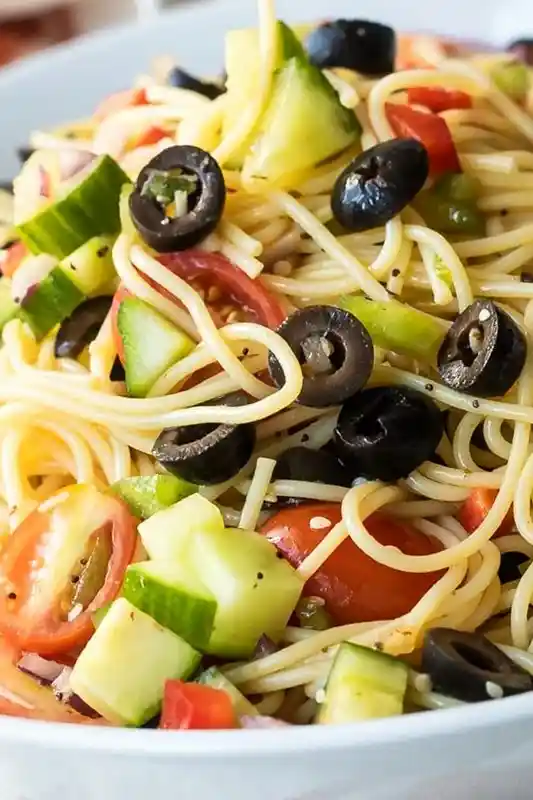
List of ingredients
- 1 cup olive oil – provides a smooth base for the dressing.
- 1/2 cup red wine vinegar – adds the necessary acidity and tang.
- 1/4 cup freshly grated microbial-rennet Parmesan cheese – adds a salty, nutty depth.
- 1 tablespoon sesame seeds – contributes a slight nuttiness and visual texture.
- 2 teaspoons dried oregano – brings an earthy, herbal aroma.
- 2 teaspoons poppy seeds – adds small pops of texture and classic salad aesthetics.
- 1/4 teaspoon garlic powder or two cloves fresh, finely minced – provides a pungent savory base.
- 1 teaspoon paprika – adds a mild sweetness and warm color.
- 1/2 teaspoon celery seed – offers a traditional, slightly bitter herbal note.
- 1/4 teaspoon salt – enhances all the existing flavors; adjust to taste.
- 1 pound thin spaghetti, broken into thirds – the main starch, broken for easier eating.
- 2 medium zucchini, diced – adds a mild, fresh crunch.
- 1 pint grape tomatoes, halved – provides juicy bursts of sweetness.
- 1 large hot house cucumber, diced – keeps the salad hydrating and crisp.
- 1 medium green bell pepper, stemmed, seeded, and diced – adds a bright, slightly bitter note.
- 1 medium red bell pepper, stemmed, seeded, and diced – contributes sweetness and vibrant color.
- 1 red onion, peeled and diced (optional) – adds a sharp, savory contrast.
- 1 (6.5-ounce) can sliced black olives, drained – provides a briny, salty finish.
step-by-step instructions
- Prepare the dressing: In a small bowl with a whisk, or in a jar with a tight-fitting lid, combine olive oil, red wine vinegar, Parmesan cheese, sesame seeds, oregano, poppy seeds, garlic, paprika, celery seed, and salt. Mix well and allow the flavors to blend while you prepare the other components.
- Cook the pasta: Bring 4 quarts of water and 1 tablespoon of salt to a boil. Add the broken spaghetti and cook according to package directions, usually about 9 minutes. Drain the pasta thoroughly and rinse it under cold water to stop the cooking process.
- Combine and chill: In a large mixing bowl, combine the diced zucchini, halved tomatoes, diced cucumber, bell peppers, onion, and drained black olives. Add the rinsed pasta and drizzle the salad dressing over the mixture to taste, as you may not need all of it. Toss gently to combine, cover with a lid or plastic wrap, and chill in the refrigerator for at least 2 hours or overnight.
Pasta Preparation Secrets
Breaking Spaghetti for Convenience
Breaking long noodles into thirds makes the salad significantly easier to serve and eat. It prevents long strands from tangling and ensures that every forkful contains a balanced mix of pasta and vegetables. This method also allows the pasta to fit more easily into smaller pots during the boiling process.
The Importance of Rinsing Pasta
While rinsing pasta is usually avoided for hot dishes, it is essential for cold salads. Rinsing removes excess surface starch that would otherwise cause the noodles to stick together in a clump. Cold water also immediately halts the cooking process, preventing the pasta from becoming overcooked and mushy.
Cooking Al Dente for Salads
Cooking the pasta slightly under the package directions ensures it maintains a firm bite. Since the pasta will continue to soften slightly as it absorbs the vinaigrette during the chilling process, starting with an al dente texture is key. This prevents the spaghetti from disintegrating when tossed with the heavy vegetables.
Vegetable Preparation and Selection
Choosing the Best Zucchini
Select medium-sized zucchini that feel firm to the touch. Smaller zucchini typically have fewer seeds and a denser flesh, which prevents the salad from becoming too watery. Dice them into uniform cubes to ensure a consistent texture in every bite.
Handling Grape Tomatoes
Grape tomatoes are preferred over larger tomatoes because they hold their shape better and have a concentrated sweetness. Halving them allows some of the juices to escape and mingle with the dressing, enhancing the overall flavor. Ensure they are patted dry after washing to avoid diluting the vinaigrette.
Dicing Cucumbers for Uniformity
Hot house or English cucumbers are ideal because they have thinner skins and smaller seeds. If using a standard garden cucumber, consider scooping out the seeds with a spoon before dicing. This step prevents excess moisture from pooling at the bottom of the bowl.
Selecting Crisp Bell Peppers
Use a combination of red and green peppers to provide a visual contrast and a blend of sweetness and bitterness. Ensure the peppers are firm and free of soft spots. Removing all the white pith and seeds ensures the flavor remains clean and bright.
Prepping Red Onions for Mildness
Red onions provide a necessary sharp contrast to the sweetness of the peppers and tomatoes. If the raw flavor is too intense, soak the diced onions in cold water for ten minutes before adding them to the bowl. Drain them well before mixing to keep the salad’s consistency.
Vinaigrette Customization and Tips
Emulsifying the Dressing
For the best results, use a jar with a tight lid and shake vigorously for 30 seconds. This process creates an emulsion, bonding the oil and vinegar together so the dressing doesn’t separate on the pasta. A well-emulsified dressing coats the ingredients more evenly and tastes more cohesive.
Adjusting the Acidity
Red wine vinegar provides a robust tang that stands up to the hearty vegetables. If you prefer a milder taste, you can replace a tablespoon of the vinegar with a pinch of sugar or honey. Always taste the dressing before adding it to the salad to ensure the balance is correct.
Adding Extra Texture with Seeds
Poppy and sesame seeds are not just for decoration; they add a subtle nuttiness and a pleasing crunch. These seeds help thicken the dressing slightly, allowing it to cling better to the smooth surface of the spaghetti. Ensure the seeds are fresh for the best flavor profile.
Fresh Garlic vs Powdered Garlic
Using fresh minced garlic provides a sharp, spicy kick that is characteristic of Mediterranean salads. Powdered garlic offers a more muted, consistent flavor that distributes evenly throughout the dressing. Choose based on how prominent you want the garlic flavor to be in the final dish.
Alternative Ingredient Options
Using Different Pasta Shapes
While thin spaghetti is a unique choice, other shapes can work well. Rotini or fusilli are excellent for trapping the dressing in their spirals. Farfalle (bowtie pasta) provides a sturdy structure that holds up well during long marination periods.
Substituting the Cheese
If you prefer a different flavor profile, replace the Parmesan with crumbled feta for a saltier, tangier taste. Goat cheese can be used for a creamier, more sophisticated finish. Ensure the cheese is added just before chilling to maintain its texture.
Replacing Black Olives
Black olives provide a briny element, but Kalamata olives offer a deeper, more complex saltiness. Capers are another great alternative for those who want a salty punch without the texture of an olive. Simply drain and rinse them before adding.
Using Different Vinegars
Apple cider vinegar can be used as a substitute for red wine vinegar to give the salad a slightly fruitier tone. White wine vinegar is a more neutral option that lets the flavor of the vegetables shine through. Maintain the same ratio of oil to vinegar regardless of the type used.
Serving and Storage Guidelines
Optimizing Chilling Time
Chilling the salad for at least two hours is critical for the marination process. During this time, the pasta absorbs the acidity and spices of the vinaigrette, deepening the overall flavor. Overnight chilling is highly recommended for the most cohesive taste.
Storing Leftovers Safely
Transfer any remaining pasta salad to an airtight glass or plastic container. This prevents the vegetables from absorbing odors from other foods in the refrigerator. Keep the container sealed tightly to maintain the crispness of the peppers and cucumbers.
Freshness Window
This salad stays fresh in the refrigerator for up to four days. After this point, the zucchini and cucumbers may lose their crunch and release too much water. For the best quality, consume the salad within 72 hours of preparation.
Preventing the Pasta from Drying Out
Pasta tends to absorb dressing as it sits in the fridge. If the salad looks dry before serving, drizzle a small amount of additional olive oil and red wine vinegar over the top. Gently toss the mixture to redistribute the moisture and refresh the flavors.
Common Troubleshooting and FAQs
Why is my pasta salad dry?
The starch in the pasta naturally absorbs liquid over time. To fix this, stir in an extra tablespoon of olive oil or a splash of vinegar just before serving. This restores the glossy appearance and the tangy flavor.
Can I make this vegan?
Yes, you can make this recipe vegan by omitting the Parmesan cheese. To replace the savory, salty element, add one tablespoon of nutritional yeast or a pinch of extra salt to the vinaigrette.
How long does it stay fresh?
The salad is best consumed within four days when stored in an airtight container in the refrigerator. Be aware that the vegetables will gradually soften the longer the salad sits.
Can I freeze pasta salad?
No, freezing is not recommended for this recipe. The high water content in the fresh zucchini, cucumbers, and tomatoes causes them to break down and become mushy upon thawing. This dish is strictly for refrigerated storage.
How do I scale the recipe for a crowd?
To double the recipe, simply multiply all ingredients by two. Use a significantly larger mixing bowl to ensure you can toss the ingredients without crushing the delicate tomatoes and zucchini.
Print
Vibrant California Pasta Salad
- Total Time: 2 hours 40 minutes
- Yield: 16 servings 1x
- Diet: Vegetarian
Description
This delicious and colorful California Pasta Salad is always a hit as part of a party menu. Make this easy pasta salad recipe up to a day ahead if you like; the flavors only get better as it marinates.
Ingredients
- 1 cup olive oil
- 1/2 cup red wine vinegar
- 1/4 cup freshly grated Parmesan cheese
- 1 tablespoon sesame seeds
- 2 teaspoons dried oregano
- 2 teaspoons poppy seeds
- 1/4 teaspoon garlic (or two cloves fresh, finely minced)
- 1 teaspoon paprika
- 1/2 teaspoon celery seed
- 1/4 teaspoon salt
- 1 pound thin spaghetti, broken into thirds
- 2 medium zucchini, diced
- 1 pint grape tomatoes, halved
- 1 large hot house cucumber, diced
- 1 medium green bell pepper, stemmed, seeded, and diced
- 1 medium red bell pepper, stemmed, seeded, and diced
- 1 red onion, peeled and diced (optional)
- 1 (6.5-ounce) can sliced black olives, drained
Instructions
- Prepare Dressing: In a small bowl with a whisk, or in a jar with a tight-fitting lid, combine olive oil, red wine vinegar, Parmesan cheese, sesame seeds, oregano, poppy seeds, garlic, paprika, celery seed, and salt. Mix well and allow flavors to blend while preparing the salad.
- Cook Pasta: Bring 4 quarts water and 1 tablespoon salt to boil. Add spaghetti and cook according to package directions, about 9 minutes. Drain well and rinse in cold water.
- Assemble Salad: In a large bowl add zucchini, tomatoes, cucumber, bell peppers, onion, and black olives. Add rinsed pasta and drizzle with salad dressing to taste. Toss to combine, cover, and chill at least 2 hours or overnight.
Notes
Thin spaghetti: Breaking the noodles into thirds makes the pasta easier to eat. Grape tomatoes: Cherry tomatoes or chopped Roma, classic, or heirloom tomatoes can be used. Canned black olives: These can be omitted if preferred. Storage: Transfer extra pasta salad to an airtight container in the refrigerator up to 4 days. Make ahead: Can be assembled up to 3 days in advance.
- Prep Time: 15 minutes
- Cook Time: 2 hours 25 minutes
- Category: Salad
- Method: Boiling, Mixing
- Cuisine: American
Nutrition
- Serving Size: 1 cup
- Calories: 257 kcal
- Sugar: 3 g
- Sodium: 70 mg
- Fat: 15 g
- Saturated Fat: 2 g
- Unsaturated Fat: 13 g
- Trans Fat: 0 g
- Carbohydrates: 26 g
- Fiber: 2 g
- Protein: 5 g
- Cholesterol: 1 mg