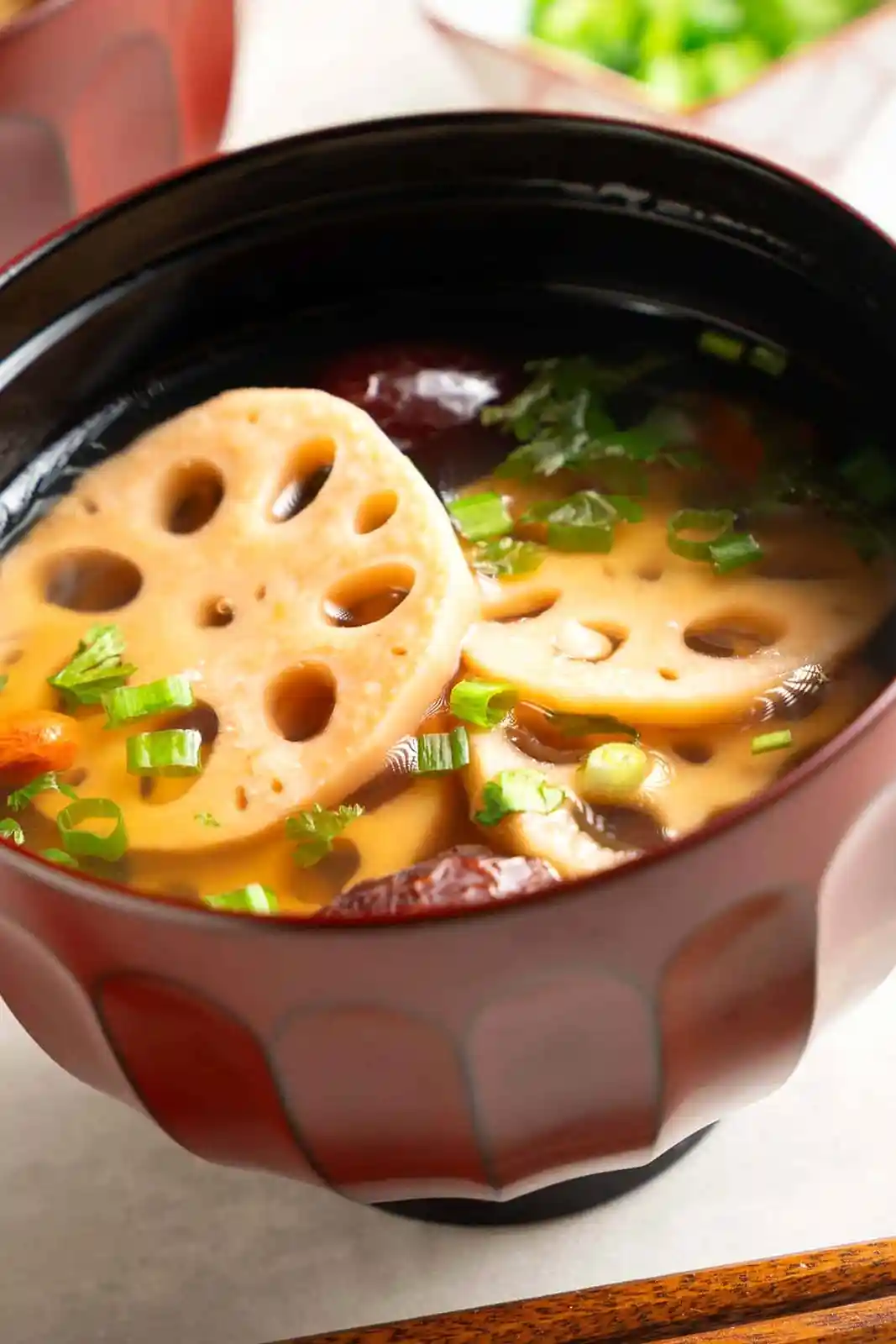
This nourishing lotus root soup features a delicate balance of earthy, tender roots paired with the natural sweetness of jujubes and goji berries. It serves as a light, gluten-free, and vegan starter that fits perfectly into any balanced meal. By simmering these wholesome ingredients together, you create a clear, refreshing broth that highlights the unique texture of the lotus.
List of ingredients
- 1 piece of kombu (12g or 0.4 oz; 4.5 x 4.5 inches)
- 4 cups water or vegetable broth
- 16 oz peeled lotus roots
- 1/2 lime or 1 teaspoon of vinegar
- 8 red dates (jujubes), rinsed and pitted
- 1 1/2 tablespoons goji berries, rinsed
- 3/4 teaspoon salt
- Thinly sliced scallion for garnishing
- Chopped cilantro for garnishing
step-by-step instructions
- Step: Use a damp cloth to gently remove dirt from the piece of kombu, keeping the white umami-rich powder intact.
- Step: Place the kombu and water in a pot and let it soak while preparing other ingredients.
- Step: Peel the lotus root and slice into 1/4 inch thick pieces, then soak in a bowl of cold water with the lime juice or vinegar to prevent browning.
- Step: Place the pot containing the kombu over medium-low heat and remove the kombu just before the water begins to boil.
- Step: Bring the stock to a boil, then add the lotus roots, red dates, and salt, skimming off any foam as needed.
- Step: Reduce heat to a gentle simmer, cover, and cook for 80 minutes.
- Step: Add the goji berries, cover, and continue to simmer for an additional 10-15 minutes.
- Step: Taste and adjust seasoning with salt or water as desired, then transfer to bowls and garnish with scallion and cilantro.
Practical Preparation Tips
Selecting and Handling Fresh Lotus Root
When purchasing lotus root, look for sections that are long and have clean, unbroken segments. The holes inside the root should be clean and white, showing no signs of dark discoloration or sliminess. If you are not using them immediately, keep them wrapped in a damp paper towel and stored in the refrigerator, but try to cook them within two or three days to ensure the best crunch.
The Importance of the Acid Bath
Lotus root contains high amounts of iron and tannins, which cause it to oxidize very rapidly once exposed to air. Using a bowl of water with lime juice or white vinegar is not just a suggestion but a necessity for aesthetics. If you notice the slices starting to gray even while in the water, double-check that your water-to-acid ratio is sufficient to keep them submerged completely.
Substitution and Ingredient Variations
Swapping Dried Fruits
If you have difficulty finding dried jujubes, you can substitute them with high-quality dried longan fruit, which offers a similar deep, honey-like sweetness. While the flavor profile will shift slightly, it remains very compatible with the earthy base of the lotus root. Avoid using dark, sticky dates like Medjool as they tend to dissolve entirely and cloud the broth.
Enhancing the Broth Profile
For a more complex flavor, consider adding a small knob of smashed ginger to the pot while it simmers. The ginger will not overpower the other flavors but will provide a subtle warmth that elevates the overall experience of the soup. Alternatively, if you want a slightly more floral aroma, a few star anise pods can be added at the start, though they should be removed before serving.
Serving Ideas for Complete Meals
Pairing with Steamed Tofu
Because the lotus root soup is light and clear, it pairs exceptionally well with protein-rich dishes that have a bit of texture. Steamed tofu with a light drizzle of soy sauce and sesame oil offers a soft, silky contrast to the crunch of the lotus slices. This combination keeps your meal light yet satisfying enough for a full dinner.
Serving with Grain Sides
If you want to make this a more substantial main course, serve the soup alongside a bowl of steamed jasmine rice or a side of cold sesame noodles. The neutral, fluffy nature of steamed rice allows it to absorb the sweet, umami-rich broth effectively. This makes it a great way to stretch the soup if you are feeding a larger group of guests.
Storage and Reheating Guidelines
Proper Cooling and Storage
Leftover soup should be transferred to an airtight glass container once it has cooled down to room temperature. It will keep well in the refrigerator for up to three days. Note that the lotus root may continue to absorb liquid while stored, so the broth might become slightly thicker or less clear; this is completely normal and does not affect the safety or flavor of the dish.
Gently Reheating the Broth
When you are ready to eat the leftovers, reheat the soup on the stove over medium-low heat. Avoid boiling the soup vigorously, as this can break down the lotus root and cause the goji berries to turn mushy. If the broth seems a bit too thick, add a few tablespoons of water to loosen the consistency before warming through.
Troubleshooting Common Issues
Addressing Cloudy Broth
A cloudy broth is usually caused by the starches released from the lotus root during a violent boil. To achieve a crystal-clear appearance, ensure the heat is kept at a very low simmer and that you skim any white foam that rises to the surface during the first 15 minutes of cooking. If the soup does become cloudy, the flavor remains perfectly fine, even if the visual clarity is diminished.
Fixing Under-seasoned Broth
If the soup tastes bland, it is often because the salt was added too early or not in sufficient quantities to bridge the gap between the earthiness of the root and the sweetness of the fruit. Do not fear adding a little extra salt in small increments at the end of the cooking process. A tiny splash of light soy sauce can also act as a flavor booster if you are looking for more depth.
Frequently Asked Questions
Can I prepare the soup ahead of time?
Yes, this soup is excellent for make-ahead meals because the flavors have more time to meld together in the refrigerator. You can prepare the entire soup one day in advance, store it in the fridge, and reheat it when ready to serve. Just ensure you add the fresh garnishes like scallions and cilantro only at the moment of serving.
Are there any health benefits to lotus root?
Lotus root is prized in many traditions for being a good source of dietary fiber, vitamins, and essential minerals. When combined with the antioxidant properties of goji berries and the nourishing qualities of jujubes, this soup is often viewed as a restorative dish. It is a popular choice for those looking for a light, hydrating meal that does not rely on heavy fats or oils.
Is this soup suitable for children?
The subtle, slightly sweet profile of this soup is generally well-received by children who may be sensitive to strong flavors. The lotus root slices are fun to eat due to their unique, lace-like appearance. Ensure you supervise small children, as the jujubes may still contain small, hard pits if not perfectly cleaned, so always double-check your dates before adding them to the pot.
Print
Vegan Lotus Root Soup with Jujubes and Goji Berries
- Total Time: PT105M
- Yield: 4 servings 1x
- Diet: Vegan, Gluten-Free
Description
This lotus root soup with red dates and goji berries is a clear soup with a harmonious blend of subtle, earthy flavors and sweet, nourishing undertones. Serve it as a starter or side for your Asian dinner night. It is naturally vegan and gluten-free.
Ingredients
- 1 piece of kombu (12g or 0.4 oz; 4.5 x 4.5 inches)
- 4 cups water or vegetable broth
- 16 oz peeled lotus roots
- 1/2 lime or 1 teaspoon of vinegar
- 8 red dates (jujubes), rinsed and pitted
- 1 1/2 tablespoons goji berries, rinsed
- 3/4 teaspoon salt
- Thinly sliced scallion for garnishing
- Chopped cilantro for garnishing
Instructions
- Step: Use a damp cloth to gently remove dirt from the piece of kombu, keeping the white umami-rich powder intact.
- Step: Place the kombu and water in a pot and let it soak while preparing other ingredients.
- Step: Peel the lotus root and slice into 1/4 inch thick pieces, then soak in a bowl of cold water with the lime juice or vinegar to prevent browning.
- Step: Place the pot containing the kombu over medium-low heat and remove the kombu just before the water begins to boil.
- Step: Bring the stock to a boil, then add the lotus roots, red dates, and salt, skimming off any foam as needed.
- Step: Reduce heat to a gentle simmer, cover, and cook for 80 minutes.
- Step: Add the goji berries, cover, and continue to simmer for an additional 10-15 minutes.
- Step: Taste and adjust seasoning with salt or water as desired, then transfer to bowls and garnish with scallion and cilantro.
Notes
Ensure you do not wipe off the white powder from the kombu as it provides essential umami flavor. The lotus root should be kept in acidulated water until ready to cook to maintain its bright color.
- Prep Time: PT10M
- Cook Time: PT95M
- Category: Side Dish, Soup
- Method: Simmering
- Cuisine: Vietnamese
Nutrition
- Serving Size: 1 bowl
- Calories: 90 kcal
- Sugar: 0.003 g
- Sodium: 495 mg
- Fat: 0.1 g
- Saturated Fat: 0.04 g
- Unsaturated Fat: 0.06 g
- Trans Fat: 0 g
- Carbohydrates: 21 g
- Fiber: 6 g
- Protein: 3 g
- Cholesterol: 0 mg