This vegan eggplant lasagna is a nutrient-dense, low-carb alternative to traditional pasta dishes. It combines tender seared eggplant with creamy plant-based ricotta and mozzarella for a satisfying family meal.
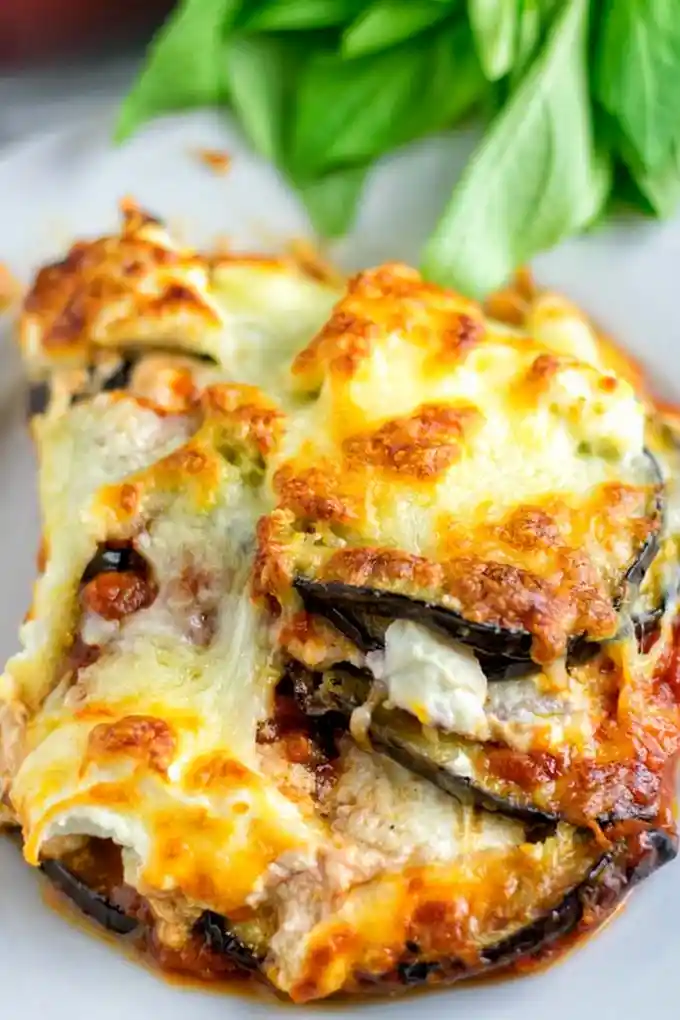
List of ingredients
- 2 large eggplants, cut into slices – provides the main structure of the dish.
- 1/4 cup olive oil – used for frying the eggplant slices.
- 1 batch Vegan Parmesan Cheese – adds a salty, nutty flavor.
- 2 batches Vegan Ricotta – creates the creamy filling layer.
- 2 cups marinara sauce – serves as the savory base and layer.
- 5 cloves garlic – provides a sharp, aromatic punch to the sauce.
- 1 cup Vegan mozzarella, shredded – used for melting and the golden top crust.
- salt, pepper to taste – essential for seasoning the eggplant and sauce.
- 3 teaspoon Italian herbs – adds classic Mediterranean flavor.
- 2 teaspoon onion powder – enhances the depth of the ricotta.
- 4 teaspoon garlic powder – adds concentrated savory notes to the filling.
step-by-step instructions
- Prepare the Oven: Preheat your oven to 410°F and prepare a 10×10 casserole dish for assembly.
- Fry the Eggplant: Cut the eggplants into thin slices. Heat olive oil in a pan and fry the slices for approximately 5 minutes, seasoning with salt and pepper. Ensure the oil is hot to achieve the best texture and flavor, then remove any excess oil using kitchen paper.
- Mix the Sauce: Combine the marinara sauce with the minced garlic in a bowl and season with a pinch of salt and pepper.
- Season the Ricotta: Mix the Italian herbs, onion powder, and garlic powder into the prepared vegan ricotta.
- Layer the Lasagna: Spread a layer of marinara sauce on the bottom of the dish. Follow with a layer of eggplant slices, vegan ricotta, more marinara, and a sprinkling of vegan Parmesan and mozzarella. Repeat these layers until all ingredients are used.
- Final Topping: Finish the top layer with a small amount of marinara and ricotta, then garnish generously with Vegan Parmesan and mozzarella.
- Bake and Cool: Bake for about 30 minutes until the cheese is melted and golden brown. Allow the lasagna to cool for 5 to 8 minutes before slicing and serving to let the layers set.
Mastering Eggplant Preparation
Selecting the Firmest Eggplants
Choose eggplants that feel heavy for their size and have a smooth, glossy skin without bruises. Firmness indicates freshness and a denser flesh, which holds up better during the frying and baking process.
Slicing for Uniformity
Use a sharp knife or a mandoline to cut the eggplant into thin, even slices. Uniform thickness ensures that every piece cooks at the same rate, preventing some slices from being mushy while others remain tough.
Managing Moisture with Salt
If the eggplants seem particularly spongy, sprinkle the slices with salt and let them sit for 20 minutes before frying. This process draws out excess water, resulting in a better sear and a less watery final lasagna.
Achieving the Ideal Sear
Heat the olive oil until it shimmers before adding the eggplant slices to the pan. Frying quickly on high heat caramelizes the exterior, which creates a structural barrier that prevents the slices from absorbing too much sauce.
Optimizing Vegan Cheese Components
Creating a Creamy Vegan Ricotta
Use a base of blended tofu or soaked cashews to achieve the classic ricotta texture. Adding a touch of lemon juice or apple cider vinegar mimics the slight tang found in traditional dairy ricotta.
Developing Savory Vegan Parmesan
Combine nutritional yeast with pulsed walnuts or almonds and a pinch of salt for a realistic Parmesan substitute. This provides the necessary umami and salty kick that complements the marinara sauce.
Selecting the Right Vegan Mozzarella
Opt for a shredded vegan mozzarella that explicitly mentions a high melting point or ‘meltable’ properties. This ensures the top layer becomes gooey and golden rather than remaining as separate shreds.
Balancing the Salt Levels
Taste your vegan cheese blends before assembling the lasagna. Since vegan cheeses vary in saltiness, adjust the amount of added salt in the marinara and eggplant to avoid an overly salty dish.
Enhancing the Sauce and Seasoning
Selecting a Quality Marinara
Use a marinara sauce that contains simple ingredients like crushed tomatoes, olive oil, and basil. Avoid sauces with added sugars or thickeners to keep the flavor clean and the texture light.
Infusing Garlic for Maximum Aroma
Finely mince the garlic cloves to distribute the flavor evenly throughout the sauce. For a milder taste, you can lightly sauté the garlic in oil before adding it to the marinara.
Utilizing Dried Italian Herb Blends
Dried Italian herbs provide a concentrated flavor that stands up well to the baking process. Rub the herbs between your palms before adding them to the ricotta to release the essential oils.
The Role of Onion and Garlic Powders
Using powders in the ricotta adds a layer of savory depth without adding moisture. This helps the filling remain thick and creamy while intensifying the overall flavor profile of the lasagna.
Advanced Layering and Baking Techniques
Establishing a Stable Base Layer
Apply a generous layer of marinara sauce at the bottom of the pan to prevent the first layer of eggplant from sticking. This also provides moisture that steams the bottom layers during the baking process.
Ensuring Even Cheese Distribution
Spread the vegan ricotta using a spatula to ensure a consistent thickness across the entire layer. Avoid leaving gaps, as this will cause the lasagna to collapse when sliced.
Managing Oven Hot Spots
Position the casserole dish in the center of the oven rack for even heat distribution. If your oven has a known hot spot, rotate the dish 180 degrees halfway through the 30-minute baking time.
Identifying the Golden Crust
Look for the vegan mozzarella to bubble and develop small brown spots. If the cheese isn’t browning enough, you can switch to the broiler for the final 2 minutes of cooking.
Storage and Preservation Guide
Cooling for Optimal Structure
Allow the lasagna to rest on a wire rack for at least 8 minutes after removing it from the oven. This resting period allows the plant-based proteins and fats to stabilize, ensuring clean slices.
Airtight Container Selection
Store leftovers in a glass container with a tight-fitting lid to prevent the edges from drying out. Glass is preferable to plastic as it does not absorb odors and is safer for reheating.
Reheating in the Oven
Place a slice in a baking dish and cover it with foil to retain moisture. Heat at 350°F for 15-20 minutes until the center is hot throughout.
Reheating in the Microwave
Heat slices on medium power in 1-minute intervals, adding a teaspoon of water to the dish. This creates a small amount of steam that keeps the vegan cheese from becoming rubbery.
Strategic Meal Prep Advice
Preparing Eggplant in Advance
You can fry the eggplant slices up to two days before assembly and store them in the refrigerator. Simply reheat them briefly in a pan or oven before layering to restore their texture.
Assembling the Lasagna Early
The lasagna can be fully assembled and refrigerated for up to 24 hours before baking. This often allows the flavors to meld more effectively, resulting in a deeper taste.
Freezing the Unbaked Dish
Wrap the assembled but unbaked lasagna tightly in plastic wrap and aluminum foil. Store it in the freezer for up to three months, thawing it in the fridge overnight before baking.
Thawing for Best Results
Avoid thawing the lasagna at room temperature to prevent the eggplant from becoming too soft. A slow thaw in the refrigerator ensures the layers maintain their integrity.
Troubleshooting Common Issues
Preventing a Watery Lasagna
If the lasagna releases too much liquid, ensure you are frying the eggplant slices thoroughly. Removing excess moisture through frying or salting is the most effective way to prevent sogginess.
Avoiding Burnt Cheese Tops
If the cheese browns too quickly before the center is hot, cover the dish with aluminum foil. Remove the foil for the last 10 minutes of baking to achieve the desired golden finish.
Correcting Bland Eggplant Slices
If the eggplant tastes bland, increase the amount of salt and pepper during the frying stage. Eggplants act like sponges and require more seasoning than most other vegetables.
Improving Vegan Ricotta Texture
If the vegan ricotta is too chunky, use a high-speed blender or food processor to smooth it out. Adding a tablespoon of olive oil during blending can create a silkier consistency.
Frequently Asked Questions
Can I use zucchini instead of eggplant?
Yes, zucchini can be used as a substitute. However, zucchini has a higher water content, so it is essential to salt the slices and pat them dry before frying.
Do I have to fry the eggplant slices?
While you can roast them, frying provides a better texture and prevents the lasagna from becoming mushy. Searing locks in the flavor and gives the slices more structural support.
What is the best vegan mozzarella for melting?
Cashew-based or coconut-oil-based vegan mozzarellas typically melt the best. Check the ingredient list for modified starches or oils that aid in melting.
Can this lasagna be made gluten-free?
This recipe is naturally gluten-free as it replaces pasta with eggplant. Just ensure that your chosen marinara sauce and vegan cheese brands are certified gluten-free.
} Print
Vegan Eggplant Lasagna
- Total Time: 40 minutes
- Yield: 4 servings 1x
- Diet: Vegan
Description
This Eggplant Lasagna is easy to make with simple ingredients, budget friendly and rich in flavor. Once you’ve tried it you know you will wow everyone, even pickiest eaters. This easy recipe is such a great option for any easy family meals that you can always count on.
Ingredients
- 2 large eggplants, cut into slices
- 1/4 cup olive oil
- 1 batch Vegan Parmesan Cheese
- 2 batches Vegan Ricotta
- 2 cups marinara sauce
- 5 cloves garlic
- 1 cup Vegan mozzarella, shredded
- salt, pepper to taste
- 3 teaspoon Italian herbs
- 2 teaspoon onion powder
- 4 teaspoon garlic powder
Instructions
- Preheat: Preheat oven to 410°F and have a 10×10 casserole dish ready.
- Fry Eggplants: Start with cutting eggplants in thin slices. Heat olive oil in a pan and fry the eggplants for around 5 minutes. Season with salt and pepper, then set aside.
- Mix: Next mix marinara with garlic in a bow and season with a pinch of salt and pepper. If you use the optional garlic powder, onion powder and Italian herbs, mix them with the prepared vegan ricotta.
- Layer: Last be ready for layering your lasagna. Start with a layer of the marinara sauce on the bottom, followed by eggplants, vegan ricotta, marinara and a bit of vegan Parmesan, vegan mozzarella. Repeat until everything is used. The last layer should be a bit marinara and ricotta, garnish with Parmesan and Mozzarella.
- Bake: Bake for around 30 minutes until the vegan cheese is melted and a bit golden on top. Let cool down a bit for approximately 5 up 8 minutes and serve.
Notes
Never skip the salt and pepper. Frying your eggplants adds flavor and texture. You can prepare it in advance up to 5 days and bake when ready; it also tastes delicious cold.
- Prep Time: 10 minutes
- Cook Time: 30 minutes
- Category: Dinner
- Method: Baking
- Cuisine: Vegan
Nutrition
- Serving Size: 2 cups
- Calories: 566 kcal
- Sugar: 5.6 g
- Sodium: 393 mg
- Fat: 31.5 g
- Saturated Fat: 14.8 g
- Unsaturated Fat: 13.3 g
- Trans Fat: 0 g
- Carbohydrates: 18.9 g
- Fiber: 10.9 g
- Protein: 25 g
- Cholesterol: 0 mg