Achieving perfectly juicy grilled chicken breasts can be a challenge due to their lean nature, but this technique transforms them using a simple moisture-retaining method. By massaging water directly into the meat before marinating with aromatic herbs, you create a succulent texture that remains moist even after hitting the grill. This preparation method is a reliable way to ensure every bite is packed with flavor and tenderness.
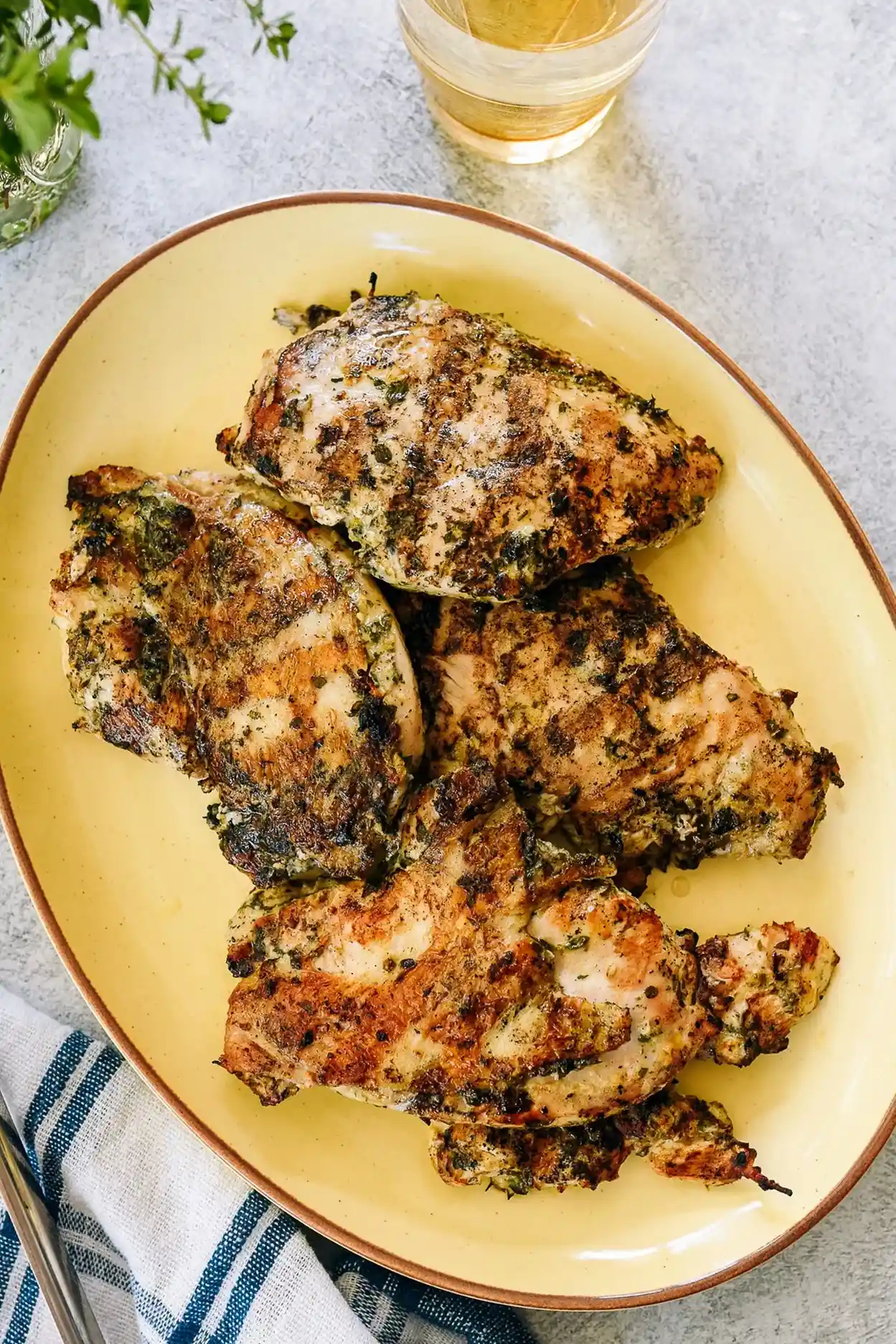
List of ingredients
- 1 pound boneless chicken breasts (with or without skin)
- 1/3-1/2 cup water
- 1 tablespoon finely chopped fresh thyme
- 1 tablespoon finely chopped fresh oregano
- 1 tablespoon minced garlic
- 3 tablespoons extra virgin olive oil
- 3/4 teaspoon salt (or to taste)
- 1/4 teaspoon ground black pepper
step-by-step instructions
- Step: Pound the chicken breast on both sides with the back of a heavy knife or meat mallet, rotating the chicken 90° to create a crosshatch pattern to loosen the meat fibers.
- Step: Place chicken in a large bowl and gradually add water, a few tablespoons at a time, massaging it into the meat until it stops absorbing the liquid; this should take about 10 minutes.
- Step: Prepare the marinade by mixing the finely chopped fresh thyme, oregano, minced garlic, olive oil, salt, and pepper into the bowl with the chicken.
- Step: Cover the bowl and refrigerate the mixture for at least 8 hours, preferably overnight.
- Step: Remove chicken from the refrigerator 1 hour before cooking, then preheat your grill to a hot temperature (400-500°F/200-260°C).
- Step: If using skin-on chicken, place skin side down on the grill, using any leftover marinade to baste the meat.
- Step: Grill for 6-8 minutes total (3-4 minutes per side), rotating once to achieve grill marks, and use an instant-read thermometer to ensure the chicken reaches 160°F.
- Step: Remove from the grill and let the chicken rest under an overturned plate or foil for 5-10 minutes, during which time it will rise to 165°F before serving.
Refining the Preparation Technique
Achieving Even Cooking With Consistent Thickness
Using a meat mallet or the back of a cleaver is critical not just for texture but for ensuring the chicken cooks at the same rate across the entire surface. If one side of a breast is significantly thicker than the other, the thin edge will dry out before the thick portion reaches safe temperatures. A consistent thickness allows you to pull the meat off the grill at the exact right moment for maximum juiciness.
Why Water Incorporation Changes Everything
Adding water to the meat mimics a professional kitchen technique often used for velveting or preparing delicate protein fillings. By forcing the protein to absorb extra water, you physically displace air and tighten the structure to hold moisture, ensuring the chicken does not become fibrous under high-heat grilling. This step is the defining difference between average grilled chicken and a dish that stays tender through the entire serving process.
Selecting and Handling Your Poultry
Choosing Between Skin-On and Skinless Options
While boneless skinless breasts are convenient, leaving the skin on provides a natural layer of fat that bastes the meat from the outside in as it renders. If you choose skin-on, always start the grilling process with the skin side facing down to crisp it up properly. This layer acts as a protective barrier against the intense heat, helping to keep the underlying meat shielded from overcooking.
The Role of Fresh Herbs in Your Marinade
Using dried herbs can work in a pinch, but fresh thyme and oregano provide essential volatile oils that release their flavor when exposed to the direct heat of the grill. Finely chopping these herbs ensures that they adhere to the surface of the chicken, creating a fragrant crust rather than clumping in isolated spots. Always remove the woody stems completely, as they do not soften during the brief grilling time and can detract from the final mouthfeel of the dish.
Grilling Accuracy and Heat Management
Interpreting Grill Temperatures Without a Thermometer
While an instant-read thermometer is the most reliable tool, you can gauge heat by the color and intensity of the fire or the proximity of the grates. Aim for a temperature range that is hot enough to sear quickly without charring the exterior before the inside is ready. If you are using a gas grill, keep the lid closed as much as possible to maintain a consistent convection heat, which prevents the surface from drying out due to excessive air circulation.
Managing Flare-Ups During Cooking
If you have any oil dripping onto the coals or burners, keep a spray bottle of water nearby to manage sudden flare-ups. Excess flames can cause uneven charring and impart a bitter burnt flavor to the herbs and garlic on the chicken exterior. Controlling the environment ensures that the smoky flavor remains clean and complimentary to the natural sweetness of the chicken.
Common Questions and Solutions
Can this recipe be prepared on a stovetop if a grill is unavailable?
Absolutely, you can achieve excellent results using a heavy-bottomed grill pan or a standard stainless steel skillet over medium-high heat. Follow the same marinating and resting procedures, ensuring you do not crowd the pan to maintain a proper sear. The cooking time will remain similar, though you should monitor the internal temperature closely as stove temperatures can be more direct than outdoor grills.
What should I do if my chicken looks like it is drying out?
If you notice the chicken edges appearing dry, you can lightly brush the surface with a small amount of additional olive oil or a splash of water just before the final minute of cooking. However, if you have followed the water-absorption step correctly, this is rarely necessary. Resting the meat away from direct heat is the most important defense against dry, unappealing poultry.
How can I make this ahead of time?
You can marinate the chicken up to 24 hours in advance to maximize the flavor intensity and water retention. If you need to cook it ahead, store it in an airtight container once it has reached room temperature, which helps maintain the internal moisture. When reheating, use a low-heat method like an oven at 250°F to prevent the proteins from contracting further and squeezing out the juices.
Is it necessary to use only fresh garlic?
Freshly minced garlic is highly recommended because it releases its pungent oils immediately upon contact with the heat of the grill. Jarred or powdered garlic does not provide the same aromatic complexity and often contains additives that can burn faster than fresh garlic. For the best result, mince the cloves just before mixing them into the marinade bowl.
Flavor Variations and Customizations
Adding Citrus for Brightness
While the original recipe relies on herbs, adding a small amount of lime or lemon juice can introduce a clean acidity that cuts through the richness of the olive oil. Use the juice sparingly, as high acid levels can begin to change the texture of the chicken if left to marinate for longer than a few hours. A squeeze of fresh juice just before serving is often safer and provides a cleaner, brighter flavor profile for your guests.
Infusing Heat into the Marinade
If you enjoy a bit of spice, you can incorporate crushed red pepper flakes or finely minced fresh chili into the marinade alongside the herbs. These ingredients provide a subtle warmth that pairs perfectly with the garlic and oregano. Remember that dried spices may burn faster than fresh ingredients, so monitor the surface of the chicken closely while it is over the flame to ensure the heat remains pleasant rather than bitter.
Enhancing the Herbal Blend
Feel free to incorporate other woody herbs like rosemary or sage if you prefer a more robust, rustic flavor profile. These herbs stand up very well to the intense heat of the grill and pair beautifully with the garlic. Ensure that you mince these tougher herbs much finer than the thyme or oregano to prevent them from feeling stringy or overpowering the delicate chicken breast.
Print
The Ultimate Juiciest Grilled Chicken Breast
- Total Time: PT750M
- Yield: 4 1x
- Diet: High Protein
Description
This grilled chicken breast recipe produces the juiciest results imaginable. The secret lies in a special marinating technique that incorporates water to keep the meat succulent, inspired by traditional culinary methods.
Ingredients
- 1 pound boneless chicken breasts (with or without skin)
- 1/3–1/2 cup water
- 1 tablespoon finely chopped fresh thyme
- 1 tablespoon finely chopped fresh oregano
- 1 tablespoon minced garlic
- 3 tablespoons extra virgin olive oil
- 3/4 teaspoon salt (or to taste)
- 1/4 teaspoon ground black pepper
Instructions
- Step: Pound the chicken breast on both sides with the back of a heavy knife or meat mallet, rotating the chicken 90° to create a crosshatch pattern to loosen the meat fibers.
- Step: Place chicken in a large bowl and gradually add water, a few tablespoons at a time, massaging it into the meat until it stops absorbing the liquid; this should take about 10 minutes.
- Step: Prepare the marinade by mixing the finely chopped fresh thyme, oregano, minced garlic, olive oil, salt, and pepper into the bowl with the chicken.
- Step: Cover the bowl and refrigerate the mixture for at least 8 hours, preferably overnight.
- Step: Remove chicken from the refrigerator 1 hour before cooking, then preheat your grill to a hot temperature (400-500°F/200-260°C).
- Step: If using skin-on chicken, place skin side down on the grill, using any leftover marinade to baste the meat.
- Step: Grill for 6-8 minutes total (3-4 minutes per side), rotating once to achieve grill marks, and use an instant-read thermometer to ensure the chicken reaches 160°F.
- Step: Remove from the grill and let the chicken rest under an overturned plate or foil for 5-10 minutes, during which time it will rise to 165°F before serving.
Notes
Total time includes 12 hours of marinating time. The addition of water to the marinade ensures the chicken remains incredibly moist during the high-heat grilling process.
- Prep Time: PT20M
- Cook Time: PT10M
- Category: Chicken
- Method: Grilling
- Cuisine: American
Nutrition
- Serving Size: 1 breast
- Calories: 296 kcal
- Sugar: 0.1 g
- Sodium: 509 mg
- Fat: 21 g
- Saturated Fat: 5 g
- Unsaturated Fat: 15 g
- Trans Fat: 0.1 g
- Carbohydrates: 2 g
- Fiber: 1 g
- Protein: 24 g
- Cholesterol: 73 mg