Experience the ultimate comfort of a perfectly seasoned, golden-brown chicken fried chicken that delivers an unmatched crunch in every single bite. This classic dish features tender, juicy chicken breasts encased in a savory, spiced crust, providing a nostalgic Southern-style dining experience that is perfect for any occasion. By following these straightforward techniques, you will achieve professional results with simple, accessible pantry staples that turn dinner into a celebratory event.
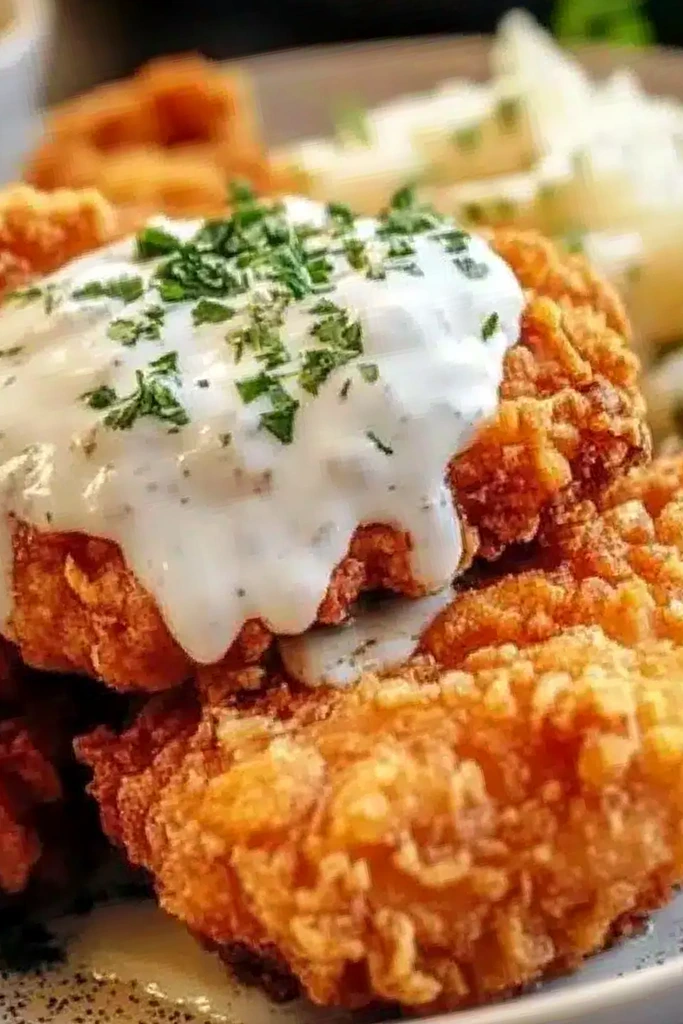
List of ingredients
- 4 boneless, skinless chicken breasts
- 1 cup all-purpose flour
- ½ cup buttermilk (or milk mixed with lemon juice)
- 2 large eggs
- 1 tablespoon garlic powder
- 1 tablespoon onion powder
- 1 teaspoon paprika
- 1 teaspoon cayenne pepper (optional, for heat)
- Salt and pepper to taste
- Vegetable oil for frying
- Cream gravy (optional for serving)
step-by-step instructions
- Prepare the Chicken: Place chicken breasts between plastic wrap and pound to an even ½ inch thickness.
- Marinate: Whisk buttermilk and eggs in a bowl. Add chicken, ensuring it is coated, and refrigerate for at least 30 minutes.
- Set Up Dredging Station: Combine flour, garlic powder, onion powder, paprika, cayenne pepper, salt, and pepper in a bowl.
- Heat the Oil: Heat one inch of vegetable oil in a large skillet to 350°F (175°C).
- Dredge the Chicken: Remove chicken from marinade, let excess drip off, then coat thoroughly in the flour mixture, pressing gently to adhere.
- Fry the Chicken: Carefully place chicken in hot oil and fry 5-7 minutes per side until golden brown and internal temperature reaches 165°F (74°C).
- Drain and Rest: Remove chicken to paper towels to drain oil and let rest for 5 minutes before serving.
Refining your frying technique
Achieving the ideal oil temperature
Maintaining a consistent oil temperature is the secret to a non-greasy crust. If the oil is too cold, the breading will soak up the grease and become soggy before the chicken finishes cooking. Use a reliable kitchen thermometer to monitor the heat continuously, adjusting the burner as needed to keep the oil steady around 350°F.
Preventing the crust from detaching
One common issue is the coating pulling away from the chicken during the frying process. To avoid this, make sure the chicken is patted dry with paper towels before starting the marination process and press the flour mixture firmly into the wet breading with your hands. This physical compression creates a stronger mechanical bond between the meat and the crust, ensuring it stays intact when flipped.
Managing pan density during frying
Crowding the skillet is a frequent mistake that leads to lower oil temperatures and steaming rather than frying. Only cook one or two pieces at a time depending on the size of your vessel to maintain high heat levels. If the temperature drops too quickly, the chicken will lose its signature crispness and become heavy with oil.
Customizing the flavor profile
Adjusting the heat levels
The addition of cayenne pepper is entirely adjustable based on your preference for spice. For those who enjoy a subtle tickle of heat, keep the measurement as listed, but feel free to double the amount for a bolder kick. If you prefer a milder version, you can replace the cayenne with a smoked paprika to maintain a deep, savory aroma without the spiciness.
Experimenting with dry herbs
While the classic seasoning profile is garlic and onion based, you can easily elevate the flavor by adding dried herbs to the flour. Finely ground dried oregano, thyme, or even a hint of sage can impart a sophisticated, garden-fresh scent to the breading. Ensure any herbs added are finely crushed so they do not interfere with the smooth texture of the crust.
Serving and presentation strategies
Selecting the perfect side dishes
Because chicken fried chicken is a hearty, rich meal, it pairs exceptionally well with bright or acidic sides to balance the fat. Creamy mashed potatoes are the traditional choice, but roasted asparagus or a tangy coleslaw can provide a necessary crunch and freshness. For a classic Southern spread, consider adding a side of corn on the cob or buttered biscuits.
Choosing the right gravy
While gravy is optional, it is highly recommended to provide a moist, savory contrast to the crunchy breading. A white cream gravy, made from the pan drippings if possible, adds a layer of comfort that ties the whole dish together. Pour the gravy over the sides rather than directly onto the chicken just before serving to preserve the crispy integrity of the crust.
Professional storage and reheat tips
Proper cooling before storage
Never place warm, fried chicken directly into an airtight container, as the trapped steam will turn your crispy coating into a soft, unappealing mess. Allow the chicken to reach room temperature on a wire rack before transferring it to the refrigerator. Once completely cool, you can store it in a single layer to ensure the crust stays as firm as possible during the storage period.
Restoring crispness with oven reheating
When you are ready to enjoy leftovers, avoid the microwave, which will ruin the texture of the crust instantly. Place your chicken on a baking sheet and heat it in an oven or toaster oven preheated to 375°F (190°C). This method allows the heat to penetrate the meat while simultaneously crisping up the exterior coating, returning it to a state very close to its freshly fried original quality.
Frequently Asked Questions
Why does my breading turn dark too quickly?
If your chicken is turning dark brown before the inside is cooked through, your oil is likely too hot. Reduce the heat to medium and use a thermometer to keep the temperature steady; alternatively, keep the chicken slightly thinner so it requires less time in the pan to cook through.
Can I prepare the chicken in advance?
You can certainly pound the chicken and prepare the flour mixture ahead of time to save effort during dinner preparation. For the best texture, however, you should avoid dredging the chicken until the very last moment before frying, as the flour will absorb moisture from the chicken if left sitting too long, leading to a gummy layer.
Is there a way to make this without buttermilk?
If you do not have buttermilk, you can easily create a substitute by adding one tablespoon of lemon juice or white vinegar to a cup of regular milk. Let it sit for five to ten minutes until it begins to curdle slightly, then use it exactly as you would use traditional buttermilk for the marinade phase.
Can this dish be frozen for later?
Fried chicken freezes surprisingly well if handled correctly after the initial cooking. Allow the pieces to cool completely, wrap them individually in heavy-duty aluminum foil, and store them in a freezer-safe bag for up to three months. Thaw them in the refrigerator overnight and reheat them in a hot oven to bring back the crisp surface.
How do I know if the flour is correctly seasoned?
A quick way to check if your flour mixture is seasoned to your liking is to cook a small pinch of the batter in the oil and taste it. While this might seem unnecessary, it ensures your seasoning balance is perfect before committing to the whole batch, allowing you to adjust salt or spice levels while the chicken is still in the dredging stage.
Print
The Golden Crispy Chicken Fried Chicken Mastery
- Total Time: 50 minutes
- Yield: 4 servings 1x
- Diet: High Protein
Description
An incredible and classic recipe for crispy, tender, and flavorful chicken fried chicken that brings comfort to any table. Perfect for family dinners and loved by all ages.
Ingredients
- 4 boneless, skinless chicken breasts
- 1 cup all-purpose flour
- ½ cup buttermilk (or milk mixed with lemon juice)
- 2 large eggs
- 1 tablespoon garlic powder
- 1 tablespoon onion powder
- 1 teaspoon paprika
- 1 teaspoon cayenne pepper (optional, for heat)
- Salt and pepper to taste
- Vegetable oil for frying
- Cream gravy (optional for serving)
Instructions
- Prepare the Chicken: Place chicken breasts between plastic wrap and pound to an even ½ inch thickness.
- Marinate: Whisk buttermilk and eggs in a bowl. Add chicken, ensuring it is coated, and refrigerate for at least 30 minutes.
- Set Up Dredging Station: Combine flour, garlic powder, onion powder, paprika, cayenne pepper, salt, and pepper in a bowl.
- Heat the Oil: Heat one inch of vegetable oil in a large skillet to 350°F (175°C).
- Dredge the Chicken: Remove chicken from marinade, let excess drip off, then coat thoroughly in the flour mixture, pressing gently to adhere.
- Fry the Chicken: Carefully place chicken in hot oil and fry 5-7 minutes per side until golden brown and internal temperature reaches 165°F (74°C).
- Drain and Rest: Remove chicken to paper towels to drain oil and let rest for 5 minutes before serving.
Notes
For maximum flavor, you can marinate the chicken overnight. Use a meat thermometer to ensure the chicken reaches a safe internal temperature of 165°F (74°C). Do not crowd the pan to keep the crust crispy.
- Prep Time: 30 minutes
- Cook Time: 20 minutes
- Category: Main Course
- Method: Frying
- Cuisine: Southern
Nutrition
- Serving Size: 1 breast
- Calories: 420 kcal
- Sugar: 2g
- Sodium: 550mg
- Fat: 20g
- Saturated Fat: 3g
- Unsaturated Fat: 15g
- Trans Fat: 0g
- Carbohydrates: 28g
- Fiber: 1g
- Protein: 34g
- Cholesterol: 145mg