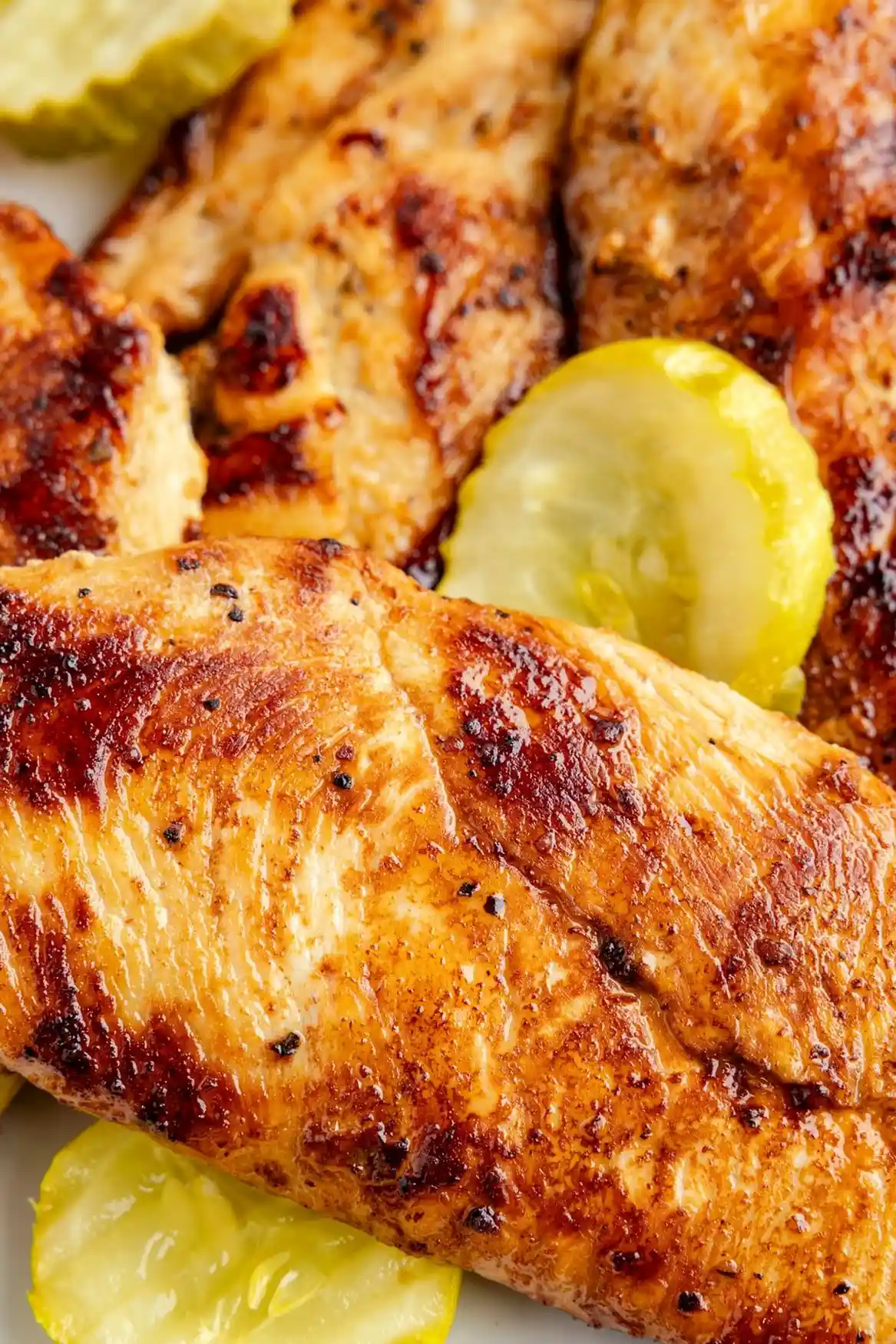
Experience an incredibly moist and flavorful dinner with this simple pickle-infused chicken. By using the natural brine from your favorite jar of pickles, you can replicate a classic, savory taste profile that ensures every bite remains succulent and tender. This straightforward preparation technique is perfect for busy weeknights when you want a high-quality, restaurant-style meal with minimal active cooking time.
List of ingredients
- 2 large boneless, skinless chicken breasts
- 1½ cup dill pickle juice (from a jar of dill pickles)
- 1 teaspoon granulated sugar
- 1 teaspoon kosher salt
- 1 teaspoon garlic powder
- 1 teaspoon onion powder
- ¼ teaspoon red pepper flakes (optional)
- 1-2 tablespoons oil (olive, canola, vegetable, or avocado)
step-by-step instructions
- Step: Cut each chicken breast in half, lengthwise, so you end up with four thinner pieces of chicken.
- Step: Into a large Ziploc bag, add the 4 pieces of thin chicken breast, pickle juice, sugar, kosher salt, garlic powder, onion powder, and red pepper flakes (if using). Seal it tightly and shake it while massaging it to mix everything together.
- Step: Place the Ziploc bag in the fridge and allow it to marinate for 4 to 6 hours.
- Step: Add the oil to a large skillet pan or grill pan, over medium-high heat, and cook the chicken for about 4-5 minutes per side or until the chicken reaches a safe internal temperature of 165℉.
- Step: Transfer the chicken to a cutting board and allow it to rest for a few minutes. Cut into slices, chunks, or leave whole (depending on how you’re serving it).
Essential Preparation Techniques
Ensuring Even Marination Coverage
When placing the chicken into your storage bag, make sure you spread the chicken pieces out so they are not overlapping significantly. This allows the pickle juice to circulate around each piece, ensuring consistent flavor throughout the entire batch. If you are short on time, rotating the bag every hour helps speed up the interaction between the brine and the meat.
Selecting the Right Pickle Brine
Always reach for a jar of traditional dill pickles rather than bread and butter or sweet varieties. Sweet pickles contain too much sugar and flavorings that will overpower the savory profile of the chicken. The goal is a tangy, acidic, and slightly salty environment that tenderizes the chicken without turning the finished dish into a dessert-like experience.
Monitoring Internal Temperature
Because chicken breasts vary in size and thickness, visual cues like golden color are not always accurate indicators of doneness. Use a reliable digital thermometer inserted into the thickest part of the meat to confirm that the chicken has reached exactly 165℉. This prevents overcooking, which is the primary cause of dry or rubbery results.
Refining the Flavor Profile
Balancing the Salt Content
Since pickle brine can vary in saltiness between brands, consider tasting your brine before adding the extra kosher salt. If you prefer a lower sodium intake, you can reduce the added salt by half, relying primarily on the brine itself. This adjustment ensures the final flavor profile remains palatable while still benefiting from the tenderizing properties of the brine.
Adding Fresh Herb Notes
While the pickle juice provides a strong foundation, you can elevate the flavor by adding a teaspoon of dried dill or crushed peppercorns to the marinade. These extra aromatics cling to the chicken during the cooking process and add a gourmet visual touch to the final presentation. Simply whisk these additions into the brine before adding the chicken to the bag.
Practical Serving Suggestions
Creating Custom Chicken Sandwiches
For a classic sandwich experience, toast some brioche or hamburger buns and spread a thin layer of mayonnaise on both sides. Add crisp lettuce, slices of fresh tomato, and extra pickles to complement the brine flavor of the chicken. Serve with a side of crispy oven-baked fries or a light coleslaw to balance the meal.
Incorporating Into Fresh Salads
If you have leftover chicken, chilling it and slicing it into thin strips makes an excellent topping for a garden salad. The brine-marinated chicken pairs exceptionally well with creamy dressings like buttermilk ranch or a light vinaigrette. Combine with cucumbers, cherry tomatoes, and red onions to mimic the refreshing crunch of the pickles themselves.
Common Queries Addressed
How long can I marinate the chicken safely?
We recommend a window of 4 to 6 hours for optimal results. Marinating for less time may not allow the brine enough time to tenderize, while marinating for longer than 8 hours can sometimes cause the texture of the chicken to become slightly mushy due to the acidity. Always keep the chicken refrigerated while marinating to maintain safety.
Can I prepare this in an air fryer?
Yes, you can cook the marinated chicken in an air fryer set to 375℉ for approximately 8 to 10 minutes. Ensure you pat the chicken dry with a paper towel before placing it in the basket to achieve a better sear. Check the temperature halfway through to prevent drying out the edges.
What is the best way to handle leftovers?
Store any remaining cooked chicken in an airtight container for up to 3 days in the refrigerator. To maintain moisture during reheating, add a tablespoon of water or broth to the dish before microwaving on medium power. Alternatively, gently warm it in a skillet over low heat with a lid on to trap the steam.
Can I freeze the raw marinated chicken?
You can freeze the chicken directly in the marinade for up to one month. Label the bag clearly with the date and ensure it is stored flat to save space. When you are ready to cook, thaw it completely in the refrigerator for 24 hours before transferring to the skillet as instructed.
Are there any specific safety precautions?
Always wash your hands and any surfaces that came into contact with the raw chicken immediately. Do not reuse the marinade once the raw chicken has been removed, as it can harbor bacteria. Discard the leftover brine safely after you have transferred the chicken to the cooking pan to prevent any risk of cross-contamination in your workspace.
Print
Tender and Juicy Dill Pickle Marinated Chicken
- Total Time: 4 hours 20 minutes
- Yield: 4 servings 1x
- Diet: Gluten-free
Description
Pickle Chicken is a delicious, moist, and tender chicken recipe that has so much flavor thanks to the marinade time! Chicken breasts marinate in dill pickle juice and other seasonings which makes the chicken so flavorful and juicy.
Ingredients
- 2 large boneless, skinless chicken breasts
- 1½ cup dill pickle juice (from a jar of dill pickles)
- 1 teaspoon granulated sugar
- 1 teaspoon kosher salt
- 1 teaspoon garlic powder
- 1 teaspoon onion powder
- ¼ teaspoon red pepper flakes (optional)
- 1–2 tablespoons oil (olive, canola, vegetable, or avocado)
Instructions
- Step: Cut each chicken breast in half, lengthwise, so you end up with four thinner pieces of chicken.
- Step: Into a large Ziploc bag, add the 4 pieces of thin chicken breast, pickle juice, sugar, kosher salt, garlic powder, onion powder, and red pepper flakes (if using). Seal it tightly and shake it while massaging it to mix everything together.
- Step: Place the Ziploc bag in the fridge and allow it to marinate for 4 to 6 hours.
- Step: Add the oil to a large skillet pan or grill pan, over medium-high heat, and cook the chicken for about 4-5 minutes per side or until the chicken reaches a safe internal temperature of 165℉.
- Step: Transfer the chicken to a cutting board and allow it to rest for a few minutes. Cut into slices, chunks, or leave whole (depending on how you’re serving it).
Notes
If you need more servings, you can use 3-4 chicken breasts (cut in half lengthwise) which provides 6 to 8 pieces of chicken. The chicken can be stored in an airtight container in the fridge for up to 3-4 days.
- Prep Time: 5 minutes
- Cook Time: 15 minutes
- Category: Dinner
- Method: Stovetop
- Cuisine: American
Nutrition
- Serving Size: 1 piece
- Calories: 323 kcal
- Sugar: 1 g
- Sodium: 2178 mg
- Fat: 9 g
- Saturated Fat: 2 g
- Unsaturated Fat: 6 g
- Trans Fat: 0 g
- Carbohydrates: 8 g
- Fiber: 0.2 g
- Protein: 48 g
- Cholesterol: 145 mg