This oven-baked salmon features a zesty Dijon mustard glaze that ensures the fish remains moist and flavorful. It is a nutritious, heart-healthy meal that can be prepared and served in less than 30 minutes.
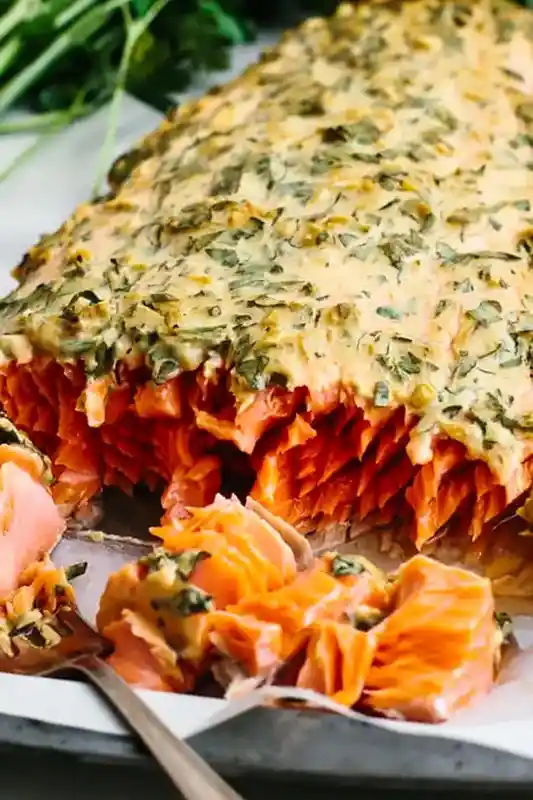
List of ingredients
- 1 ½ pounds salmon (King, Sockeye, or Coho) – use a large fillet or individual portions.
- ¼ cup fresh parsley (finely chopped) – adds a bright, herbaceous note.
- ¼ cup Dijon mustard – provides the primary tangy flavor base.
- 1 tablespoon lemon juice – adds necessary acidity to cut through the fat.
- 1 tablespoon extra-virgin olive oil – helps the glaze adhere and adds richness.
- 3 garlic cloves (finely chopped) – provides aromatic depth.
- salt and pepper (to taste) – for basic seasoning.
step-by-step instructions
- Prepare the Oven: Preheat your oven to 375 degrees Fahrenheit to ensure a consistent cooking temperature.
- Create the Glaze: In a small mixing bowl, combine the Dijon mustard, chopped parsley, lemon juice, olive oil, chopped garlic, salt, and pepper. Stir until the mixture is smooth and well blended.
- Coat the Salmon: Place the salmon fillet on a baking tray lined with parchment paper. Spread the herbed mustard mixture generously over the top of the fish, ensuring full coverage.
- Bake and Serve: Bake for 18 to 20 minutes, depending on the thickness of the fillet. Once finished, slice the salmon into individual servings and serve immediately.
Guide to Selecting the Best Salmon
Choosing King Salmon for Richness
King salmon, also known as Chinook, has the highest fat content of all salmon species. This makes it the most forgiving variety for baking, as it remains buttery and moist even if cooked slightly longer.
Using Sockeye Salmon for Bold Flavor
Sockeye salmon is prized for its deep red color and intense, robust flavor. Because it is leaner than King salmon, it cooks faster and can become dry if overdone, so monitor the cooking time closely.
Selecting Coho Salmon for a Milder Taste
Coho salmon offers a flavor profile that is milder than Sockeye but more flavorful than Atlantic varieties. It is an excellent middle-ground option that pairs exceptionally well with strong glazes like Dijon mustard.
Avoiding Atlantic Salmon Concerns
Wild-caught salmon is generally preferred over farmed Atlantic salmon to avoid potential exposure to antibiotics and pollutants. Wild varieties typically offer a more natural nutrient profile and a firmer texture.
Flavor Variations and Substitutions
Substituting Whole Grain Mustard
For a more rustic texture and a slightly milder tang, replace the Dijon mustard with whole grain mustard. This adds visible mustard seeds to the crust and a different mouthfeel while keeping the flavor profile similar.
Adding Honey for a Sweet Balance
If you prefer a sweeter glaze, stir in one tablespoon of honey or maple syrup to the mustard mixture. This creates a honey-dijon profile that balances the acidity of the lemon juice and the pungency of the garlic.
Incorporating Fresh Dill
While parsley is the primary herb in this recipe, adding a tablespoon of fresh chopped dill provides a classic seafood pairing. Dill complements the lemon and mustard, adding a refreshing, anise-like quality to the dish.
Adding Smoked Paprika for Depth
A pinch of smoked paprika stirred into the glaze adds a subtle wood-fired aroma and a deeper golden color to the finished salmon. This is particularly effective when using leaner cuts of fish.
Cooking Tips for Perfect Texture
Preventing Overcooking with Carry-Over Heat
Salmon continues to cook for several minutes after being removed from the oven due to residual heat. To ensure the fish stays moist, remove it from the oven when it is slightly underdone in the center.
The Role of the Mustard Barrier
The thick layer of Dijon mustard acts as a protective seal over the fish. This prevents the surface from drying out during the baking process, eliminating the need to cover the salmon with foil or parchment.
Ensuring Even Thickness for Uniform Cooking
If using a large fillet, try to select a piece with consistent thickness from end to end. If one end is significantly thinner, you can tuck the thin tail under itself to create a more uniform height for even baking.
Using a Meat Thermometer for Precision
The most reliable way to check for doneness is using an instant-read thermometer. Aim for an internal temperature of 145 degrees Fahrenheit, or slightly lower if you prefer a more tender, medium-rare center.
Serving Ideas and Side Dish Pairings
Pairing with Sautéed Leafy Greens
The richness of the salmon pairs well with bitter or earthy greens. Quickly sauté baby spinach, kale, or bok choy with a bit of garlic and lemon to mirror the flavors in the glaze.
Building a Nutrient-Dense Grain Bowl
Serve the salmon over a bed of cooked quinoa or brown rice. Add steamed broccoli, sliced avocado, and shredded carrots to create a balanced, filling meal suitable for lunch or dinner.
Serving Over a Fresh Garden Salad
Flake the cooked salmon over a bed of mixed greens, cucumber, cherry tomatoes, and red onion. Drizzle the entire salad with a simple lemon vinaigrette to complement the tangy mustard crust.
Roasted Root Vegetable Accompaniments
Roasted sweet potatoes, carrots, or Brussels sprouts provide a hearty contrast to the flaky fish. These can be roasted on a separate tray in the same oven at 375 degrees Fahrenheit for coordinated timing.
Storage and Reheating Instructions
Safe Refrigeration Practices
Store leftover salmon in an airtight container in the refrigerator for up to three to four days. Keep the fish flat to prevent the mustard glaze from rubbing off or becoming uneven.
Optimal Reheating Method
To avoid drying out the fish, reheat salmon gently in the oven at 275 degrees Fahrenheit until warmed through. Avoid using a microwave, as high-intensity heat can make the salmon rubbery and eliminate its flakiness.
Freezing Leftover Salmon
While fresh salmon is best, you can freeze cooked salmon for up to two months. Wrap the portions tightly in foil and place them in a freezer-safe bag to prevent freezer burn.
Make-Ahead Preparation Advice
Preparing the Glaze in Advance
The herbed mustard mixture can be made up to 24 hours before cooking. Store it in a small jar in the refrigerator to allow the garlic and parsley flavors to infuse more deeply into the mustard.
Pre-Coating the Salmon
You can apply the glaze to the salmon several hours before baking and keep it covered in the fridge. This allows the acidity from the lemon juice to slightly tenderize the fish before it hits the oven.
Troubleshooting Common Issues
Handling Dry or Overcooked Salmon
If the salmon becomes too dry, it is usually due to overcooking or using a fillet that was too thin for the 20-minute mark. Reduce the baking time by 2-3 minutes for thinner cuts to maintain moisture.
Preventing a Burnt Mustard Crust
If the glaze begins to brown too quickly, you can lower the oven temperature to 350 degrees Fahrenheit and increase the cook time slightly. Ensure the mustard is spread in a thick, even layer to protect the fish.
Eliminating Strong Fishy Odors
To ensure a clean taste, pat the salmon dry with paper towels before applying the glaze. Using high-quality wild-caught fish and fresh lemon juice also helps neutralize any overly strong odors.
Frequently Asked Questions
Can I use frozen salmon for this recipe?
Yes, but ensure the salmon is completely thawed and patted dry before applying the glaze. Baking frozen salmon directly can lead to uneven cooking and a watery texture.
Is Dijon mustard necessary for the recipe?
Dijon is recommended for its specific tang and thick consistency. Yellow mustard is too thin and vinegary, which may alter the flavor and prevent the glaze from staying on the fish.
Can I bake individual fillets instead of one large piece?
Yes, individual fillets work perfectly. You may need to reduce the baking time by a few minutes since smaller pieces cook faster than one large fillet.
What is the best way to flake the fish for salads?
Use a fork to gently pull the salmon apart along its natural muscle lines. Do this while the fish is still warm for the easiest flaking, or chilled for cleaner, larger chunks.
Print
Tangy Dijon Baked Salmon
- Total Time: 25 minutes
- Yield: 5 servings 1x
- Diet: Pescatarian
Description
This Dijon baked salmon is incredibly flavorful, moist, and flaky, and a healthy dinner recipe that’s made in under 30 minutes.
Ingredients
- 1 ½ pounds salmon (King, Sockeye or Coho salmon)
- ¼ cup fresh parsley (finely chopped)
- ¼ cup Dijon mustard
- 1 tablespoon lemon juice
- 1 tablespoon extra-virgin olive oil
- 3 garlic cloves (finely chopped)
- salt and pepper (to taste)
Instructions
- Step 1: Preheat your oven to 375 degrees Fahrenheit. Mix together the mustard, parsley, lemon juice, oil, garlic, salt, and pepper in a small bowl.
- Step 2: Place the salmon on a parchment lined baking tray and generously coat the top of the salmon with the herbed mustard mix.
- Step 3: Bake the salmon for 18 to 20 minutes (depending on size and thickness), then slice it into individual portions and serve immediately.
Notes
The layer of Dijon mustard keeps the salmon moist, so there is no need to cover it with foil or parchment. You can use either one large fillet or individual fillets.
- Prep Time: 5 minutes
- Cook Time: 20 minutes
- Category: Main Course
- Method: Baking
- Cuisine: American
Nutrition
- Serving Size: 1 serving
- Calories: 249.7 kcal
- Sugar: 0.3 g
- Sodium: 371 mg
- Fat: 13.4 g
- Saturated Fat: 1.7 g
- Unsaturated Fat: 11.7 g
- Trans Fat: 0 g
- Carbohydrates: 1.9 g
- Fiber: 0.5 g
- Protein: 30.5 g
- Cholesterol: 87.1 mg