This Mediterranean-inspired pasta salad combines bold sun-dried tomatoes and tangy feta for a refreshing side dish. It is an easy-to-assemble recipe that works perfectly for meal prep or large gatherings.
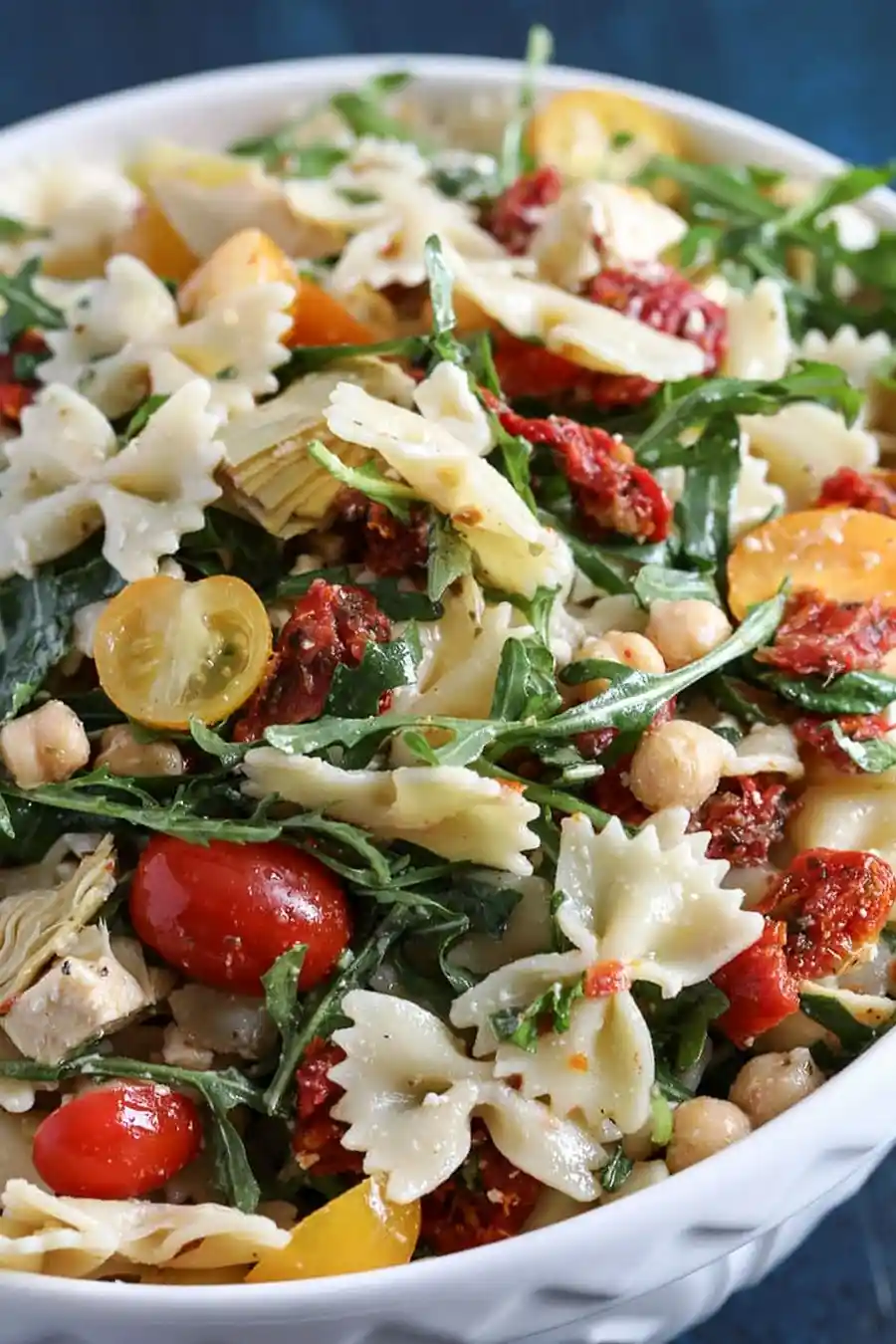
List of ingredients
- 1 lb farfalle pasta – cooked al dente for a firm texture.
- 1 jar (8.5 ounces) sun-dried tomatoes in oil – drained and roughly chopped.
- 2 jars (7 ounces) marinated artichoke hearts – drained and roughly chopped.
- 1 container 8 ounces feta cheese crumbles – use microbial-rennet feta for suitability.
- 1 can (15 ounces) garbanzo beans – rinsed and drained chickpeas.
- 2 cups cherry tomatoes – sliced in half.
- 3 cups baby arugula – kept fresh and crisp.
- 1/4 cup fresh basil – roughly chopped.
- 1/2 cup extra virgin olive oil – for a smooth, rich dressing.
- Juice from one large lemon – provides a bright, zesty acidity.
- 1 tablespoon sugar – balances the tartness of the lemon.
- Salt and pepper – adjusted to taste.
step-by-step instructions
- Combine base ingredients: In a large mixing bowl, add the cooked farfalle, chopped sun-dried tomatoes, artichoke hearts, feta crumbles, garbanzo beans, halved cherry tomatoes, baby arugula, and fresh basil.
- Prepare the dressing: In a separate small bowl, whisk together the extra virgin olive oil, fresh lemon juice, sugar, salt, and pepper until well blended.
- Toss and season: Gently fold the dressing into the pasta mixture using a large spoon or tongs to ensure even coating. Taste the salad and add extra olive oil, salt, or pepper if needed.
Optimizing Your Pasta Base
Choosing Farfalle for Better Dressing Adhesion
Farfalle, or bow-tie pasta, is ideal for this salad because its shape creates pockets that trap the dressing and small ingredients. This ensures that every bite contains a balance of flavors. Other shapes like rotini or fusilli also work well for similar reasons.
Cooking Pasta to a Perfect Al Dente
Boil the pasta in heavily salted water and remove it one minute before the package directions suggest. This prevents the noodles from becoming mushy when they absorb the dressing later. Firm pasta maintains its structure and provides a better contrast to the soft vegetables.
Preventing Pasta from Sticking
Rinse the cooked pasta briefly under cool water to remove excess surface starch. This prevents the bow-ties from clumping together in the bowl. It also cools the pasta quickly, which prevents the baby arugula from wilting immediately upon contact.
Enhancing the Mediterranean Components
Selecting High-Quality Sun-Dried Tomatoes
Use sun-dried tomatoes packed in olive oil rather than the dry-packed variety for a richer flavor. The oil helps preserve the intensity of the tomato. Be sure to chop them into bite-sized pieces so they distribute evenly throughout the salad.
Preparing Marinated Artichoke Hearts
Drain the artichokes well to prevent the marinade from overpowering the lemon dressing. Roughly chopping the hearts allows them to blend seamlessly with the pasta. This ensures you get a bit of artichoke in every forkful.
Using Microbial-Rennet Feta Cheese
Select a crumbled feta made with microbial rennet to ensure it meets specific dietary needs. Feta adds a salty, creamy element that cuts through the acidity of the lemon. For a creamier texture, use a block of feta and crumble it by hand.
Prepping Garbanzo Beans for Texture
Rinse the canned chickpeas thoroughly under cold water until the foam disappears. This removes the metallic taste of the canning liquid and reduces excess sodium. The beans provide a necessary protein boost and a satisfying heartiness.
Mastering the Zesty Dressing
Balancing Acidity with Fresh Lemon Juice
Freshly squeezed lemon juice is superior to bottled juice for this recipe. It provides a bright, clean acidity that lifts the heavier flavors of the olive oil and cheese. If the lemon is small, add a teaspoon of extra juice to maintain the tang.
The Role of Sugar in Flavor Balance
Adding a tablespoon of sugar helps neutralize the sharp edges of the lemon juice. This creates a more rounded flavor profile without making the salad taste sweet. If you prefer a more tart salad, you can reduce the sugar slightly.
Selecting the Right Extra Virgin Olive Oil
Use a high-quality extra virgin olive oil with a mild or fruity profile. Since the dressing is not cooked, the flavor of the oil remains prominent. A strong, peppery oil can complement the arugula well.
Adjusting Salt and Pepper for Depth
Season the dressing carefully, keeping in mind that feta and marinated artichokes are already salty. Start with a small amount of salt and increase it gradually after tossing. Freshly cracked black pepper adds a subtle heat that enhances the fresh basil.
Customizing Your Salad Components
Replacing Feta with Goat Cheese
If you prefer a milder, creamier taste, substitute the feta with crumbled goat cheese. Goat cheese offers a distinct tang that pairs beautifully with sun-dried tomatoes. It creates a softer texture compared to the firm crumble of feta.
Swapping Arugula for Spinach or Kale
While arugula provides a peppery bite, baby spinach is a great alternative for a milder flavor. If using kale, massage the leaves with a bit of olive oil first to soften the fibers. This makes the greens easier to chew and better at holding the dressing.
Adding Grilled Chicken for More Protein
To turn this side dish into a full meal, add sliced grilled chicken breast. Season the chicken with oregano and garlic to match the Mediterranean theme. Ensure the chicken is cooled before adding it to the salad to keep the greens crisp.
Incorporating Grilled Shrimp for a Seafood Twist
Sautéed or grilled shrimp adds a luxurious element to the pasta salad. Shrimp pairs exceptionally well with lemon and basil. Like the chicken, ensure the shrimp is chilled before mixing it in.
Using Shredded Parmesan as a Salty Alternative
For those who dislike the texture of feta, shredded or shaved Parmesan is an excellent substitute. It provides a nutty, salty flavor that complements the sun-dried tomatoes. Use a coarse shred to maintain some texture in the dish.
Practical Storage and Longevity
Preventing Arugula from Wilting
If you are preparing the salad hours in advance, keep the arugula in a separate container. Fold the greens in just before serving to ensure they remain crisp and vibrant. Arugula wilts quickly once it comes into contact with acidic dressing.
Proper Refrigeration Techniques
Store the assembled salad in an airtight glass container to keep it fresh. Glass prevents the pasta from absorbing odors from other foods in the fridge. Keep the container pushed toward the back of the refrigerator where the temperature is most consistent.
Maximizing Shelf Life in Airtight Containers
This pasta salad typically stays fresh for up to two days in the refrigerator. Note that the pasta will continue to absorb the dressing over time. If the salad seems dry on the second day, stir in a tablespoon of olive oil and a squeeze of lemon.
Serving and Presentation Ideas
Plating for Large Gatherings
Present the salad in a wide, shallow bowl rather than a deep one. This prevents the heavier ingredients like chickpeas and feta from settling at the bottom. Garnish with a few whole basil leaves on top for a professional look.
Ideal Main Course Pairings
This salad pairs perfectly with grilled proteins such as lemon-herb chicken or baked salmon. It also serves as a great accompaniment to a crusty baguette and a platter of olives. The acidity of the salad cleanses the palate between bites of rich meat.
Serving Temperatures for Best Flavor
Serve the salad chilled or at room temperature. While cold is refreshing for summer, room temperature allows the flavors of the olive oil and sun-dried tomatoes to be more pronounced. Avoid heating the salad, as the arugula and cherry tomatoes will lose their structure.
Common Troubleshooting Tips
Fixing Overly Dry Pasta Salad
If the pasta has absorbed too much dressing, do not simply add more salt. Instead, whisk together a small amount of olive oil and lemon juice. Stir this emulsified mixture into the salad to restore the glossy coating and zesty taste.
Correcting a Dressing That is Too Tart
If the lemon juice is too overpowering, add a tiny pinch more sugar or a drizzle of honey. Alternatively, adding more olive oil can help mellow out the acidity. Taste after each small addition to find the right balance.
Handling Clumpy Feta Cheese
To avoid large clumps of cheese, stir the feta into the pasta while the noodles are still slightly warm. This softens the cheese just enough to distribute it more evenly. If using pre-crumbled feta, toss it in gently at the end to keep the crumbles intact.
Managing Excess Liquid from Vegetables
If the salad becomes watery, it is usually due to poorly drained artichokes or tomatoes. Use a colander to drain these ingredients thoroughly before adding them to the bowl. You can also pat them dry with a paper towel to ensure the dressing stays thick.
Frequently Asked Questions
Can I use dried basil instead of fresh?
You can use dried basil, but the flavor will be less vibrant. Use one-third of the amount of dried basil compared to the fresh version. For the best results, rub the dried herbs between your palms to release the oils before adding them.
Is it possible to make this vegan?
Yes, you can make this vegan by omitting the feta cheese. Replace it with cubed extra-firm tofu marinated in lemon juice and salt, or use a plant-based feta alternative. The rest of the ingredients are naturally vegan.
How do I stop the pasta from absorbing the dressing?
Rinsing the pasta with cold water and allowing it to cool completely before mixing is the best method. Additionally, adding a small amount of extra dressing just before serving can refresh the dish. This is common with pasta salads made for picnics.
Can I use a different type of bean?
Cannellini beans or kidney beans are excellent substitutes for garbanzo beans. Cannellini beans offer a creamier texture, while kidney beans provide a more robust look. Ensure they are rinsed and drained well before adding.
What is the best way to refresh leftovers?
Do not reheat the salad in a microwave, as this will destroy the fresh arugula and cherry tomatoes. Instead, stir in a splash of olive oil and fresh lemon juice. Add a few fresh basil leaves to bring back the aromatic quality of the dish.
Print
Sun-Dried Tomato Pasta Salad
- Total Time: 15 minutes
- Yield: 8 servings 1x
- Diet: Vegetarian
Description
This Sun-Dried Tomato Pasta Salad is a flavorful twist on a classic recipe. It’s simple to put together, making it the perfect accompaniment to any meal.
Ingredients
- 1 lb farfalle pasta (cooked al dente)
- 1 jar (8.5 ounces) sun-dried tomatoes in oil (drained and roughly chopped)
- 2 jars (7 ounces) marinated artichoke hearts, drained and roughly chopped
- 8 ounces feta cheese crumbles
- 1 can (15 ounces) garbanzo beans
- 2 cups cherry tomatoes (halved)
- 3 cups baby arugula
- 1/4 cup roughly chopped fresh basil
- 1/2 cup extra virgin olive oil
- Juice from one large lemon
- 1 tablespoon sugar
- Salt and pepper to taste
Instructions
- Step 1: In a large bowl, add the cooked pasta, sun-dried tomatoes, artichoke hearts, feta cheese, garbanzo beans, cherry tomatoes, arugula, and fresh basil.
- Step 2: In a small bowl, whisk together the extra virgin olive oil, lemon juice, sugar, salt, and pepper.
- Step 3: Gently toss all of the ingredients together to combine. Add more oil, salt, or pepper, if desired.
Notes
For best results, make the recipe a couple of hours before serving to ensure the arugula remains crisp.
- Prep Time: 15 minutes
- Cook Time: 0 minutes
- Category: Salad, Side Dish
- Method: Mixing
- Cuisine: American
Nutrition
- Serving Size: 1 serving
- Calories: 600 kcal
- Sugar: 6 g
- Sodium: 850 mg
- Fat: 35 g
- Saturated Fat: 12 g
- Unsaturated Fat: 23 g
- Trans Fat: 0 g
- Carbohydrates: 55 g
- Fiber: 8 g
- Protein: 18 g
- Cholesterol: 40 mg