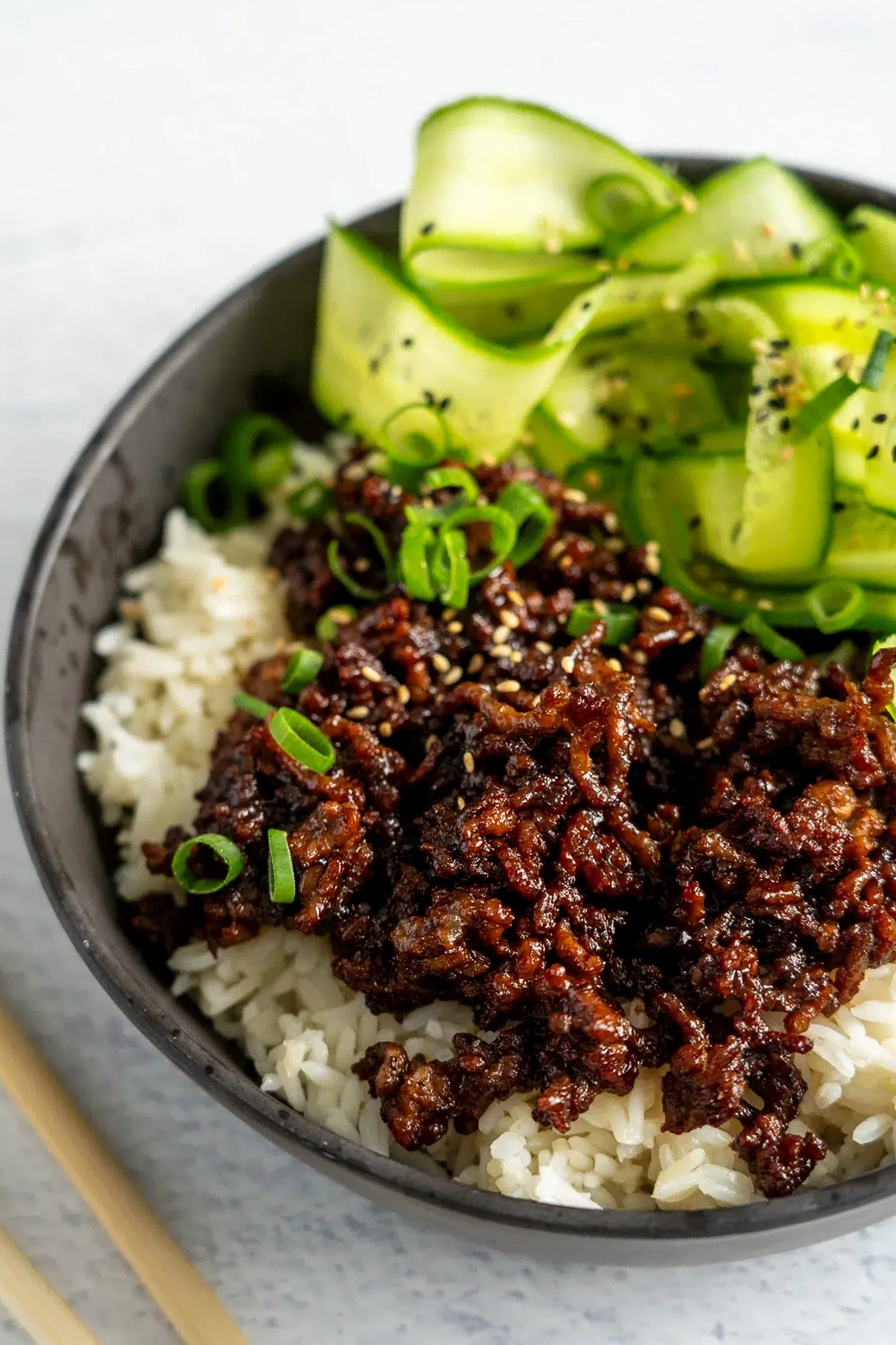
This fast and budget-friendly dish features caramelized minced beef tossed in a sticky, savory sauce. It is a perfect weekday alternative to takeout that comes together in just 20 minutes. Serve it over fluffy rice with crisp vegetables for a complete meal.
List of ingredients
- 3 tbsp hoisin sauce – provides the primary sweet and savory base.
- 1 tbsp all-purpose soy sauce – adds salty depth.
- 1 tbsp dark soy sauce – used for a rich, deep mahogany color.
- 1 tbsp rice wine vinegar – provides necessary acidity to balance the sweetness.
- 1 tsp brown sugar – helps with caramelization and sweetness.
- ½ tsp Chinese five-spice (optional) – adds aromatic warmth.
- 1 tbsp light olive oil (or any neutral oil) – for searing the beef.
- 500 g regular minced (ground) beef (not extra-lean) – ensures a juicy texture and better browning.
- 1 tsp freshly minced garlic – for pungent aromatic flavor.
- 1 tbsp freshly grated ginger – adds a fresh, spicy zing.
- 1 tsp cornflour (cornstarch) mixed with 2 tbsp water – used as a thickening slurry.
- Steamed jasmine rice – the ideal base for soaking up the sauce.
- 2 cucumbers, peeled into ribbons – adds a cool, refreshing contrast.
- 2 spring onions (scallions), thinly sliced – provides a fresh, sharp garnish.
- Toasted sesame seeds – adds a nutty crunch.
- 1 tsp sesame oil – for a final aromatic drizzle.
step-by-step instructions
- Make the sauce: In a jug or small bowl, combine the hoisin sauce, all-purpose soy sauce, dark soy sauce, rice wine vinegar, brown sugar, and five-spice, then set aside.
- Cook the beef: Heat the oil in a large, heavy-based pan over high heat. Add the beef and break it up to cover the pan surface, then let it cook untouched for 5–6 minutes to develop crispy brown edges. Flip the beef, break it apart further with a spatula, and cook for another 1–2 minutes until fully cooked through.
- Add the garlic and ginger: Stir in the minced garlic and grated ginger, cooking for about 30 seconds until fragrant.
- Add the sauce: Pour the prepared sauce over the beef and simmer for 1–2 minutes until the meat is well coated.
- Thicken the sauce: Stir in the cornflour and water mixture. Cook for 30–60 seconds until the sauce thickens and clings tightly to the beef.
- Serve: Spoon the beef over steamed rice and top with cucumber ribbons, sliced spring onions, sesame seeds, and a drizzle of sesame oil.
Optimizing Your Beef Selection
Why Regular Ground Beef is Preferred
Regular ground beef contains a higher fat percentage which allows the meat to fry in its own rendered fat. This process creates a deeper brown crust and a richer flavor profile compared to lean beef. Lean beef often releases more water, which can lead to steaming rather than searing.
Using Leaner Beef Alternatives
If you prefer using lean beef, you may need to add an extra tablespoon of oil to the pan. This compensates for the lack of natural fat and helps the meat caramelize. Be careful not to overcook lean beef, as it can become dry and tough quickly.
Grated Tofu for Plant-Based Versions
To make a vegetarian version, use extra-firm tofu that has been grated or crumbled. Cook the tofu in oil until the edges are golden and crisp before adding the aromatics and sauce. This ensures the tofu has a meaty texture and can absorb the sauce effectively.
Minced Chicken or Turkey Options
Ground chicken or turkey can be used as a lighter protein substitute. These meats cook faster than beef and have a milder flavor, allowing the hoisin sauce to stand out. Adjust the cooking time and ensure the meat is browned well to avoid a pale appearance.
Mastering the Flavor Balance
Understanding the Role of Hoisin Sauce
Hoisin sauce acts as the primary thickening and flavoring agent in this recipe. It provides a complex mix of sweetness and saltiness that mimics the traditional Peking duck glaze. If your hoisin is very thick, you can whisk it with a teaspoon of water before adding it to the sauce mix.
Dark Soy Sauce vs Light Soy Sauce
Light soy sauce provides the main salt hit, while dark soy sauce is essential for the visual appeal. Dark soy sauce is thicker and less salty, providing the deep brown, glossy finish seen in restaurant dishes. If you only have light soy sauce, the flavor will be similar, but the color will be lighter.
Adjusting the Five-Spice Level
Chinese five-spice is a potent blend of star anise, cloves, cinnamon, Sichuan pepper, and fennel seeds. It adds an authentic aromatic quality, but can be overwhelming if overused. Start with the recommended half teaspoon and add more only if you prefer a very bold, spiced profile.
Increasing Heat with Chili Additions
To add a spicy kick, stir in a tablespoon of chili crisp or sriracha during the sauce simmering stage. Alternatively, add a teaspoon of red pepper flakes when cooking the garlic and ginger. For those who prefer customizable heat, serve a side of chili oil for individual dipping.
Preparing the Perfect Accompaniments
Achieving Extra-Crisp Cucumber Ribbons
To prevent cucumbers from becoming watery, toss the ribbons with half a teaspoon of sea salt flakes and let them sit for five minutes. This process draws out excess moisture through osmosis. Pat the ribbons dry with a paper towel before serving to maintain a crisp snap.
Steaming Perfect Jasmine Rice
Rinse jasmine rice under cold water until the water runs clear to remove excess surface starch. Use a 1:1.5 rice-to-water ratio for a fluffy texture that is not overly sticky. Once cooked, let the rice rest for five minutes before fluffing it with a fork.
Preparing Fresh Spring Onion Garnishes
Slice spring onions thinly on a diagonal to create visually appealing pieces. Use both the white and green parts of the stalk for a balance of mild and sharp flavors. Adding them at the very end preserves their bright color and fresh crunch.
Toasting Sesame Seeds for Maximum Aroma
Place raw sesame seeds in a dry pan over medium heat for 2–3 minutes. Shake the pan constantly until the seeds turn golden brown and smell nutty. Toasted seeds have a significantly more intense flavor than raw seeds.
Diverse Serving Suggestions
Using Egg or Rice Noodles
Instead of rice, serve the beef over boiled egg noodles or thin rice vermicelli. For a more integrated dish, toss the cooked noodles directly into the pan with the beef during the final thickening stage. This allows the noodles to be coated in the glossy sauce.
Assembling Bao Buns
Stuff the Peking-style beef into steamed bao buns for a handheld version of the meal. Add the cucumber ribbons and spring onions inside the bun for a contrast of temperatures. These buns can be found in the freezer section and steamed in minutes.
Creating Lettuce Wraps
Use large leaves of iceberg or butter lettuce as natural wraps for the beef. This provides a low-carb alternative that emphasizes the freshness of the meat and sauce. Place a spoonful of beef in each leaf and top with sesame seeds.
Pairing with Steamed Bok Choy
Steamed bok choy or choy sum adds a healthy, bitter contrast to the sweet beef. Steam the greens for 3–5 minutes until they are tender but still vibrant green. Arrange them on the side of the plate or under the beef.
Professional Cooking Tips
The Importance of High Heat for Browning
Use a high heat setting to ensure the beef sears rather than steams in its own juices. If the pan is not hot enough, the meat will release water and turn grey. Allowing the beef to sit undisturbed for several minutes is the key to achieving those crispy, caramelized edges.
Managing the Cornflour Slurry
Always mix cornflour with cold water before adding it to the hot pan. This prevents the starch from clumping, which would result in unsightly lumps in the sauce. Stir the slurry immediately before pouring it in, as the starch tends to settle at the bottom.
Timing the Garlic and Ginger
Add the garlic and ginger only after the beef is browned. These aromatics have a high sugar content and can burn quickly if added at the start of the high-heat searing process. Thirty seconds is usually enough to release their oils without scorching.
Choosing the Right Pan for Searing
A heavy-based pan, such as cast iron or stainless steel, is ideal for this recipe. These materials retain heat better than thin non-stick pans, allowing for a more consistent sear. A wider pan also prevents overcrowding, which is essential for browning the meat effectively.
Storage and Meal Prep Advice
Refrigerator Storage Guidelines
Store leftover beef in an airtight container in the refrigerator for up to three days. Ensure the beef has cooled slightly before sealing to prevent excess condensation from making the sauce watery. Keep the cucumber and spring onions in a separate container to maintain their freshness.
Best Practices for Reheating
Reheat the beef gently in a pan over medium heat with a splash of water to loosen the sauce. Alternatively, use a microwave on medium power, stirring halfway through to ensure even heating. Avoid overheating, as this can cause the sauce to separate and lose its gloss.
Advance Vegetable Preparation
Prepare cucumber ribbons and sliced spring onions a few hours in advance to save time during dinner. Store them in airtight containers lined with a dry paper towel. The paper towel absorbs excess moisture and keeps the vegetables crisp for longer.
Freezing and Thawing Considerations
Freezing is possible, but the sauce may split or lose its glossy texture upon thawing. If freezing, use a vacuum-seal bag to prevent freezer burn. Thaw the beef in the refrigerator overnight before reheating it gently on the stovetop.
Troubleshooting and Common Questions
Why is my beef grey instead of brown?
This happens when the pan is overcrowded or the heat is too low, causing the meat to release moisture and boil. To fix this, cook the beef in smaller batches and ensure the pan is smoking hot before adding the oil and meat.
How do I fix a sauce that is too salty?
If the sauce tastes too salty, add a small amount of brown sugar or a squeeze of lime juice. The sweetness and acidity will balance the saltiness of the soy sauce. You can also stir in a tablespoon of water to dilute the concentration.
Can I use a different vinegar?
Apple cider vinegar is a suitable substitute for rice wine vinegar, though it has a slightly different fruity profile. Distilled white vinegar can also be used, but use slightly less as it is more pungent. Rice wine vinegar is preferred for its mild, balanced acidity.
What if I do not have a vegetable peeler?
You can create cucumber ribbons using a sharp knife by slicing the cucumber very thinly lengthwise. Alternatively, julienne the cucumber into matchsticks for a similar texture and crunch. The important part is keeping the pieces thin to contrast with the beef.
Print
Sticky Peking-Style Minced Beef
- Total Time: 20 minutes
- Yield: 4 servings 1x
- Diet: General
Description
Sticky, sweet and savoury minced (ground) beef cooked until glossy and caramelised. Serve Peking-style Beef over rice with cool cucumber ribbons and spring onion (scallion) for a quick fakeaway dinner that’s faster (and cheaper!) than delivery.
Ingredients
- 3 tbsp hoisin sauce
- 1 tbsp all-purpose soy sauce
- 1 tbsp dark soy sauce
- 1 tbsp rice wine vinegar
- 1 tsp brown sugar
- ½ tsp Chinese five-spice (optional)
- 1 tbsp light olive oil (or any neutral oil of choice)
- 500 g regular minced (ground) beef (not extra-lean)
- 1 tsp freshly minced garlic
- 1 tbsp freshly grated ginger
- 1 tsp cornflour (cornstarch) mixed with 2 tbsp water
- Steamed jasmine rice
- 2 cucumbers, peeled into ribbons
- 2 spring onions (scallions), thinly sliced
- Toasted sesame seeds
- 1 tsp sesame oil
Instructions
- Make the sauce: In a jug or small bowl, combine the sauce ingredients and set aside.
- Cook the beef: Heat the oil in a large, heavy-based pan over high heat. Add the beef, break it up, and allow it to cook, untouched, for at least 5–6 minutes. Flip it, further breaking it apart with your spatula, and cook for a further 1–2 minutes or until cooked through.
- Add the garlic and ginger: Stir the garlic and ginger in, cooking for 30 seconds.
- Add the sauce: Pour the sauce over the beef and simmer for 1–2 minutes to coat the beef.
- Thicken the sauce: Stir in the cornflour and water mixture. Cook for 30–60 seconds until the sauce thickens and clings to the beef.
- Serve: Spoon over rice and top with cucumber ribbons, spring onion, sesame seeds and a drizzle of sesame oil.
Notes
For extra-crisp cucumbers, toss the ribbons with ½ teaspoon of sea salt flakes, let stand for 5 minutes, then pat dry with paper towel. This recipe can be made ahead; cook the beef and store in an airtight container in the fridge for up to 3 days.
- Prep Time: 5 minutes
- Cook Time: 15 minutes
- Category: beef
- Method: Stir-fry
- Cuisine: Asian-inspired
Nutrition
- Serving Size: 1 serving
- Calories: 447 kcal
- Sugar: 8 g
- Sodium: 1032 mg
- Fat: 32 g
- Saturated Fat: 11 g
- Unsaturated Fat: 17 g
- Trans Fat: 2 g
- Carbohydrates: 16 g
- Fiber: 2 g
- Protein: 25 g
- Cholesterol: 89 mg