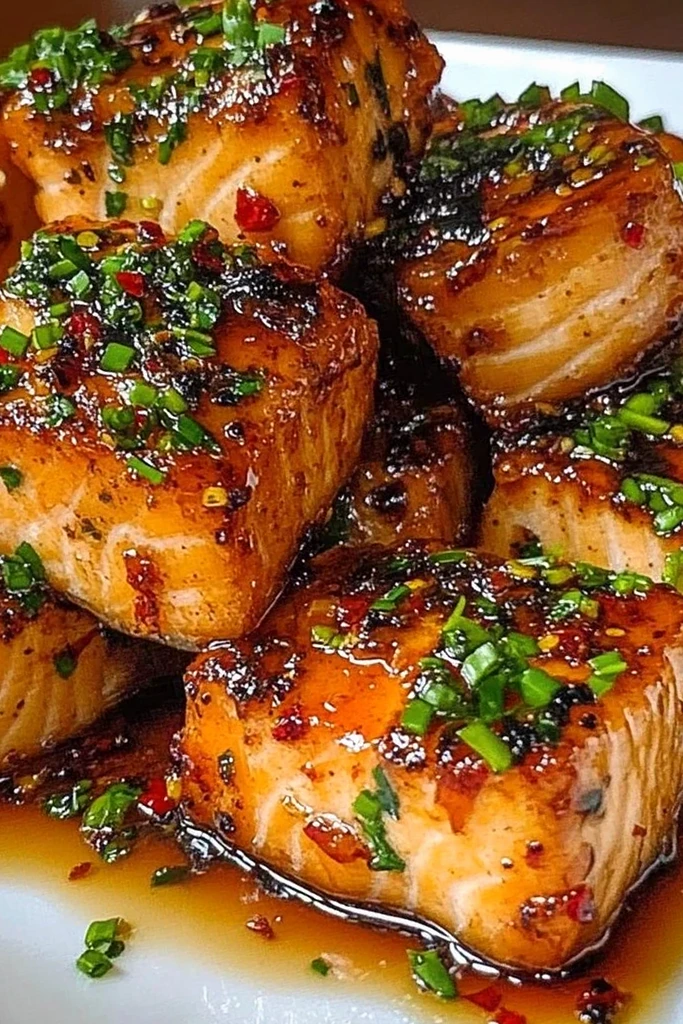
These Spicy Sweet Hot Honey Salmon Bites are the ultimate solution for anyone craving a sophisticated, restaurant-quality meal in under thirty minutes. By transforming fresh salmon fillets into caramelized, bite-sized morsels glazed in a bold mixture of heat and sweetness, you create a versatile dish perfect for quick weeknight dinners or elegant appetizers. The high-heat roasting method ensures the salmon stays tender and succulent while the glaze reduces into a sticky, flavor-packed coating that clings to every single piece.
List of ingredients
- 1 pound salmon fillets (skinless, boneless)
- 1/4 cup hot honey (store-bought or homemade)
- 2 tablespoons soy sauce (or tamari for gluten-free)
- 1 tablespoon olive oil
- 1 teaspoon garlic powder
- 1 teaspoon smoked paprika
- 1/2 teaspoon black pepper
- 1/2 teaspoon salt
- 1 tablespoon chopped fresh parsley (for garnish)
step-by-step instructions
- Step: Start by cutting the salmon fillets into bite-sized cubes, roughly 1-inch pieces.
- Step: In a mixing bowl, combine the hot honey, soy sauce, olive oil, garlic powder, smoked paprika, black pepper, and salt. Stir until well-combined.
- Step: Gently toss in the salmon cubes, ensuring each piece is coated, and let the salmon marinate for at least 10 minutes.
- Step: Preheat your oven to 400°F (200°C) and line a baking sheet with parchment paper.
- Step: Spread the marinated salmon bites in a single layer on the baking sheet and bake for 12-15 minutes, or until the salmon is cooked through and flakes easily with a fork.
- Step: Sprinkle freshly chopped parsley over the salmon bites and serve immediately.
Practical Cooking Guidelines
Achieving the perfect salmon bite requires attention to the temperature of your oven and the quality of the salmon itself. Because honey has a high sugar content, it can burn quickly if the oven is too hot; keeping the temperature at 400°F strikes the right balance between browning the exterior and keeping the interior moist. If you notice your oven runs hot, check the salmon at the 10-minute mark to avoid overcooking. It is always better to pull the salmon out slightly early than to leave it in too long, as it will continue to cook from residual heat for a few moments after coming out of the oven.
Achieving Uniformity with Cube Slicing
When cutting your salmon, prioritize creating pieces that are roughly the same size and shape. If you have some tiny slivers and some large chunks on the same pan, the small pieces will become tough and rubbery long before the larger pieces are cooked through. Use a very sharp chef’s knife to make clean slices rather than tearing the flesh, which helps maintain the integrity of the fish and ensures a professional presentation.
Managing the Glaze Consistency
If you find that your marinade is too thin, you can reduce it in a small saucepan on the stove over medium-low heat for a few minutes before pouring it over the salmon. Thickening the sauce slightly allows it to coat the fish more heavily, which is beneficial if you prefer a more intense, candy-like coating on your salmon. Just be sure to cool the glaze slightly before adding it to the raw fish to prevent premature cooking.
Substitutions and Dietary Tweaks
You can easily adapt this recipe to suit different dietary needs or pantry availability without losing the essence of the dish. If you do not have hot honey, a simple mixture of two tablespoons of regular honey mixed with a half-teaspoon of crushed red pepper flakes or cayenne powder serves as an excellent substitute. This homemade version often allows for better control over the specific heat level of your dish, letting you scale the spice up or down based on your personal preference.
Gluten-Free and Soy-Free Alternatives
For those avoiding gluten, standard soy sauce can be replaced with tamari or liquid aminos. These alternatives provide the same salty, savory punch without the wheat content. If you are aiming to be entirely soy-free, coconut aminos are an excellent choice as they offer a naturally slightly sweeter, less intense flavor that pairs remarkably well with honey and fish.
Adjusting the Fat Content
While olive oil is traditional for its heart-healthy properties and flavor, melted butter can be used for a richer, more luxurious mouthfeel. If you want to keep the calories lower, you can omit the oil entirely, though you may find that the glaze doesn’t stick quite as effectively. In such cases, consider using a non-stick cooking spray on your parchment paper to ensure the salmon lifts away cleanly after roasting.
Creative Serving Ideas
These salmon bites are highly versatile and can be served as the centerpiece of a meal or as a crowd-pleasing snack. Because the flavor profile is strong, it pairs best with neutral-tasting sides that can absorb the extra glaze from the plate. Think of sides that provide a textural contrast, such as crunchy vegetables or light, airy grains, to keep the meal feeling balanced rather than heavy.
Pairing with Whole Grains and Vegetables
Serving the salmon over a bed of fluffy jasmine rice or quinoa is a classic approach that ensures none of the spicy honey glaze goes to waste. Steamed broccoli, roasted asparagus, or thin ribbons of snap peas offer a refreshing, clean taste that contrasts beautifully with the sticky, sweet coating on the fish. You can also serve these bites inside butter lettuce leaves to create low-carb salmon tacos, adding a splash of fresh lime juice to bridge the flavors together.
Incorporating Fresh Textures
To elevate the dish during a dinner party, consider adding a quick slaw on the side made from shredded carrots, purple cabbage, and a light rice vinegar dressing. The acidity of the vinegar will cut through the sweetness of the honey, cleaning your palate between bites. Additionally, a sprinkle of toasted sesame seeds added at the very end provides a pleasant crunch and a nutty aroma that complements the salmon perfectly.
Storage and Reheating Advice
If you have leftovers, they can be stored in the refrigerator for up to three days, though the texture of the salmon will be best if consumed within the first 24 hours. When storing, place the bites in an airtight container to keep them from absorbing other odors from your fridge. If you anticipate having leftovers, store the sauce separately if possible, or try to avoid overcrowding the storage container so the pieces do not stick together in one large, mushy clump.
Preserving Texture During Reheating
The best way to reheat these bites is in an oven or a toaster oven set to 350°F. Place the bites on a tray for about 5 to 7 minutes; this allows the glaze to warm through and re-liquefy without the fish becoming overcooked or dry. Avoid using the microwave if possible, as it tends to make the fish rubbery and turns the glaze into a soggy, watery mess that loses its appealing sheen and sticky consistency.
Freezing Recommendations
While salmon is best eaten fresh, you can freeze the cooked bites for up to three months. To do this, freeze the pieces individually on a tray first, then transfer them to a freezer-safe bag once solid. When you are ready to eat them, allow them to thaw slowly in the refrigerator overnight before warming them in the oven. This method prevents the fish from breaking apart and helps it maintain its structural integrity.
Troubleshooting Common Issues
Even simple recipes can run into minor issues, but most are easily addressed by adjusting your technique. If you find your glaze is burning onto the pan, check your oven calibration; a hot-running oven will scorch the honey before the center of the salmon is cooked. If the salmon seems to be cooking unevenly, ensure that you are cutting the pieces to a consistent size, as large variations in mass are the primary cause of uneven heat distribution during the short baking cycle.
Dealing with Excessive Moisture
If your salmon releases too much liquid during the baking process, ensure you are starting with dry fish. Patting the salmon with paper towels removes surface moisture that can create steam inside the oven. If the fish is wet, it will steam rather than sear, which prevents the honey glaze from caramelizing properly and leaves you with a watery sauce instead of a thick, syrupy coating.
FAQs
Can I make this dish using other types of fish?
Yes, firm white fish such as halibut or cod can be used, though you should adjust the cooking time as these are leaner and may cook slightly faster than salmon. Ensure the pieces are cut to the same size as recommended to maintain consistency.
What should I do if the glaze is too spicy?
The spice level is determined by the specific hot honey you use. If you find it too intense, dilute the honey with a little extra neutral sweetener like maple syrup or simple honey to mellow out the heat without sacrificing the sticky texture of the glaze.
Why did my salmon fall apart while mixing?
Salmon is a delicate fish, especially after it has been sitting in a marinade. Always use a gentle folding motion with a rubber spatula rather than vigorous stirring. If you have the time, you can also brush the glaze onto the pieces after placing them on the baking sheet to avoid handling them unnecessarily.
Can I grill these instead of baking them?
Grilling works well if you use a fine-mesh grill basket to prevent the small cubes from falling through the grates. Keep the heat at a medium-high level and ensure the cubes are well-oiled so they do not stick, flipping them halfway through the cooking process for an even char.
Is this dish suitable for meal prep?
This recipe is excellent for meal prep. You can store the raw salmon in the marinade in a glass container for up to 2 hours before cooking, or simply bake the entire batch and portion it out into containers with a side of grains and vegetables for easy lunches throughout the week.
Print
Spicy Sweet Hot Honey Salmon Bites
- Total Time: 25 minutes
- Yield: 4 servings 1x
- Diet: Pescatarian
Description
Experience explosive flavors with these Spicy Sweet Hot Honey Salmon Bites, perfectly combining sweet and spicy for a delightful culinary treat.
Ingredients
- 1 pound salmon fillets (skinless, boneless)
- 1/4 cup hot honey (store-bought or homemade)
- 2 tablespoons soy sauce (or tamari for gluten-free)
- 1 tablespoon olive oil
- 1 teaspoon garlic powder
- 1 teaspoon smoked paprika
- 1/2 teaspoon black pepper
- 1/2 teaspoon salt
- 1 tablespoon chopped fresh parsley (for garnish)
Instructions
- Step: Start by cutting the salmon fillets into bite-sized cubes, roughly 1-inch pieces.
- Step: In a mixing bowl, combine the hot honey, soy sauce, olive oil, garlic powder, smoked paprika, black pepper, and salt. Stir until well-combined.
- Step: Gently toss in the salmon cubes, ensuring each piece is coated, and let the salmon marinate for at least 10 minutes.
- Step: Preheat your oven to 400°F (200°C) and line a baking sheet with parchment paper.
- Step: Spread the marinated salmon bites in a single layer on the baking sheet and bake for 12-15 minutes, or until the salmon is cooked through and flakes easily with a fork.
- Step: Sprinkle freshly chopped parsley over the salmon bites and serve immediately.
Notes
Serve with fluffy jasmine rice, sautéed greens, or even a scoop of vanilla ice cream for a unique flavor experience. Consider substituting salmon with trout or chicken for different variations.
- Prep Time: 10 minutes
- Cook Time: 15 minutes
- Category: Main Course
- Method: Baking
- Cuisine: American
Nutrition
- Serving Size: 1 serving
- Calories: 250 kcal
- Sugar: 12 g
- Sodium: 650 mg
- Fat: 14 g
- Saturated Fat: 2 g
- Unsaturated Fat: 10 g
- Trans Fat: 0 g
- Carbohydrates: 10 g
- Fiber: 1 g
- Protein: 23 g
- Cholesterol: 65 mg