This deconstructed sushi bowl combines marinated broiled salmon with a zesty cabbage slaw and creamy avocado. It is an ideal meal prep option that delivers a balance of fresh vegetables and savory proteins in a single dish.
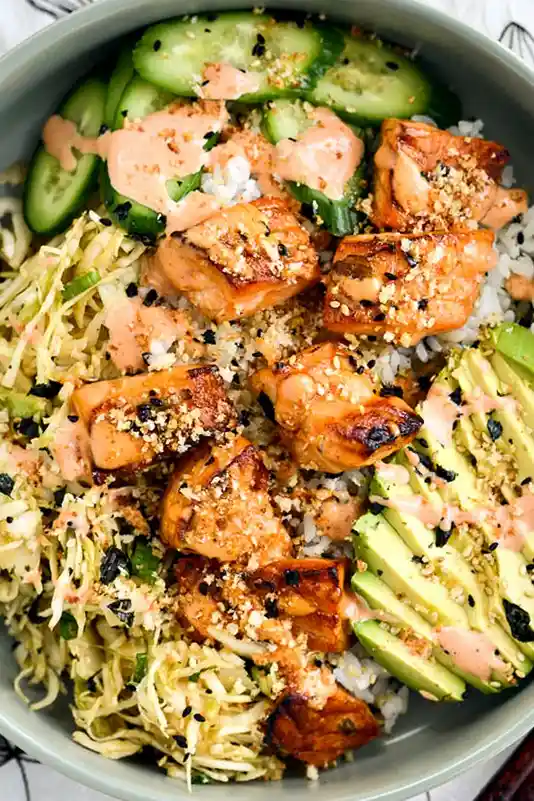
List of ingredients
- 2 tablespoons Japanese mayo – for the spicy sauce base.
- 2 tablespoons sriracha – for heat in the sauce.
- 1 pound skinless wild caught salmon – cut into 1 to 1-1/2 inch pieces.
- 1/4 cup coconut aminos – used for the salmon marinade.
- 1/4 cup rice vinegar – for acidity in the marinade.
- 1 tablespoon toasted sesame oil – adds nuttiness to the salmon.
- 1 tablespoon sriracha – adds spice to the salmon.
- 2 to 3 green onions (light green/white parts) – for the salmon marinade.
- 4 cups shredded cabbage – the base of the zippy slaw.
- Dark green parts from 2 green onions – reserved for the slaw.
- 2 tablespoons tamari (or low-sodium soy sauce) – for the slaw dressing.
- 2 tablespoons rice vinegar – for the slaw dressing.
- 1 teaspoon toasted sesame oil – for the slaw dressing.
- 1 teaspoon grated fresh ginger – adds zing to the slaw.
- 1 teaspoon grated fresh garlic – adds depth to the slaw.
- 1 teaspoon toasted sesame oil – used for toasting the panko.
- 1/2 cup panko breadcrumbs – for the crunchy topping.
- 1/4 teaspoon garlic powder – for the panko seasoning.
- 1/4 teaspoon onion powder – for the panko seasoning.
- 2 cups cooked sushi rice – the foundation of the bowl.
- 1 small avocado – quartered and sliced.
- 2 mini cucumbers – sliced into thin rounds.
- 1/2 to 3/4 sheet nori – crushed into small pieces.
- 2 teaspoons total toasted and/or black sesame seeds – for garnish.
step-by-step instructions
- Prepare the Spicy Mayo: In a small bowl, whisk together the Japanese mayo and sriracha until smooth. Cover the bowl and keep it refrigerated until the assembly phase.
- Marinate the Salmon: Whisk together coconut aminos, rice vinegar, 1 tablespoon toasted sesame oil, 1 tablespoon sriracha, and the white parts of the green onions. Place the salmon cubes in a bowl or resealable bag, pour the marinade over them, squeeze out excess air, and refrigerate for 30 to 40 minutes.
- Cook the Rice: While the salmon marinates, rinse sushi rice until the water runs clear. Cook according to package instructions or using a rice cooker to yield approximately 2 cups of cooked rice.
- Mix the Cabbage Slaw: Whisk together tamari, rice vinegar, 1 teaspoon toasted sesame oil, grated ginger, and grated garlic to create the dressing. In a large bowl, toss the shredded cabbage and reserved green onion parts with the dressing until well coated.
- Toast the Crunchy Topping: Heat 1 teaspoon of toasted sesame oil in a small non-stick skillet over medium-low heat. Add panko breadcrumbs, garlic powder, and onion powder, stirring constantly until golden brown. Remove from heat immediately to prevent burning.
- Bake and Broil the Salmon: Preheat your oven to 400°F (200°C) and line a rimmed sheet pan with foil, lightly spraying it with olive oil. Arrange the salmon pieces on the pan, discarding any leftover marinade. Bake for 6 to 8 minutes, then move the oven rack to the highest position and broil on high for about 1 minute until crispy.
- Assemble the Bowls: Divide the cooked sushi rice among four bowls, using about 1/2 cup per serving. Top each bowl with a portion of cabbage slaw, broiled salmon, avocado slices, and cucumber slices. Sprinkle with crushed nori, sesame seeds, and the crunchy panko topping, then finish with a drizzle of spicy mayo.
Salmon Preparation Secrets
Using Wild-Caught Salmon for Texture
Wild-caught salmon typically has a firmer texture and a more robust flavor than farmed varieties. This firmness is essential when cutting the fish into cubes, as it prevents the pieces from falling apart during the marinating and broiling process.
Achieving Uniform Cube Sizes
Cutting the salmon into consistent 1 to 1.5 inch pieces ensures that every piece cooks at the same rate. Uniformity prevents smaller pieces from overcooking and drying out while larger pieces remain underdone in the center.
Maximizing Marinade Absorption
Using a resealable bag for marinating allows you to squeeze out air, forcing the liquid into direct contact with all surfaces of the salmon. A resting time of 30 to 40 minutes is sufficient to infuse flavor without breaking down the proteins too much with the acid in the vinegar.
Rice and Vegetable Tips
Preparing Perfect Sticky Sushi Rice
Rinsing the rice thoroughly is the most important step to remove excess surface starch, which prevents the rice from becoming gummy. For the best results, use a rice cooker to maintain a precise temperature and water ratio.
Selecting the Best Mini Cucumbers
Mini cucumbers are preferred over larger varieties because they have thinner skins and smaller seeds. This results in a crispier texture and a cleaner flavor that does not overwhelm the other components of the bowl.
Preventing Avocado Oxidation
Slice the avocado immediately before assembling the bowls to prevent the flesh from turning brown. If you must slice them in advance, toss the slices in a small amount of rice vinegar or lemon juice to create a protective barrier.
Customizing Your Maki Bowl
Adjusting the Sodium Levels
Using tamari or low-sodium soy sauce reduces the overall salt content while maintaining the deep umami flavor of the dish. If you are very sensitive to salt, you can further dilute the slaw dressing with a teaspoon of water.
Substituting the Cabbage Base
If shredded cabbage is unavailable, thinly sliced kale or red cabbage can be used as a substitute. Red cabbage adds a vibrant color to the bowl, while kale provides a heartier texture and additional nutrients.
Adding Complementary Protein Options
While salmon is the star, you can add edamame or a soft-boiled egg to increase the protein content. These additions pair well with the spicy mayo and the acidity of the pickled slaw.
Essential Tool and Equipment Advice
Utilizing a Non-Stick Skillet for Panko
A non-stick skillet is highly recommended for toasting panko to ensure the breadcrumbs do not stick to the pan. Medium-low heat is critical because panko can transition from golden to burnt in a matter of seconds.
Optimizing the Broiler Position
Moving the oven rack to the highest position places the salmon closer to the heating element. This creates a quick sear and a charred exterior without overcooking the interior of the fish.
The Importance of Foil Lining
Lining the baking sheet with foil and oil minimizes cleanup and prevents the marinated salmon from sticking to the pan. This allows you to easily flip or move the salmon pieces during the broiling phase.
Storage and Reheating Guidelines
Separating Components for Freshness
When preparing this meal for meal prep, store the cooked rice, salmon, and slaw in separate containers. Keep the panko topping and spicy mayo separate as well to ensure the crunch and creaminess are preserved.
Air Fryer Reheating Method
The best way to reheat the marinated salmon is in an air fryer at 390°F for approximately 4 minutes. This restores the exterior crispness that is often lost when using a microwave.
Managing Slaw Longevity
The cabbage slaw can stay fresh in the refrigerator for up to 3 to 4 days. Because it is pickled in vinegar, the flavors often deepen and improve after the first 24 hours of storage.
Troubleshooting and FAQs
Why is my salmon coming out dry?
Dry salmon is usually the result of overcooking during the baking phase or leaving it under the broiler too long. Check the internal temperature or look for the fish to just flake with a fork before removing it from the oven.
How do I make the rice stickier?
If your rice is too loose, ensure you are using short-grain sushi rice and adding a small amount of seasoned rice vinegar after cooking. Stirring the vinegar in gently while the rice is hot helps create the traditional sticky texture.
Can I make this dish vegan?
You can substitute the salmon with firm tofu and use a vegan-certified mayonnaise for the spicy sauce. Ensure the tamari used is gluten-free and vegan, and replace the salmon marinade with a similar soy-based mixture.
What is the best substitute for coconut aminos?
Low-sodium soy sauce is the closest substitute for coconut aminos, though it is saltier and less sweet. You can add a pinch of brown sugar to the soy sauce to mimic the flavor profile of coconut aminos.
How do I prevent the panko from burning?
The key is to maintain a low heat and stir the breadcrumbs constantly. As soon as the panko reaches a golden-brown hue, remove the pan from the heat source immediately, as the residual heat will continue to cook the crumbs.
Print
Spicy Salmon Maki Bowl
- Total Time: 48 minutes
- Yield: 4 bowls 1x
- Diet: Pescatarian
Description
This Spicy Salmon Maki Bowl is sushi inspired and has everything we all love deconstructed into one fabulous, healthy and wholesome bowl. Sushi rice, a zippy cabbage slaw, sliced avocado, cool crisp cucumbers and broiled marinated salmon.
Ingredients
- 2 tablespoons Japanese mayo
- 2 tablespoons sriracha
- 1 pound skinless wild caught salmon, cut into 1 to 1-1/2 inch pieces
- 1/4 cup coconut aminos
- 1/4 cup rice vinegar
- 1 tablespoon toasted sesame oil
- 1 tablespoon sriracha
- 2 to 3 green onions, light green/white parts
- 4 cups shredded cabbage
- Dark green parts from 2 green onions
- 2 tablespoons tamari or low-sodium soy sauce
- 2 tablespoons rice vinegar
- 1 teaspoon toasted sesame oil
- 1 teaspoon grated fresh ginger
- 1 teaspoon grated fresh garlic
- 1 teaspoon toasted sesame oil
- 1/2 cup panko breadcrumbs
- 1/4 teaspoon garlic powder
- 1/4 teaspoon onion powder
- 2 cups cooked sushi rice
- 1 small avocado, quartered and sliced
- 2 mini cucumbers, sliced
- 1/2 to 3/4 sheet nori, crushed
- 2 teaspoons total toasted and/or black sesame seeds
Instructions
- Spicy Mayo: In a bowl, combine Japanese mayo with sriracha. Cover and keep refrigerated until ready to use.
- Salmon Marinade: Combine coconut aminos, rice vinegar, toasted sesame oil, sriracha, and the light/white parts of the green onions.
- Marinate Salmon: Place salmon in a bowl or resealable bag, pour marinade over top, squeeze out air, and refrigerate for 30 to 40 minutes.
- Cook Salmon: Preheat oven to 400℉ (200℃). Line a rimmed sheet pan with foil, spray with olive oil, and arrange salmon pieces. Bake for 6 to 8 minutes. Move rack to the highest position, turn on the broiler, and broil until crispy, about 1 minute.
- Cabbage Slaw: Combine tamari, rice vinegar, toasted sesame oil, ginger, and garlic for the dressing. In a large bowl, toss shredded cabbage and green onion with the dressing.
- Crunchy Topping: In a small non-stick skillet, combine toasted sesame oil, panko, garlic powder, and onion powder. Heat over medium-low until golden brown.
- Assemble Bowl: Divide cooked sushi rice among 4 bowls. Top with cabbage slaw, salmon, avocado, and cucumbers. Sprinkle with crushed nori, sesame seeds, and the crunchy panko topping. Drizzle with spicy mayo.
Notes
This recipe is great for meal prep. Leftover salmon can be reheated in an air fryer at 390°F for approximately 4 minutes to regain crispiness.
- Prep Time: 40 minutes
- Cook Time: 8 minutes
- Category: Mains & Entrees
- Method: Broiling
- Cuisine: Japanese-inspired
Nutrition
- Serving Size: 1 bowl
- Calories: 704 kcal
- Sugar: 15 g
- Sodium: 1459 mg
- Fat: 38 g
- Saturated Fat: 6 g
- Unsaturated Fat: 32 g
- Trans Fat: 0 g
- Carbohydrates: 58 g
- Fiber: 9 g
- Protein: 35 g
- Cholesterol: 74 mg