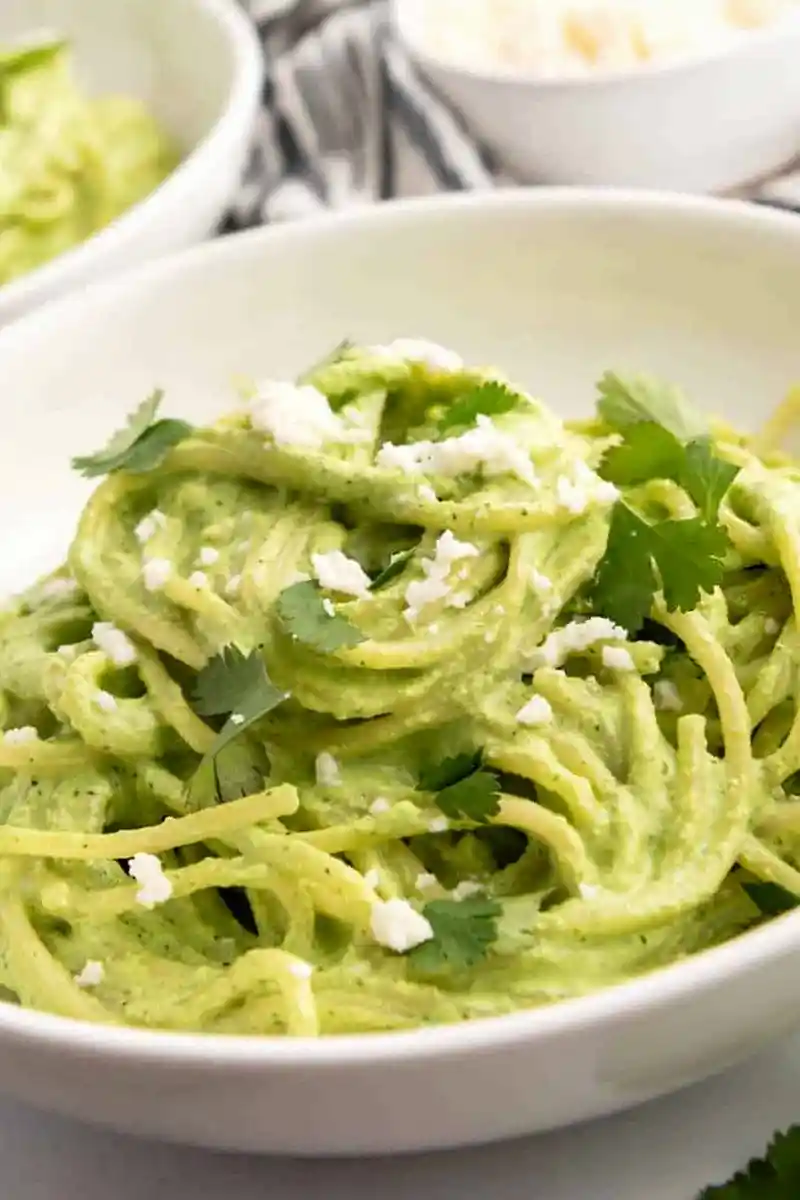
This Mexican-style pasta features a rich, creamy sauce made from fire-roasted poblano peppers and fresh herbs. It is a satisfying dinner option that blends traditional smoky flavors with a comforting spaghetti base.
List of ingredients
- 16 ounces spaghetti – cooked according to package directions.
- 4 poblano peppers – provides the primary smoky flavor.
- 2 Tablespoons olive oil – used for sautéing aromatics.
- ½ medium onion – chopped.
- 4 cloves garlic – minced.
- 1 bunch of cilantro – approximately 1 cup.
- 1 (8-ounce) package full-fat cream cheese – for thickness and creaminess.
- 1 cup sour cream or Mexican crema – adds tang and richness.
- ½ cup chicken broth or milk – used to adjust sauce consistency.
- ½ teaspoon kosher salt – to enhance overall flavor.
- ¼ teaspoon ground cumin – adds an earthy undertone.
- ½ cup queso fresco – plus extra for garnishing the final dish.
step-by-step instructions
- Roast the peppers: Roast poblano peppers over an open flame or in the oven until the skin is almost black. Place them in a glass bowl or a sealed ziplock bag and cover with plastic wrap. Let them steam for 10 minutes, then peel off the skins and remove the seeds under cold water.
- Sauté and blend: Sauté the chopped onion and minced garlic in olive oil until softened. Transfer the sautéed mixture into a blender along with the roasted poblanos, cilantro, cream cheese, sour cream, chicken broth, salt, cumin, and queso fresco. Blend the mixture until it is completely smooth.
- Heat and combine: Pour the blended sauce into a saucepan and heat over low to medium heat until warm. Stir in the cooked spaghetti and toss until the pasta is evenly coated. Serve immediately with extra cilantro leaves and sprinkled queso fresco.
Pro Techniques for Perfect Results
Mastering the Poblano Roasting Process
To get the best flavor, char the peppers until the skin is blistered and blackened. If using a gas stove, place the peppers directly on the grates and turn them frequently with tongs. For oven roasting, use the broiler setting on high, turning the peppers every few minutes to ensure even charring on all sides.
Achieving a Silky Sauce Consistency
Ensure the cream cheese is at room temperature before blending to avoid small lumps in the sauce. Use a high-speed blender or food processor and process the ingredients for at least 60 seconds. If the sauce remains grainy, pass it through a fine-mesh sieve before heating it in the saucepan.
Cooking Pasta to Al Dente
Boil the spaghetti in heavily salted water and remove it one minute before the package directions suggest. Because the pasta continues to cook slightly when tossed in the warm sauce, undercooking it slightly prevents the noodles from becoming mushy. This ensures the pasta maintains a firm bite against the creamy sauce.
Optimizing the Final Garnish
Use fresh, bright green cilantro leaves for the garnish to provide a color contrast against the pale green sauce. Crumble the queso fresco by hand just before serving to keep the cheese fluffy. A small squeeze of fresh lime juice over the top can help cut through the richness of the cream cheese.
Ingredient Substitutions and Alternatives
Using Lighter Cheese Options
For a lower-calorie version, replace full-fat cream cheese with a reduced-fat variety or Neufchatel cheese. While the texture may be slightly less dense, the flavor remains very similar. You can also use a blend of Greek yogurt and cream cheese to increase the protein content while reducing total fat.
Vegetarian Broth Alternatives
Replace the chicken broth with a high-quality vegetable broth to make the dish vegetarian. If you prefer a creamier, less savory profile, use whole milk or heavy cream. For a dairy-free alternative, use an unsweetened cashew cream and a plant-based cream cheese substitute.
Swapping the Pasta Shape
While spaghetti is traditional, shorter pasta shapes like penne, fusilli, or rotini are excellent alternatives. These shapes have ridges and holes that trap more of the thick poblano sauce in every bite. Fettuccine is another great choice if you prefer a wider noodle that can support the heavy sauce.
Alternative Cheeses for Queso Fresco
If queso fresco is unavailable, use Cotija cheese for a saltier, firmer taste. Feta cheese is another suitable substitute due to its similar crumbly texture and salty profile. If using feta, reduce the amount of added kosher salt in the recipe to avoid over-salting the dish.
Milder Pepper Options
If you prefer a flavor with even less heat, substitute the poblano peppers with Anaheim peppers. Anaheim peppers have a similar shape and flavor profile but generally offer a milder taste. Ensure you follow the same roasting and steaming process to maintain the smoky depth.
Protein and Vegetable Pairings
Adding Lean Grilled Chicken
Marinate chicken breast in lime juice, garlic, and cumin before grilling. Slice the cooked chicken into strips and place them on top of the plated spaghetti. This transforms the dish from a side into a hearty main course with a balanced protein profile.
Integrating Sautéed Shrimp
Sauté shrimp in olive oil and garlic until pink and opaque. Fold the shrimp into the pasta and sauce during the final tossing stage. The sweetness of the shrimp complements the smoky poblano sauce and the saltiness of the queso fresco.
Increasing Nutritional Value with Greens
Add two cups of fresh baby spinach or kale to the blender during the sauce-making process. These greens blend seamlessly into the sauce, intensifying the green color and adding vitamins without significantly altering the taste. Alternatively, stir in sautéed zucchini slices during the final step.
Incorporating Plant-Based Proteins
Cube firm tofu and pan-fry it until the edges are golden brown. Toss the tofu cubes with the spaghetti and sauce for a vegetarian protein boost. Roasted chickpeas also provide a nice textural contrast to the creamy pasta.
Storage and Preservation Guidelines
Refrigerating Leftovers
Store leftover spaghetti in an airtight container in the refrigerator for up to three days. The sauce may thicken significantly as it cools due to the cream cheese and sour cream content. Keep the pasta and sauce well-mixed to prevent the noodles from sticking together in a clump.
Proper Reheating Methods
Avoid reheating the pasta in the microwave on high heat, as this can cause the cream-based sauce to separate. Instead, heat the pasta in a saucepan over low heat. Add a splash of milk or vegetable broth to loosen the sauce and restore its original creamy consistency.
Preparing the Sauce in Advance
The poblano cream sauce can be made up to 48 hours in advance and stored in a sealed jar. When ready to serve, simply warm the sauce in a pan before adding freshly cooked pasta. This is an efficient way to reduce dinner prep time during the week.
Troubleshooting Common Issues
Fixing a Sauce That Is Too Thick
If the sauce is too thick to coat the pasta evenly, gradually whisk in more chicken broth or milk one tablespoon at a time. You can also use a small amount of the reserved starchy pasta water. The starch in the water helps the sauce emulsify and stick to the noodles more effectively.
Dealing with Bitter Pepper Skins
Bitter flavors in the sauce usually come from leftover charred skins that were not fully removed. Always ensure the peppers have steamed for the full 10 minutes in a sealed container, which loosens the skin. Rub the skins off under cool running water to ensure a smooth, sweet flavor.
Preventing Pasta from Getting Mushy
If the pasta becomes too soft, it is likely because it was overcooked during the boiling phase or over-heated in the sauce. Always cook pasta to al dente and toss it with the sauce just before serving. Avoid simmering the pasta in the sauce for extended periods.
Frequently Asked Questions
Is this dish spicy?
Poblano peppers are generally mild, providing a smoky warmth rather than intense heat. However, heat levels can vary by pepper; removing all seeds and membranes during preparation keeps the spice level very low.
Can I use a food processor instead of a blender?
Yes, a food processor works well for this recipe. Be sure to scrape down the sides of the bowl frequently to ensure all the cream cheese and cilantro are fully incorporated into a smooth puree.
What is the best substitute for Mexican Crema?
Sour cream is the closest substitute for Mexican crema. For a more authentic taste, you can blend equal parts sour cream and heavy cream together to mimic the thinner, slightly sweeter consistency of real crema.
Can I freeze this pasta dish?
It is not recommended to freeze this recipe because the cream cheese and sour cream can break and separate during the freezing and thawing process. The texture will become grainy and lose its smoothness upon reheating.
How do I store the roasted peppers if I am not making the sauce immediately?
Once peeled and seeded, place the roasted poblanos in an airtight container or freeze them in a freezer bag. They will stay fresh in the refrigerator for 3-5 days or in the freezer for up to 3 months.
Print
Spaghetti Verde (Mexican Spaghetti with Creamy Poblano Sauce)
- Total Time: 20 minutes
- Yield: 6 servings 1x
- Diet: General
Description
Mexican Green Spaghetti (Spaghetti Verde) combines the rich, smoky flavors of roasted poblano peppers with creamy cheese and fresh herbs!
Ingredients
- 16 ounces spaghetti, cooked according to package directions
- 4 poblano peppers
- 2 Tablespoons olive oil
- ½ medium onion, chopped
- 4 cloves garlic, minced
- 1 bunch cilantro (about 1 cup)
- 1 (8-ounce) package full-fat cream cheese
- 1 cup sour cream or Mexican crema
- ½ cup chicken broth or milk
- ½ teaspoon kosher salt
- ¼ teaspoon ground cumin
- ½ cup queso fresco
Instructions
- Roast: Roast poblano peppers over a flame or in the oven until almost black on the outside. Place in a glass bowl or ziploc bag and cover with plastic wrap to seal. Let the roasted peppers steam for 10 minutes to loosen the skins, then peel the skins off, tear open and remove the seeds under cold water.
- Blend: Saute the onion and garlic in the olive oil. Add to blender with the poblano peppers, cilantro, cream cheese, sour cream, chicken broth, salt, cumin, and queso fresco. Blend until smooth.
- Toss: Add to sauce pan and heat over low to medium heat until warm. Add cooked pasta. Toss to coat the pasta in the sauce. Serve warm with additional cilantro leaves and queso fresco sprinkled on top.
Notes
Make Ahead: Prepare the creamy green sauce in advance and refrigerate it. Reheat the sauce gently while you cook the pasta, then combine just before serving. Store: Store leftover Mexican Green Spaghetti in an airtight container in the refrigerator for up to 3 days. Reheat gently, adding a splash of broth, milk, or water to loosen up the sauce if needed.
- Prep Time: 10 minutes
- Cook Time: 10 minutes
- Category: Dinner
- Method: Stovetop
- Cuisine: Mexican
Nutrition
- Serving Size: 1 serving
- Calories: 584 kcal
- Sugar: 7 g
- Sodium: 481 mg
- Fat: 29 g
- Saturated Fat: 14 g
- Unsaturated Fat: 15 g
- Trans Fat: 0.1 g
- Carbohydrates: 66 g
- Fiber: 4 g
- Protein: 16 g
- Cholesterol: 68 mg