This slow cooker ravioli lasagna is a hearty meal that simplifies the traditional layering process. By using frozen ravioli, you can achieve a cheesy, pasta-filled dinner with minimal effort and prep time.
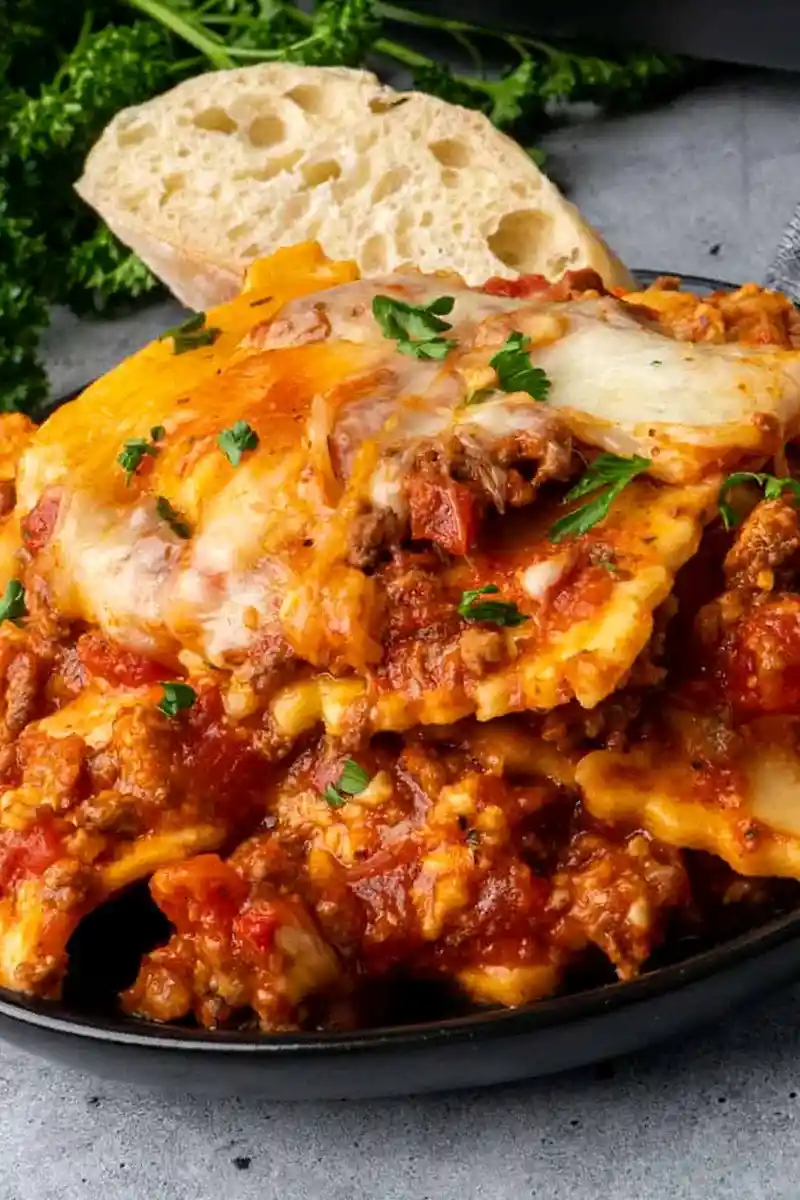
List of ingredients
- 1 (25 oz) bag frozen cheese ravioli – keeps the structure better than fresh pasta.
- 1 tbsp olive oil – used for sautéing the garlic and beef.
- 2 tsp minced garlic – provides a strong aromatic base.
- 1 lb ground beef – lean beef is recommended for a cleaner sauce.
- 1 (24 oz) jar spaghetti sauce – use your favorite brand for the primary flavor.
- 1 (14.5 oz) can diced tomatoes – adds chunks of texture and acidity.
- 1 tsp Italian seasoning – a blend of dried herbs for classic taste.
- 1 tsp ground black pepper – adds a subtle heat to the meat.
- 4 cups shredded mozzarella cheese – ensures a gooey, melted topping.
step-by-step instructions
- Brown the Meat: Heat olive oil and garlic in a large skillet over medium heat for 30 seconds, then add the ground beef. Cook until completely browned and drain off the remaining fat to prevent an oily sauce.
- Simmer the Sauce: Stir the spaghetti sauce, diced tomatoes, Italian seasoning, and black pepper into the skillet with the beef. Mix well to ensure the seasonings are evenly distributed.
- Build the Base: Pour one-third of the meat sauce into the bottom of a 6-quart slow cooker. Layer half of the frozen ravioli over the sauce in a single layer.
- Add First Cheese Layer: Sprinkle 1 cup of shredded mozzarella cheese evenly over the ravioli.
- Repeat the Layers: Add another layer of meat sauce and the remaining ravioli, then sprinkle another cup of cheese on top.
- Finish the Topping: Spread the final portion of meat sauce over the top layer and sprinkle the remaining mozzarella cheese over the sauce.
- Slow Cook: Cover the slow cooker and cook on the low setting for 3 to 4 hours until the cheese is bubbly and the pasta is tender.
Protein and Pasta Substitutions
Substituting Ground Beef with Turkey or Chicken
For a lower-fat alternative, you can use lean ground turkey or ground chicken. Since these meats are milder than beef, you may want to add an extra pinch of Italian seasoning to maintain the depth of flavor.
Using Spinach and Ricotta Ravioli for Extra Greens
While cheese ravioli are standard, spinach and ricotta filled pasta adds a nutritional boost and a different color. Mushroom-filled ravioli are also a great choice for those who prefer an earthier taste.
Swapping Mozzarella for Provolone or Monterey Jack
If you do not have mozzarella, provolone or Monterey Jack are excellent melting cheeses. You can also create a blend of these cheeses to add a sharper or creamier flavor profile to the dish.
Choosing Low-Sodium Sauce for Healthier Results
To reduce salt intake, look for “no salt added” canned tomatoes and pasta sauces. You can control the seasoning by adding your own sea salt or extra herbs at the end of the cooking process.
Flavor Variations
Adding Crushed Red Pepper for a Spicy Kick
If you prefer a spicier meal, stir in a teaspoon of crushed red pepper flakes or cayenne pepper into the meat sauce. This adds a warm heat that cuts through the richness of the cheese.
Incorporating Finely Diced Carrots and Celery
Sauté finely diced carrots and celery with the garlic before adding the beef. This increases the nutrient density of the sauce and adds a subtle sweetness and crunch to the meat layer.
Adding Ricotta Layers for Extra Creaminess
To make this taste more like a traditional lasagna, dollop small amounts of ricotta cheese between the ravioli and sauce layers. This adds a creamy, creamy texture that balances the acidity of the tomatoes.
Using Fresh Basil and Parsley for Garnish
Fresh herbs provide a bright contrast to the slow-cooked flavors. Finely chop fresh basil or flat-leaf parsley and sprinkle them over the melted cheese just before serving.
Serving and Pairing Suggestions
Pairing with Homemade Garlic Breadsticks
Warm garlic breadsticks provide a satisfying crunch that complements the soft texture of the ravioli. Brush them with melted butter and fresh minced garlic before baking them in the oven.
Serving with a Fresh Balsamic Green Salad
A light mixed green salad with a balsamic vinaigrette helps balance the richness of the cheese and meat. Include cherry tomatoes and cucumber slices for extra freshness and acidity.
Adding Steamed Broccoli as a Side Dish
Steamed broccoli or roasted asparagus are healthy side options that add color to the plate. These green vegetables provide a nutritional balance to the pasta-heavy main course.
Pairing with a Light Lemon-Based Dessert
Follow this heavy meal with a light dessert like a lemon tart or a fresh fruit salad. Avoiding overly rich desserts keeps the overall meal from feeling too heavy.
Storage and Preservation
Storing Leftovers in Airtight Glass Containers
Once the lasagna has cooled completely, transfer leftovers into an airtight glass container. This prevents the pasta from absorbing odors from the fridge and keeps the sauce moist.
Freezing Portions for Long-Term Storage
This recipe freezes exceptionally well for future meals. Place individual portions in freezer-safe containers or heavy-duty bags and store them for up to six weeks.
Thawing Frozen Lasagna Safely in the Fridge
To thaw frozen portions, move them to the refrigerator 24 hours before you plan to eat. Avoid thawing at room temperature to ensure the food remains safe for consumption.
Reheating Instructions
Reheating Individual Slices in the Microwave
Place a slice on a microwave-safe plate and cover it with a damp paper towel. Heat for 2-3 minutes, adding a splash of water to keep the ravioli from drying out.
Warming the Dish in the Oven for Better Texture
Preheat your oven to 350 degrees Fahrenheit and place the lasagna in an oven-safe dish. Cover with foil to retain moisture and heat until the cheese is bubbling again.
Using a Skillet for Stovetop Reheating
Place a portion of the lasagna in a small skillet over low heat. Add a tablespoon of water or extra pasta sauce and cover with a lid to steam the pasta through.
Make-Ahead Strategies
Pre-cooking the Meat Sauce One Day Ahead
You can prepare the beef, garlic, and sauce mixture a day before you intend to assemble the dish. Store the sauce in the refrigerator and simply layer it with the ravioli the next morning.
Assembling the Layers the Night Before
Assemble the entire lasagna in the slow cooker insert and refrigerate it overnight. When you start the slow cooker the next day, add an extra 30-60 minutes to the cook time since the ingredients are cold.
Timing the Slow Cooker for Workday Meals
Set the slow cooker to the low setting just before leaving for work. Four hours is usually the sweet spot for the ravioli to be tender without becoming mushy.
Common Troubleshooting
Thickening a Sauce That Is Too Watery
If the sauce appears too thin after cooking, remove the lid for the final 30 minutes of the process. This allows excess moisture to evaporate and thickens the consistency of the sauce.
Fixing Under-cooked Ravioli by Extending Time
If the ravioli still feel firm in the center, extend the cooking time by another 30 to 60 minutes. Ensure the lid remains tightly sealed to keep the heat trapped inside.
Ensuring Cheese Melts Smoothly and Evenly
Use low-moisture mozzarella for the best melt. If the top layer isn’t bubbling enough, you can briefly place the slow cooker insert under a broiler for 2-3 minutes, provided the insert is oven-safe.
Frequently Asked Questions
Can I use beef ravioli instead of cheese?
Yes, beef ravioli are a great alternative for those who want a heartier meal. However, cheese ravioli provide a better contrast to the meat sauce used in this recipe.
Do I need to thaw the ravioli first?
No, you should use the ravioli directly from the freezer. Thawing them beforehand can cause them to become too soft or break apart during the slow cooking process.
Can I use a 4-quart slow cooker?
You can use a 4-quart pot, but you must reduce all ingredients by approximately one-third. Overfilling a smaller slow cooker can lead to uneven cooking and overflows.
What is the best mozzarella for melting?
Low-moisture, part-skim mozzarella is the best choice for this recipe. Fresh mozzarella balls contain too much water and can make the lasagna soggy.
Equipment and Technique
The Benefits of Using a 6-Quart Slow Cooker
A 6-quart slow cooker provides ample space for the layers to expand without spilling over. This size ensures that heat circulates evenly around the ravioli and sauce.
Comparing Ceramic and Metal Slow Cooker Inserts
Ceramic inserts hold heat longer and are generally better for slow-cooking pasta. Metal inserts heat up faster but may require more frequent stirring to avoid scorching the bottom.
Maintaining a Tight Lid Seal for Heat Retention
Ensure your slow cooker lid is fitting tightly to prevent steam from escaping. If the seal is loose, you can place a piece of parchment paper between the pot and the lid.
Using Slow Cooker Liners for Easy Cleanup
Plastic liners are a practical way to avoid scrubbing the ceramic pot after cooking. If you do not have liners, spraying the pot with a non-stick cooking spray is an effective alternative.
Avoiding Mushy Pasta by Avoiding High Heat
Always use the low setting for this recipe. High heat can cause the frozen ravioli to break down and lose their shape, resulting in a porridge-like consistency.
Preventing Sauce Separation with Proper Draining
Draining the beef thoroughly after browning is critical. If excess grease remains, it will separate from the sauce and create an oily layer on top of the cheese.
Adding a Pinch of Sugar to Balance Tomato Acidity
If your chosen spaghetti sauce tastes too acidic, add a pinch of granulated sugar. This neutralizes the tartness of the canned tomatoes and creates a smoother flavor.
Incorporating Grated Parmesan for a Salty Finish
For an extra layer of flavor, mix some grated parmesan cheese into the mozzarella. The saltiness of the parmesan enhances the savory notes of the beef and garlic.
Layering Technique for Even Heat Distribution
Ensure the ravioli are spread in a flat, even layer rather than clumped together. This ensures that the sauce penetrates every piece of pasta and cooks them uniformly.
Print
Slow Cooker Ravioli Lasagna
- Total Time: 4 hours 10 minutes
- Yield: 8 servings 1x
- Diet: General
Description
This slow cooker Lasagna with Ravioli is a delicious combination of frozen cheese ravioli, filling ground beef, your favorite spaghetti sauce, canned tomatoes, and the perfect combination of seasonings for an easy crock pot dinner.
Ingredients
- 1 (25 oz) bag of frozen cheese ravioli
- 1 tbsp olive oil
- 2 tsp minced garlic
- 1 lb ground beef
- 1 (24 oz) jar of spaghetti sauce
- 1 (14.5 oz) can diced tomatoes
- 1 tsp Italian seasoning
- 1 tsp ground black pepper
- 4 cups shredded mozzarella cheese (microbial-rennet)
Instructions
- Step 1: In a large skillet over medium heat add olive oil and garlic. Brown garlic for 30 seconds and then add ground beef. Completely brown and drain off remaining fat.
- Step 2: Add spaghetti sauce, diced tomatoes, Italian seasoning, and black pepper to the skillet. Stir to combine.
- Step 3: In a 6-quart slow cooker add ⅓ of the sauce to the bottom and layer half of the ravioli over the sauce. Sprinkle 1 cup of cheese over the top and repeat 1 more time.
- Step 4: Evenly spread the remaining sauce over the top and sprinkle the remaining cheese over the sauce.
- Step 5: Cover and cook on low for 3-4 hours.
Notes
You can substitute ground turkey or ground chicken for a lower fat option. A 6-quart slow cooker is recommended for this volume of food.
- Prep Time: 10 minutes
- Cook Time: 4 hours
- Category: Main Course
- Method: Slow Cooking
- Cuisine: Italian
Nutrition
- Serving Size: 1 serving
- Calories: 330 kcal
- Sugar: 1 g
- Sodium: 391 mg
- Fat: 26 g
- Saturated Fat: 12 g
- Unsaturated Fat: 13 g
- Trans Fat: 1 g
- Carbohydrates: 35 g
- Fiber: 0.2 g
- Protein: 22 g
- Cholesterol: 85 mg