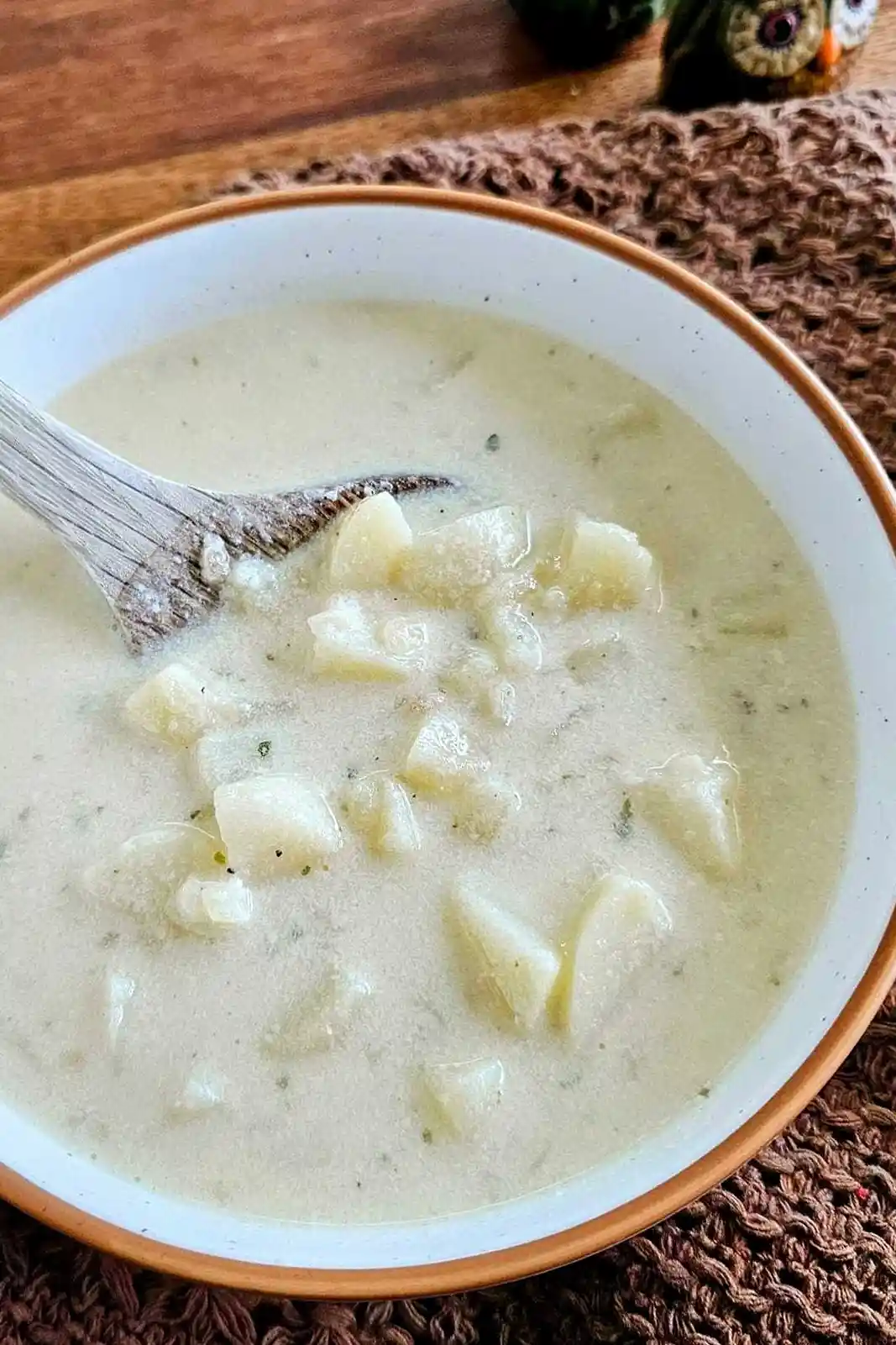
This classic potato soup is the definition of comfort food, relying on the natural starch of the potatoes and the richness of whole milk to create a velvety, soothing texture. With just a handful of pantry staples, you can prepare a hearty, soul-warming meal that is perfect for chilly evenings or busy weekdays. It is a straightforward, no-fuss dish that lets the humble ingredients shine without unnecessary additives.
List of ingredients
- 3 ½ pounds potatoes, peeled and diced
- Water with a few pinches of salt added
- 3 tablespoons butter
- 1 medium onion, diced
- 6 cups whole milk
- 1 ½ teaspoons salt
- Ground black pepper to taste
step-by-step instructions
- Step: Add potatoes to a pot and add enough water to cover by about 1 inch. Stir in a few pinches of salt and bring to a boil. Boil gently until potatoes are fork-tender, about 10-15 minutes; drain and set aside, reserving a cup of the cooking water.
- Step: While the potatoes are boiling, heat butter over medium heat in a Dutch oven or soup pot. Add onions to the butter and cook until soft and golden brown.
- Step: Add drained potatoes to the pot with cooked onions. Add milk, salt, and pepper. Gently bring to a simmer, ensuring the milk does not boil.
- Step: Simmer gently for 10 minutes. Remove from the heat, and use a potato masher or immersion blender to mash up about half of the potatoes. Add reserved cooking liquid if a thinner consistency is desired.
- Step: Taste and adjust seasonings. Serve while hot.
Refining Your Soup Texture
Achieving The Perfect Consistency
The secret to a great potato soup lies in the balance between creamy base and tender potato chunks. By only mashing half of your cooked potatoes, you create a natural thickener that maintains the heartiness of the dish without needing any flour or starch. Using an immersion blender makes this process quick and efficient, but a standard handheld potato masher allows for more control over the size of the remaining potato pieces.
Managing The Starch Content
Using the right potato variety is critical for success in this recipe. High-starch potatoes like Russets will break down more easily during the mashing phase, effectively thickening the soup base naturally. If you prefer a thinner soup, you can add more milk or a splash of vegetable broth at the very end to loosen the texture without losing the creamy mouthfeel.
Effective Cooking Strategies
Avoiding Scorched Milk
Since milk is a primary liquid in this recipe, it requires gentle handling to prevent burning at the bottom of the pot or curdling from excessive heat. Always maintain a low-to-medium heat setting when simmering the soup and use a heavy-bottomed Dutch oven, which distributes heat more evenly. If you see small bubbles forming around the edges of the pot, you have reached the ideal temperature for simmering.
Enhancing Flavor Profiles
While this recipe is excellent in its simple form, you can enhance the depth of flavor by carefully browning the onions. Do not rush the sautéing process; allowing the onions to caramelize slightly brings out a natural sweetness that balances the saltiness of the potatoes. Seasoning the potato water during the boiling phase also ensures the flavor is integrated throughout the potato, rather than just sitting on the surface.
Substitutions and Adjustments
Dairy Alternatives
If you prefer to avoid whole milk, you can substitute it with half-and-half for a decadent, restaurant-quality thickness. For a lighter version, skim or 2% milk will work, though the final result will be slightly thinner. If using a plant-based milk, ensure it is unsweetened and neutral in flavor, such as soy or oat milk, to prevent an overpowering aftertaste that might clash with the savory profile of the onions and potatoes.
Vegetable Additions
For those looking to increase the nutritional density of their meal, consider adding finely diced carrots or celery during the initial sautéing phase with the onions. These vegetables add a subtle crunch and extra color without compromising the classic, old-fashioned taste of the soup. Always ensure that any added vegetables are chopped to a similar size as the potatoes so they finish cooking at the same time.
Serving and Storage Recommendations
Complimentary Side Dishes
This soup is best served with a side that can help soak up the creamy broth. Crusty artisan bread, soft dinner rolls, or even a batch of corn muffins are ideal companions for this dish. If you are serving this as a main meal, a fresh green side salad with a light vinaigrette can provide a sharp, acidic contrast to the rich, heavy creaminess of the potato soup.
Storing Leftovers
Leftover soup should be cooled to room temperature before being transferred to an airtight container. It will stay fresh in the refrigerator for up to three days. Keep in mind that the potatoes may absorb more liquid over time, so you may need to add a small amount of milk or water when you reheat the soup to restore its original, creamy texture.
Troubleshooting Common Issues
Fixing A Thin Soup
If your soup turns out thinner than you prefer, do not panic; it is easily corrected. Simply mash a few more of the existing potato pieces against the side of the pot to release extra starch. Alternatively, you can simmer the soup uncovered for an additional five minutes to allow some of the liquid to evaporate, which will naturally concentrate the flavors and thicken the consistency.
Correcting Under-Seasoned Soup
Potato soup can be quite bland if it is not salted properly because potatoes are notorious for absorbing large amounts of salt. If the soup tastes “flat,” add salt in quarter-teaspoon increments, stirring well between each addition until the flavor pops. Freshly cracked black pepper is also essential; do not rely solely on pre-ground pepper, as the fresh variety provides a much more aromatic and vibrant finish.
Frequently Asked Questions
Can I freeze this potato soup?
Freezing this soup is not recommended because the milk-based broth often separates and becomes grainy upon thawing. If you must store it long-term, it is better to freeze it before adding the milk, then stir in the dairy while reheating.
Why did my soup curdle?
Curdling usually happens when the soup is allowed to boil aggressively. To prevent this, keep the heat low and ensure the mixture stays at a gentle simmer rather than a rapid, rolling boil.
What is the best potato variety for this recipe?
Russet potatoes are the gold standard for this soup due to their high starch content. Yukon Golds are an excellent secondary choice, as they provide a buttery flavor and a slightly creamier texture.
Print
Simple Old-Fashioned Potato Soup Recipe
- Total Time: PT50M
- Yield: 6 servings 1x
- Diet: Vegetarian, Gluten-free
Description
This Potato Soup Recipe uses only 4 simple ingredients but is still delicious and perfectly comforting (and naturally gluten-free). Serve it up piping hot for lunch or supper on a chilly day.
Ingredients
- 3 ½ pounds potatoes, peeled and diced
- Water with a few pinches of salt added
- 3 tablespoons butter
- 1 medium onion, diced
- 6 cups whole milk
- 1 ½ teaspoons salt
- Ground black pepper to taste
Instructions
- Step: Add potatoes to a pot and add enough water to cover by about 1 inch. Stir in a few pinches of salt and bring to a boil. Boil gently until potatoes are fork-tender, about 10-15 minutes; drain and set aside, reserving a cup of the cooking water.
- Step: While the potatoes are boiling, heat butter over medium heat in a Dutch oven or soup pot. Add onions to the butter and cook until soft and golden brown.
- Step: Add drained potatoes to the pot with cooked onions. Add milk, salt, and pepper. Gently bring to a simmer, ensuring the milk does not boil.
- Step: Simmer gently for 10 minutes. Remove from the heat, and use a potato masher or immersion blender to mash up about half of the potatoes. Add reserved cooking liquid if a thinner consistency is desired.
- Step: Taste and adjust seasonings. Serve while hot.
Notes
For the best texture, use starchy potatoes like russets or Yukon Golds. Avoid waxy potatoes. If you prefer a richer soup, substitute some milk with half-and-half.
- Prep Time: PT20M
- Cook Time: PT30M
- Category: Soup
- Method: Stovetop
- Cuisine: American
Nutrition
- Serving Size: 1 bowl
- Calories: 310 kcal
- Sugar: 9 g
- Sodium: 750 mg
- Fat: 12 g
- Saturated Fat: 7 g
- Unsaturated Fat: 4 g
- Trans Fat: 0 g
- Carbohydrates: 42 g
- Fiber: 5 g
- Protein: 9 g
- Cholesterol: 35 mg