This slow-simmered red sauce is a hearty meal featuring a variety of tender meats cooked in a rich tomato base. It is designed for large gatherings and provides a deeply savory flavor through hours of gentle cooking.
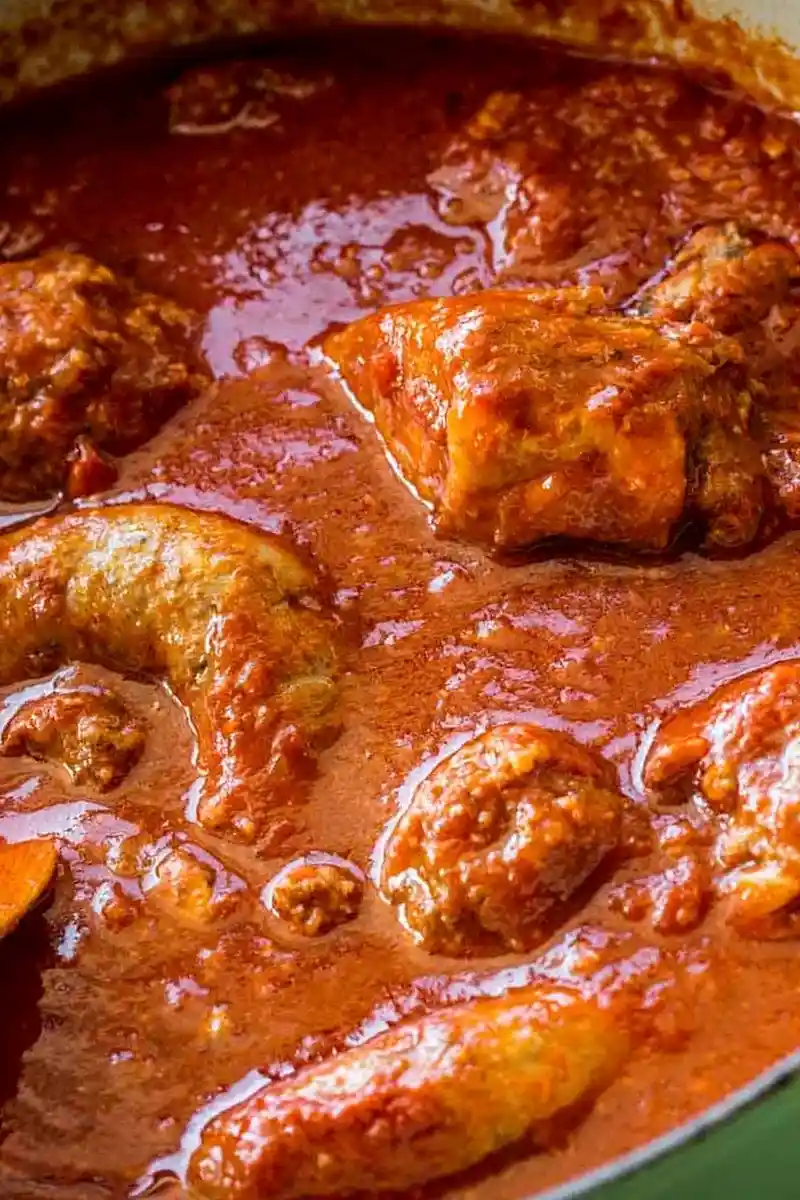
List of ingredients
- 2 tablespoons extra virgin olive oil – used for searing the meat.
- 2-3 lbs beef chuck or beef short ribs – substitute for pork to provide a rich, tender base.
- Kosher salt and black pepper – used to season meat and sauce to taste.
- 1 small yellow or sweet onion – finely diced for aromatics.
- 5 cloves garlic – very thinly sliced to prevent burning.
- Pinch of red chili flakes – adds a subtle heat to the sauce.
- 3 tablespoons tomato paste – thickens the sauce and intensifies tomato flavor.
- 2 28-ounce cans whole peeled tomatoes or crushed tomatoes – the main body of the sauce.
- 2 bay leaves – provides a distinct herbal depth.
- 1 tablespoon Italian parsley – finely minced for freshness.
- Pinch of sugar (optional) – used to balance the acidity of the tomatoes.
- 1 ½ lbs beef Italian sausage – hot, sweet, or a combination.
- 1 batch homemade Italian meatballs or 16-20 store-bought meatballs, cooked – added for texture.
- Pasta – for serving, such as rigatoni or spaghetti.
- Pecorino Romano cheese – grated, for serving.
- Ricotta cheese – for serving.
step-by-step instructions
- Sear the Beef: Heat olive oil in a large pot or Dutch oven over high heat. Season the beef chuck or ribs on all sides with salt and pepper, then sear until browned on all sides. Remove the meat and set it aside.
- Sauté Aromatics: Lower the heat to medium. Add the diced onions and sauté until they are soft, which typically takes about 5 minutes.
- Add Garlic and Heat: Stir in the sliced garlic and red chili flakes. Cook for another 2 minutes, ensuring the garlic does not brown too quickly.
- Concentrate Flavor: Stir in the tomato paste and cook for 1-2 minutes to caramelize the paste slightly.
- Build the Sauce Base: Add the tomatoes, bay leaves, and parsley. Season with salt and pepper. Fill one empty tomato can halfway to three-quarters full with water and stir it into the pot. If using whole peeled tomatoes, break them apart with a wooden spoon or use an immersion blender for a smoother consistency.
- Combine and Simmer: Bring the sauce to a boil. Add the seared beef, beef sausages, and meatballs, then reduce the heat to low.
- Slow Cook: Cover the pot with the lid slightly ajar. Simmer on the lowest heat setting for about 3 hours, stirring every 20 minutes to prevent the bottom from scorching. Cook until the beef is falling apart. Turn off the heat and let the meats rest in the sauce.
- Prepare for Serving: Taste the sauce and adjust salt. Remove the bay leaves and any bones from the beef. Use a slotted spoon to transfer the meats to a serving platter.
- Finish and Plate: Toss al dente pasta with a small amount of sauce and a splash of pasta water. Serve the pasta alongside the platter of meats and extra sauce in gravy boats, with bowls of grated cheese and ricotta on the table.
Meat Selection and Preparation
Using Beef Chuck for Tenderness
Beef chuck is an ideal substitute for pork in this recipe because it contains significant connective tissue. During the long simmering process, this collagen breaks down into gelatin, creating a melt-in-your-mouth texture. Ensure the beef is cut into large chunks to prevent it from disintegrating too early.
Selecting Beef Short Ribs
Beef short ribs add a deeper, more intense flavor and richness to the sauce compared to chuck. The marrow from the ribs infuses the tomato base with a buttery quality. If using short ribs, sear them thoroughly to develop a dark crust for maximum flavor extraction.
Choosing Beef Italian Sausage
When selecting beef-based Italian sausage, look for options with a high meat-to-filler ratio. Sweet beef sausage provides a balanced flavor, while hot beef sausage adds a spicy kick. Leaving the sausages whole allows them to stay intact during the initial hours and break apart naturally toward the end.
Optimizing Tomato and Herb Flavors
Selecting the Right Canned Tomatoes
Whole peeled tomatoes generally offer a cleaner, less processed taste than crushed versions. For the best results, choose San Marzano style tomatoes, which are known for lower acidity and a sweeter profile. Manually crushing them with a spoon provides a rustic, chunky texture.
The Role of Bay Leaves
Bay leaves provide a subtle, woody aroma that cuts through the richness of the beef and sausage. It is important to add them at the beginning of the simmer to allow the flavor to infuse slowly. Always remove them before serving, as they remain tough and are not meant for consumption.
Balancing Acidity with Sugar
Depending on the brand of tomatoes, some sauces may taste overly acidic or tart. A small pinch of granulated sugar can neutralize this acidity without making the sauce taste sweet. Add the sugar in very small increments and taste after each addition.
Advanced Cooking Techniques
Executing the Perfect Sear
Searing the meat at high heat creates a Maillard reaction, which develops complex brown flavors. Use a heavy-bottomed pot to maintain consistent heat across the surface. Avoid overcrowding the pan, as this drops the temperature and causes the meat to steam rather than brown.
Maintaining a Low Simmer
The goal of the three-hour simmer is to tenderize the meat without boiling it aggressively. Keep the heat on the lowest possible setting and leave the lid slightly ajar to allow some moisture to escape, which thickens the sauce. This gentle heat prevents the meat from becoming tough or rubbery.
Preventing Bottom Scorching
Because this sauce is thick and contains sugars from the tomatoes, it can easily burn at the bottom of the pot. Stirring every 20 minutes ensures that the solids are moved and the heat is distributed evenly. If you notice the sauce thickening too quickly, add a small amount of water to maintain consistency.
Sauce Texture and Consistency
Using Tomato Paste for Body
Tomato paste acts as a thickener and provides a concentrated tomato flavor that cannot be achieved with canned tomatoes alone. Cooking the paste for a few minutes before adding the liquids removes the raw metallic taste. If you prefer a thinner sauce, reduce the paste to one tablespoon.
Utilizing an Immersion Blender
For those who prefer a velvet-like sauce over a chunky one, an immersion blender is highly effective. Blend the sauce after sautéing the vegetables but before adding the whole pieces of meat. Be sure to remove the bay leaves before blending to avoid incorporating them into the sauce.
Managing the Water Ratio
Adding water from the empty tomato can ensures that the sauce has enough liquid to simmer for hours without drying out. The amount of water should be adjusted based on how thick you want the final product. If the sauce is too thin after three hours, simmer it with the lid fully off for the final 30 minutes.
Serving and Pairing Suggestions
Selecting the Best Pasta Shape
Rigatoni or penne are excellent choices because their hollow centers and ridges trap the thick sauce. Spaghetti or linguine are traditional, but they require the sauce to be tossed thoroughly with the noodles. Always cook pasta al dente to ensure it maintains its structure when mixed with the heavy gravy.
The Importance of Pasta Water
Reserved pasta water contains starch that helps the sauce emulsify and cling to the noodles. Add a splash of this starchy water to the pasta and a bit of sauce before serving. This prevents the sauce from sliding off the pasta and pooling at the bottom of the plate.
Adding Ricotta Cheese
Serving a dollop of fresh ricotta cheese on the side or on top of the pasta adds a creamy, cool contrast to the rich, acidic sauce. The mild flavor of the ricotta balances the intensity of the beef and garlic. This is a traditional Sicilian touch that enhances the overall meal.
Storage and Preservation
Refrigeration Guidelines
Store leftover sauce and meat together in airtight glass or plastic containers. The flavors often improve after 24 hours as the spices continue to meld. Refrigerate the sauce promptly and consume it within five days to maintain quality.
Freezing for Long-Term Use
This sauce freezes exceptionally well due to its high tomato and fat content. Portion the sauce into freezer-safe bags or containers, leaving a small amount of space for expansion. Frozen sauce can be kept for up to six months without a significant loss in flavor.
Proper Reheating Methods
To reheat, place the sauce in a pot over low heat and add a small amount of water or beef broth to loosen the consistency. Stir frequently to ensure the meat is heated through evenly. Avoid reheating in the microwave on high power, as this can cause the sauce to splatter and the meat to overcook.
Troubleshooting Common Issues
Handling Bitter Garlic
If the garlic is cooked too quickly over high heat, it can become bitter and ruin the flavor of the sauce. To prevent this, slice the garlic thinly and add it only after the onions have softened. If the garlic burns, it is best to start the aromatic base over.
Managing Excess Fat
Since beef chuck and sausages release a significant amount of fat, you may see a layer of oil on top of the sauce. Use a wide spoon or a fat separator to skim the excess oil off the surface before serving. This results in a cleaner taste and a less greasy mouthfeel.
Fixing Tough Meat
If the beef is still tough after three hours, it likely wasn’t simmered at a low enough temperature or needs more time. Continue simmering on low for another 30 to 60 minutes. Ensure there is enough liquid in the pot to keep the meat submerged.
Frequently Asked Questions
What is the difference between red gravy and marinara?
Marinara is a quick-cooking tomato sauce usually made without meat and simmered for a short time. Red gravy, or sugo, is a slow-cooked sauce containing various large pieces of meat that tenderize over several hours.
Can I use a slow cooker for this recipe?
Yes, after searing the meat and sautéing the vegetables in a pot, you can transfer everything to a slow cooker. Set it to the low setting for 5-6 hours to achieve the same tender results as the stovetop method.
Which cheese is best for topping?
Pecorino Romano is the traditional choice for this recipe because its sharp, salty profile complements the rich beef. Grana Padano or Parmigiano Reggiano are also excellent alternatives for a slightly nuttier, milder taste.
How do I stop the sauce from being too salty?
If the sauce is too salty, adding a peeled, halved potato during the last hour of simmering can help absorb some of the excess salt. Alternatively, stirring in a small amount of unsalted tomato puree or more water can dilute the saltiness.
Print
Sicilian-Style Sunday Red Sauce with Beef
- Total Time: 4 hours 20 minutes
- Yield: 10 servings 1x
- Diet: General
Description
This authentic recipe for Italian Sunday gravy (sauce) – or sugo – is a rich tradition passed down through a Sicilian family. It is a homemade red sauce simmered for hours with meatballs, Italian beef sausage, and tender slow-cooked beef.
Ingredients
- 2 tablespoons extra virgin olive oil
- 2–3 lbs beef chuck or beef short ribs
- kosher salt and black pepper (to taste)
- 1 small yellow or sweet onion, finely diced
- 5 cloves garlic, very thinly sliced
- pinch of red chili flakes
- 3 tablespoons tomato paste
- 2 28-ounce cans whole peeled tomatoes (or crushed tomatoes)
- 2 bay leaves
- 1 tablespoon Italian parsley, finely minced
- pinch of sugar (optional)
- 1 ½ lbs beef Italian sausage
- 1 batch homemade beef Italian meatballs (or 16–20 store-bought beef meatballs, cooked)
- pasta (for serving)
- pecorino Romano cheese, grated (for serving)
- ricotta cheese (for serving)
Instructions
- Step: Heat olive oil in a large pot or Dutch oven over high heat. Season the beef on all sides with salt and pepper, then sear until nicely browned on all sides. Remove and set aside.
- Step: Lower the heat to medium, then add the onions to the pot and sauté until soft, about 5 minutes.
- Step: Add the garlic and chili flakes, then continue cooking for another 2 minutes.
- Step: Stir in the tomato paste for about 1-2 minutes.
- Step: Add the tomatoes, bay leaves and parsley, then season with salt and pepper. Fill one empty tomato can ½ to ¾ of the way with water and add it to the pot, then stir to combine. If using whole peeled tomatoes, use the back of a wooden spoon to break them apart, or use an immersion blender for a smoother sauce.
- Step: Bring the sauce up to a boil, then add the beef, beef sausage and beef meatballs and reduce the heat to low.
- Step: Cover, but leave the lid slightly ajar and simmer on the lowest possible heat setting, stirring about every 20 minutes to prevent the bottom from burning, for about 3 hours, or until the beef is falling apart. Turn off the heat and allow the meats to sit in the sauce until ready to eat.
- Step: Taste the sauce and add more salt if needed. Remove the bay leaves and any bones from the beef, then use a slotted spoon to transfer the meats to a large platter.
- Step: Toss al dente pasta with a little bit of sauce, then transfer the rest to gravy boats or another serving vessel, and serve the pasta with the platter of meats and sauce on the side, with a bowl of grated cheese and a bowl of ricotta for passing at the table.
Notes
Cook the onion and garlic slowly over medium-low heat to avoid browning. Ensure the sauce simmers on the lowest possible heat and stir every 20 minutes to prevent burning. This recipe freezes beautifully and tastes even better the next day.
- Prep Time: 20 minutes
- Cook Time: 4 hours
- Category: Main Course
- Method: Simmering
- Cuisine: Italian
Nutrition
- Serving Size: 1 serving
- Calories: 421 kcal
- Sugar: 5 g
- Sodium: 694 mg
- Fat: 28 g
- Saturated Fat: 9 g
- Unsaturated Fat: 17 g
- Trans Fat: 0 g
- Carbohydrates: 9 g
- Fiber: 2 g
- Protein: 32 g
- Cholesterol: 110 mg