This one-pan meal combines zesty lemon and aromatic rosemary with roasted chicken and crispy potatoes. It is a streamlined dinner solution that minimizes cleanup while delivering complex flavors.
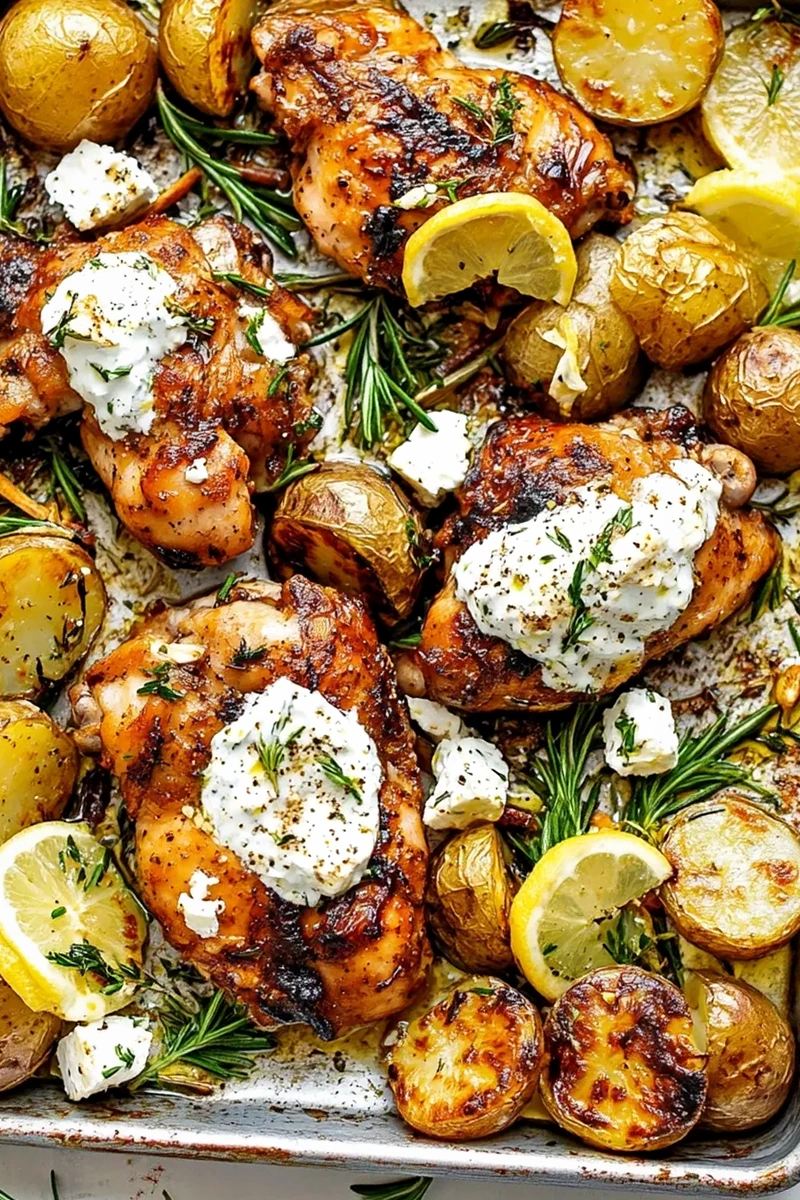
List of ingredients
- 6 tablespoons extra virgin olive oil – used for marinade, roasting potatoes, and asparagus.
- 2 tablespoons Dijon mustard – provides a tangy base for the chicken marinade.
- 4 cloves garlic, minced or grated – adds pungent depth to the roast.
- 1 medium shallot, finely chopped – contributes a mild, sweet onion flavor.
- 2 tablespoons chopped fresh rosemary – provides the primary aromatic herb note.
- 1 teaspoon smoked paprika – adds a subtle woodsy smoke flavor.
- Juice and zest of 1 lemon – ensures brightness and acidity.
- Kosher salt – to taste.
- Black pepper – to taste.
- 2 pounds boneless chicken breasts or thighs – the main protein.
- 3-4 medium russet potatoes, cut into 2 inch pieces – for a hearty, starchy side.
- 1 tablespoon raw sesame seeds – adds a nutty texture to the potatoes.
- 1 small bunch asparagus, ends trimmed – provides a fresh, green element.
- 4-6 ounces feta cheese – the creamy, salty base for the sauce.
- 1/4 cup plain Greek yogurt – adds tang and creaminess to the sauce.
- 1 clove garlic, grated – for the feta sauce.
- Juice from 1 lemon – to thin and brighten the sauce.
- 1/4 cup chopped fresh tender herbs (dill, basil, or parsley) or 2 tablespoons dried herbs – for the sauce finish.
- 1/4 teaspoon smoked paprika – for sauce coloring and flavor.
- 1 pinch crushed red pepper flakes – adds a hint of spice to the sauce.
step-by-step instructions
- Prepare the Marinade: Preheat your oven to 425 degrees F. In a medium bowl, whisk together 4 tablespoons of olive oil, Dijon mustard, minced garlic, chopped shallot, fresh rosemary, smoked paprika, lemon zest, lemon juice, salt, and black pepper.
- Marinate the Chicken: Add the chicken pieces to the marinade bowl and toss until thoroughly coated. Let the chicken sit for 15 to 20 minutes to allow the flavors to penetrate the meat.
- Roast the Potatoes: On a rimmed baking sheet, toss the 2-inch potato pieces with 2 tablespoons of olive oil and sesame seeds. Season with salt and pepper, spread in an even layer, and roast for 20 minutes until golden and tender.
- Arrange the Pan: Remove the pan from the oven and move the potatoes to one side. Place the marinated chicken on the other side and arrange the trimmed asparagus around the meat. Drizzle the asparagus with 1 tablespoon of olive oil and season with salt and pepper.
- Final Roast: Return the pan to the oven and roast for 20 to 25 minutes. Ensure the chicken reaches an internal temperature of 165 degrees F and the juices run clear.
- Blend the Feta Sauce: While the pan is roasting, place feta cheese, Greek yogurt, grated garlic, and lemon juice in a blender. Blend until smooth, then stir in the fresh herbs, smoked paprika, and red pepper flakes. Add a splash more lemon juice if a thinner consistency is desired.
- Assemble and Serve: Divide the chicken, roasted potatoes, and asparagus onto plates. Spoon a generous amount of the creamy feta sauce over the chicken and serve immediately.
Expert Roasting Techniques
Use a Heavy-Duty Rimmed Baking Sheet
A rimmed baking sheet prevents the olive oil and chicken juices from dripping into the oven. Using a heavy-gauge pan helps distribute heat more evenly across the bottom, reducing the risk of hot spots that can burn the potatoes.
Ensure Uniform Potato Sizing
Cutting potatoes into consistent 2-inch pieces is critical for even cooking. If some pieces are significantly smaller than others, they will overcook and soften before the larger pieces are tender.
Optimize Oven Rack Position
Position your oven rack in the center of the oven. This allows for optimal air circulation around the sheet pan, ensuring the chicken browns on top while the potatoes crisp up on the bottom.
Utilize a Digital Meat Thermometer
Relying on visual cues like clear juices is helpful, but a digital thermometer is the only way to guarantee safety and juiciness. Pull the chicken when it hits 165 degrees F to avoid the rubbery texture of overcooked poultry.
Ingredient Substitutions and Adaptations
Swap Russet Potatoes for Yukon Gold
If you prefer a creamier interior and a thinner skin, use Yukon Gold potatoes. They hold their shape well during high-heat roasting and offer a naturally buttery flavor that complements the lemon.
Use Chicken Thighs for Added Juiciness
While breasts are lean, boneless skinless chicken thighs are more forgiving at 425 degrees F. Their higher fat content prevents the meat from drying out during the final 25 minutes of roasting.
Replace Asparagus with Seasonal Greens
You can substitute asparagus with trimmed green beans, broccoli florets, or sliced zucchini. Adjust the timing based on the vegetable; for example, broccoli may need to enter the oven at the same time as the chicken.
Alternative Herb Combinations
If rosemary is too potent, try fresh thyme or oregano. These herbs pair well with lemon and garlic, though you should maintain the same quantity to ensure the marinade consistency remains correct.
Flavor Variations to Try
Add a Touch of Honey for Balance
Whisk one tablespoon of honey into the chicken marinade. The sweetness balances the acidity of the lemon and the tang of the Dijon mustard, creating a caramelized glaze on the chicken.
Increase the Heat with Extra Red Pepper
For a spicier version, add a half teaspoon of crushed red pepper flakes directly into the marinade. This infuses the chicken and potatoes with a consistent warmth throughout the dish.
Incorporate a Garlic-Parmesan Crust
Sprinkle a small amount of grated Parmesan cheese over the potatoes during the last 10 minutes of roasting. This creates a salty, cheesy crust that adds another layer of texture to the side dish.
Use a Different Creamy Base for the Sauce
If Greek yogurt is unavailable, use sour cream or a thick plant-based yogurt. These alternatives maintain the creamy texture of the feta sauce while slightly altering the tanginess.
Serving and Plating Suggestions
Pair with a Zesty Arugula Salad
A side of fresh arugula tossed with lemon juice and olive oil provides a peppery contrast to the rich feta sauce. This adds a fresh, raw element to an otherwise roasted meal.
Serve with Toasted Sourdough Bread
Warm slices of toasted sourdough or a crusty baguette are ideal for soaking up the leftover feta sauce and chicken juices. Brush the bread with garlic butter before toasting for extra flavor.
Add a Garnish of Fresh Parsley
Finely chopped flat-leaf parsley sprinkled over the entire platter adds a vibrant green color. It also provides a clean, grassy finish that cuts through the richness of the feta.
Plating for Family Style
Arrange the chicken in the center of a large platter, surrounded by the roasted potatoes and asparagus. Drizzle the feta sauce in a zig-zag pattern across the meat for a professional presentation.
Storage and Preservation
Refrigerate in Airtight Containers
Store leftovers in a sealed glass or plastic container in the refrigerator. This prevents the chicken and potatoes from absorbing other fridge odors and keeps the meat moist for up to 3 days.
Separate the Feta Sauce
Keep the feta sauce in a separate small jar or container. This prevents the sauce from soaking into the potatoes and chicken during storage, which would make the roast soggy.
Freeze Chicken and Potatoes Separately
Cooked chicken and potatoes can be frozen in freezer-safe bags for up to two months. Ensure they are completely cooled before freezing to prevent ice crystals from forming.
Thawing Frozen Portions
Thaw frozen leftovers in the refrigerator overnight. Avoid thawing at room temperature to ensure the meat remains safe for consumption.
Reheating Guidelines
Use the Oven for Maximum Crispiness
To maintain the texture of the potatoes, reheat the chicken and vegetables in a 350 degree F oven for 10 to 15 minutes. This restores the crispiness that is often lost during refrigeration.
Quick Microwave Method
For a faster option, microwave the chicken and vegetables on medium power for 2 to 3 minutes. Cover the dish with a damp paper towel to steam the chicken and prevent it from drying out.
Reheating the Feta Sauce
The feta sauce is best served chilled or at room temperature. If it has thickened too much in the fridge, stir in a teaspoon of lemon juice or water to loosen the consistency.
Avoid Overheating the Sauce
Do not microwave the feta sauce for long periods, as the yogurt may separate. Gently stir it and serve it cold over the hot chicken.
Make-Ahead Planning
Marinate Chicken Up to 24 Hours Early
You can prep the chicken and marinade the day before. Store them in a sealed container or Ziploc bag in the fridge to allow the flavors to deepen over 24 hours.
Prepare the Feta Sauce in Advance
The feta sauce can be blended up to two days before serving. In fact, letting it sit in the fridge for a few hours allows the garlic and herbs to infuse more deeply into the cream.
Pre-Cut the Potatoes and Veggies
Wash and cut the potatoes and trim the asparagus ahead of time. Store them in separate containers to save 10 to 15 minutes of prep work on the day of cooking.
Preheat the Oven Strategically
Start your oven preheating as soon as you begin the potato preparation. This ensures the oven is exactly 425 degrees F by the time the potatoes are ready to be trayed.
Troubleshooting Common Issues
Preventing Dry Chicken Breast
If using breasts, avoid roasting them longer than the recommended 25 minutes. If the potatoes are not yet done, remove the chicken first and let it rest while the potatoes finish.
Fixing Mushy Potatoes
Mushy potatoes usually result from overcrowding the pan. Ensure there is space between each piece of potato so that steam can escape and the surfaces can brown.
Adjusting Feta Sauce Consistency
If the sauce is too thick, add lemon juice one teaspoon at a time while blending. If it is too thin, blend in an extra ounce of feta cheese or a tablespoon of Greek yogurt.
Managing Burnt Garlic
Minced garlic can burn at high temperatures. If you notice the garlic in the marinade browning too quickly, stir the chicken occasionally during the roasting process.
Frequently Asked Questions
Can you marinate the chicken up to 24 hours in advance?
Yes, you can marinate the chicken for up to 24 hours in the refrigerator. This helps the rosemary and lemon flavors penetrate deeper into the meat.
What can I use if I don’t have fresh rosemary?
You can use dried rosemary or substitutes like thyme or oregano. Use about one-third of the amount of dried herbs compared to fresh, as dried herbs are more concentrated.
How do I keep the chicken juicy?
The key is to marinate the meat and monitor the internal temperature. Use a thermometer to ensure it reaches 165 degrees F, then let it rest for five minutes before serving.
Can I serve this with other side dishes?
Yes, this dish pairs well with a fresh garden salad, additional roasted root vegetables, or a side of crusty bread to accompany the sauce.
Can I use different vegetables besides asparagus?
Absolutely. Carrots, bell peppers, or zucchini work well. Just ensure they are cut to a size that allows them to cook through in the same timeframe as the chicken.
Print
Sheet Pan Lemon Rosemary Dijon Chicken and Potatoes
- Total Time: 60 minutes
- Yield: 6 servings 1x
- Diet: Keto, Gluten-Free
Description
The ultimate comfort food, this Sheet Pan Lemon Rosemary Dijon Chicken and Potatoes is a quick and easy weeknight dinner that’s bursting with flavor. Roasted to perfection, the chicken is juicy and tender with a tangy lemon and rosemary marinade, complemented by crispy potatoes and a creamy feta sauce.
Ingredients
- 6 tablespoons extra virgin olive oil
- 2 tablespoons Dijon mustard
- 4 cloves garlic (minced or grated)
- 1 medium shallot (finely chopped)
- 2 tablespoons chopped fresh rosemary
- 1 teaspoon smoked paprika
- Juice and zest of 1 lemon
- Kosher salt (to taste)
- Black pepper (to taste)
- 2 pounds boneless chicken breasts or thighs
- 3–4 medium russet potatoes (cut into 2 inch pieces)
- 1 tablespoon raw sesame seeds
- 1 small bunch asparagus (ends trimmed)
- 4–6 ounces microbial-rennet feta cheese
- 1/4 cup plain Greek yogurt
- 1 clove garlic (grated)
- Juice from 1 lemon
- 1/4 cup chopped fresh tender herbs (dill, basil or parsley)
- 1/4 teaspoon smoked paprika
- 1 pinch crushed red pepper flakes
Instructions
- Step 1: Preheat your oven to 425 degrees F. In a medium bowl, combine the remaining 4 tablespoons of olive oil, Dijon mustard, minced garlic, finely chopped shallot, chopped rosemary, smoked paprika, lemon zest, lemon juice, and a pinch each of kosher salt and black pepper.
- Step 2: Add the chicken to the bowl and toss well to ensure every piece is coated in that flavorful marinade. Let it sit for about 15 to 20 minutes.
- Step 3: On a rimmed baking sheet, toss the potatoes with 2 tablespoons of olive oil and the sesame seeds, seasoning them with kosher salt and black pepper. Spread them out in an even layer and roast for 20 minutes.
- Step 4: Remove potatoes from the oven and push them to one side of the pan. Place the marinated chicken on the other side of the pan, arrange the asparagus around the chicken, and drizzle with 1 tablespoon of olive oil, seasoning with more salt and pepper.
- Step 5: Return the pan to the oven and roast for another 20 to 25 minutes, or until the chicken is cooked through and has reached an internal temperature of 165 degrees F.
- Step 6: In a blender, combine the feta cheese, Greek yogurt, grated garlic, and lemon juice. Blend until smooth. Stir in the herbs, smoked paprika, and a pinch of crushed red pepper flakes.
- Step 7: Divide everything between plates and spoon the feta sauce over the chicken.
Notes
Leftovers can be stored in an airtight container in the refrigerator for up to 3 days. You can freeze cooked chicken and potatoes separately. This dish pairs beautifully with a fresh side salad or crusty bread.
- Prep Time: 20 minutes
- Cook Time: 40 minutes
- Category: Dinner
- Method: Roasting
- Cuisine: American
Nutrition
- Serving Size: 1 serving
- Calories: 420 kcal
- Sugar: 6 g
- Sodium: 780 mg
- Fat: 20 g
- Saturated Fat: 6 g
- Unsaturated Fat: 14 g
- Trans Fat: 0 g
- Carbohydrates: 24 g
- Fiber: 5 g
- Protein: 35 g
- Cholesterol: 115 mg