This sheet pan honey garlic chicken delivers a perfectly balanced meal with minimal effort, utilizing the oven to caramelize the poultry and root vegetables simultaneously. It is an ideal weeknight solution that minimizes cleanup while providing a depth of flavor through a bright, tangy, and sweet glaze. Enjoy this dish as a standalone meal or paired with your favorite starchy side to soak up the delicious roasting juices.
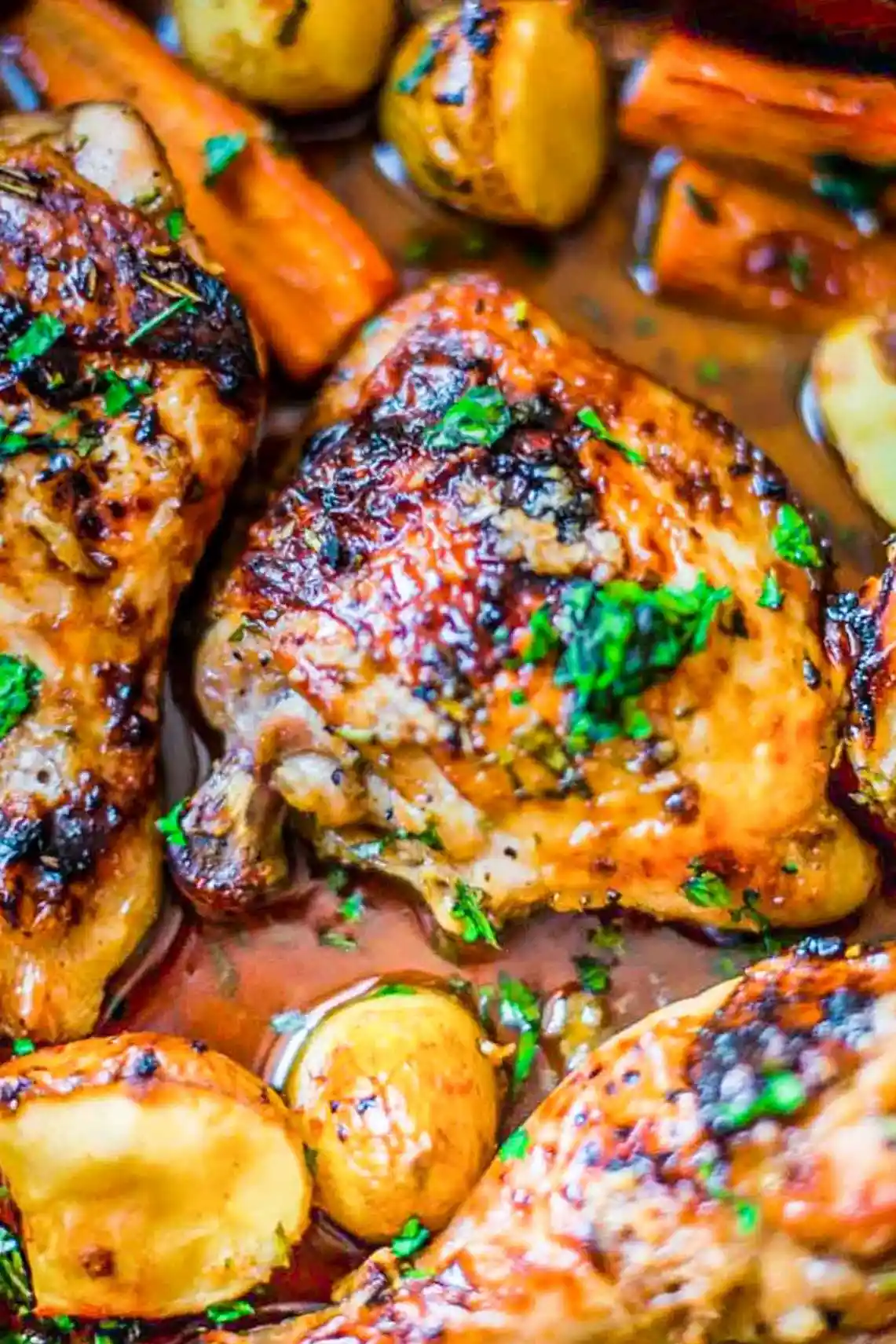
List of ingredients
- 8 chicken legs + thighs (skin-on, bone-in)
- 2 large carrots (chopped into cubes)
- 3 medium potatoes (chopped into cubes)
- 1 teaspoon salt
- 1/2 teaspoon ground black pepper
- 1 tbsp olive oil
- 1 tbsp honey
- 3 large garlic cloves (grated)
- 1 tbsp apple cider vinegar
- 1 tbsp balsamic vinegar
- 1 tbsp chopped fresh herbs + 1 teaspoon for garnish (basil, thyme, or parsley)
- 1 teaspoon paprika
step-by-step instructions
- Step: Preheat the oven to 350 F while you prep the ingredients.
- Step: Rinse and pat dry the chicken pieces.
- Step: Into a large food-safe zip-lock bag, add the chicken pieces along with the potatoes and carrots.
- Step: Add all the marinade ingredients to the bag, and seal the bag.
- Step: Give the bag a few good tosses, until the chicken and vegetables are well coated with the marinade.
- Step: Transfer all the ingredients from the bag into a sheet pan or an oven-safe tray. Spread out the ingredients so that they bake evenly.
- Step: Bake at 350 F for 20 minutes until the chicken juices run clear and the skin is browned.
- Step: Serve with a side of crusty bread or steamed rice.
Understanding Ingredient Roles
Selecting the Right Potato Varieties
When roasting potatoes on a sheet pan, starch content matters significantly. Starchy varieties like Russets tend to break down and become fluffy, which is excellent for soaking up the honey-garlic glaze. Waxy varieties like Yukon Golds or red potatoes hold their shape better during the 20-minute roast, offering a slightly creamier texture that balances the crunchy carrots.
The Impact of Fresh Garlic
Using fresh garlic cloves rather than powdered alternatives provides an aromatic intensity that defines this dish. Grating the garlic releases its essential oils into the honey and vinegar mixture, creating a more uniform flavor distribution across the chicken skin. If you find your garlic cloves are sprouting, trim the green center before grating to ensure the flavor remains sweet rather than bitter.
Balancing Acid and Sweetness
The combination of apple cider vinegar and balsamic vinegar creates a multi-layered acidic profile. The apple cider vinegar provides a sharp, bright note that keeps the dish from feeling too heavy, while the balsamic vinegar offers a rich, syrupy depth that complements the honey. These two vinegars work in tandem to create a complex sauce that deglazes the pan naturally during the roasting process.
Refining the Roasting Process
Achieving Crispy Chicken Skin
One of the primary challenges with sheet pan meals is preventing the chicken skin from steaming rather than roasting. By ensuring the chicken is bone-in and skin-on, you provide a natural barrier that protects the meat while allowing the skin to render its own fat. Always patting the chicken dry before adding it to the bag is a critical step because moisture on the surface will prevent the skin from browning effectively in the oven.
Spacing for Proper Airflow
The layout on your sheet pan directly influences the texture of the vegetables. If the carrots and potatoes are crowded or piled on top of each other, they will steam in their own released moisture, resulting in a mushy consistency. Use a large enough sheet pan to spread all ingredients into a single layer, ensuring that the hot oven air can circulate freely around every piece of chicken and vegetable.
Resting for Juicy Results
Allowing the chicken to rest for at least 5 minutes after removing it from the oven is a fundamental rule for all roasted meats. During the high-heat cooking process, the juices migrate toward the center of the meat; resting allows those juices to redistribute evenly throughout the fibers. Skipping this step often results in the juices running out onto the plate immediately upon cutting, leaving the meat dry.
Storage and Preparation
Managing Leftover Portions
If you have leftover honey garlic chicken, it is best stored in an airtight container within the refrigerator for up to three days. When storing, try to keep the chicken and vegetables in a single layer if possible, though they can be stacked once fully cooled. Reheat the portions in a conventional oven at 300 F for 10-15 minutes to help restore some of the crispiness to the skin, rather than using a microwave, which tends to soften the skin significantly.
Freezer-Friendly Meal Planning
This recipe is excellent for freezer-to-oven meal preparation. By placing the raw chicken, raw vegetables, and marinade into a heavy-duty freezer bag, you can store the meal for up to one month. When you are ready to cook, it is essential to thaw the bag completely in the refrigerator overnight before transferring it to the sheet pan, as starting with frozen items will cause uneven cooking and potential food safety concerns.
Troubleshooting Soggy Skin
If your skin is not browning as desired after 20 minutes, check the positioning of your rack in the oven. Moving the sheet pan to a higher rack position for the final 3-5 minutes can help increase the heat exposure to the skin. Alternatively, ensure your oven has reached the full 350 F preheated state before the chicken is placed inside, as a cold oven will cause the chicken to release water prematurely.
Common Queries
Can I use boneless chicken breasts instead of thighs?
Yes, boneless, skinless chicken breasts can be used, but you must adjust the timing. Chicken breasts cook much faster than bone-in legs and thighs and will likely dry out if left in for 20 minutes at high heat. If using breasts, check for doneness around the 12-15 minute mark, or consider cutting them into larger chunks so they cook at a similar rate to the potatoes.
How do I know when the chicken is fully cooked?
The safest way to determine if the chicken is ready is to use an instant-read meat thermometer inserted into the thickest part of the meat without touching the bone. The chicken should reach an internal temperature of 165 F. If you do not have a thermometer, pierce the thickest part of the thigh with a skewer or fork; the juices should run clear and the meat should no longer show any pink coloring.
What if I do not have a zip-lock bag?
If you prefer to avoid plastic bags, you can use a large glass or ceramic mixing bowl to combine the chicken, vegetables, and marinade. Cover the bowl with a silicone lid or reusable wrap and toss the contents gently. Marinating in a bowl is just as effective as using a bag, provided you give it an occasional stir to ensure every piece is evenly coated in the honey-garlic mixture before transferring to the sheet pan.
Is it possible to add more vegetables?
This recipe is highly adaptable to other root vegetables. You can successfully add chunks of sweet potato, parsnips, or even wedges of red onion to the sheet pan. Keep in mind that some vegetables, like zucchini or bell peppers, cook much faster than potatoes and carrots; if you choose to include these softer vegetables, add them to the tray during the final 10 minutes of the roasting process to prevent them from becoming overcooked.
Can I substitute the honey for another sweetener?
If you do not have honey available, pure maple syrup is an excellent alternative that provides a similar viscosity and sweetness. While the flavor profile will shift slightly toward an earthier tone, it caramelizes well under high heat. Avoid using granulated sugar as a direct replacement in the marinade, as it will not dissolve as effectively into the liquids and may burn before the chicken is fully cooked.
How can I make the dish spicier?
To introduce a heat element to the dish, you can incorporate a small amount of chili flakes or a dash of cayenne pepper into the marinade. Adding these spices at the beginning ensures the heat is distributed throughout the glaze. Because honey and garlic are classic foundations for many savory heat profiles, a small amount of heat pairs exceptionally well with the tanginess of the vinegar and the savory notes of the chicken.
Print
Sheet Pan Honey Garlic Chicken
- Total Time: 30 minutes
- Yield: 8 pieces 1x
- Diet: Non-Vegetarian
Description
This sheet pan honey garlic chicken comes together with minimal prep, letting the oven do all the hard work for you. Enjoy this delicious meal with some crusty bread or steamed rice on the side.
Ingredients
- 8 chicken legs + thighs (skin-on, bone-in)
- 2 large carrots (chopped into cubes)
- 3 medium potatoes (chopped into cubes)
- 1 teaspoon salt
- 1/2 teaspoon ground black pepper
- 1 tbsp olive oil
- 1 tbsp honey
- 3 large garlic cloves (grated)
- 1 tbsp apple cider vinegar
- 1 tbsp balsamic vinegar
- 1 tbsp chopped fresh herbs + 1 teaspoon for garnish (basil, thyme, or parsley)
- 1 teaspoon paprika
Instructions
- Step: Preheat the oven to 350 F while you prep the ingredients.
- Step: Rinse and pat dry the chicken pieces.
- Step: Into a large food-safe zip-lock bag, add the chicken pieces along with the potatoes and carrots.
- Step: Add all the marinade ingredients to the bag, and seal the bag.
- Step: Give the bag a few good tosses, until the chicken and vegetables are well coated with the marinade.
- Step: Transfer all the ingredients from the bag into a sheet pan or an oven-safe tray. Spread out the ingredients so that they bake evenly.
- Step: Bake at 350 F for 20 minutes until the chicken juices run clear and the skin is browned.
- Step: Serve with a side of crusty bread or steamed rice.
Notes
Let the chicken rest for 5-7 minutes before serving to ensure the best texture and flavor. The dish can be prepared ahead by marinating in the fridge for up to 2 days.
- Prep Time: 10 minutes
- Cook Time: 20 minutes
- Category: Main Course
- Method: Baking
- Cuisine: American
Nutrition
- Serving Size: 1 piece
- Calories: 310 kcal
- Sugar: 3 g
- Sodium: 410 mg
- Fat: 22 g
- Saturated Fat: 6 g
- Unsaturated Fat: 15 g
- Trans Fat: 0 g
- Carbohydrates: 5 g
- Fiber: 1 g
- Protein: 21 g
- Cholesterol: 120 mg