This refreshing dish combines pan-seared Creole shrimp with crisp romaine lettuce and a creamy homemade Caesar dressing. It is a nutrient-dense meal that balances savory, salty, and zesty flavors in every bite.
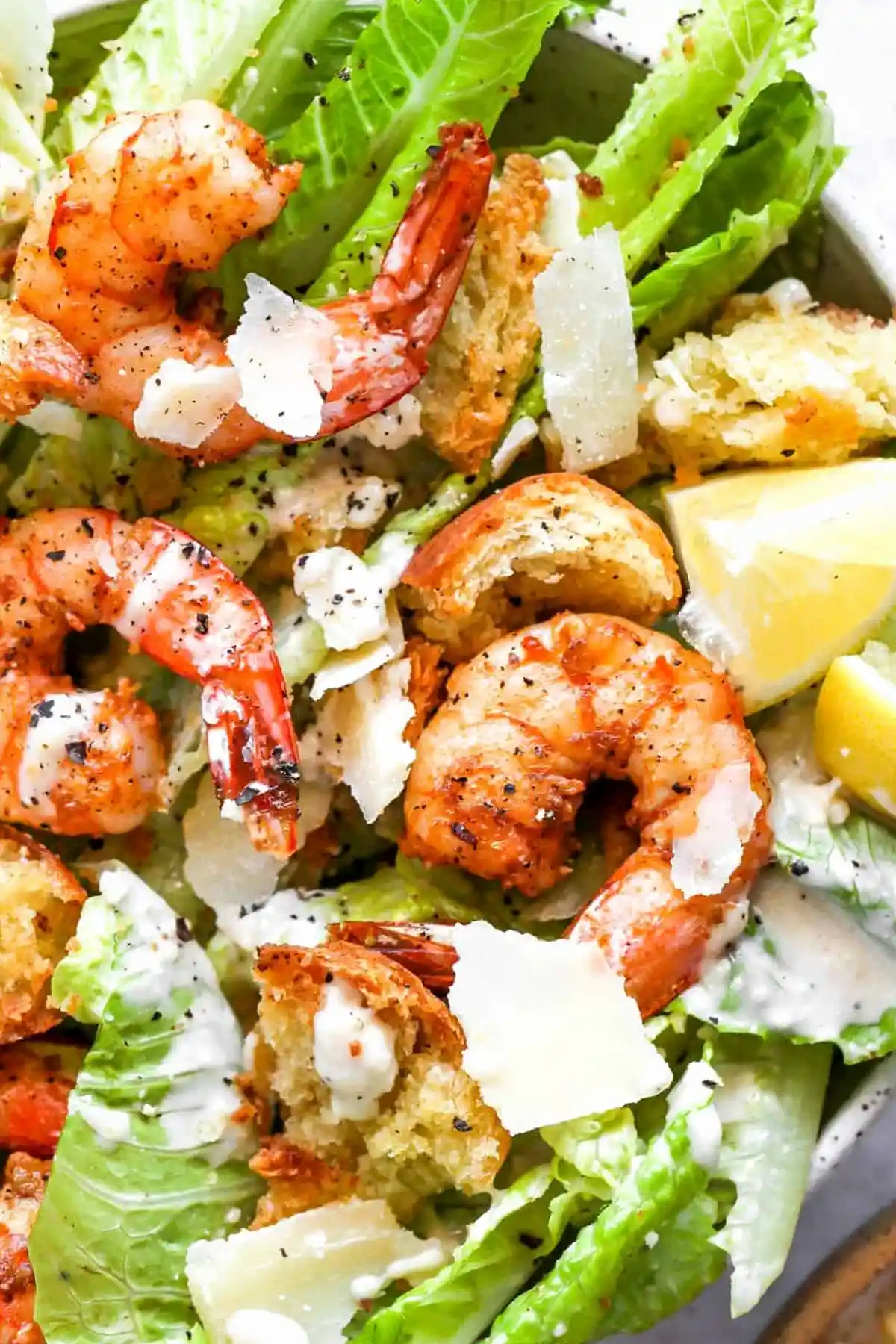
List of ingredients
- 1 lb 16/20 or U-15 shrimp – peeled and deveined for easy eating.
- 1/2 tbsp creole seasoning – for a bold, Southern flavor profile.
- 2 tbsp grapeseed oil – chosen for its high smoke point during searing.
- 3/4 cup mayonnaise – provides a creamy, stable base for the dressing.
- 3 anchovy fillets or 1 1/2 tsp anchovy paste – adds essential umami depth.
- 1 tsp dijon mustard – acts as a flavor enhancer and emulsion stabilizer.
- 1 tsp worcestershire sauce – contributes a complex, tangy saltiness.
- 2 tbsp fresh lemon juice – approximately one medium lemon for brightness.
- 2 garlic cloves – crushed to release aromatic oils.
- 1/2 cup parmesan – freshly grated or in chunks for the blender.
- Salt and pepper – added to taste for final seasoning.
- 1 romaine lettuce head – sliced vertically into 1.5 inch strips.
- 1/3 cup shaved or grated parmesan cheese – for the final garnish.
- Homemade Croutons – toasted bread cubes for added texture.
step-by-step instructions
- Sear the Shrimp: Heat a medium skillet over medium heat and add the grapeseed oil. While the pan warms, toss the shrimp in a bowl with the creole seasoning until they are fully coated. Cook the shrimp for 2-3 minutes per side until they turn pink and opaque, then remove them from the pan and set them aside.
- Prepare the Dressing: Place the mayonnaise, anchovy fillets (or paste), dijon mustard, worcestershire sauce, lemon juice, crushed garlic, and 1/2 cup of parmesan into a food processor. Pulse the mixture for 20-30 seconds until the texture is completely smooth and the ingredients are well combined.
- Coat the Greens: Arrange the sliced romaine leaves in a large serving bowl. Pour the prepared Caesar dressing over the lettuce and toss gently until every leaf is evenly coated.
- Assemble and Serve: Place the homemade croutons on top of the dressed lettuce first. Layer the cooked shrimp over the croutons, then sprinkle with the remaining shaved parmesan cheese. This specific order ensures the croutons absorb the dressing and shrimp juices without becoming soggy.
Shrimp Selection and Preparation Guide
Choosing the Right Shrimp Size
For this recipe, 16/20 or U-15 shrimp are recommended. The numbers refer to the count of shrimp per pound, meaning 16 to 20 shrimp or fewer than 15 per pound. Larger shrimp provide a more substantial bite and are less likely to overcook quickly compared to smaller varieties.
The Importance of Patting Shrimp Dry
Before applying the creole seasoning, ensure the shrimp are patted dry with paper towels. Excess moisture on the surface of the shrimp creates steam in the pan, which prevents a proper sear. Drying the shrimp allows them to brown quickly, resulting in a better texture and deeper flavor.
Identifying Perfect Doneness
Watch the shape of the shrimp closely while cooking. They are finished when they curl into a loose ‘C’ shape and the flesh becomes opaque and pink. If the shrimp curl tightly into an ‘O’ shape, they have become overcooked and may turn rubbery.
Mastering the Homemade Caesar Dressing
Using Mayonnaise for Stability
Using mayonnaise instead of raw egg yolks simplifies the process and ensures a stable emulsion. Mayonnaise provides a rich, creamy consistency that clings to the romaine leaves effectively. This method removes the risk associated with raw eggs while maintaining the classic flavor profile.
The Role of Umami Elements
Anchovies and parmesan cheese are the primary sources of umami in this dressing. These ingredients provide a savory, salty depth that balances the acidity of the lemon juice. If using fillets, the food processor will break them down into a smooth paste that blends seamlessly into the mayo.
Balancing Acidity and Pungency
The combination of fresh lemon juice and crushed garlic provides the necessary ‘zing’ to cut through the richness of the mayonnaise. Using a garlic press ensures that the garlic is finely minced, preventing large, pungent chunks from dominating the dressing’s flavor.
Guide to Professional Homemade Croutons
Selecting the Ideal Bread
Sturdy breads like sourdough, French bread, or rustic Italian loaves are best for croutons. These breads have a denser crumb that holds up well during the baking process. Day-old bread is preferable because it has lower moisture content, which allows the croutons to crisp up faster.
Baking for Even Browning
Bake your bread cubes at 375°F for 15-20 minutes. To ensure all sides are golden brown, flip the croutons every five minutes using a spatula. This prevents the bottom from burning while the tops remain pale.
Adding the Finishing Touch
For maximum flavor, sprinkle freshly grated parmesan cheese over the croutons immediately after removing them from the oven. The residual heat allows the cheese to melt slightly and adhere to the bread, adding a savory crust to each piece.
Lettuce Handling and Preparation
Ensuring Proper Drainage
Use a salad spinner to dry the romaine lettuce thoroughly after washing. Water remaining on the leaves creates a barrier that prevents the dressing from adhering. When leaves are wet, the dressing becomes diluted and slides off, leaving the salad tasting bland.
Optimizing the Slice
Slicing the romaine vertically into 1.5-inch strips creates more surface area for the dressing to coat. This method also makes the salad easier to eat and provides a consistent texture in every forkful compared to chopping the lettuce into small squares.
Maintaining Crispness
Keep the lettuce refrigerated until the moment you are ready to assemble the salad. The contrast between the cold, crisp greens and the warm, seared shrimp is a key element of the dish’s appeal. Avoid dressing the salad more than a few minutes before serving to prevent wilting.
Plating and Assembly Strategy
The Logical Layering Sequence
The order of assembly is critical for maintaining texture. By placing the croutons beneath the shrimp, the croutons act as a sponge for the dressing and the juices from the shrimp. This enhances the flavor of the bread without making it mushy.
Managing Temperature Contrast
Serve the shrimp immediately after they have rested for a minute. Adding warm shrimp to cold romaine creates a dynamic temperature contrast. This heat also slightly softens the shaved parmesan on top, releasing more of its aromatic oils.
Bowl Selection for Tossing
Use a bowl that is significantly larger than the volume of the lettuce. This provides enough room to toss the greens with the dressing without bruising the leaves or spilling the ingredients. A wide, shallow bowl is ideal for showing off the shrimp on top.
Storage and Freshness Maintenance
Storing Unmixed Components
To keep the salad fresh for the longest period, store the shrimp, lettuce, and dressing in separate airtight containers in the refrigerator. This prevents the lettuce from wilting and the croutons from losing their crunch. Assemble the components only when you are ready to serve.
Handling Pre-Mixed Salads
If the salad has already been tossed, store it in a tightly covered container. It will remain edible for about 24 hours, though the romaine will naturally lose some of its crispness. Eat pre-mixed salad as soon as possible for the best quality.
Safe Shrimp Refrigeration
Cooked shrimp should be cooled slightly before being placed in the fridge to prevent condensation. Store them in a glass container to maintain freshness. They are best consumed within three days of cooking.
Customizing the Flavor Profile
Alternative Shrimp Seasonings
While Creole seasoning is traditional for this version, you can swap it for Old Bay or a mix of smoked paprika and garlic powder. For a brighter taste, use a lemon-pepper seasoning. Always ensure the shrimp are dried well regardless of the spice used.
Modifying the Dressing Base
For a lighter version, you can replace half of the mayonnaise with plain Greek yogurt. This increases the protein content and adds a slight tang. Be mindful that this may change the emulsion, so pulse the mixture slightly longer in the food processor.
Adding Complementary Vegetables
Enhance the salad by adding halved cherry tomatoes or thinly sliced red onions for extra crunch and color. Diced avocado can also be added for a creamy contrast to the sharp Caesar dressing. These additions provide extra nutrients without overpowering the main flavors.
Troubleshooting Common Issues
Fixing a Broken Dressing
If the dressing appears separated or watery, it is likely due to an emulsion failure. To fix this, slowly whisk in a teaspoon of warm water or add another tablespoon of mayonnaise while pulsing the food processor. This helps re-bind the fats and acids.
Preventing Rubbery Shrimp
Rubbery shrimp are almost always the result of overcooking. Use a meat thermometer to ensure they reach an internal temperature of 145°F, or rely on the ‘C’ shape visual cue. Avoid cooking them on high heat for too long; medium heat provides a more controlled sear.
Adjusting Over-Salted Flavors
If the dressing tastes too salty, do not add more salt to the shrimp. Instead, add an extra squeeze of fresh lemon juice or a pinch of sugar to the dressing to balance the sodium. Increasing the amount of romaine lettuce can also dilute the overall saltiness of the dish.
Frequently Asked Questions
Should I remove the shrimp tails?
Removing the tails makes the salad easier to eat, as guests won’t have to stop to remove them. However, leaving the tails on provides a better visual presentation and can make the shrimp easier to handle if served as an appetizer.
What is the best bread for croutons?
Sourdough is highly recommended because its natural acidity complements the Caesar dressing. French bread or a rustic Italian loaf are also excellent choices because they provide the necessary structure to stay crunchy after being tossed with dressing.
Print
Savory Shrimp Caesar Salad
- Total Time: 17 minutes
- Yield: 4 servings 1x
- Diet: General
Description
This Shrimp Caesar Salad tosses fresh romaine lettuce with a homemade Caesar dressing, shaved Parmesan cheese, and pan-seared shrimp!
Ingredients
- 1 lb 16/20 or U-15 shrimp, peeled and deveined
- 1/2 tbsp creole seasoning
- 2 tbsp grapeseed oil
- 3/4 cup mayonnaise
- 3 anchovy fillets or 1 1/2 tsp anchovy paste
- 1 tsp dijon mustard
- 1 tsp worcestershire sauce
- 2 tbsp fresh lemon juice
- 2 garlic cloves, crushed
- 1/2 cup parmesan cheese, grated
- salt and pepper to taste
- 1 romaine lettuce head, sliced vertically in 1 ½ inch slices
- 1/3 cup shaved or grated parmesan cheese
- Homemade Croutons
Instructions
- Heat: Heat a medium sized skillet to medium heat and add oil. While the skillet is warming, sprinkle creole seasoning on the shrimp in a bowl and toss to fully coat.
- Cook: Cook shrimp in the skillet for 2-3 minutes on each side until pink. Remove from the skillet and set aside.
- Blend: In a food processor, add all of the ingredients for the caesar dressing and pulse for 20-30 seconds until smooth and well combined.
- Toss: Arrange the salad leaves in a serving bowl and pour the caesar dressing on top. Toss the leaves with the dressing until all leaves are coated.
- Assemble: Place the croutons on top of the salad, add the shrimp, and sprinkle with the remaining parmesan cheese.
Notes
Homemade Croutons: Cut bread into cubes, drizzle with olive oil, sprinkle with salt and pepper, and bake at 375°F for 15-20 minutes, flipping every 5 minutes. For best results, dry shrimp and romaine well before preparing. Store unmixed components separately in the fridge to maintain crispness.
- Prep Time: 15 minutes
- Cook Time: 2 minutes
- Category: Main Course, Salad
- Method: Pan-searing
- Cuisine: American, Cajun/Creole
Nutrition
- Serving Size: 1 serving
- Calories: 449 kcal
- Sugar: 1 g
- Sodium: 652 mg
- Fat: 44 g
- Saturated Fat: 9 g
- Unsaturated Fat: 34 g
- Trans Fat: 0.1 g
- Carbohydrates: 4 g
- Fiber: 1 g
- Protein: 9 g
- Cholesterol: 35 mg