This low-carb alternative to traditional fried rice combines succulent shrimp with nutrient-dense cauliflower. It is a fast, high-protein meal that delivers classic takeout flavors in under 30 minutes.
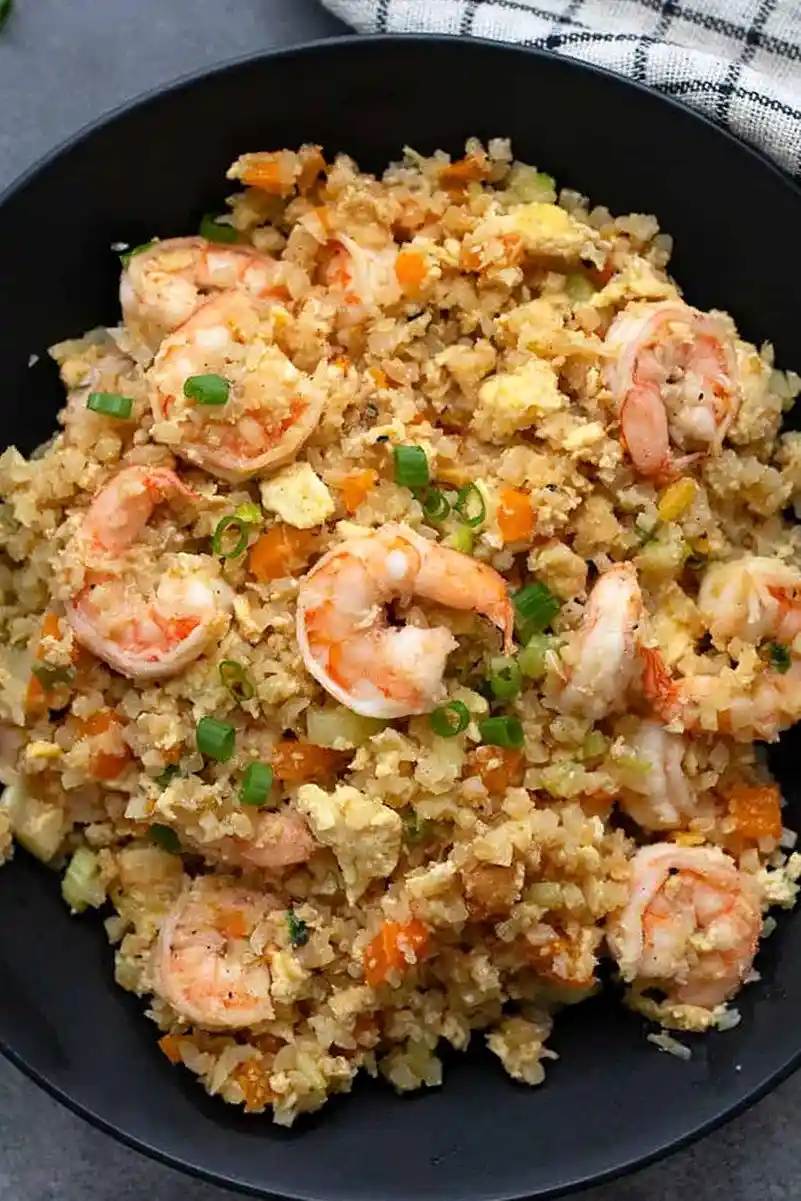
List of ingredients
- 2 tbsp sesame oil (or avocado oil) – used for sautéing for a nutty base flavor.
- 1 pound medium-size shrimp – peeled with tails removed for easy eating.
- 3/4 tsp salt – to enhance the natural flavor of the seafood.
- 1/2 tsp ground black pepper – adds a subtle, warm spice.
- 1/4 tsp red pepper flakes – provides a hint of heat.
- 1/2 medium-size orange or red bell pepper – finely chopped for color and sweetness.
- 2 scallions – thinly sliced, separating the white and green parts.
- 2 garlic cloves – minced fresh for maximum aroma.
- 1/2 tsp fresh ginger – peeled and minced to add a zingy contrast.
- 3 large eggs – lightly beaten for added protein and texture.
- 16 oz frozen cauliflower rice – thawed completely and drained.
- 2 tbsp tamari or soy sauce – provides the essential salty, umami depth.
- 1 tbsp toasted sesame oil – used as a finishing oil for a rich aroma.
step-by-step instructions
- Sear the Shrimp: Heat 1 tablespoon of sesame oil in a large skillet over medium-high heat until it shimmers. Add the shrimp in a single layer and season them with salt, black pepper, and red pepper flakes. Cook for 1 minute, flip each piece, and cook for another minute until they are bright pink, then transfer them to a bowl.
- Sauté the Aromatics: Add the remaining 1 tablespoon of sesame oil to the same skillet. Toss in the chopped bell pepper, sliced scallion whites, minced garlic, and minced ginger. Sauté these ingredients for about 2 minutes until they become fragrant and slightly softened.
- Scramble the Eggs: Push the sautéed vegetables to one side of the pan to create an open space. Pour the beaten eggs into the open area and use a spatula to scramble them quickly until they are set.
- Fry the Cauliflower: Add the thawed cauliflower rice to the pan and stir-fry everything together quickly. Cook for approximately 3 minutes, ensuring the cauliflower is well combined with the eggs and vegetables.
- Final Assembly: Return the cooked shrimp to the skillet and stir in the tamari and toasted sesame oil. Sauté for one more minute just to warm everything through, then garnish with the reserved scallion greens before serving.
Pro Tips for the Best Texture
Pat Shrimp Dry to Prevent Stewing
Always pat your shrimp dry with paper towels after thawing and before seasoning. Excess moisture creates steam in the pan, which prevents the shrimp from searing and can lead to a rubbery texture. A dry surface ensures a golden-brown exterior and a juicy interior.
Use a High-Heat Skillet for Proper Searing
A cast iron or stainless steel skillet is ideal for this recipe because it retains heat better than non-stick pans. High heat is necessary to evaporate the moisture from the cauliflower rice quickly. This prevents the dish from becoming mushy and gives it a more authentic fried rice consistency.
Thaw and Drain Cauliflower Rice Thoroughly
If using frozen cauliflower rice, thaw it completely in the refrigerator or microwave. Once thawed, press the rice between paper towels or a fine-mesh strainer to remove excess water. Removing this liquid prevents the rice from steaming in the pan, which preserves the distinct grain-like texture.
Maintain High Heat During Stir-Frying
Keep the skillet temperature medium-high throughout the process to ensure the vegetables stay crisp. If the pan cools down too much, the cauliflower will release its own water and boil rather than fry. Stir frequently and move the ingredients quickly to maintain an even sear.
Ingredient Substitutions and Adjustments
Substituting Shrimp with Chicken
If you prefer chicken, use thinly sliced chicken breast or thighs cut into bite-sized pieces. Sauté the chicken in the first step for 7 to 10 minutes instead of 2 minutes. Ensure the chicken is fully cooked through before removing it from the pan to make room for the vegetables.
Using Tofu for a Vegetarian Option
Extra-firm tofu is an excellent plant-based substitute for shrimp. Press the tofu for 20 minutes to remove excess water, cube it, and sauté until the edges are golden brown. Use the same seasoning of salt, pepper, and red pepper flakes to maintain the flavor profile.
Coconut Aminos for a Soy-Free Alternative
For those avoiding soy, coconut aminos are a great replacement for tamari or soy sauce. Coconut aminos are slightly sweeter and lower in sodium, so you may need to add an extra pinch of salt. They provide a similar umami depth while being completely soy-free.
Swapping Sesame Oil for Avocado Oil
If you do not have sesame oil for the initial sauté, avocado oil is a superior choice due to its high smoke point. It is a neutral oil that allows the flavors of the garlic and ginger to shine. However, keep the toasted sesame oil at the end for that signature aromatic finish.
Fresh Cauliflower Rice vs Frozen
You can make fresh cauliflower rice by pulsing raw cauliflower florets in a food processor until they reach a grain-like consistency. Fresh cauliflower often has a slightly firmer bite than the frozen version. If using fresh, you may need to sauté it for an extra minute to soften it slightly.
Customizing Your Fried Rice
Adding Frozen Peas and Carrots
For a more traditional look and added nutrition, stir in a handful of frozen peas and diced carrots. Add them during the vegetable sauté step so they have time to heat through and soften. These additions provide a pop of color and a subtle sweetness to the dish.
Incorporating Water Chestnuts for Crunch
Canned water chestnuts provide a satisfying crunch that contrasts well with the soft cauliflower. Slice them thinly and add them at the same time as the bell peppers. This adds a professional, restaurant-style texture to every bite.
Boosting the Heat with Spicy Sauces
If the red pepper flakes are not enough, stir in a tablespoon of Sriracha or chili garlic sauce at the final assembly stage. These sauces add a complex, vinegary heat that complements the savory tamari. Adjust the amount based on your personal heat tolerance.
Using Different Bell Pepper Colors
While red or orange peppers are recommended for sweetness, green bell peppers add a more savory, earthy tone. You can also use a mix of all three colors for a vibrant, multi-colored presentation. Finely chopping them ensures they distribute evenly throughout the rice.
Serving and Pairing Suggestions
Pairing with Steamed Bok Choy
Serving this dish alongside steamed or sautéed bok choy adds a refreshing, crisp element to the meal. Briefly steam the bok choy with a drizzle of sesame oil and a splash of soy sauce. This pairing balances the richness of the fried rice with a light, leafy green.
Garnish Options for Better Presentation
Beyond scallions, you can garnish the dish with toasted sesame seeds for added texture. A few leaves of fresh cilantro or a squeeze of fresh lime juice can also brighten the flavors. The lime juice specifically cuts through the richness of the oil and eggs.
Serving as a Side Dish
While this is a hearty main course, it can easily serve as a side for grilled salmon or tofu steaks. When serving as a side, reduce the amount of shrimp and increase the cauliflower rice. This keeps the dish light while still providing a flavorful accompaniment.
Storage and Reheating Guide
Proper Refrigeration Methods
Store any leftover fried rice in an airtight glass or plastic container in the refrigerator. It will remain fresh and safe to eat for up to 5 days. Ensure the dish is cooled slightly before sealing the lid to prevent excess condensation from forming inside.
Best Ways to Reheat Without Overcooking
The best way to reheat this dish is in a skillet over medium heat with a teaspoon of oil. This helps restore the slightly fried texture of the cauliflower and prevents the shrimp from becoming rubbery. If using a microwave, heat in short bursts and stir in between to ensure even warming.
Freezing Guidelines for Meal Prep
While the dish can be frozen, cauliflower rice may lose some of its structure upon thawing. To freeze, use freezer-safe containers and remove as much air as possible. Thaw overnight in the refrigerator before reheating on the stovetop for the best possible results.
Common Troubleshooting Issues
Why is My Cauliflower Rice Soggy?
Sogginess usually happens when there is too much moisture in the pan or the heat is too low. Ensure the cauliflower rice is thoroughly thawed and squeezed dry before cooking. Avoid overcrowding the pan, as this drops the temperature and causes the vegetables to steam instead of fry.
How to Prevent the Eggs from Overcooking
Eggs cook very quickly and can become dry if left too long. Scramble them quickly in the open part of the pan and immediately incorporate the cauliflower rice. The moisture from the rice will stop the eggs from overcooking and help them integrate into the dish.
Dealing with Shrimp That Releases Water
If your shrimp release a lot of liquid, it is often because they were frozen and not fully dried. If this happens, increase the heat to high to evaporate the liquid as quickly as possible. In the future, ensure you pat each shrimp piece dry with a paper towel before they hit the oil.
Frequently Asked Questions
Is this recipe keto-friendly?
Yes, this recipe is very low in carbohydrates because it replaces traditional white rice with cauliflower. It focuses on lean proteins and healthy fats, making it suitable for ketogenic and low-carb dietary patterns.
Can I use a different type of rice?
You can use brown rice or white jasmine rice, but the cooking method will change. Pre-cooked, chilled rice is necessary for traditional fried rice to prevent it from becoming mushy. If using real rice, you will need to increase the cooking time for the grain stage.
How long does this dish stay fresh?
When stored in an airtight container in the refrigerator, the shrimp fried cauliflower rice lasts up to 5 days. The flavors often meld together overnight, making the leftovers taste even better the next day.
Can I make this in a wok?
Absolutely, a wok is the ideal tool for this recipe due to its shape and ability to distribute high heat. The sloping sides make it easy to push ingredients to the side while scrambling the eggs. Use the same sequence of steps for the best results.
Print
Savory Shrimp and Cauliflower Fried Rice
- Total Time: 24 minutes
- Yield: 4 servings 1x
- Diet: Keto, Gluten-Free
Description
Shrimp Fried Cauliflower Rice is a light and healthy twist on the classic takeout favorite. Juicy shrimp, tender-crisp vegetables, and perfectly seasoned cauliflower rice come together in under 30 minutes. With all the savory goodness of the original and a fraction of the carbs!
Ingredients
- 2 tbsp sesame oil (or avocado oil)
- 1 pound medium-size shrimp (peeled with tails removed)
- 3/4 tsp salt
- 1/2 tsp ground black pepper
- 1/4 tsp red pepper flakes
- 1/2 medium-size orange or red bell pepper (finely chopped)
- 2 scallions (white and green parts, thinly sliced)
- 2 garlic cloves (minced)
- 1/2 tsp fresh ginger (peeled and minced)
- 3 large eggs
- 16 oz frozen cauliflower rice (thawed)
- 2 tbsp tamari or soy sauce
- 1 tbsp toasted sesame oil
Instructions
- Step: In a large skillet over medium-high heat, heat 1 tablespoon (15 ml) of the sesame oil until it shimmers.
- Step: Add the shrimp in a single layer and season with the salt, black pepper, and red pepper flakes. Cook for 1 minute, flip, and cook for another minute until the shrimp are bright pink. Transfer to a bowl.
- Step: Add the remaining 1 tablespoon (15 ml) sesame oil to the pan along with the bell pepper, scallions, garlic, and ginger and sauté for 2 minutes.
- Step: Push the veggies to one side of the pan and add the eggs to the open part of the skillet. Use a spatula to scramble the eggs quickly.
- Step: Add the cauliflower rice to the pan and stir-fry quickly to combine. Cook for 3 minutes, then return the shrimp to the skillet and add the tamari and toasted sesame oil. Sauté for another minute to warm through. Garnish with the reserved scallion greens.
Notes
Store any leftovers in an airtight container in the refrigerator for up to 5 days.
- Prep Time: 12 minutes
- Cook Time: 12 minutes
- Category: Main Course
- Method: Stir-fry
- Cuisine: Asian
Nutrition
- Serving Size: 1 serving
- Calories: 252 kcal
- Sugar: 4 g
- Sodium: 850 mg
- Fat: 14.1 g
- Saturated Fat: 2.9 g
- Unsaturated Fat: 11.2 g
- Trans Fat: 0 g
- Carbohydrates: 8 g
- Fiber: 3.2 g
- Protein: 30.8 g
- Cholesterol: 210 mg