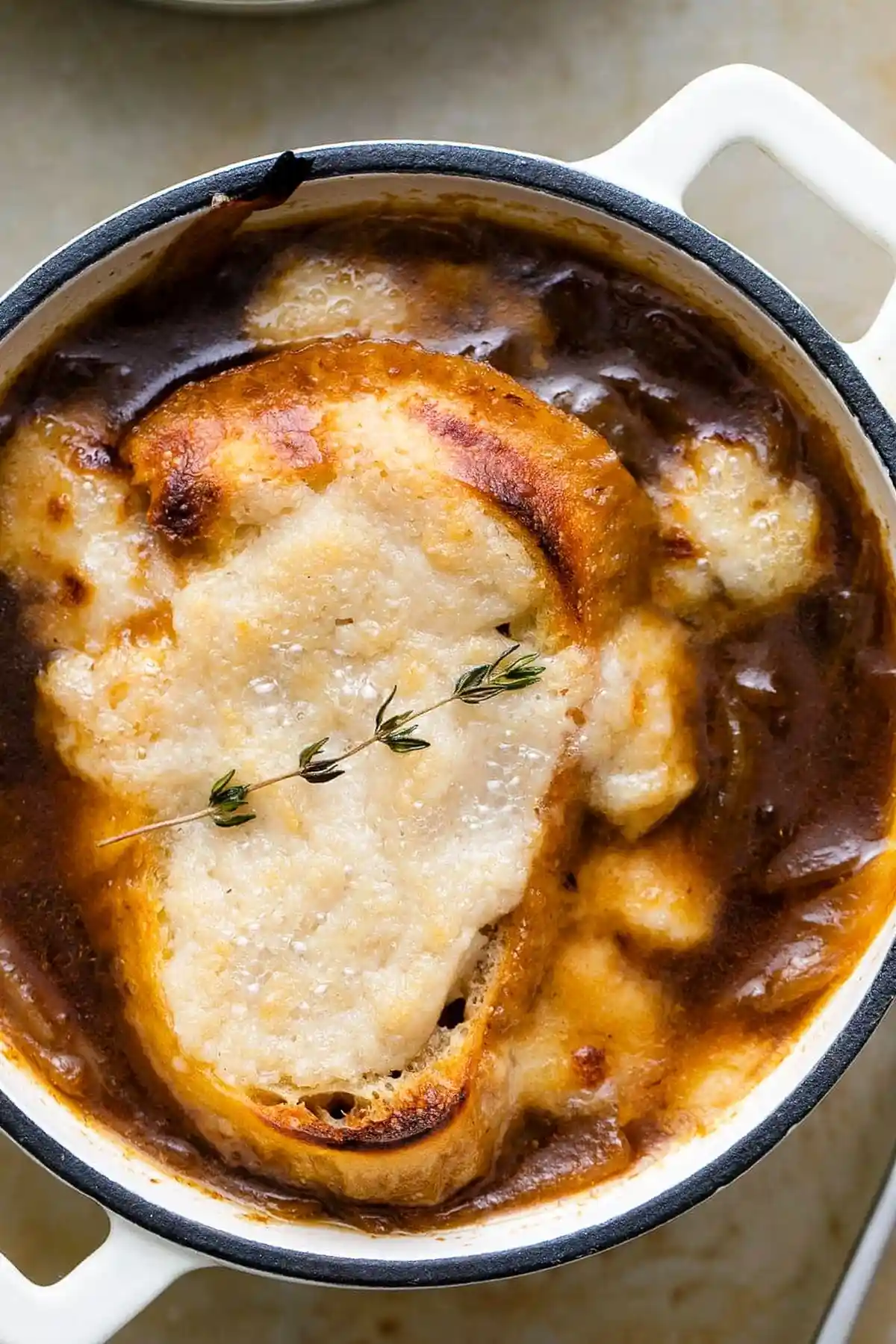
This plant-based onion soup offers a deep, savory profile achieved by slow-cooking onions until they reach a state of sweet, golden perfection. It is a comforting dish that brings professional, bistro-style quality to your home kitchen with ease. Perfect for a cozy meal, this soup highlights the natural umami found in well-browned vegetables.
List of ingredients
- 1/4 cup vegan butter or olive oil
- 4 white onions (about 2 lbs)
- 3 – 4 sprigs of fresh thyme (or 1 1/2 teaspoons dried)
- 2 bay leaves
- 1/2 teaspoon salt
- 1 tablespoon flour
- 3/4 cup non-alcoholic grape juice or extra vegetable broth
- 6 cups low-sodium vegetable broth
- 1/2 teaspoon fresh cracked black or white pepper
- 1 baguette, sliced
- vegan cheese for topping
step-by-step instructions
- Prep: Cut the onions lengthwise, lay cut sides on a flat surface and trim the ends. Peel away the outer skin, and slice lengthwise into thin strips to get about 2 lbs of sliced onions.
- Caramelize: In a 4 qt. pan, heat vegan butter or oil over medium heat, add the onions, thyme, bay leaves, and salt. Cook, stirring frequently, for 45 to 60 minutes until onions are soft and golden brown.
- Thicken: Sprinkle in the flour, stirring well to incorporate until no white streaks remain, and cook for 1 minute.
- Simmer: Pour in the non-alcoholic liquid, cook for 10 minutes to reduce, then add the vegetable broth and pepper. Bring to a boil, then reduce heat and simmer uncovered for 30 minutes.
- Assemble: Ladle soup into individual oven-safe bowls. Top with 1 or 2 slices of baguette and a layer of vegan cheese.
- Bake: Place in a preheated 350°F oven for 20 minutes, or broil 5-6 inches from the heat for 5-7 minutes until the cheese is melted and golden.
Professional Caramelization Techniques
The Importance of Consistent Stirring
To achieve the perfect texture, stirring your onions every few minutes is essential. This prevents uneven burning and ensures that every piece of onion develops that rich, dark brown color without drying out. If you notice any sticking, a small splash of water can help lift the brown bits from the bottom of the pot.
Why Low and Slow Wins
Rushing the process by using excessively high heat can result in scorched onions that taste bitter rather than sweet. By keeping the heat at a steady, manageable medium, you allow the natural sugars in the onion to break down slowly. This patient process is the secret to the deep, complex flavor that defines a high-quality bowl of this soup.
Selecting the Best Bread for Topping
Choosing Sturdy Bread Varieties
Select a baguette that has a relatively tight crumb structure rather than one that is overly airy. A denser loaf will hold its shape better when submerged in the hot liquid, preventing the bread from turning into mush before you have a chance to eat it. A crusty French-style baguette provides the best structural integrity for this application.
Toasting Before Assembly
If you prefer an extra crunch, toast your bread slices in the oven until they are firm and golden before adding them to the bowls. This pre-toasting ensures that even the center of the bread remains somewhat firm. It is a small step that yields a superior contrast between the soft, soaked bottom and the crispy top of the bread slice.
Optimizing the Broth Base
The Role of Fresh Herbs
Using fresh thyme sprigs rather than dried can significantly enhance the aroma of your broth. When adding the herbs, tie them together with a bit of kitchen twine for easy removal after the simmering process is complete. This keeps the soup clear of stray stems while maintaining all the herbal essence.
Adjusting Sodium Levels
Because the liquid reduces during the cooking process, it is wise to start with a low-sodium vegetable stock. This gives you full control over the final saltiness of the dish, allowing you to season exactly to your preference at the very end. Testing the seasoning only after the final simmer prevents an overly salty end result.
Storage and Reheating Strategy
Maximizing Refrigerator Life
The flavors in this soup develop even further after a day or two in the refrigerator, making it an excellent candidate for advance preparation. Store the liquid base in an airtight container for up to six days. Ensure the soup has cooled to room temperature before securing the lid to prevent condensation from affecting the broth quality.
Freezing for Long-term Convenience
You can freeze the base of this soup for up to three months. To maintain the best texture, always store the broth without the bread or cheese toppings. When you are ready to serve, thaw the soup slowly in the refrigerator overnight before warming it on the stovetop over low heat, which helps keep the consistency uniform.
Solving Common Cooking Challenges
Addressing Watery Broth
If your soup feels too thin after the initial simmer, you can increase the reduction time or add a small amount of extra flour mixed with a tablespoon of cool water. Whisk this mixture into the simmering soup to thicken it slightly. Always add thickeners gradually to avoid a gummy texture.
Restoring Texture After Reheating
Reheating can sometimes cause the soup to lose its vibrant flavor, so stirring in a dash of fresh black pepper or a fresh sprig of thyme right before serving can brighten the bowl. Always treat the baguette and cheese as a fresh addition, even if the soup base was made previously, to keep the top layer crisp and hot.
FAQ: How can I tell when the onions are truly ready?
The onions are ready when they have transformed from pale white to a deep, uniform golden brown color. They should be very soft, almost jam-like in consistency, and possess a sweet, concentrated aroma that fills the kitchen.
FAQ: Is there a specific onion type that works best?
Yellow and white onions are generally the best choices for this recipe due to their high sugar content and structural strength. While red onions can be used, they may produce a slightly different color and a more pungent flavor profile.
FAQ: Can I skip the flour if I have dietary restrictions?
Yes, you can omit the flour if you prefer a lighter, clearer broth. The soup will still be delicious, though it will have a thinner consistency. Alternatively, using a small amount of arrowroot powder is an effective way to thicken the soup while remaining gluten-free.
FAQ: How do I ensure the cheese melts evenly?
For the best results, use a high-quality vegan cheese that is formulated to melt at moderate temperatures. If you struggle with melting, finely shredding the cheese rather than using large chunks or thick slices will help it distribute evenly across the surface of the bread and the broth.
Print
Savory Plant-Based Onion Soup
- Total Time: 1 hour 30 minutes
- Yield: 4 servings 1x
- Diet: Vegan
Description
Warm and cozy, this Vegan French Onion Soup features perfectly caramelized onions and a savory broth, served with a warm, crusty baguette and melted vegan cheese. It is a comforting, plant-based classic perfect for any meal.
Ingredients
- 1/4 cup vegan butter or olive oil
- 4 white onions (about 2 lbs)
- 3 – 4 sprigs of fresh thyme (or 1 1/2 teaspoons dried)
- 2 bay leaves
- 1/2 teaspoon salt
- 1 tablespoon flour
- 3/4 cup non-alcoholic grape juice or extra vegetable broth
- 6 cups low-sodium vegetable broth
- 1/2 teaspoon fresh cracked black or white pepper
- 1 baguette, sliced
- vegan cheese for topping
Instructions
- Prep: Cut the onions lengthwise, lay cut sides on a flat surface and trim the ends. Peel away the outer skin, and slice lengthwise into thin strips to get about 2 lbs of sliced onions.
- Caramelize: In a 4 qt. pan, heat vegan butter or oil over medium heat, add the onions, thyme, bay leaves, and salt. Cook, stirring frequently, for 45 to 60 minutes until onions are soft and golden brown.
- Thicken: Sprinkle in the flour, stirring well to incorporate until no white streaks remain, and cook for 1 minute.
- Simmer: Pour in the non-alcoholic liquid, cook for 10 minutes to reduce, then add the vegetable broth and pepper. Bring to a boil, then reduce heat and simmer uncovered for 30 minutes.
- Assemble: Ladle soup into individual oven-safe bowls. Top with 1 or 2 slices of baguette and a layer of vegan cheese.
- Bake: Place in a preheated 350°F oven for 20 minutes, or broil 5-6 inches from the heat for 5-7 minutes until the cheese is melted and golden.
Notes
Add 1–2 teaspoons of vegan Worcestershire sauce for depth. Use cashew-based cheese for a creamy, plant-based finish. Store leftovers in the refrigerator for up to 6 days or freeze for up to 3 months.
- Prep Time: 15 minutes
- Cook Time: 1 hour 15 minutes
- Category: Entree
- Method: Stovetop and Oven
- Cuisine: French
Nutrition
- Serving Size: 1 bowl
- Calories: 320 kcal
- Sugar: 9 g
- Sodium: 850 mg
- Fat: 12 g
- Saturated Fat: 3 g
- Unsaturated Fat: 7 g
- Trans Fat: 0 g
- Carbohydrates: 42 g
- Fiber: 5 g
- Protein: 8 g
- Cholesterol: 0 mg