This quick, one-pot meal delivers the classic flavors of a traditional egg roll in a warming, savory broth. It is a low-carb and nutrient-dense option that comes together in just 30 minutes.
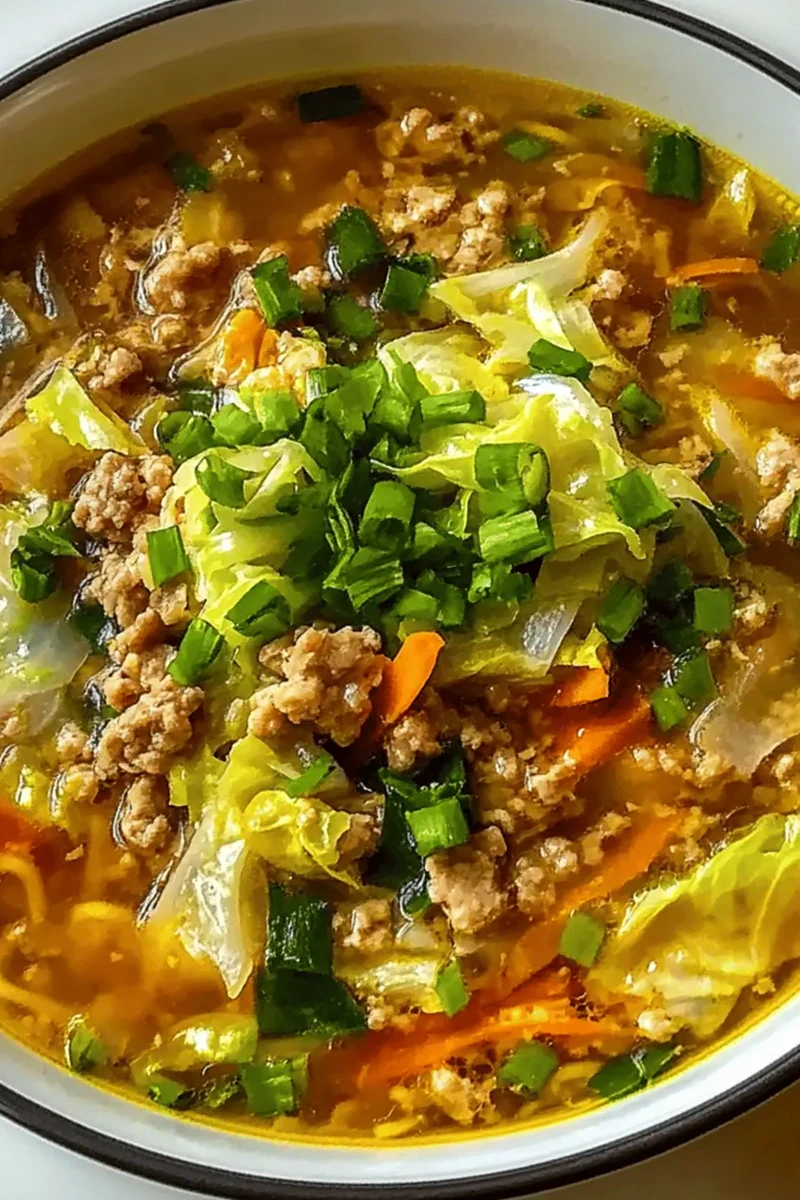
List of ingredients
- 1 pound ground chicken or turkey – a lean protein alternative to pork.
- 4 cloves garlic, minced – essential for a pungent, aromatic base.
- 2 tablespoons fresh ginger, grated – adds warmth, brightness, and zest.
- 1 tablespoon soy sauce – provides deep umami richness; use tamari for gluten-free.
- 1 tablespoon sesame oil – imparts a characteristic toasted, nutty aroma.
- 1 medium yellow onion, diced – adds a subtle, natural sweetness.
- 6 cups low-sodium chicken broth – the savory liquid base; use vegetable broth for a meatless version.
- 1 cup shredded carrots – adds vibrant color and mild sweetness.
- 4 cups green cabbage, thinly sliced – the primary vegetable for authentic texture.
- 1/2 cup green onions, chopped – provides a fresh, sharp contrast; divide for cooking and garnish.
- 1 tablespoon rice vinegar – balances the richness with a touch of acidity.
- Salt and pepper – used to season the broth to your taste.
- 2 beaten eggs (optional) – creates silky protein ribbons for added richness.
- Red pepper flakes or sriracha (optional) – allows for customizable heat levels.
step-by-step instructions
- Brown the Protein: Heat a large pot over medium-high heat and add the ground chicken or turkey. Cook for 5-7 minutes, stirring frequently until the meat is fully browned and no longer pink, then drain any excess fat.
- Sauté the Aromatics: Add the diced yellow onion, minced garlic, and grated ginger to the pot with the meat. Sauté for 3-4 minutes until the onions become translucent and the aromatics are fragrant.
- Build the Broth Base: Stir in the soy sauce, sesame oil, and rice vinegar, ensuring they combine well with the meat mixture. Pour in the chicken broth and increase the heat to bring the liquid to a gentle boil.
- Simmer the Vegetables: Add the shredded carrots and thinly sliced green cabbage to the bubbling broth. Reduce the heat to low and simmer for about 15 minutes until the cabbage is tender, then stir in half of the chopped green onions.
- Create the Egg Swirl: If using eggs, slowly drizzle the beaten eggs into the simmering soup while stirring gently in a circular motion. Allow the eggs to cook for about one minute to form delicate, silky ribbons throughout the pot.
- Final Seasoning and Serving: Taste the soup and adjust the salt and pepper as needed. Ladle the soup into bowls and garnish with the remaining chopped green onions and a dash of red pepper flakes or sriracha if desired.
Customizing Your Soup
Using Different Ground Meats
While ground chicken or turkey provides a lean base, you can also use ground beef for a richer flavor. Plant-based crumbles are an excellent alternative for those seeking a vegetarian version. Ensure all proteins are browned thoroughly to develop a deep, savory crust.
Expanding the Vegetable Mix
To add more nutrition, consider stirring in fresh baby spinach or bok choy during the last few minutes of cooking. Sliced snap peas or water chestnuts can add a satisfying crunch. These additions maintain the Asian-inspired profile while increasing the vitamin content.
Adjusting the Heat Level
For a mild soup, omit the red pepper flakes and sriracha entirely. If you prefer a significant kick, stir in a tablespoon of chili garlic sauce or diced fresh jalapeños during the sauté step. Always start with a small amount and taste as you go.
Gluten-Free Modifications
Traditional soy sauce contains wheat, making it unsuitable for gluten-free diets. Replace it with tamari or coconut aminos to achieve the same umami depth without the gluten. Both alternatives blend seamlessly into the broth without altering the flavor profile.
Adding a Creamy Element
For a slightly thicker and more luscious mouthfeel, stir in a tablespoon of full-fat coconut milk at the very end. This adds a subtle creaminess that balances the acidity of the rice vinegar. Be sure to stir gently to avoid breaking the egg ribbons.
Substituting the Vinegar
If you do not have rice vinegar, apple cider vinegar is a practical substitute. It provides a similar tartness that cuts through the richness of the sesame oil. Use the same quantity to maintain the intended balance of flavors.
Pro Cooking Techniques
Preparing the Cabbage for Texture
To mimic the texture of an egg roll, slice the cabbage as thinly as possible. Using a mandoline slicer or a sharp chef’s knife ensures consistent pieces. This allows the cabbage to soften evenly without becoming mushy.
Grating Fresh Ginger Efficiently
Use a microplane or a fine grater to process the fresh ginger root. This creates a paste-like consistency that distributes evenly throughout the broth. Avoid using pre-ground ginger powder if possible, as the fresh root offers a much brighter flavor.
Achieving Silky Egg Ribbons
The key to perfect ribbons is the motion of the stir. Drizzle the beaten eggs in a thin stream while moving the spoon in a slow, consistent circular motion. Do not over-stir, or the eggs will break into tiny pieces rather than long ribbons.
Managing Salt and Sodium
Since soy sauce and chicken broth both contain salt, use low-sodium versions of these ingredients. Taste the soup only after the vegetables have simmered, as the flavors concentrate. Add salt and pepper at the very end to avoid over-seasoning.
Sautéing for Maximum Flavor
Allow the meat to brown undisturbed for a few minutes before stirring to create a sear. This Maillard reaction adds a layer of complexity to the broth. Sautéing the aromatics until translucent ensures the raw edge of the garlic and onion is gone.
Controlling the Simmer
Keep the soup at a gentle simmer rather than a rolling boil once the vegetables are added. High heat can cause the cabbage to break down too quickly and lose its color. A low simmer preserves the vibrant greens and oranges of the produce.
Serving and Pairing Suggestions
Adding a Crispy Element
Serve the soup with a side of fried wonton strips or crispy rice noodles. These provide a textural contrast to the soft vegetables and silky eggs. You can also place a few crispy strips directly on top of each bowl.
Low-Carb Side Accompaniments
Cauliflower rice is an excellent pairing that absorbs the flavorful broth. For something fresher, serve a side of steamed bok choy seasoned with a drop of sesame oil. Both options keep the meal low-carb and healthy.
Refreshing Side Salads
A chilled cucumber salad with a light rice vinegar and sesame dressing balances the warmth of the soup. The coolness of the cucumber cleanses the palate between spoonfuls. Garnish the salad with toasted sesame seeds for extra crunch.
Choosing the Right Beverage
A hot cup of green tea complements the ginger and garlic notes in the soup. For a cold option, sparkling water with a slice of lime provides a refreshing acidity. Avoid heavy drinks that might mask the delicate flavors of the broth.
Balanced Dessert Pairings
Finish the meal with something light and fruity, such as sliced mango or a small bowl of pineapple. The natural sweetness of tropical fruits contrasts well with the savory umami of the soup. A small portion of coconut pudding is another thematic choice.
Presentation Tips
Use deep bowls to keep the soup hot and prevent splashing. Garnish with a generous pinch of sesame seeds and fresh green onion curls for a professional look. A drizzle of sriracha on top adds a pop of color and an inviting aroma.
Storage and Preservation
Refrigeration Guidelines
Store leftover soup in an airtight glass container in the refrigerator for up to four days. To maintain the best quality, cool the soup slightly before sealing the lid. Ensure the container is completely filled to minimize air exposure.
Freezing Instructions
If you plan to freeze the soup, omit the beaten eggs entirely. Freeze the base in freezer-safe bags or containers for up to three months. Label the containers with the date to ensure you use them while the flavor is peak.
Optimal Reheating Methods
Reheat the soup slowly on the stove over medium heat to avoid scorching. If the broth has thickened during storage, add a splash of water or chicken broth to loosen it. Stir occasionally to distribute the heat evenly.
Maintaining Ingredient Texture
Cabbage can lose its structure when frozen and thawed. To combat this, reheat the soup just until it reaches a simmer rather than boiling it again. If adding eggs to a frozen base, do so during the final stage of reheating.
Handling Egg-Based Leftovers
Eggs can become rubbery when reheated in a microwave. For the best results, use the stovetop method and heat gently. If the eggs have clumped, a quick stir can help redistribute them into the broth.
Meal Prep Strategies
Advance Vegetable Preparation
You can shred the carrots and slice the cabbage up to 24 hours in advance. Store them in separate airtight containers or a single large bag with a damp paper towel. This reduces the active cooking time to under 20 minutes.
Pre-Cooking the Protein
Brown the ground chicken or turkey and store it in the fridge. When you are ready to eat, simply add the pre-cooked meat to the pot with the aromatics. This is ideal for those with very limited time on weeknights.
Batch Cooking for the Week
Double or triple the recipe to create multiple portions for lunch prep. Divide the soup into individual portions in microwave-safe containers. Keep the garnishes, like green onions and sesame seeds, in a separate small container.
Organizing Your Mise en Place
Prepare all minced garlic, grated ginger, and diced onions before turning on the heat. Having everything measured and ready prevents the garlic from burning while you chop other vegetables. This organized approach ensures a smooth cooking process.
Troubleshooting and FAQs
What should I do if my soup is too salty?
If the broth is overly salty, stir in an additional cup of unsalted chicken or vegetable broth. You can also add a small amount of water or a squeeze of fresh lime juice to balance the sodium. Simmer for a few more minutes to meld the flavors.
How can I prevent the cabbage from becoming mushy?
Ensure you do not simmer the cabbage for longer than 15 minutes. Adding the cabbage to boiling broth and then immediately reducing the heat helps lock in the texture. Avoid over-stirring the pot once the vegetables are added.
Can I use frozen vegetables instead of fresh?
Yes, frozen shredded carrots and cabbage can be used in a pinch. Add them directly to the boiling broth, but reduce the simmering time by a few minutes. Be aware that frozen vegetables may release more water, potentially thinning the broth.
What are the best substitutes for rice vinegar?
Apple cider vinegar is the closest substitute due to its balanced acidity. White distilled vinegar can be used, but use slightly less as it is more pungent. Lemon or lime juice can also provide the necessary brightness.
How do I choose the best cabbage for this recipe?
Look for a head of green cabbage that feels heavy for its size and has tight, crisp leaves. Avoid cabbage with brown spots or wilting edges. Napa cabbage can be used for a softer, more delicate texture.
Can this soup be made in a slow cooker?
While designed for one pot, you can brown the meat and aromatics first, then transfer everything to a slow cooker. Cook on low for 4-6 hours or high for 2-3 hours. Add the eggs and green onions manually just before serving.
How do I store the ginger root to keep it fresh?
Store fresh ginger in a sealed plastic bag in the refrigerator or freeze it whole. Freezing ginger actually makes it easier to grate while frozen. Simply peel the skin off with a spoon before grating.
Print
Savory One-Pot Egg Roll Soup with Ginger and Green Onions
- Total Time: 30 minutes
- Yield: 6 servings 1x
- Diet: Low-Carb
Description
A comforting One-Pot Egg Roll Soup with Green Onions and Ginger, perfect for chilly evenings.
Ingredients
- 1 pound ground turkey
- 4 cloves garlic, minced
- 2 tablespoons fresh ginger, grated
- 1 tablespoon soy sauce
- 1 tablespoon sesame oil
- 1 medium yellow onion, diced
- 6 cups low sodium chicken broth
- 1 cup shredded carrots
- 4 cups green cabbage, thinly sliced
- 1/2 cup green onions, chopped
- 1 tablespoon rice vinegar
- salt and pepper, to taste
- 2 beaten eggs (optional)
- red pepper flakes or sriracha (optional)
Instructions
- Step 1: In a large pot, heat over medium-high heat and add the ground turkey. Cook for about 5–7 minutes, stirring frequently until the meat is browned and no longer pink. Drain any excess fat.
- Step 2: Add the diced yellow onion, minced garlic, and grated ginger to the pot with the browned turkey. Sauté for 3–4 minutes until the onions are translucent and aromatic.
- Step 3: Stir in the soy sauce, sesame oil, and rice vinegar, combining well with the turkey and aromatics. Pour in the chicken broth and bring the mixture to a gentle boil.
- Step 4: Once the broth is bubbling, add the shredded carrots and thinly sliced green cabbage. Reduce heat and let the soup simmer for about 15 minutes.
- Step 5: If you’re adding eggs, slowly drizzle in the beaten eggs while gently stirring the soup in a circular motion.
- Step 6: Taste the soup and adjust seasoning with salt and pepper. Serve topped with remaining chopped green onions.
Notes
For the best texture, store leftovers without the egg swirl. Thaw overnight before reheating.
- Prep Time: 10 minutes
- Cook Time: 20 minutes
- Category: Dinner
- Method: Simmering
- Cuisine: Asian
Nutrition
- Serving Size: 1 bowl
- Calories: 250 kcal
- Sugar: 5 g
- Sodium: 800 mg
- Fat: 12 g
- Saturated Fat: 3 g
- Unsaturated Fat: 9 g
- Trans Fat: 0 g
- Carbohydrates: 15 g
- Fiber: 3 g
- Protein: 20 g
- Cholesterol: 70 mg