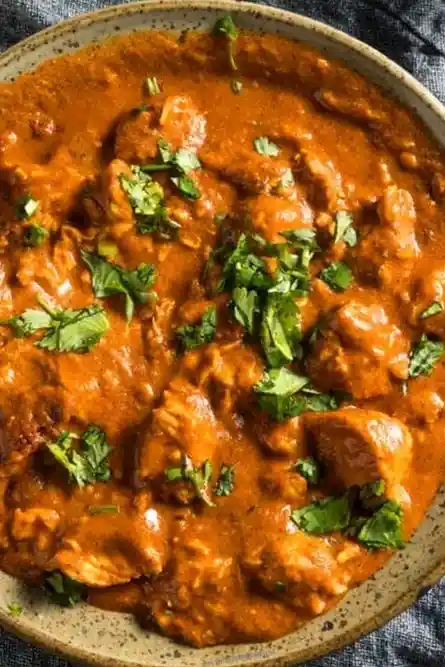
Enjoy the rich, aromatic flavors of traditional butter chicken without the heavy cream and excessive fats typically found in restaurant versions. This streamlined recipe focuses on high protein and efficient seasoning, providing a satisfying main course that fits perfectly into a balanced dietary routine. By using a touch of butter at the very end and thickening the sauce with Greek yogurt, you achieve a luxurious texture while keeping each portion exceptionally light.
List of ingredients
- 1 boneless skinless chicken breast, cubed
- Olive oil spray
- 2/3 cup 0% Greek yogurt, divided
- 2 cloves garlic, minced, divided
- 1 teaspoon garam masala, divided
- 1/4 teaspoon ginger, minced
- 1/4 teaspoon ground turmeric
- 1/2 teaspoon ground cumin, divided
- 1/2 teaspoon chilli powder, divided
- 1/2 teaspoon salt, divided
- 1/2 yellow onion, minced
- 2 roma tomatoes, chopped
- 1/4 teaspoon coriander
- 1/2 teaspoon sugar
- 1/3 cup water
- 1 teaspoon butter
step-by-step instructions
- Marinate: In a large bowl, combine 1/3 cup Greek yogurt, 1 clove garlic, 1/2 tsp garam masala, ginger, turmeric, 1/4 tsp cumin, 1/4 tsp chilli powder, and 1/4 tsp salt. Mix in the chicken and marinate for 25 minutes to 12 hours.
- Sear: Heat a skillet over medium heat, spray with olive oil, and cook the chicken for 7-8 minutes until browned. Remove from skillet and set aside.
- Sauté: In the same skillet, cook onions on medium-high for 5 minutes until browned. Add the remaining garlic and sauté for 1 minute.
- Simmer Sauce: Mix in the remaining garam masala, cumin, coriander, salt, chilli powder, sugar, tomatoes, and the remaining 1/3 cup Greek yogurt. Reduce heat to medium-low and simmer for 10 minutes.
- Blend: Add water to the skillet and use an immersion blender to blend the sauce until smooth.
- Finish: Return the chicken to the skillet, stir in the butter, and simmer for 10-15 minutes until fully cooked.
Essential Preparation Pointers
Achieving the Perfect Marinade Infusion
Marinating for at least 25 minutes is the absolute minimum requirement, but allowing the chicken to soak in the Greek yogurt and spices for 12 hours significantly improves the final flavor. The acidity in the yogurt helps tenderize the chicken breast, which can sometimes become dry during the cooking process. Plan ahead to ensure your protein develops that deep, aromatic complexity that defines this style of dish.
Managing Pan Heat for Better Browning
When cooking the chicken initially, avoid overcrowding the skillet to ensure each cube browns rather than steams. If the skillet is too full, the chicken will release too much moisture and lose its texture. Browning the meat effectively creates the foundation for the deep flavor profile of the entire dish.
Understanding Ingredient Roles
Why Greek Yogurt Replaces Heavy Cream
Greek yogurt offers a thick, creamy consistency and a tangy profile that mimics the richness of traditional cream-based sauces while significantly lowering the calorie count. Because it is protein-dense, it provides a much more satisfying mouthfeel and nutritional profile for a weight-management-focused meal. Ensure you use plain 0% fat Greek yogurt to avoid unwanted added sugars or excessive fats in the final sauce.
The Role of Sugar in Savory Sauces
A mere half-teaspoon of sugar is vital for balancing the sharp acidity of the roma tomatoes and the tanginess of the Greek yogurt. It does not make the dish taste sweet, but rather prevents the tomato base from tasting overly sour. You can substitute a small amount of monk fruit sweetener if you are strictly monitoring every gram of sugar in your diet.
Smart Storage and Reheating
Maintaining Texture During Fridge Storage
This dish keeps exceptionally well in an airtight container within the refrigerator for up to five days. To prevent the sauce from separating, ensure it has completely cooled before sealing it in the container. When you prepare this for a weekly meal plan, consider storing the chicken and sauce separately from your rice or cauliflower rice to prevent the grains from becoming overly soggy.
Safe Reheating Techniques for Cream-Based Sauces
When reheating in the microwave, use medium power settings rather than high to prevent the Greek yogurt from potentially curdling. Heat in short 60-second bursts, stirring between each interval, until the sauce is steaming and the chicken is heated through. If the sauce looks a little too thick after refrigeration, add one tablespoon of water before heating to restore the original silky consistency.
Customizing Your Experience
Vegetable Additions for Increased Volume
If you want to increase the volume of your meal without adding significant calories, consider stirring in baby spinach or frozen peas during the final five minutes of simmering. These additions absorb the flavorful sauce beautifully and add a nice pop of color and extra fiber. Bell peppers can also be sautéed alongside the onions for a different texture profile.
Adjusting Spice Intensity to Personal Preference
The current recipe includes a balanced amount of chili powder, but you can adjust this easily based on your heat tolerance. If you prefer a milder version, reduce the chili powder by half or omit it entirely. For those who enjoy more heat, you can add a pinch of cayenne pepper or a finely diced fresh green chili when you add the garlic and ginger to the skillet.
Common Queries Addressed
Can I use chicken thighs instead of breasts?
You can certainly use boneless, skinless chicken thighs, though note that they will increase the overall calorie count due to the slightly higher fat content in the meat. Thighs often stay juicier during the cooking process, which can be an advantage if you prefer a softer texture, but the breast remains the best choice for maximizing protein while keeping calories low.
Is there a way to make this dish without an immersion blender?
If you lack an immersion blender, a standard countertop blender works perfectly fine. Simply pour the cooked sauce into the blender container, ensuring you leave the center cap slightly open or remove it to allow steam to escape while you pulse. Once the sauce is perfectly smooth, pour it back into the skillet to continue with the final cooking steps.
Can I freeze the cooked butter chicken?
Yes, this recipe freezes quite well for up to one month. To maintain the best quality, freeze the sauce and chicken in a single-portion container, leaving a little room at the top for expansion. Thaw the container overnight in the refrigerator before reheating it on the stovetop over low heat, adding a splash of water to refresh the sauce texture.
What is the best way to serve this dish for guests?
When serving for guests, garnish with a sprinkle of fresh cilantro or a dash of fresh garam masala right before bringing it to the table. Serving the sauce in a shallow bowl with a side of steamed cauliflower rice provides a visually appealing and healthy meal that looks like it took hours to prepare. Providing a small side of sliced cucumbers can also offer a refreshing contrast to the warm spices.
Why is the butter added only at the very end?
Adding the butter at the final step ensures that the fat does not degrade or disappear during the long simmering process. By incorporating it right before serving, you ensure that the richness coats the sauce completely, providing a luxurious mouthfeel with a minimal amount of actual product. This simple trick is what allows the dish to feel indulgent while remaining light enough for a consistent weight-loss plan.
Print
Savory Low-Calorie Butter Chicken
- Total Time: 40 minutes
- Yield: 2 servings 1x
- Diet: Gluten-Free
Description
This Low Calorie Butter Chicken is just 259 calories and it has 45g of protein per serving. By using a small amount of butter added at the very end, you achieve a rich, authentic flavor while keeping the dish light and healthy.
Ingredients
- 1 boneless skinless chicken breast, cubed
- Olive oil spray
- 2/3 cup 0% Greek yogurt, divided
- 2 cloves garlic, minced, divided
- 1 teaspoon garam masala, divided
- 1/4 teaspoon ginger, minced
- 1/4 teaspoon ground turmeric
- 1/2 teaspoon ground cumin, divided
- 1/2 teaspoon chilli powder, divided
- 1/2 teaspoon salt, divided
- 1/2 yellow onion, minced
- 2 roma tomatoes, chopped
- 1/4 teaspoon coriander
- 1/2 teaspoon sugar
- 1/3 cup water
- 1 teaspoon butter
Instructions
- Marinate: In a large bowl, combine 1/3 cup Greek yogurt, 1 clove garlic, 1/2 tsp garam masala, ginger, turmeric, 1/4 tsp cumin, 1/4 tsp chilli powder, and 1/4 tsp salt. Mix in the chicken and marinate for 25 minutes to 12 hours.
- Sear: Heat a skillet over medium heat, spray with olive oil, and cook the chicken for 7-8 minutes until browned. Remove from skillet and set aside.
- Sauté: In the same skillet, cook onions on medium-high for 5 minutes until browned. Add the remaining garlic and sauté for 1 minute.
- Simmer Sauce: Mix in the remaining garam masala, cumin, coriander, salt, chilli powder, sugar, tomatoes, and the remaining 1/3 cup Greek yogurt. Reduce heat to medium-low and simmer for 10 minutes.
- Blend: Add water to the skillet and use an immersion blender to blend the sauce until smooth.
- Finish: Return the chicken to the skillet, stir in the butter, and simmer for 10-15 minutes until fully cooked.
Notes
The longer you marinate the chicken, the better the flavor. Store in the refrigerator for up to 5 days or freeze for up to a month.
- Prep Time: 5 minutes
- Cook Time: 35 minutes
- Category: Main Course
- Method: Stovetop
- Cuisine: Indian
Nutrition
- Serving Size: 1.5 cups
- Calories: 259 kcal
- Sugar: 6.8 g
- Sodium: 731 mg
- Fat: 4.5 g
- Saturated Fat: 1.2 g
- Unsaturated Fat: 3.3 g
- Trans Fat: 0 g
- Carbohydrates: 10.2 g
- Fiber: 1.9 g
- Protein: 45 g
- Cholesterol: 103 mg