These Korean-style beef bowls are a quick, flavor-packed dinner option that comes together in under 30 minutes. This simplified version uses ground beef for a hearty texture and a sweet-and-savory glaze that appeals to the whole family.
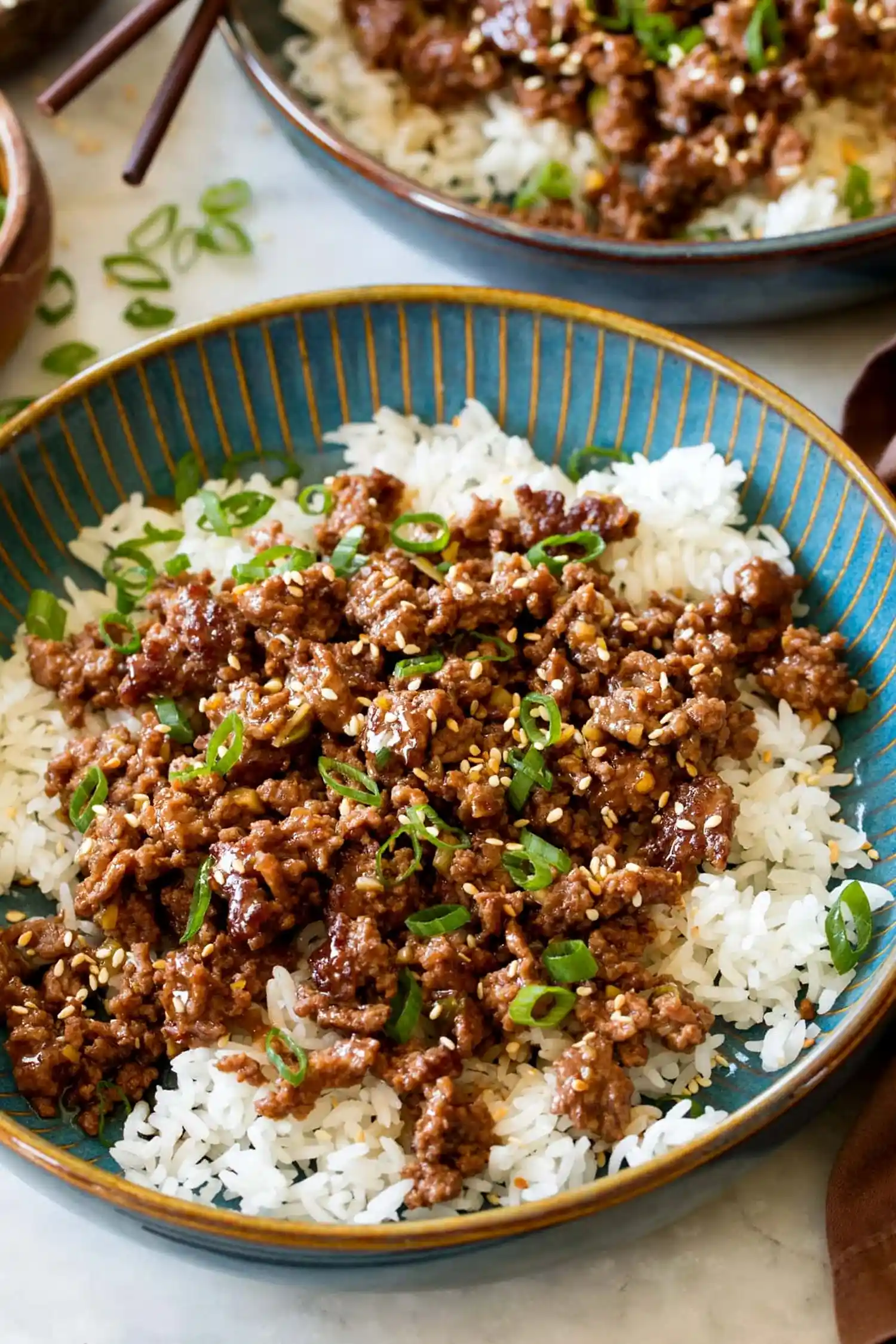
List of ingredients
- 1 1/2 Tbsp honey – adds natural sweetness and shine.
- 1 1/2 Tbsp dark brown sugar – provides a rich, molasses-like depth (light brown sugar also works).
- 1 Tbsp sesame oil – essential for an authentic nutty aroma.
- 2 tsp fresh lime juice – adds necessary acidity to balance the sweetness.
- 3 Tbsp soy sauce – the primary source of salt and umami.
- 2 Tbsp water – thins the sauce for better distribution.
- 2 tsp vegetable oil – used for searing the meat.
- 18 oz. 85% lean ground beef – the protein base of the dish.
- 1/3 cup chopped green onions (white and light portion) – used for aromatic flavor.
- 1 Tbsp minced fresh garlic – provides a pungent, savory base.
- 1 Tbsp peeled and minced fresh ginger – adds a zesty, warm note.
- 1/2 tsp red pepper flakes (optional) – adds a touch of heat.
- 1 tsp cornstarch mixed with 2 tsp water (optional) – creates a thicker glaze.
- Chopped green onions (green portion), chopped unsalted peanuts, or toasted sesame seeds – for garnish.
- 2 cups cooked white or brown rice, or cauliflower rice – the serving base.
step-by-step instructions
- Prepare the sauce: In a small mixing bowl, whisk together the honey, brown sugar, sesame oil, lime juice, soy sauce, and water. Set this mixture aside for later use.
- Sear the beef: Preheat a 12-inch non-stick skillet over moderately high heat. Crumble the beef into 1-inch chunks and add the vegetable oil to the skillet. Space the chunks out to ensure they brown properly rather than steaming.
- Brown the meat: Let the beef cook undisturbed for 2 1/2 to 3 minutes until a deep brown crust forms on the bottom. Sprinkle in the white and light portions of the green onions, minced garlic, ginger, and optional red pepper flakes.
- Finish cooking: Toss and break up the beef chunks, continuing to cook for another 2 to 3 minutes until the meat is fully browned. If there is excess rendered fat in the pan, dab it away using paper towels held by tongs.
- Glaze the beef: Pour in the honey mixture and reduce the heat to medium. If a thicker sauce is desired, stir in the cornstarch and water slurry now. Simmer the beef in the sauce, stirring frequently for about 1 minute.
- Final seasoning: Taste the beef and add a small amount of extra soy sauce or salt if needed.
- Assemble and serve: Spoon the warm beef over cooked rice. Garnish with green onion tops, peanuts, or sesame seeds before serving.
Optimizing Your Meat Selection
Use 85% Lean Ground Beef for Balance
Using beef with an 85% lean ratio ensures there is enough fat for flavor and browning, but not so much that the dish becomes greasy. If the meat is too lean, it may dry out during the searing process. If it is too fatty, you will spend more time draining grease from the pan.
Source Freshly Ground Beef from a Butcher
For the best results, choose freshly ground beef from a meat tray at a butcher rather than pre-packaged chubs. Freshly ground meat often has a better texture and consistent fat distribution. This leads to better browning and a more premium mouthfeel in the final bowl.
Substituting Other Ground Meats
You can replace ground beef with ground turkey or ground chicken for a leaner version of this dish. When using poultry, you may need to add a small amount of extra oil to the pan as these meats are naturally leaner. The flavor profile of the sauce works equally well with these alternatives.
Mastering the Searing Process
Preheat the Skillet Thoroughly
A hot pan is critical for achieving a deep brown sear on the meat. If the beef hits a cool pan, it will release juices and boil in its own liquid instead of searing. Wait until the oil shimmers before adding the beef chunks.
Avoid Crowding the Pan to Prevent Steaming
Leaving space between the beef chunks allows moisture to evaporate quickly. If the pan is too crowded, the temperature drops and the meat steams, resulting in a grey color. Use a large 12-inch or 14-inch skillet to give the meat room to breathe.
Let the Beef Sear Undisturbed
Resist the urge to stir the meat immediately after adding it to the pan. Let the beef sit undisturbed for several minutes to develop a caramelized crust. This browning process, known as the Maillard reaction, is what provides the deep, savory flavor of the dish.
Removing Excess Rendered Fat
Even lean beef can release a significant amount of fat during browning. To avoid an oily sauce, use tongs to hold a balled-up paper towel and dab the fat from the pan before adding the glaze. This ensures the sauce clings to the meat rather than floating on oil.
Customizing the Flavor Profile
Adjusting Sweetness Levels
The recipe uses both honey and brown sugar for a complex sweetness. If you prefer a different taste, you can use 3 tablespoons of just one or the other. Honey provides a floral note, while brown sugar adds a rich, molasses-like quality.
Increasing the Heat
For those who prefer a spicier bowl, increase the amount of red pepper flakes. You can also substitute the flakes with Korean red chili powder or a pinch of cayenne pepper. Adding a small amount of Sriracha at the end is another way to boost the heat.
Enhancing the Tanginess
If the dish feels too heavy, add an extra teaspoon of fresh lime juice. This acidity cuts through the richness of the beef and the sweetness of the honey. In a pinch, rice vinegar can be used as a substitute for lime juice.
Adding More Saltiness
To increase the savory, salty profile, replace one tablespoon of the water in the sauce mixture with an additional tablespoon of soy sauce. Be careful not to over-salt, as the soy sauce can become overpowering if added in too large a quantity.
Sauce Consistency Tips
Using a Cornstarch Slurry for Thickness
The optional cornstarch slurry transforms the liquid sauce into a thick glaze that coats every piece of beef. Mix the cornstarch with cold water first to prevent lumps. Stir it in during the final minute of simmering for a glossy finish.
Simmering Time for Reduction
The sauce only needs about one minute of simmering to integrate with the beef. Overcooking the sauce can lead to it becoming too thick or burnt due to the sugar content. Keep the heat at medium and stir frequently to prevent sticking.
Balancing Liquid Ratios
The water in the recipe helps distribute the flavors evenly without making the sauce too intense. If you find the sauce too thick, add a tablespoon of water. If it is too thin and you forgot the cornstarch, simmer it for an extra minute to reduce the liquid.
Best Side Dish Pairings
Fresh and Crunchy Vegetables
Pair the beef bowls with sliced cucumbers, radishes, or carrots to add a refreshing contrast. A quick Korean cucumber salad with vinegar and sesame oil is a traditional and highly recommended side. The crisp texture balances the soft rice and tender beef.
Steamed Greens
Steamed broccoli, asparagus, or sautéed spinach provide essential nutrients and a vibrant color to the meal. These vegetables can be cooked quickly in the same pan after the beef is removed. Sautéed cabbage or zucchini also pair well with the soy-ginger glaze.
Fermented Sides
Serving this dish with a side of kimchi adds a pungent, sour, and spicy element that complements the sweet beef. The probiotic nature of kimchi also aids in digestion. It provides a sharp contrast to the richness of the ground beef.
Protein-Rich Additions
Add a sunny-side-up egg on top of the bowl for extra creaminess and protein. The runny yolk acts as an additional sauce that blends well with the rice and beef. This addition makes the meal more filling and visually appealing.
Grain and Base Options
Traditional White Rice
Short-grain or medium-grain white rice is the classic choice for Asian beef bowls. Its slightly sticky texture helps hold the beef and sauce together in every bite. Ensure the rice is steamed and fluffy before serving.
Hearty Brown Rice
Brown rice is an excellent alternative for those seeking more fiber and a nuttier flavor. Because brown rice has a chewier texture, it stands up well to the bold flavors of the Korean glaze. It is a great way to make the meal more sustaining.
Low-Carb Cauliflower Rice
For a lower-calorie or keto-friendly option, use cauliflower rice. Sauté the cauliflower rice briefly in a pan with a touch of oil before serving to remove excess moisture. This provides the bulk of a rice bowl without the carbohydrates.
Quinoa or Farro Alternatives
Quinoa or farro can be used as a base if you want a higher protein grain. These options add a distinct chewiness and an earthy taste. They absorb the sauce well, ensuring that no flavor is wasted at the bottom of the bowl.
Proper Storage and Reheating
Refrigeration Guidelines
Store leftovers in an airtight container in the refrigerator for up to three days. Keep the beef and rice in the same container for convenience, or store them separately to maintain the rice texture. Ensure the beef has cooled slightly before sealing the lid.
Microwave Reheating Method
To prevent the beef from becoming tough or rubbery, reheat the bowls in the microwave at 50% power. This slower heating process ensures the meat remains tender and the sauce doesn’t separate. Add a teaspoon of water to the rice to restore its moisture.
Stovetop Reheating Method
For the best texture, reheat the beef in a small skillet over medium-low heat. Add a splash of water or beef broth to loosen the sauce. Once the beef is warmed through, serve it over freshly steamed rice.
Common Troubleshooting Solutions
Why is my beef grayish instead of brown?
Gray beef occurs when the meat is steamed instead of seared. This happens if the pan wasn’t hot enough or if the beef was crowded. To fix this in the future, use a larger skillet and let the meat sit undisturbed for several minutes.
What to do if the sauce is too sweet?
If the honey and brown sugar overpower the dish, add a bit more lime juice or a splash of rice vinegar. The acid neutralizes the sweetness and restores balance. A pinch of extra salt can also help cut through the sugar.
How to fix a sauce that is too salty?
If the soy sauce makes the dish too salty, add a small amount of water or unsweetened applesauce. You can also serve the beef over unseasoned rice, which will absorb the excess salt. Adding more fresh vegetables to the bowl also helps dilute the saltiness.
Why is the beef tough after reheating?
Beef becomes tough when it is overheated, causing the proteins to tighten. Avoid using high heat in the microwave. Using the 50% power setting or the stovetop method keeps the ground beef tender.
Frequently Asked Questions
Can I use honey instead of brown sugar?
Yes, you can use honey as the sole sweetener. Simply replace the 1 1/2 tablespoons of brown sugar with an additional 1 1/2 tablespoons of honey. The result will be a slightly different flavor profile but equally delicious.
Is sesame oil essential?
Sesame oil is critical for the authentic toasted aroma associated with Korean cuisine. If you don’t have it, you can use a neutral oil, but the dish will lack its characteristic depth. It is highly recommended to use toasted sesame oil specifically.
Can I make this recipe in a slow cooker?
This recipe is designed for a skillet to achieve browning, which is essential for flavor. A slow cooker cannot brown the meat, resulting in a different taste. For the best results, stick to the stovetop method.
How do I keep the beef tender?
Avoid overcooking the beef after adding the sauce. Once the sauce is added and simmered for a minute, remove the pan from the heat. Over-simmering ground beef can make it dry and grainy.
Print
Savory Korean Ground Beef Bowls
- Total Time: 30 minutes
- Yield: 4 servings 1x
- Diet: General
Description
Super fast and seriously delicious simplified Korean Beef Bowls! Perfectly seasoned and ready in under 30 minutes. A recipe definitely worthy of your dinner rotation!
Ingredients
- 1 1/2 Tbsp honey
- 1 1/2 Tbsp dark brown sugar
- 1 Tbsp sesame oil
- 2 tsp fresh lime juice
- 3 Tbsp soy sauce
- 2 Tbsp water
- 2 tsp vegetable oil
- 18 oz 85% lean ground beef
- 1/3 cup chopped green onions (white and light portion)
- 1 Tbsp minced fresh garlic
- 1 Tbsp peeled and minced fresh ginger
- 1/2 tsp red pepper flakes (optional)
- 1 tsp cornstarch mixed with 2 tsp water (optional)
- Chopped green onions (green portion), chopped unsalted peanuts, or toasted sesame seeds
- 2 cups cooked white or brown rice, or cauliflower “rice”
Instructions
- Step 1: In a small mixing bowl whisk together honey, brown sugar, sesame oil, lime juice, soy sauce and water. Set aside.
- Step 2: Preheat a 12-inch non-stick skillet over moderately high heat. Crumble beef into 1-inch chunks. Add oil to skillet and beef chunks (while leaving some space between them so they brown and don’t steam).
- Step 3: Let beef cook undisturbed for 2 1/2 – 3 minutes until nicely browned on bottom. Sprinkle in green onions (white/light portion), garlic, ginger and optional red pepper flakes.
- Step 4: Toss and break up beef and continue to cook until beef if fully browned and cooked through, about 2 – 3 minutes longer. If there’s excess fat you can dab some if up using a few balled up paper towels held by tongs.
- Step 5: Pour in honey mixture and reduce heat to medium. If you want the sauce thickened add cornstarch/water mixture at this point. Simmer beef with sauce, stirring frequently for about 1 minute. Taste for more soy sauce or a little salt if needed.
- Step 6: Serve warm over rice, sprinkle with green onions greens, peanuts or toasted sesame seeds.
Notes
If preferred you can use all honey or all brown sugar (3 Tbsp of one or the other) in the recipe for sweetening the sauce. You don’t have to use both.
- Prep Time: 20 minutes
- Cook Time: 10 minutes
- Category: Main Course
- Method: Stovetop
- Cuisine: Asian
Nutrition
- Serving Size: 1 serving
- Calories: 487 kcal
- Sugar: 11 g
- Sodium: 847 mg
- Fat: 25 g
- Saturated Fat: 8 g
- Unsaturated Fat: 13 g
- Trans Fat: 1 g
- Carbohydrates: 36 g
- Fiber: 1 g
- Protein: 28 g
- Cholesterol: 87 mg