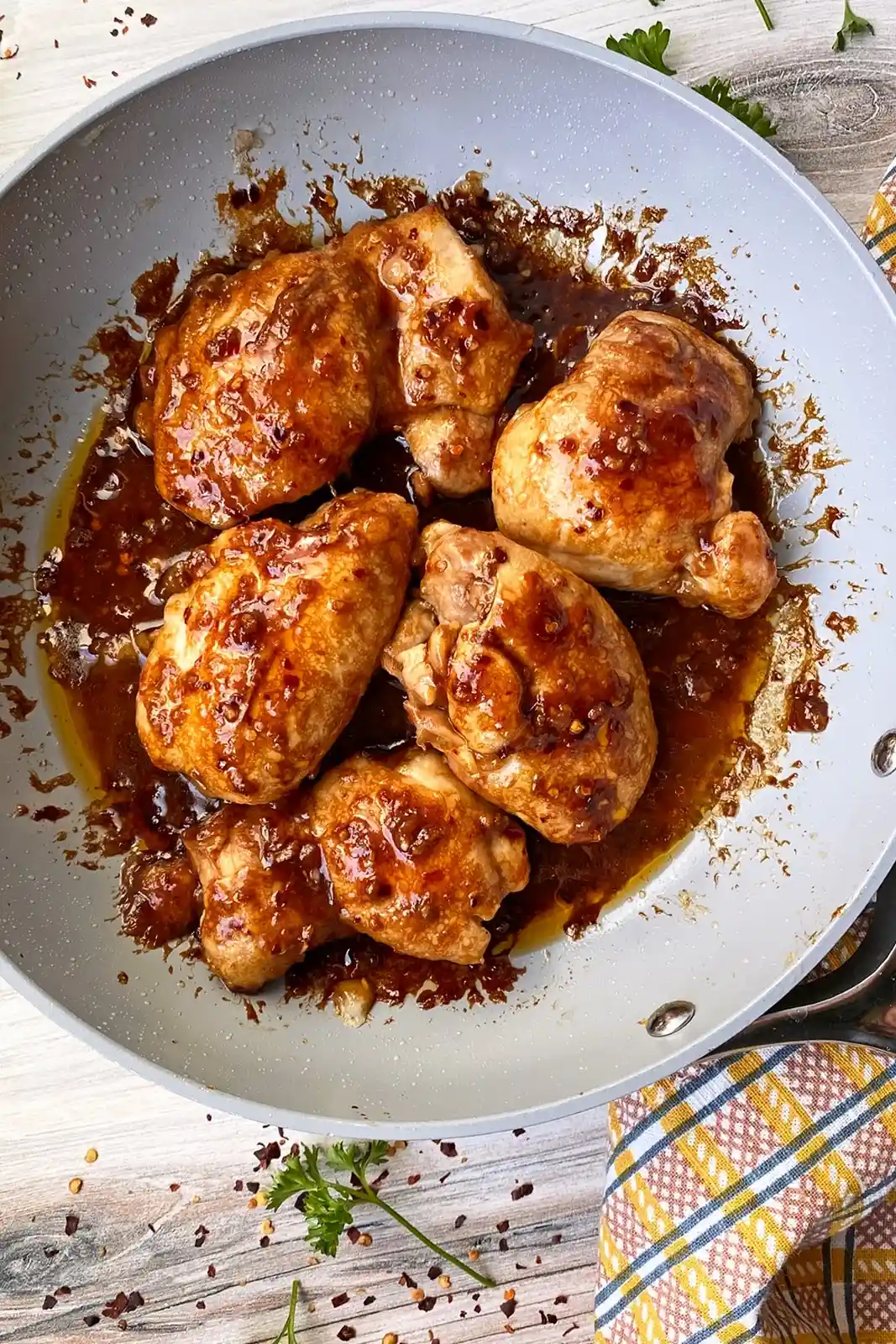
These savory honey garlic chicken thighs offer a perfect balance of sweet and aromatic flavors in a simple, nutritious format. By using tapioca starch to lightly sear the protein, you achieve a delightful texture that holds the sticky glaze perfectly. It is an ideal meal for busy weeknights when you want high-quality results without spending hours in the kitchen.
List of ingredients
- 2 Tbsp avocado oil
- 1.5 lbs boneless, skinless chicken thighs
- 2 Tbsp tapioca starch
- 3 Tbsp coconut aminos
- 4 cloves garlic, pressed
- 1 Tbsp raw honey
- 1 tsp paleo sriracha (optional)
- 1/2 tsp salt
- 1/2 tsp chili flakes (optional)
step-by-step instructions
- Step: Set a frying pan on the stove top and pour avocado oil in the pan. Preheat on medium heat.
- Step: In a medium-sized mixing bowl, combine the chicken thighs and tapioca starch. Mix until they’re well coated.
- Step: Place the chicken thighs on the preheated, oiled frying pan. Cover the pan with a lid and cook for 10 minutes on medium heat.
- Step: After 10 minutes, remove the lid and flip all of the thighs. Cook the chicken thighs (uncovered) for 10 more minutes, or until cooked through.
- Step: In a small bowl, whisk together the coconut aminos, pressed garlic, honey, sriracha, salt and chili flakes.
- Step: Once the chicken thighs are cooked through, pour the sauce over the thighs. Continue cooking on medium heat, flipping the thighs every so often, until the sauce thickens.
Improving the Searing Process
Choosing the Right Pan Material
Using a stainless steel or ceramic-coated skillet works best for this recipe because they conduct heat consistently. Avoid non-stick pans with very thin bottoms, as they may lead to uneven heat distribution and potential burnt spots in the sauce. A heavy-bottomed pan will retain the warmth necessary to caramelize the honey-garlic glaze without scorching the sugars.
Ensuring Surface Dryness
Patting your chicken thighs dry with a paper towel before coating them in the tapioca starch is a vital step. Moisture on the surface of the meat can cause the starch to turn gummy rather than forming a crisp, golden barrier. When the meat is dry, the starch adheres better and provides a superior texture once it hits the hot oil.
Refining the Glaze Consistency
Reducing the Liquid Properly
To achieve the perfect sticky consistency, keep the heat at a steady medium level once you pour the sauce over the meat. If the sauce remains too runny after a few minutes, simply remove the chicken to a platter and let the sauce bubble down for an additional minute before tossing the meat back in. This extra step ensures a thick, concentrated flavor that glazes each piece of chicken thoroughly.
Balancing Saltiness and Sweetness
If you prefer a deeper flavor profile, ensure the coconut aminos you use are of high quality, as the fermentation level can vary between brands. You can adjust the honey slightly if you desire a more pronounced caramelized finish, but be mindful that too much sugar can cause the sauce to smoke if the pan temperature is too high. Always taste the sauce before adding it to the skillet to ensure it matches your personal preference for saltiness.
Serving Suggestions and Pairings
Choosing Complementary Side Dishes
Because this dish has a rich and savory glaze, it pairs wonderfully with neutral vegetables that can soak up any remaining sauce. Steamed broccoli, roasted cauliflower, or a light cucumber salad are excellent choices that do not overwhelm the palate. If you want a more substantial meal, serve the chicken over a bed of fluffy cauliflower rice, which mimics the experience of eating grain-based dishes while remaining paleo-friendly.
Incorporating Fresh Garnishes
To brighten the final presentation, consider finishing the dish with a sprinkle of sliced green onions or toasted sesame seeds just before serving. These additions provide a fresh, crisp contrast to the dense, sweet glaze of the chicken. A squeeze of fresh lime juice can also add a necessary acid note that cuts through the richness of the garlic and honey.
Managing Leftovers
Proper Refrigeration Techniques
Transfer any remaining chicken into an airtight container while it is still slightly warm but not steaming hot. This prevents excess moisture from building up inside the container, which can lead to soggy leftovers. Stored properly, the chicken will maintain its flavor for up to five days, making it an excellent candidate for organized meal prep throughout your work week.
Reviving the Glaze Texture
When reheating leftovers, the sauce may appear thicker or slightly separated due to the honey content. Add a very small splash of water or extra coconut aminos to the pan when reheating to bring the glaze back to a silky consistency. Warming the meat gently on the stove rather than using a microwave will help maintain the texture of the chicken, ensuring it does not become tough or rubbery.
Common Kitchen Questions
Can I use chicken breasts instead of thighs?
While this recipe is optimized for the moisture content of chicken thighs, you can use breasts if you prefer a leaner option. Be careful to reduce the cooking time by a few minutes, as chicken breasts cook faster and can dry out if left in the pan for the full 20 minutes. It is best to slice the breasts into even-sized strips to help them cook uniformly in the glaze.
Is there a way to make the sauce without tapioca starch?
Arrowroot powder is the most effective direct substitute for tapioca starch in this recipe. Both act as a thickening agent that remains paleo-compliant and provides the same structural benefit during the searing phase. Simply use an equal amount of arrowroot powder to achieve the same result without sacrificing the integrity of the glaze or the chicken crust.
Can I prepare the sauce in advance?
You can certainly whisk the sauce ingredients together a day ahead of time and store them in the refrigerator. This allows the garlic flavors to infuse more deeply into the coconut aminos and honey base. Just give the mixture a quick stir before pouring it over the chicken, as the ingredients may settle slightly while sitting in the cold.
Print
Savory Garlic Glazed Chicken Thighs
- Total Time: PT30M
- Yield: 4 servings 1x
- Diet: Paleo, Gluten-Free, Dairy-Free
Description
These healthy honey garlic chicken thighs are paleo, gluten free, dairy free and nut free. Great for an easy weeknight dinner!
Ingredients
- 2 Tbsp avocado oil
- 1.5 lbs boneless, skinless chicken thighs
- 2 Tbsp tapioca starch
- 3 Tbsp coconut aminos
- 4 cloves garlic, pressed
- 1 Tbsp raw honey
- 1 tsp paleo sriracha (optional)
- 1/2 tsp salt
- 1/2 tsp chili flakes (optional)
Instructions
- Step: Set a frying pan on the stove top and pour avocado oil in the pan. Preheat on medium heat.
- Step: In a medium-sized mixing bowl, combine the chicken thighs and tapioca starch. Mix until they’re well coated.
- Step: Place the chicken thighs on the preheated, oiled frying pan. Cover the pan with a lid and cook for 10 minutes on medium heat.
- Step: After 10 minutes, remove the lid and flip all of the thighs. Cook the chicken thighs (uncovered) for 10 more minutes, or until cooked through.
- Step: In a small bowl, whisk together the coconut aminos, pressed garlic, honey, sriracha, salt and chili flakes.
- Step: Once the chicken thighs are cooked through, pour the sauce over the thighs. Continue cooking on medium heat, flipping the thighs every so often, until the sauce thickens.
Notes
Store leftovers in a sealed, air-tight container in the fridge for up to 5 days.
- Prep Time: PT5M
- Cook Time: PT25M
- Category: Main Course
- Method: Stove Top
- Cuisine: American
Nutrition
- Serving Size: 1 thigh
- Calories: 280 kcal
- Sugar: 5 g
- Sodium: 450 mg
- Fat: 12 g
- Saturated Fat: 2 g
- Unsaturated Fat: 8 g
- Trans Fat: 0 g
- Carbohydrates: 10 g
- Fiber: 0 g
- Protein: 32 g
- Cholesterol: 110 mg