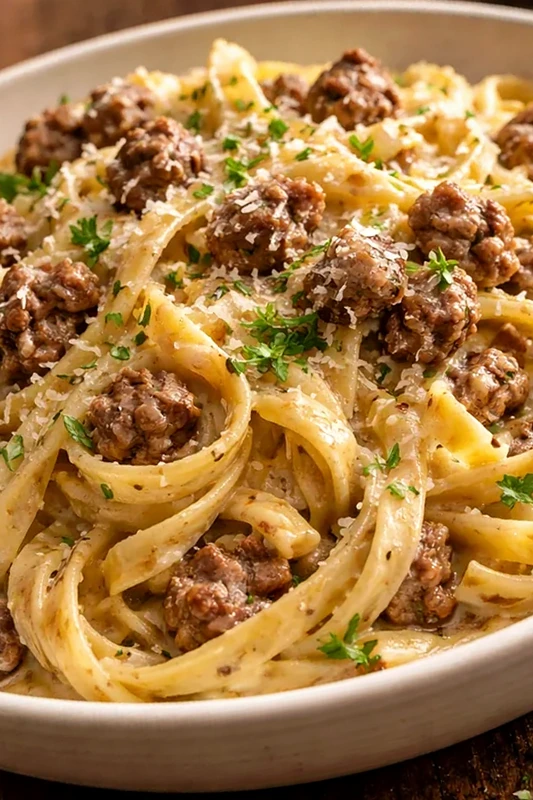
When you are looking for a satisfying, high-protein meal that delivers restaurant-quality flavors without the pile of dirty dishes, this creamy beef butter pasta is the perfect solution. By simmering the pasta directly in a savory broth and milk base, you create a rich, velvety sauce that clings to every noodle. It is an effortless weeknight dinner that balances deep, savory notes with a smooth, comforting finish.
List of ingredients
- 1 tbsp olive oil
- 1 lb ground beef
- 4 cloves garlic, minced
- 1/2 tsp salt
- 1/2 tsp black pepper
- 1/2 tsp red pepper flakes
- 3 cups beef broth
- 2 cups milk
- 12 oz pasta
- 1 tsp Italian seasoning
- 1/2 cup parmesan cheese, grated
- 2 tbsp butter
- fresh parsley
step-by-step instructions
- Step: Warm the olive oil in a large deep skillet or heavy-bottomed pot over medium heat until shimmering.
- Step: Crumble the ground beef into the skillet and cook for 5-6 minutes, breaking the meat into small bits until fully browned.
- Step: Incorporate the minced garlic, salt, pepper, and red pepper flakes, stirring for 60 seconds until fragrant.
- Step: Pour the beef broth and milk into the pan, scraping the bottom to release any flavorful browned bits.
- Step: Submerge the dry pasta into the liquid and sprinkle in the Italian seasoning.
- Step: Bring the mixture to a gentle simmer, cover with a lid, and cook for 12-15 minutes while stirring occasionally to prevent sticking.
- Step: Turn the heat to low once the pasta is tender and stir in the parmesan cheese and butter until the sauce is glossy.
- Step: Check the consistency and stir in an extra splash of milk if you prefer a thinner sauce.
- Step: Top each bowl with chopped fresh parsley and a dusting of extra cheese before serving.
Essential Preparation Techniques
Choosing the Right Pasta Shape
For this specific recipe, the geometry of the pasta plays a crucial role in how well the sauce coats every bite. Shapes with textures, such as penne, rotini, or orecchiette, are significantly more effective at trapping the creamy, garlic-infused sauce within their ridges or centers. Smooth noodles tend to let the sauce slide off, which can lead to a less satisfying mouthfeel.
The Role of Liquid Ratios
The combination of broth and dairy provides both seasoning and structure to the final dish. Beef broth infuses the pasta with savory notes from the inside out as it hydrates, while the milk or cream adds the necessary fat to emulsify the sauce. If you prefer a lighter final result, you can substitute half of the liquid with vegetable broth, but keep the dairy portion consistent to maintain the required creaminess.
Managing Heat During Simmering
Maintaining a gentle, steady simmer is vital for ensuring the dairy does not separate or curdle. When cooking pasta in a milky base, keep the lid partially on to trap moisture, but check the pot regularly to ensure the heat is not too high. A rolling boil will likely cause the milk solids to break down, turning your beautiful sauce into an uneven, watery mixture.
Refining Your Sauce Consistency
Utilizing Starch for Natural Thickening
As the pasta cooks, it naturally releases starches into the liquid, which is the secret to getting a thick, restaurant-style sauce without needing flour or cornstarch. Stirring the mixture periodically ensures these starches are evenly distributed, creating a more cohesive texture. If you find the liquid is reducing too quickly before the pasta is cooked, simply add a small splash of hot water or more broth to keep the noodles moving freely.
The Finishing Emulsion Step
Adding the butter and parmesan cheese off the heat is a deliberate move to ensure a smooth, glossy finish. Introducing these ingredients while the pan is still over high heat can cause the cheese to clump or the butter to separate into pools of oil. By removing the skillet from the heat source first, you give yourself the time to whisk or stir until the fats and cheeses emulsify into a perfectly smooth coating.
Managing Leftovers and Reheating
Proper Storage Conditions
Store your leftovers in an airtight glass container to prevent flavor absorption from other items in your refrigerator. Because this dish relies on a dairy-based sauce, it is best consumed within three days. Glass containers are preferable because they do not retain odors and can be easily transferred directly to the microwave for a quick meal later.
Techniques for Smooth Reheating
When reheating, dairy sauces often thicken significantly as they cool. To restore the original creamy texture, add a small tablespoon of milk or broth to the container before heating. Gently reheat over a low flame on the stove, stirring continuously, or microwave in short 30-second intervals to prevent the cheese from burning or the sauce from splitting.
Practical Ingredient Adjustments
Protein Alternatives
If you prefer to swap the ground beef, ground turkey or chicken work excellently in this recipe. Because these leaner meats have less fat, you may want to add a small extra knob of butter when sautéing the garlic to ensure the base remains flavorful. The cooking process remains identical, though the browning stage for chicken may be slightly faster.
Adding Fresh Greens
To incorporate more nutrients and color, add a handful of baby spinach or chopped kale during the final two minutes of cooking. The heat from the simmering sauce is more than sufficient to wilt the leaves perfectly without destroying their vibrant color. This simple addition adds a fresh, peppery contrast to the otherwise rich and savory profile of the dish.
Customizing Spice Levels
The original recipe uses a modest amount of red pepper flakes for a subtle background heat. If you enjoy a spicier experience, consider adding a dash of cayenne pepper or finely diced fresh chili during the garlic sauté phase. Conversely, if you prefer a milder flavor, you can replace the red pepper flakes with a pinch of smoked paprika to add complexity without any heat.
Common Questions Addressed
How can I make this dish gluten-free?
You can easily substitute the traditional pasta with a high-quality gluten-free alternative, such as those made from brown rice or corn. Keep in mind that gluten-free pasta often requires shorter cooking times and may absorb liquid differently, so keep an extra half-cup of broth on hand to adjust the consistency of the sauce as needed.
Why should I use freshly grated parmesan?
Pre-packaged shredded cheese typically contains anti-caking agents like cellulose, which prevent the cheese from melting into a smooth, liquid state. Freshly grated parmesan melts much more cleanly, which is essential for achieving the glossy, velvety consistency required for this butter-based sauce.
Can I prepare the meat in advance?
You can certainly brown the ground beef ahead of time and store it in the refrigerator. When you are ready to prepare the full meal, simply add the pre-cooked beef to the skillet along with the garlic and proceed with the remaining steps. This can save you approximately five to seven minutes during the final cooking process on a busy evening.
Is it possible to use a different type of liquid?
While beef broth provides the most depth for this dish, you could use a high-quality vegetable broth if you want a lighter flavor profile. Avoid using water as the primary liquid, as it lacks the seasoning and depth required to make the pasta truly flavorful during the boiling process. If you find the broth too salty, you can use a 50/50 mix of broth and water.
How do I handle the sauce if it becomes too thick?
If the sauce becomes overly thick, it is usually because the pasta has absorbed too much of the liquid. Adding liquid in small increments—about a tablespoon at a time—while stirring will help return the sauce to a silky consistency. Always ensure the added liquid is warm, as cold liquid can shock the sauce and cause it to lose its smooth texture.
Print
Savory Creamy Beef Butter Pasta: The Ultimate One-Pot Comfort Meal
- Total Time: PT30M
- Yield: 4 servings 1x
- Diet: High Protein
Description
This decadent, velvety meal combines savory browned beef with a rich garlic butter infusion and a silky parmesan finish. Since everything cooks in a single vessel, you get maximum flavor with minimal cleanup for the ultimate weeknight comfort food.
Ingredients
- 1 tbsp olive oil
- 1 lb ground beef
- 4 cloves garlic, minced
- 1/2 tsp salt
- 1/2 tsp black pepper
- 1/2 tsp red pepper flakes
- 3 cups beef broth
- 2 cups milk
- 12 oz pasta
- 1 tsp Italian seasoning
- 1/2 cup parmesan cheese, grated
- 2 tbsp butter
- fresh parsley
Instructions
- Step: Warm the olive oil in a large deep skillet or heavy-bottomed pot over medium heat until shimmering.
- Step: Crumble the ground beef into the skillet and cook for 5-6 minutes, breaking the meat into small bits until fully browned.
- Step: Incorporate the minced garlic, salt, pepper, and red pepper flakes, stirring for 60 seconds until fragrant.
- Step: Pour the beef broth and milk into the pan, scraping the bottom to release any flavorful browned bits.
- Step: Submerge the dry pasta into the liquid and sprinkle in the Italian seasoning.
- Step: Bring the mixture to a gentle simmer, cover with a lid, and cook for 12-15 minutes while stirring occasionally to prevent sticking.
- Step: Turn the heat to low once the pasta is tender and stir in the parmesan cheese and butter until the sauce is glossy.
- Step: Check the consistency and stir in an extra splash of milk if you prefer a thinner sauce.
- Step: Top each bowl with chopped fresh parsley and a dusting of extra cheese before serving.
Notes
For the best results, use a sturdy pasta shape like penne or rotini which holds onto the thick garlic butter sauce. If you have leftovers, store them in an airtight container for up to three days and reheat with a tablespoon of water to loosen the cream sauce.
- Prep Time: PT10M
- Cook Time: PT20M
- Category: Dinner
- Method: One-Pot
- Cuisine: Italian-American
Nutrition
- Serving Size: 1 serving
- Calories: 580 kcal
- Sugar: 7 g
- Sodium: 850 mg
- Fat: 26 g
- Saturated Fat: 12 g
- Unsaturated Fat: 10 g
- Trans Fat: 0 g
- Carbohydrates: 48 g
- Fiber: 2 g
- Protein: 32 g
- Cholesterol: 95 mg