This nutrient-dense vegetable soup is designed to be a light yet filling meal option. It utilizes a variety of low-calorie vegetables and a savory broth to create a satisfying dish.
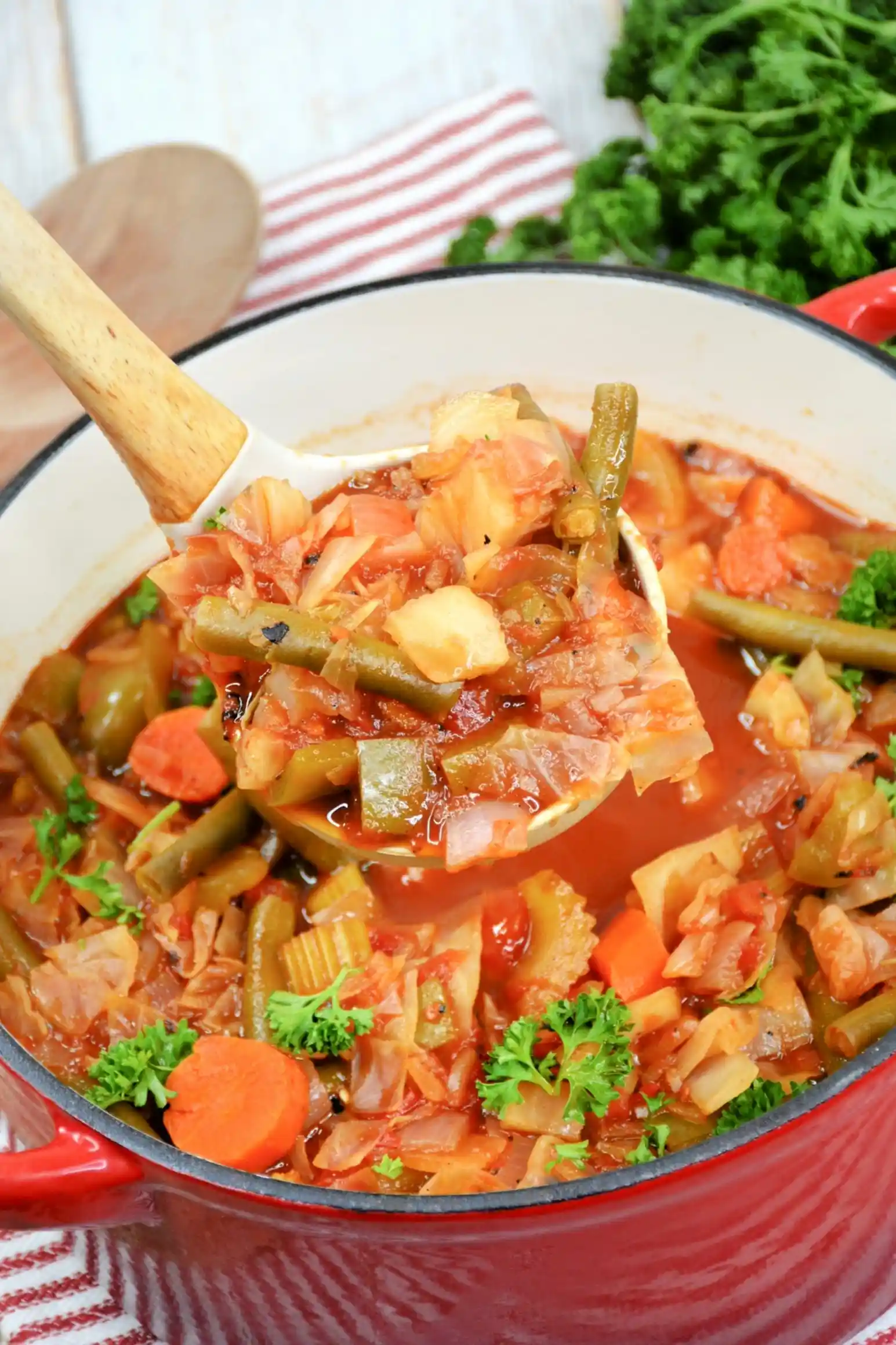
List of ingredients
- 3 carrots, washed and chopped – adds a natural sweetness and beta-carotene.
- 1 onion, peeled and chopped – creates a flavorful aromatic base.
- 1 can (16 oz) crushed tomatoes, undrained – provides body and a tangy acidity.
- ½ head of cabbage, chopped – the primary filling and nutrient-rich vegetable.
- 1 package of dry onion soup mix – concentrates the savory and salty notes.
- 1 cup fresh green beans, ends removed and cut in half – adds texture and fiber.
- 3 cups tomato juice – enhances the depth of the tomato base.
- 1 green bell pepper, diced – introduces a fresh, garden flavor.
- 1 stalk of celery, chopped – contributes an earthy aroma.
- 1 can (14 oz) beef broth – provides a rich, hearty liquid foundation.
step-by-step instructions
- Combine Base Vegetables: Place the chopped carrots, onion, crushed tomatoes, cabbage, green beans, diced peppers, and celery into a large pot. Ensure the vegetables are distributed evenly.
- Add Liquids and Seasoning: Stir in the dry onion soup mix, tomato juice, and beef broth. Include the liquid from the crushed tomatoes and add a small amount of water to reach your preferred consistency. Mix all ingredients thoroughly.
- Simmer to Tenderness: Place the pot over medium heat until it reaches a simmer, then reduce heat to low. Cover and let the soup simmer for approximately 2 hours, or until all vegetables are tender.
Cooking Tips for Success
Choosing the Best Cabbage Variety
Green cabbage is the standard choice for this recipe as it holds its structure well during long simmering periods. Savoy cabbage is another option if you prefer a more tender leaf with a slightly crinkled texture. Avoid red cabbage unless you are comfortable with the soup turning a purplish color.
Preparing Vegetables for Uniform Cooking
Cut your carrots and celery into similar sizes to ensure they cook at the same rate. If the cabbage pieces are too large, they may take longer to soften, while smaller pieces might break down. Aim for bite-sized chunks throughout the recipe.
Adjusting the Salt Levels
Because the dry onion soup mix and beef broth already contain significant amounts of sodium, avoid adding extra salt at the start. Taste the soup after it has simmered for two hours. Add salt only at the very end if you feel the flavors need more enhancement.
Managing the Simmering Temperature
Maintain a gentle simmer rather than a rolling boil to prevent the vegetables from disintegrating. A low heat setting allows the flavors to meld slowly without scorching the bottom of the pot. If the liquid reduces too much, stir in a small amount of water.
Ingredient Substitutions
Replacing Beef Broth for Different Profiles
You can substitute the beef broth with vegetable broth for a lighter, plant-based version of the soup. Chicken broth is another excellent alternative that provides a classic savory taste. Ensure the replacement broth is low-sodium if you are monitoring salt intake.
Using Frozen Vegetables
Frozen green beans or mixed vegetable blends can be used if fresh produce is unavailable. Since frozen vegetables are often blanched, they may cook faster than fresh ones. Add them during the last hour of simmering to prevent them from becoming mushy.
Alternatives to Tomato Juice
If tomato juice is not available, you can use a mixture of water and extra tomato paste. Combine two cups of water with two tablespoons of tomato paste to mimic the thickness and flavor. This ensures the soup maintains its signature red hue and tanginess.
Substitutes for Onion Soup Mix
To replace the store-bought mix, combine one tablespoon of onion powder, one teaspoon of garlic powder, and a pinch of salt and black pepper. This homemade version allows you to control the amount of sodium used in the dish. You may also add a pinch of dried thyme for extra depth.
Serving Ideas and Enhancements
Adding Fresh Herbs for Brightness
Stir in freshly chopped parsley or cilantro just before serving to add a pop of color and fresh flavor. A handful of chopped scallions can also provide a mild onion bite that complements the simmered vegetables. This freshness balances the deep flavors of the broth.
Pairing with Whole Grain Bread
Serve this soup with a slice of toasted whole grain or rye bread to add complex carbohydrates to the meal. A lightly toasted sourdough slice can also provide a nice contrast in texture. This makes the meal more filling and satisfying.
Using a Squeeze of Lemon for Acidity
Add a squeeze of fresh lemon juice into the bowl right before eating. The citric acid cuts through the richness of the beef broth and brightens the overall taste. This is a simple way to elevate the flavor profile without adding calories.
Serving with a Side Salad
Pair the soup with a simple side salad of mixed greens, cucumber, and a light vinaigrette. The crispness of a raw salad provides a textural contrast to the soft, simmered vegetables in the soup. This combination creates a complete and balanced nutritional meal.
Storage and Preservation
Refrigeration Guidelines
Allow the soup to cool completely to room temperature before transferring it to an airtight container. Store it in the refrigerator for up to four to five days. Cooling the soup properly prevents condensation from forming inside the lid, which can affect the taste.
Freezing the Soup for Later
This soup freezes well if stored in freezer-safe containers or heavy-duty freezer bags. Leave a small amount of space at the top of the container to allow for expansion as the liquid freezes. Label the containers with the date of preparation for easy tracking.
Thawing Methods
Thaw frozen soup in the refrigerator overnight for the safest and most consistent results. Alternatively, you can place the frozen container in a bowl of lukewarm water for a few hours. Avoid thawing the soup at room temperature on the counter.
Reheating Instructions
Using a Stovetop for Even Heating
Pour the stored soup into a pot and heat it over medium-low heat. Stir occasionally to ensure the vegetables are heated evenly throughout. Add a splash of water or broth if the soup has thickened too much during storage.
Microwave Reheating Tips
Place the soup in a microwave-safe bowl and cover it with a lid or paper towel to prevent splattering. Heat in one-minute intervals, stirring in between, until the soup is steaming. This prevents hot spots and ensures the cabbage is heated through.
Adjusting Consistency After Reheating
It is common for vegetable soups to thicken as they sit in the fridge. Stir in a tablespoon of water or beef broth during the reheating process to return the soup to its original consistency. Avoid over-boiling the soup during reheating to keep the vegetables intact.
Troubleshooting Common Issues
Fixing a Soup That is Too Thin
If the soup is too watery, simmer it with the lid off for an additional 30 to 45 minutes. This allows more liquid to evaporate, concentrating the flavors and thickening the base. You can also blend a small portion of the vegetables and stir the puree back into the pot.
Balancing Too Much Acidity
If the crushed tomatoes and tomato juice make the soup too tart, add a tiny pinch of sugar or a teaspoon of honey. The sweetness neutralizes the excess acidity without making the soup taste sweet. Add this in small increments and taste as you go.
Preventing Vegetables from Overcooking
If you prefer your vegetables with more bite, reduce the total simmering time from two hours to ninety minutes. Check the carrots first, as they typically take the longest to soften. Once the carrots are tender, the other vegetables should be ready as well.
Make-Ahead Advice
Pre-chopping Vegetables
Prepare all the carrots, onions, cabbage, and peppers the night before. Store them in a large airtight container or separate bags in the refrigerator. This reduces the active preparation time on the day of cooking to just a few minutes.
Cooking in Large Batches
This recipe scales easily for meal prepping for the entire week. Use a larger stockpot to double the ingredients and cook the same way. Portion the finished soup into individual containers for easy grab-and-go lunches.
Nutritional Balance
Adding Lean Proteins
For those who require more protein, add cooked shredded chicken breast or chickpeas to the soup. Stir these in during the final 10 minutes of simmering to ensure they are heated through without overcooking. This makes the soup a more substantial main course.
Incorporating Healthy Fats
Stir in a teaspoon of extra virgin olive oil or avocado oil just before serving. Healthy fats help the body absorb the fat-soluble vitamins found in the carrots and bell peppers. This small addition also improves the mouthfeel of the broth.
Frequently Asked Questions
Can I use a pressure cooker?
Yes, you can use a pressure cooker or Instant Pot to significantly reduce the cooking time. Use the manual or pressure cook setting for about 20 to 30 minutes. Ensure there is enough liquid to prevent the pot from burning.
Which type of cabbage is best?
Green cabbage is recommended because it is widely available and maintains a good texture. Savoy cabbage is a softer alternative, while red cabbage is generally avoided as it alters the color of the soup.
How long does the soup stay fresh?
When stored in an airtight container in the refrigerator, the soup remains fresh for 4 to 5 days. Always ensure the soup is cooled before sealing the container to maintain quality.
Can I substitute tomato juice with water?
You can use water, but the soup will lose the distinct tang and thickness provided by the tomato juice. To compensate, you can add a tablespoon of tomato paste or an extra tablespoon of crushed tomatoes.
Why is my soup too salty?
This usually happens if the onion soup mix and beef broth both have high sodium levels. To fix this, add an extra cup of water or unsalted beef broth to dilute the saltiness. You can also add a peeled potato to the simmer to absorb some of the excess salt.
Print
Savory Cabbage and Vegetable Fat Burning Soup
- Total Time: 1 hour 30 minutes
- Yield: 8 servings 1x
- Diet: Low Calorie
Description
Weight Watchers Cabbage Fat Burning Soup Recipe. A healthy soup to support weight loss, packed with nutritious vegetables.
Ingredients
- 3 carrots, washed and chopped
- 1 onion, peeled and chopped
- 1 can (16 oz) crushed tomatoes, undrained
- ½ head of cabbage, chopped
- 1 package vegetable-based dry onion soup mix
- 1 cup fresh green beans, ends removed and cut in half
- 3 cups tomato juice
- 1 green bell pepper, diced
- 1 stalk of celery, chopped
- 1 can (14 oz) vegetable broth
Instructions
- Step: In a large pot add the carrots, onion, crushed tomatoes, cabbage, green beans, peppers, and celery.
- Step: Stir in the dry onion soup mix, tomato juice, vegetable broth, juice from the crushed tomatoes and water. Mix well.
- Step: Simmer until vegetables are tender (about 2 hours).
Notes
4 PersonalPoints per serving. Serving size: 1 cup.
- Prep Time: 5 minutes
- Cook Time: 1 hour 10 minutes
- Category: Soups & Stews
- Method: Simmering
- Cuisine: American
Nutrition
- Serving Size: 1 cup
- Calories: 70 kcal
- Sugar: 8 g
- Sodium: 850 mg
- Fat: 1 g
- Saturated Fat: 0 g
- Unsaturated Fat: 1 g
- Trans Fat: 0 g
- Carbohydrates: 12 g
- Fiber: 3 g
- Protein: 3 g
- Cholesterol: 0 mg