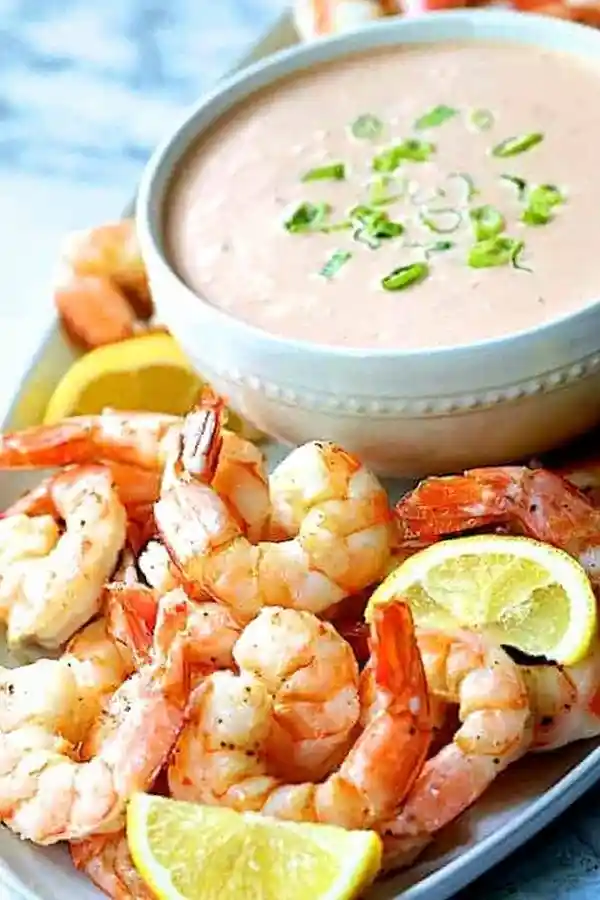
This Shrimp Cocktail Louis is an elegant appetizer featuring roasted shrimp and a zesty, creamy sauce. It is a crowd-pleasing party dish that combines classic seafood flavors with a modern spicy kick.
List of ingredients
- 2 pounds shrimp (preferably wild-caught, 16-20 count, peeled and deveined with the tail left on) – choose large shrimp for a better texture.
- Extra-virgin olive oil – used to prevent sticking and help with roasting.
- Salt and freshly ground black pepper – used for basic seasoning of the shrimp.
- 1 1/4 cups mayonnaise – forms the creamy base of the Louis sauce.
- 1/2 cup chili sauce – adds a balance of sweetness and tang.
- 1 large lemon (zested and juiced) – provides essential acidity and citrus aroma.
- 1 1/2 tablespoons prepared horseradish – adds a sharp, pungent heat.
- 2 teaspoons Sriracha – introduces a modern spicy element to the sauce.
- 1 teaspoon Worcestershire – enhances the savory depth of the mixture.
- 2 scallions (white and light green part only, minced) – adds a mild, fresh onion flavor.
- 2 tablespoons capers (drained) – contributes salty, briny pops of flavor.
- Lemon wedges (for serving) – used for an additional fresh squeeze of citrus.
step-by-step instructions
- Preheat: Preheat oven to 400 degrees. Ensure your oven rack is in the center position for even heat distribution.
- Prep Shrimp: Pat the shrimp dry with paper towels then place on a baking sheet. Removing excess moisture ensures the shrimp roast rather than steam.
- Season: Drizzle with 1-2 tablespoons olive oil and season with salt and black pepper. Toss and spread the shrimp out so they are in one layer to ensure every piece cooks evenly.
- Roast: Roast for 10 minutes or until firm and just cooked through. Let cool completely to maintain the integrity of the sauce.
- Mix Sauce: Meanwhile, combine mayonnaise and next 7 ingredients in a small bowl. Season to taste with salt and black pepper to balance the acidity and salt.
- Plating: When shrimp has cooled, arrange on a platter. A chilled platter helps keep the shrimp cold for serving.
- Final Touch: Place Louis Sauce in the center, garnish with fresh lemon wedges and serve.
Guidelines for Selecting High Quality Shrimp
Prioritize Wild-Caught Seafood
Wild-caught shrimp typically offer a firmer texture and a cleaner, more natural ocean flavor than farmed varieties. Farmed shrimp can sometimes have a softer consistency and a different taste profile. Checking the label for wild-caught certification ensures a more premium result.
Choose the Correct Shrimp Size
The 16-20 count per pound is ideal for cocktails because the shrimp are large enough to be substantial but not so big that they become chewy. This size allows the shrimp to roast quickly while remaining tender. Smaller shrimp may overcook too rapidly in a high-heat oven.
Inspect for Freshness
Fresh shrimp should have a mild, salty scent and no strong ammonia smell. The flesh should be translucent and firm to the touch, not mushy or slimy. If buying frozen, look for bags with minimal ice crystals inside to avoid freezer burn.
Perfecting the Louis Sauce
Balancing the Heat Levels
The heat in this sauce comes from both the horseradish and the Sriracha. If you prefer a milder sauce, start with one teaspoon of Sriracha and taste before adding more. Horseradish provides a nasal heat, while Sriracha adds a lingering chili warmth.
Using Fresh Citrus Zest
Zesting the lemon before juicing it provides a concentrated citrus oil that adds a bright, floral aroma. This depth of flavor is different from the acidity provided by the juice alone. Always zest the lemon before squeezing it to make the process easier.
Incorporating Briny Elements
Capers add a distinct salty punch that cuts through the richness of the mayonnaise. Ensure they are well-drained so they do not thin out the sauce. For an even saltier profile, you can rinse them lightly or leave them in their brine depending on your taste.
Optimal Roasting Techniques
Avoid Overcooking the Shrimp
Shrimp cook very quickly at 400 degrees and can become rubbery if left in the oven too long. They are done when they turn opaque and form a C-shape. If they curl tightly into an O-shape, they are likely overcooked.
The Importance of Drying Seafood
Patting the shrimp dry with paper towels is a critical step for achieving the right texture. Moisture on the surface creates steam, which prevents the shrimp from developing a slight roasted char. Dry shrimp respond better to the olive oil and seasoning.
Consistent Spacing on the Pan
Crowding the baking sheet causes the shrimp to release moisture and boil in their own juices. Spread them in a single layer with a small gap between each piece. This allows the hot air to circulate around every shrimp for an even roast.
Serving and Presentation Ideas
Utilizing Chilled Glassware
For a traditional look, serve the shrimp in chilled martini glasses or coupe glasses. Place the sauce in a small ramekin at the bottom or on the side. This presentation keeps the shrimp cold and looks professional for parties.
Adding Fresh Herbal Garnishes
While scallions are in the sauce, adding a sprig of fresh parsley or dill to the platter adds visual contrast. These herbs complement the seafood and citrus notes perfectly. Fresh greens make the platter look more vibrant and appetizing.
Platter Arrangement Strategies
Arrange the shrimp in a circular pattern around the central sauce bowl. Leave the tails on for easy gripping and a more classic aesthetic. This layout allows guests to dip their shrimp without disturbing the rest of the arrangement.
Storage and Food Safety
Safe Cooling Procedures
Allow the roasted shrimp to cool to room temperature before transferring them to the refrigerator. Placing hot shrimp directly into a sealed container can create condensation, which makes the seafood soggy. Once cooled, store them in an airtight container.
Sauce Storage Duration
The Louis sauce can be stored in the refrigerator for up to two days. Keep it in a glass jar with a tight lid to prevent it from absorbing other odors from the fridge. Stir the sauce well before serving to reintegrate any separated oils.
Thawing Frozen Shrimp Properly
If using frozen shrimp, thaw them slowly in the refrigerator overnight. Avoid thawing them in warm water, as this can compromise the texture and safety of the meat. Once thawed, pat them dry thoroughly before roasting.
Substitutions and Variations
Low-Fat Mayonnaise Alternatives
You can use a light mayonnaise or a Greek yogurt blend to reduce the calorie count. Greek yogurt adds a tangier flavor that pairs well with the lemon and horseradish. Keep in mind that this may slightly alter the thickness of the sauce.
Modifying the Chili Sauce
If chili sauce is unavailable, a mix of ketchup and a dash of apple cider vinegar can work as a substitute. This provides the necessary sweetness and acidity. However, a dedicated chili sauce usually offers a more complex flavor profile.
Alternative To Capers
Finely chopped green olives can be used if you do not have capers. Olives provide a similar briny saltiness, although the flavor is slightly more olive-forward. Use an equal amount of minced olives to maintain the balance.
Make-Ahead and Reheating Advice
Preparing the Sauce in Advance
Making the sauce a day early allows the flavors of the horseradish, Sriracha, and lemon to meld together. This often results in a more cohesive and developed taste. Store the sauce chilled and bring it to the table just before serving.
Pre-Cooking the Shrimp
The shrimp can be roasted up to 24 hours in advance. Store them in a covered container in the coldest part of the refrigerator. When ready to serve, do not reheat them; serve them chilled for the classic cocktail experience.
Avoiding Heat During Reheating
Do not use a microwave to reheat the shrimp or the sauce. Microwaving seafood often makes it rubbery and can cause the mayonnaise in the sauce to break and become oily. If you prefer warm shrimp, briefly warm them in a low oven.
Troubleshooting Common Issues
Fixing a Sauce That is Too Thick
If the sauce feels too dense, whisk in a teaspoon of lemon juice or water at a time. This will thin the consistency without significantly altering the flavor. Stir slowly to avoid incorporating too much air into the mayonnaise.
Preventing Rubbery Shrimp
Rubbery shrimp are almost always the result of overcooking. Use a meat thermometer to ensure they reach an internal temperature of 120-140 degrees Fahrenheit. Remove them from the oven the moment they turn opaque.
Managing Excessive Heat
If the sauce is too spicy, add an extra tablespoon of mayonnaise to mellow out the flavors. The fat in the mayonnaise helps neutralize the capsaicin from the Sriracha. You can also add a pinch of sugar to balance the heat.
Frequently Asked Questions
Can I use frozen shrimp for this recipe?
Yes, frozen shrimp work perfectly as long as they are fully thawed and patted dry before roasting. Ensure they are peeled and deveined to save time during preparation.
How long does the Louis sauce last in the fridge?
The sauce lasts for approximately 48 hours when stored in an airtight container. Because it contains fresh lemon juice and mayonnaise, it should be kept consistently chilled.
Is this recipe gluten-free?
This recipe is generally gluten-free, but you must check the label on your Worcestershire sauce. Some brands contain barley malt or other gluten-containing ingredients; choose a certified gluten-free version if needed.
Can I roast the shrimp at a different temperature?
You can roast them at 375 degrees, but they will need a few extra minutes in the oven. 400 degrees is recommended for a faster cook time and a better roasted exterior.
What is the best way to peel shrimp quickly?
Use kitchen shears to cut along the back of the shell from the head toward the tail. This allows you to peel the shell away easily and remove the vein in one motion.
Print
Roasted Shrimp Cocktail Louis
- Total Time: 30 minutes
- Yield: 8 servings 1x
- Diet: General
Description
Shrimp Cocktail Louis harkens back to an era when shrimp cocktail was the ultimate in elegance! This modern twist which includes Sriracha hot sauce is the perfect party food!
Ingredients
- 2 pounds shrimp (preferably wild-caught, 16–20 count, peeled and deveined with the tail left on)
- Extra-virgin olive oil
- Salt and freshly ground black pepper
- 1 1/4 cups mayonnaise
- 1/2 cup chili sauce
- 1 large lemon (zested and juiced)
- 1 1/2 tablespoons prepared horseradish
- 2 teaspoons Sriracha
- 1 teaspoon Worcestershire
- 2 scallions (white and light green part only, minced)
- 2 tablespoons capers (drained)
- Lemon wedges (for serving)
Instructions
- Preheat: Preheat oven to 400 degrees.
- Prepare: Pat the shrimp dry with paper towels then place on a baking sheet.
- Season: Drizzle with 1-2 tablespoons olive oil and season with salt and black pepper. Toss and spread the shrimp out so they are in one layer.
- Roast: Roast for 10 minutes or until firm and just cooked through. Let cool.
- Mix Sauce: Meanwhile, combine mayonnaise and next 7 ingredients in a small bowl. Season to taste with salt and black pepper.
- Arrange: When shrimp has cooled, arrange on a platter.
- Serve: Place Louis Sauce in the center, garnish with fresh lemon wedges and serve.
Notes
The sauce can be made up to 2 days ahead and refrigerated. Shrimp can be cooked 1 day ahead and refrigerated until needed.
- Prep Time: 20 minutes
- Cook Time: 10 minutes
- Category: Appetizers and Snacks
- Method: Roasting
- Cuisine: American
Nutrition
- Serving Size: 1 serving
- Calories: 357 kcal
- Sugar: 3 g
- Sodium: 690 mg
- Fat: 27 g
- Saturated Fat: 4 g
- Unsaturated Fat: 22 g
- Trans Fat: 1 g
- Carbohydrates: 6 g
- Fiber: 1 g
- Protein: 24 g
- Cholesterol: 197 mg