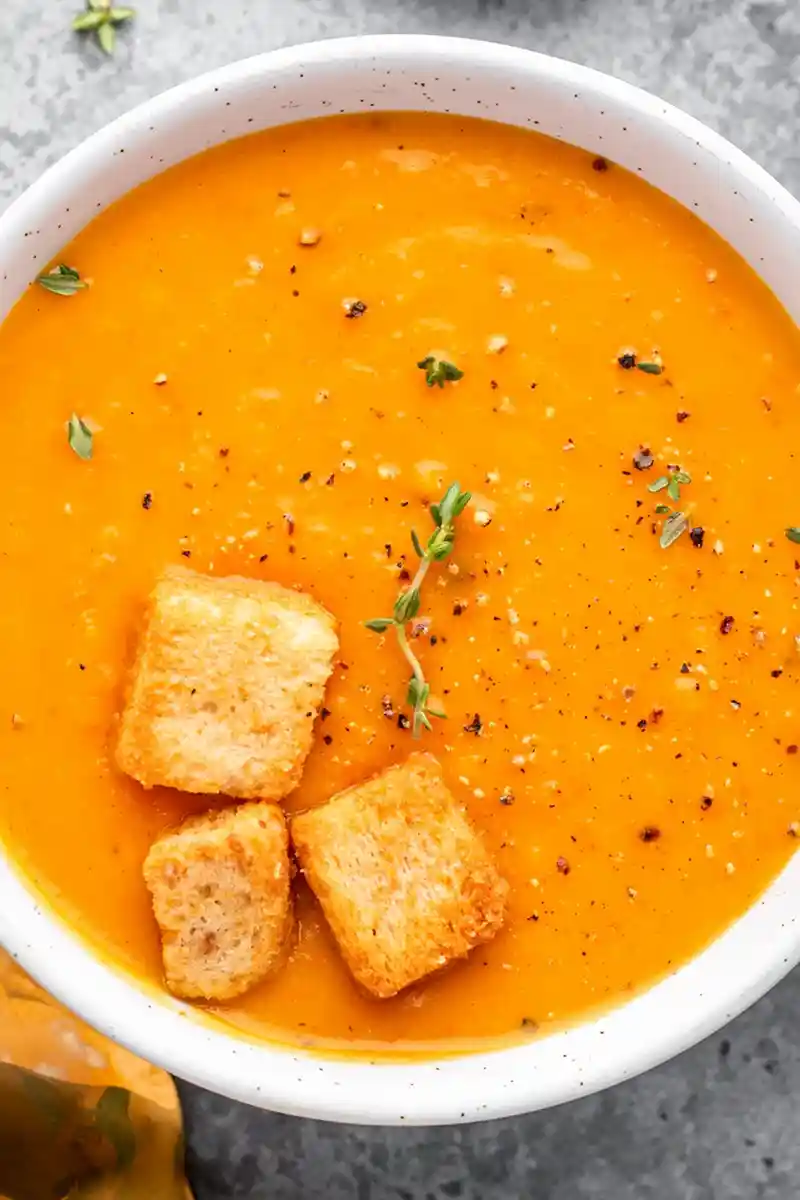
This roasted butternut squash soup delivers a velvety texture and deep, earthy sweetness that makes it a perfect meal for colder days. By roasting the vegetables before blending, you concentrate their natural sugars and enhance the overall depth of flavor in every spoonful. It is a simple, nutritious dinner option that comes together with minimal effort and brings sophisticated comfort to your table.
List of ingredients
- 1/2 large butternut squash
- 1 cup carrot, cut into rounds
- 1/2 large yellow onion, cut into thick slices
- 3 garlic cloves
- 1 Tablespoon olive oil
- salt, to taste
- 1/2 teaspoon ground black pepper
- 1/4 teaspoon cayenne pepper powder
- 1/8 teaspoon ground nutmeg
- 2 sprigs fresh thyme
- 2 Tablespoons butter
- 2-3 cups vegetable broth, adjust to the soup consistency
- Bread croutons, to serve (optional)
step-by-step instructions
- Step: Preheat the oven to 350 degrees F. Line a baking tray with parchment paper and keep it aside.
- Step: Peel the skin and remove the seeds from the butternut squash. Chop the butternut squash into 1-inch squares. Transfer them to the tray.
- Step: Add the carrots, onions, and cloves to the same tray.
- Step: Toss the olive oil over the veggies along with the spices; salt, black pepper, cayenne pepper, nutmeg, and thyme. Coat them well.
- Step: Place it in the oven and roast for 1 hour until the veggies are soft and tender.
- Step: Heat a heavy bottom pot over medium heat and add butter. Once the butter is melted add the roasted veggies along with the vegetable broth. Let them simmer for 4-5 minutes.
- Step: Using an immersion blender, puree the soup until smooth and creamy. If the soup consistency is thick add some more broth to make it a little thin.
- Step: Serve the butternut squash soup while it is still warm with bread croutons on top.
Refining the Preparation Process
Achieving Uniform Roasting
To ensure all your vegetables roast at the same rate, prioritize consistent sizing when chopping. If the squash pieces are significantly larger than the carrot rounds, the carrots may overcook or burn while the squash remains firm. Aim for 1-inch cubes for the squash and similar thickness for the carrots to guarantee an even, tender texture throughout the tray.
Selecting the Proper Squash
When selecting a butternut squash at the store, look for one that feels heavy for its size with a matte, beige skin free of deep gashes or soft spots. A firm neck indicates a smaller seed cavity, which provides you with more usable flesh and less preparation time. Avoid squash with any green streaks on the rind, as these are often indicators that the vegetable was harvested before it was fully mature.
Effective Cooking Techniques
Enhancing Flavor Through Caramelization
The secret to a complex soup lies in the browning of the vegetables during the roasting process. If your vegetables are not browning after 45 minutes, you can increase the oven temperature slightly or move the rack higher. This natural caramelization provides a layer of sweetness that boiling the vegetables simply cannot replicate, forming the backbone of the soup’s flavor profile.
Achieving the Ideal Soup Consistency
Consistency is entirely personal, so do not feel pressured to use the exact amount of broth listed in the recipe. If you prefer a thicker, bisque-style consistency, start with only two cups of broth and blend thoroughly before checking the texture. If the resulting soup is too thick, incorporate extra broth in small, quarter-cup increments until the liquid reaches your preferred level of flow.
Common Ingredient Questions
Appropriate Substitutions for Dietary Needs
If you prefer to avoid butter, you can replace it with high-quality ghee or extra virgin olive oil to maintain a rich mouthfeel. For those who need a dairy-free version, coconut oil works exceptionally well as an alternative to butter during the sautéing stage. If you find yourself without fresh thyme, you can substitute it with a smaller quantity of dried thyme, adding it during the roasting phase to allow the heat to rehydrate the herbs.
Managing Strong Onion Flavors
If you find that standard yellow onions are too sharp for your palate, you can substitute them with sweet onions or shallots. These varieties offer a milder, more delicate flavor profile that pairs beautifully with the natural sugar of the butternut squash. Simply slice them into similar thick rounds to ensure they soften at the same rate as the squash during roasting.
Storage and Reheating Advice
Storing Leftovers Safely
This soup stores remarkably well, often tasting even better the next day as the spices have more time to settle into the vegetable base. Allow the soup to cool completely to room temperature before transferring it into airtight containers. Properly sealed, it will remain fresh in the refrigerator for up to four days, making it an excellent candidate for midweek meal preparation.
Reheating for Fresh Results
When reheating individual servings, use a saucepan over low heat rather than the microwave to prevent the bottom from scorching. If the soup has thickened significantly while in the refrigerator, add a tablespoon of water or broth while stirring to restore its original silky texture. Heating slowly ensures the butter emulsion remains stable and the soup stays creamy rather than separating.
Troubleshooting Flavor Profiles
Addressing Potential Bitterness
Occasionally, a squash may have a slightly bitter note due to growing conditions or the specific variety. If your final blend tastes slightly off-balance, add a tiny pinch of brown sugar or a teaspoon of maple syrup to mask the bitterness. A small splash of apple cider vinegar can also brighten the profile, cutting through the starchiness and providing a necessary acidic counterpoint to the sweet squash.
Balancing the Spices
The cayenne pepper provides a gentle warmth rather than a sharp heat, but individual tolerances vary greatly. If you are sensitive to spice, begin with a tiny pinch of cayenne and taste the vegetables before blending. If the soup feels too mild, you can stir in an extra pinch of black pepper or even a small amount of ground ginger to provide a different kind of warmth.
Frequently Asked Questions
Can I freeze this soup for later use?
Yes, this soup freezes very well. Once completely cooled, pour the soup into heavy-duty freezer bags or containers, leaving about an inch of space at the top to allow for expansion. It will maintain its quality for up to three months in the freezer; thaw it overnight in the refrigerator before reheating gently on the stovetop.
Why should I peel the squash before roasting?
While the skin of a butternut squash becomes soft when roasted, it often retains a fibrous or chewy texture that disrupts the creamy finish of a pureed soup. Removing the skin entirely before roasting ensures that every spoonful is perfectly smooth and pleasant to eat. This step is essential for achieving a high-quality, restaurant-style texture at home.
Is it necessary to use an immersion blender?
An immersion blender is the most convenient tool because you can blend the soup directly in the cooking pot, saving you from cleaning extra dishes. However, if you do not have one, you can safely use a standard countertop blender. Ensure you work in small batches and vent the lid slightly to allow steam to escape, which prevents pressure buildup and potential spills.
Print
Roasted Butternut Squash Soup
- Total Time: PT80M
- Yield: 4 1x
- Diet: Vegetarian
Description
This simple Roasted Butternut Squash soup recipe is loaded with a creamy texture and wonderful squash flavor at only 168 calories per serving!
Ingredients
- 1/2 large butternut squash
- 1 cup carrot, cut into rounds
- 1/2 large yellow onion, cut into thick slices
- 3 garlic cloves
- 1 Tablespoon olive oil
- salt, to taste
- 1/2 teaspoon ground black pepper
- 1/4 teaspoon cayenne pepper powder
- 1/8 teaspoon ground nutmeg
- 2 sprigs fresh thyme
- 2 Tablespoons butter
- 2–3 cups vegetable broth, adjust to the soup consistency
- Bread croutons, to serve (optional)
Instructions
- Step: Preheat the oven to 350 degrees F. Line a baking tray with parchment paper and keep it aside.
- Step: Peel the skin and remove the seeds from the butternut squash. Chop the butternut squash into 1-inch squares. Transfer them to the tray.
- Step: Add the carrots, onions, and cloves to the same tray.
- Step: Toss the olive oil over the veggies along with the spices; salt, black pepper, cayenne pepper, nutmeg, and thyme. Coat them well.
- Step: Place it in the oven and roast for 1 hour until the veggies are soft and tender.
- Step: Heat a heavy bottom pot over medium heat and add butter. Once the butter is melted add the roasted veggies along with the vegetable broth. Let them simmer for 4-5 minutes.
- Step: Using an immersion blender, puree the soup until smooth and creamy. If the soup consistency is thick add some more broth to make it a little thin.
- Step: Serve the butternut squash soup while it is still warm with bread croutons on top.
Notes
Nutrition information is automatically calculated and serves as an approximation. Feel free to adjust the broth consistency to your personal preference.
- Prep Time: PT20M
- Cook Time: PT60M
- Category: Dinner
- Method: Roasting
- Cuisine: American
Nutrition
- Serving Size: 1 serving
- Calories: 168 kcal
- Sugar: 5 g
- Sodium: 113 mg
- Fat: 10 g
- Saturated Fat: 4 g
- Unsaturated Fat: 5 g
- Trans Fat: 0 g
- Carbohydrates: 18 g
- Fiber: 3 g
- Protein: 4 g
- Cholesterol: 15 mg