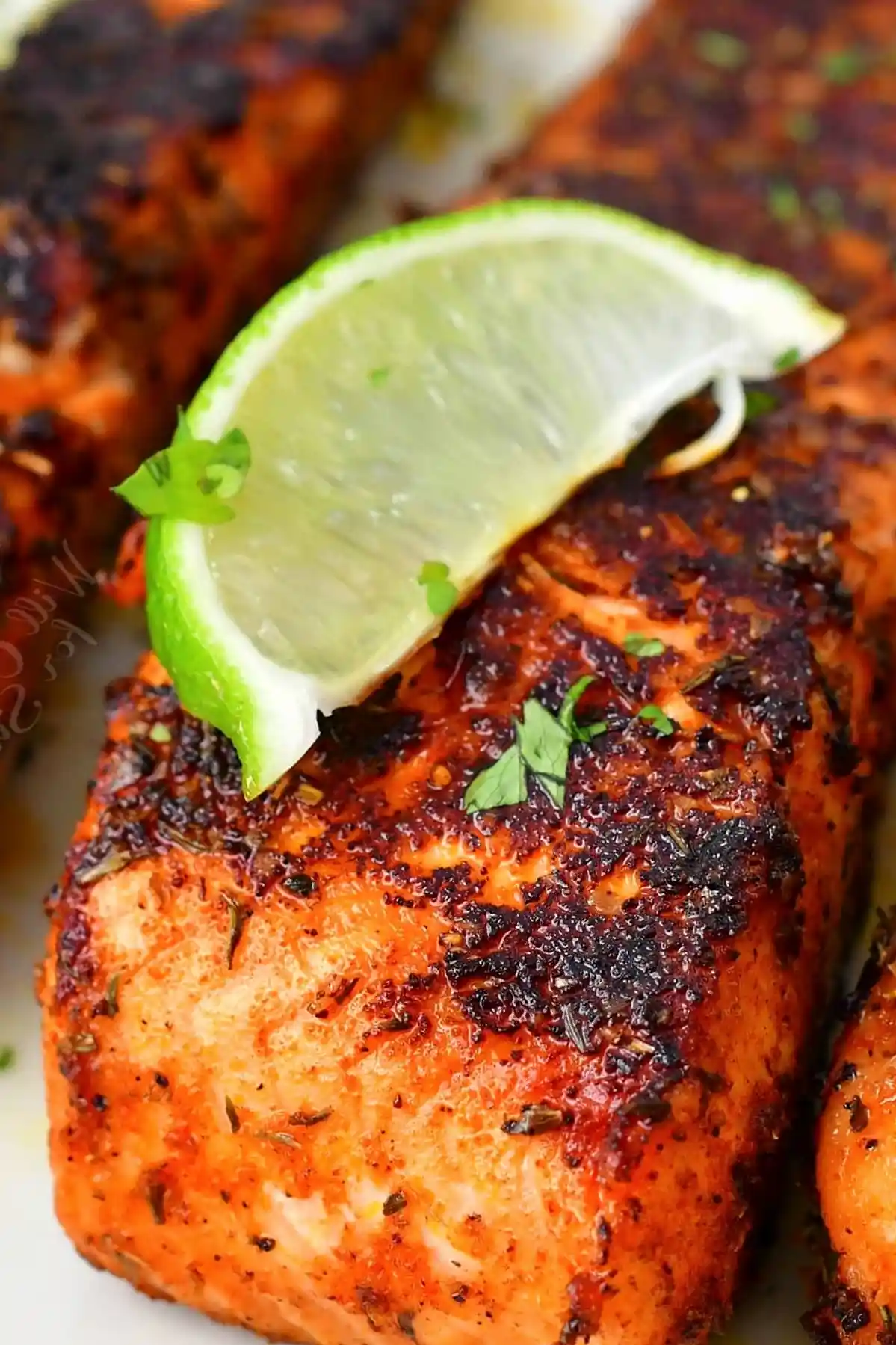
This fast and flavorful meal delivers a restaurant-quality sear in just 20 minutes. It is an ideal weeknight dinner that pairs perfectly with light sides like steamed vegetables or fluffy rice.
List of ingredients
- 3 tsp smoked paprika – adds a deep, smoky base to the rub.
- 2 1/2 tsp garlic powder – provides a savory, pungent depth.
- 2 1/2 tsp onion powder – adds a subtle sweetness and aroma.
- 2 tsp dried thyme – contributes a mild earthy flavor.
- 2 tsp dried oregano – adds a Mediterranean herbal note.
- 2 1/2 tsp coarse salt – enhances all the other spices.
- 1 1/2 tsp black pepper – provides a classic sharp heat.
- 2 tsp brown sugar – helps the spices caramelize and balances the heat.
- 1/2 tsp cayenne pepper – adds a spicy kick; adjust based on your heat preference.
- 4 skin-on salmon fillets (6-8 oz each) – skin-on is best for texture and nutrients.
- 2 tbsp unsalted butter – used for brushing to help spices adhere.
- 1-2 tbsp canola oil – used for high-heat searing in the pan.
- 4 lime wedges – for a fresh, acidic finish before serving.
step-by-step instructions
- Prepare the spice rub: In a small mixing bowl, combine smoked paprika, garlic powder, onion powder, dried thyme, dried oregano, coarse salt, black pepper, brown sugar, and cayenne pepper. Whisk until the mixture is uniform and set it aside.
- Melt the butter: Gently melt two tablespoons of unsalted butter in a microwave or small saucepan. Keep the butter liquid for easy brushing.
- Dry the fish: Remove the salmon fillets from their packaging. Use paper towels to pat both the skin and flesh sides completely dry to ensure a proper sear.
- Apply seasoning: Brush the top and sides of each salmon fillet with melted butter. Dip the three flesh sides into the spice mixture, pressing gently so the seasoning adheres well. Avoid getting spices on the skin to prevent burning.
- Heat the skillet: Place a large skillet on the stove over medium heat. Allow it to preheat for about 5 minutes so the pan is hot before adding the fish.
- Initial sear: Pour 1-2 tablespoons of canola oil into the hot pan, spreading it across the bottom. Carefully place the salmon fillets flesh-side down and cook for 3-4 minutes without moving them.
- Flip and finish: Carefully flip each fillet so the skin side is facing down. Cook for an additional 5-6 minutes, depending on the thickness of the fillets.
- Rest and serve: Remove the salmon from the pan and let it rest on a plate for 5 minutes. This redistributes the juices. Serve with fresh lime wedges.
Selecting the Best Salmon
Atlantic Salmon
Atlantic salmon is the most widely available and affordable option. It has a mild flavor and a fatty texture, making it very forgiving during the searing process.
Sockeye Salmon
Sockeye offers a more intense, bold salmon flavor and a deeper red color. It is leaner than Atlantic salmon, so be careful not to overcook it as it can dry out faster.
King Salmon
King salmon is the most luxurious choice with a high fat content and a buttery texture. It is highly resistant to overcooking and provides the richest flavor profile of all salmon types.
Determining When Salmon Is Done
Using an Instant-Read Thermometer
The most accurate way to check doneness is by measuring the internal temperature. Salmon is fully cooked at 145F, but for a medium to medium-well result, aim for 125F to 135F.
Checking the Texture by Touch
Press the center of the fillet with your finger. When the fish is cooked through, the meat should feel firm with only a slight amount of give; if it feels squishy, it needs more time.
Observing the Flake
Gently press the top of the fillet to see if it separates. When the meat flakes easily along the white fat lines, the salmon is ready to be removed from the heat.
Analyzing Opacity
Raw salmon is translucent, while cooked salmon is opaque. The exterior should be completely opaque, while the center should retain a slight shine if cooked to medium.
Pro Techniques for a Perfect Sear
The Importance of Skin-On Fillets
Keeping the skin on protects the delicate meat from direct high heat and provides a crispy texture. The fat layer between the skin and meat also retains essential Omega-3 fatty acids.
Preheating the Pan
Always ensure your skillet is fully preheated before adding oil and fish. A hot pan creates an immediate sear, which prevents the fish from sticking and develops a better crust.
Avoiding Movement During Cooking
Do not disturb the fillets once they hit the pan. Allowing the fish to sit undisturbed ensures the spices caramelize and the proteins brown properly before the fillet releases naturally.
Allowing the Meat to Rest
Resting the salmon for 5 minutes after cooking is crucial. This allows the internal juices to redistribute, ensuring the meat remains moist and tender throughout.
Useful Ingredient Substitutions
Butter Alternatives
If you avoid dairy, you can replace unsalted butter with a plant-based butter alternative or a neutral oil. This will still help the spices stick to the fish.
Alternative Cooking Oils
Canola oil can be swapped for avocado oil or grapeseed oil. These oils have high smoke points, which are necessary for the high-heat searing required for blackened fish.
Adjusting the Heat Level
To make the recipe milder, reduce the cayenne pepper to a pinch or omit it entirely. For those who prefer more heat, increase the cayenne to 1 full teaspoon.
Pairing and Serving Suggestions
Fresh and Acidic Salads
Balance the smoky richness of the salmon with a crisp cucumber salad, creamy coleslaw, or a tomato and onion salad. The acidity in vinaigrettes cuts through the fat of the fish.
Starch and Grain Options
Serve the fillets over coconut rice, parmesan rice, or a simple rice pilaf. Mashed potatoes or roasted fingerling potatoes also provide a hearty base for the blackened flavors.
Roasted Vegetable Sides
Roasted asparagus, charred broccoli, or honey-glazed carrots complement the spicy rub. These vegetables add nutritional balance and a touch of sweetness to the meal.
Tropical Fruit Salsas
Brighten the dish with a side of mango, pineapple, or avocado salsa. The sweetness of the fruit contrasts the smoky paprika and cayenne for a professional flavor profile.
Storage and Reheating Advice
Refrigeration Guidelines
Store leftover salmon in an airtight container in the refrigerator for up to 3 days. Ensure the fish is completely cooled before sealing the lid to prevent excess moisture.
Oven Reheating Method
To maintain texture, reheat salmon in an oven at 275F for about 10-15 minutes. This gentler heat prevents the fish from becoming rubbery or overcooked.
Using Cold Leftovers
Cold blackened salmon is excellent when flaked into a fresh garden salad or wrapped in a flour tortilla. It also works well as a topping for breakfast eggs or avocado toast.
Troubleshooting Common Issues
Preventing Rub Burn
If the spices burn too quickly, lower the heat to medium-low. The brown sugar in the rub can caramelize quickly, so keep a close eye on the pan temperature.
Solving Sticking Problems
If the fish sticks to the pan, it usually means the pan wasn’t hot enough or the fish was moved too soon. Wait for the crust to form naturally before attempting to flip.
Avoiding Overcooked Meat
Overcooked salmon becomes dry and chalky. Use a timer and a thermometer to ensure you remove the fillets as soon as they reach your preferred internal temperature.
Frequently Asked Questions
Can I use this rub for other types of fish?
Yes, this seasoning works well with tilapia, snapper, or shrimp. If using a fish without skin, consider baking it at 425F or searing it quickly on both sides.
Is it possible to grill blackened salmon?
Yes, grease the skin side and grill over direct heat skin-side down until 2/3 done. Flip the fish skin-side up and move it to a cooler part of the grill to finish cooking.
How do I store the extra spice mix?
Place the unused dry seasoning in an airtight glass jar and store it in a cool, dry pantry. It will remain fresh and ready for future use for several months.
Print
Quick Pan-Seared Blackened Salmon
- Total Time: 20 minutes
- Yield: 4 servings 1x
- Diet: Gluten Free
Description
Blackened salmon is a perfectly easy, 20-minute salmon recipe coated in a rich homemade blackening seasoning and seared in a pan. This is a great weeknight salmon dish that you can serve with a side of vegetables, rice, or pasta.
Ingredients
- 3 tsp smoked paprika
- 2 1/2 tsp garlic powder
- 2 1/2 tsp onion powder
- 2 tsp dried thyme
- 2 tsp dried oregano
- 2 1/2 tsp coarse salt
- 1 1/2 tsp black pepper
- 2 tsp brown sugar
- 1/2 tsp cayenne pepper
- 4 skin on salmon filets (6–8 oz. each)
- 2 tbsp unsalted butter
- 1–2 tbsp canola oil
- 4 lime wedges
Instructions
- Prepare seasoning: Combine all the ingredients for the blackening seasoning in a bowl and whisk it well.
- Prepare butter: Melt butter and set it aside.
- Prep salmon: Pat salmon fillets dry with a paper towel.
- Preheat pan: Set a large skillet on the stove over medium heat and preheat for about 5 minutes.
- Season salmon: Brush each salmon fillet with butter on top and sides and dip into the seasoning on top and the sides.
- Heat oil: Spread oil in the preheated pan all over the bottom.
- Sear flesh side: Place seasoned salmon into the pan flesh down and let it cook for 3-4 minutes.
- Sear skin side: Flip each filet skin side down and let it cook for 5-6 more minutes.
- Rest and serve: Take salmon out of the pan, let it rest for 5 minutes, and serve with lime wedges.
Notes
Use salmon with skin on for a crispy finish. Preheat the pan thoroughly before adding the fish. Do not disturb the fish while it is searing to ensure a proper crust. Allow the meat to rest for a few minutes before serving to redistribute juices.
- Prep Time: 10 minutes
- Cook Time: 10 minutes
- Category: Main Course
- Method: Pan-Searing
- Cuisine: American
Nutrition
- Serving Size: 1 filet
- Calories: 321 kcal
- Sugar: 2 g
- Sodium: 1533 mg
- Fat: 17 g
- Saturated Fat: 5 g
- Unsaturated Fat: 11 g
- Trans Fat: 1 g
- Carbohydrates: 7 g
- Fiber: 2 g
- Protein: 35 g
- Cholesterol: 109 mg