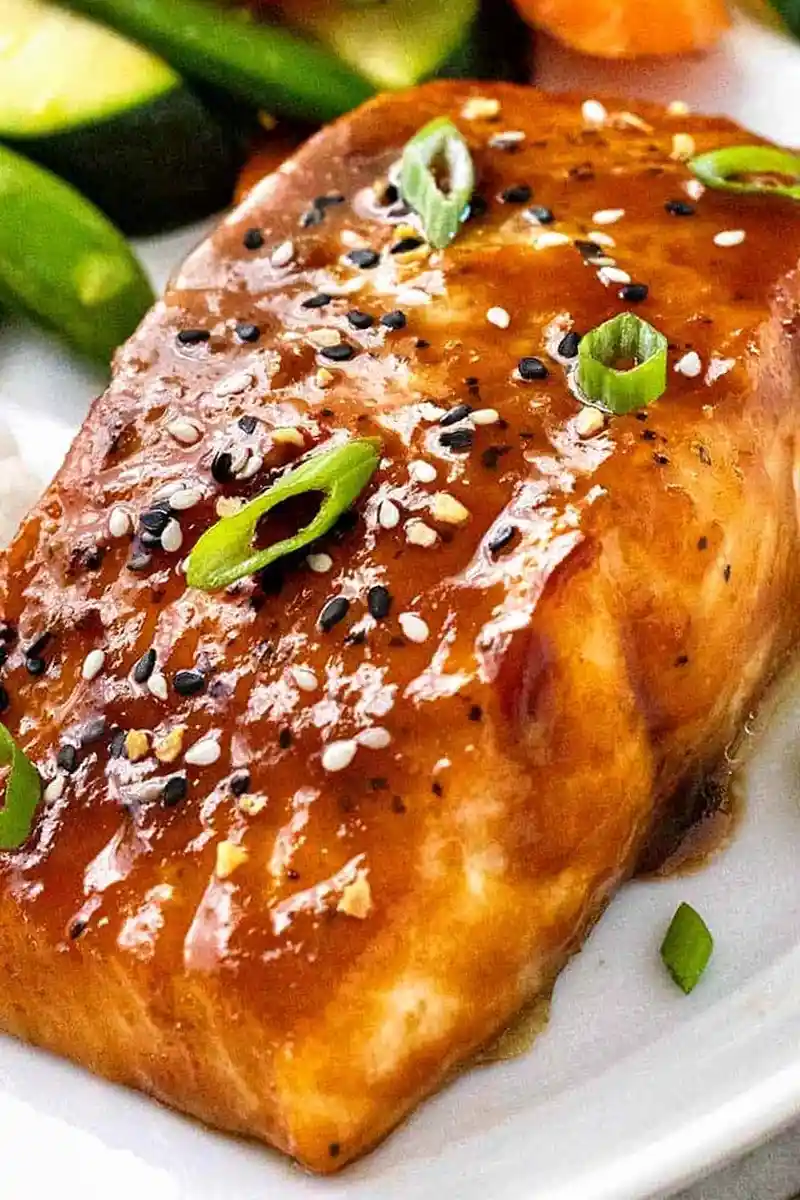
This 15-minute miso salmon offers a perfect balance of savory umami and sweetness. It is an ideal healthy dinner option for busy weeknights that requires minimal prep.
List of ingredients
- 1/4 cup packed dark brown sugar – provides sweetness and caramelization.
- 2 tablespoons red miso – adds a deep, savory umami flavor.
- 2 tablespoons hot water – used to thin the paste into a glaze.
- 2 tablespoons soy sauce – enhances the salty, savory profile.
- 4 skinless salmon fillets (5 to 6 ounce pieces) – the main protein.
- Kosher salt – for basic seasoning.
- Black pepper – for basic seasoning.
- 2 tablespoons sliced green onions – used for a fresh garnish.
- 1/2 teaspoon sesame seeds – used for texture and garnish.
step-by-step instructions
- Heat Oven: Set the oven rack to the lowest position. Heat on the high broil setting. Line a large baking sheet with foil and lightly drizzle with olive oil to prevent sticking.
- Make the Glaze: In a medium bowl, whisk together the brown sugar, red miso, hot water, and soy sauce until smooth. Set this mixture aside.
- Glaze the Salmon: Season both sides of the fillets with salt and pepper. Arrange them on the prepared baking sheet at least 2 inches apart. Spoon or brush about 1 tablespoon of miso glaze over the surface and sides of each fillet, reserving the remaining glaze.
- Broil: Broil the salmon on the lowest rack for 5 minutes. Remove the pan and add more glaze to the surface of the fish. Broil for 3 more minutes, then glaze one final time. Broil until the fish flakes easily with a fork and reaches an internal temperature of 135 to 140°F (57 to 60°C), typically about 2 more minutes depending on thickness.
- Serve: Transfer the fillets to a serving platter. Garnish with the sliced green onions and sesame seeds before serving.
Choosing the Right Salmon
Atlantic Salmon
Atlantic salmon is a popular choice for this recipe due to its higher fat content. This makes the fillets more succulent and less likely to dry out under the intense heat of the broiler.
King Salmon
King salmon is the fattiest of all salmon varieties and has a very buttery texture. It can handle high heat well and results in an exceptionally rich dish.
Wild Alaskan Salmon
Wild salmon, such as Sockeye, is leaner and has a more intense, fishy flavor. Because it has less fat, it cooks faster and may become dry if overcooked, so check the temperature early.
Skin-on vs Skinless Fillets
While skinless fillets are used here, you can use skin-on salmon for extra protection. Simply broil the fish skin-side down and use a spatula to lift the flesh away from the skin after cooking.
Understanding Miso Paste Varieties
Red Miso Paste
Red miso is fermented longer and has a higher proportion of soybeans. This results in a bold, salty, and intense flavor that stands up well to the sweetness of brown sugar.
White Miso Paste
White miso is fermented for a shorter time and contains more rice. It offers a milder, sweeter taste that is less pungent than the red variety.
Yellow Miso Paste
Yellow miso serves as a balanced middle ground between red and white. It provides a moderate level of saltiness and sweetness suitable for various palates.
Managing Salt Levels
Miso and soy sauce are both high in sodium. If you are watching your salt intake, you can use a low-sodium soy sauce or slightly reduce the amount of miso paste used.
Customizing the Miso Glaze
Honey and Maple Syrup Alternatives
You can replace brown sugar with honey or pure maple syrup for a different flavor profile. If using these liquid sweeteners, omit the hot water to keep the glaze thick enough to cling to the fish.
Adding Tangy Rice Vinegar
For a more acidic and bright taste, stir in a small amount of rice vinegar. Add it half a teaspoon at a time until you reach your preferred level of tanginess.
Incorporating Spicy Elements
To add heat to the dish, mix sriracha, chili oil, or red chili flakes into the glaze. This creates a spicy contrast to the sweet caramelized crust.
Non-Alcoholic Flavor Enhancers
For extra depth without using alcohol, replace the hot water with a non-alcoholic rice-flavored syrup or a splash of white grape juice. This adds a subtle fruitiness to the glaze.
Broiling and Heat Management
The Importance of the Lowest Rack
Placing the oven rack at the lowest position prevents the sugars in the glaze from burning too quickly. This allows the fish to cook through while the glaze caramelizes slowly.
Using Foil vs Parchment Paper
Aluminum foil is recommended because it withstands the extreme temperatures of a high broiler. If using parchment paper, ensure it is rated for high temperatures to prevent it from scorching.
Monitoring Internal Temperature
Using an instant-read thermometer is the most accurate way to ensure the salmon is cooked. Aim for 135 to 140°F for a medium finish that remains moist and flaky.
The Layering Glaze Method
Applying the glaze in multiple stages builds a thick, sticky coating. Each layer caramelizes on top of the previous one, intensifying the flavor and creating a professional-looking crust.
Serving and Pairing Suggestions
Steamed White Rice
Plain jasmine or basmati rice is an excellent side that absorbs the extra miso glaze. It provides a neutral base that balances the intensity of the savory salmon.
Sautéed Bok Choy
Bok choy cooked with garlic and ginger complements the Japanese flavors of the dish. Its crisp texture and slight bitterness cut through the richness of the salmon.
Soba Noodle Salad
Chilled buckwheat soba noodles tossed in a soy-ginger dressing make for a refreshing accompaniment. This pairing adds a different temperature element to the meal.
Roasted Root Vegetables
Carrots or parsnips roasted with a touch of honey and oil provide an earthy sweetness. These vegetables mirror the caramelized notes of the miso glaze.
Preservation and Leftovers
Refrigeration Limits
Cooked miso salmon can be stored in the refrigerator for up to five days. Ensure it is completely cooled before sealing it in a container to prevent moisture buildup.
Airtight Storage Tips
Use a glass airtight container to keep the salmon fresh and prevent it from absorbing other fridge odors. Placing a piece of parchment paper between fillets can prevent them from sticking together.
Microwave Reheating
Heat the salmon in 15 to 30-second increments on a high setting. This gradual heating prevents the fish from becoming rubbery or overcooked.
Oven Reheating Method
To maintain the texture of the glaze, reheat the salmon in a low oven (about 275°F) covered with foil. This gently warms the fish without drying out the surface.
Solving Common Cooking Issues
Preventing Glaze Burning
If the glaze begins to char too quickly, move the oven rack one level lower. You can also slightly reduce the amount of brown sugar if your broiler runs exceptionally hot.
Avoiding Overcooked Salmon
Overcooked salmon becomes dry and chalky. Start checking for doneness a few minutes early, especially when using leaner wild salmon fillets.
Stopping Salmon from Sticking
Always lightly grease your foil with olive oil or use a non-stick baking mat. This ensures the caramelized sugars do not bond the fish to the pan.
Frequently Asked Questions
What is miso?
Miso is a traditional Japanese seasoning produced by fermenting soybeans with salt and koji. It is a thick paste known for its rich umami flavor and probiotic properties.
Can I use a different fish?
Yes, this glaze works well with other fatty fish like cod or halibut. However, these may require different cooking times depending on the thickness of the fillet.
How do I know when salmon is done?
The fish is done when it flakes easily with a fork and the internal temperature reaches 135-140°F. If the skin is on, you can tell it is ready when the flesh separates easily from the skin.
Is this recipe freezer friendly?
It is best to freeze the raw salmon fillets and prepare the glaze fresh. Cooking and then freezing the salmon can result in a loss of texture and flavor upon reheating.
Print
Quick Miso Glazed Salmon
- Total Time: 15 minutes
- Yield: 4 servings 1x
- Diet: Dairy-Free
Description
Quick and easy miso salmon recipe combining the savory flavor of miso paste with succulent, fatty salmon fillets.
Ingredients
- 1/4 cup packed dark brown sugar
- 2 tablespoons red miso
- 2 tablespoons hot water
- 2 tablespoons soy sauce
- 4 skinless salmon fillets (5 to 6 ounce pieces)
- kosher salt
- black pepper
- 2 tablespoons sliced green onions
- 1/2 teaspoon sesame seeds
Instructions
- Heat Oven: Set the oven rack to the lowest position. Heat on the high broil setting. Line a large baking sheet with foil. Lightly drizzle with olive oil to prevent sticking. Set aside.
- Make the Glaze: In a medium bowl, whisk together brown sugar, miso, hot water, and soy sauce. Set aside.
- Glaze the Salmon: Season both sides of the fillets with salt and pepper. Arrange them at least 2 inches apart on the prepared baking sheet. Spoon or brush about 1 tablespoon of miso glaze over the surface and sides of each fillet. Reserve the remaining glaze.
- Broil: Broil the salmon on the lowest rack for 5 minutes. Remove and add more glaze to the surface. Broil for 3 minutes, then glaze one more time. Broil until the fish flakes easily with a fork, and reaches an internal temperature between 135 to 140ºF (57 to 60ºC), about 2 minutes depending on thickness.
- Serve: Transfer to a serving platter or dish. Garnish with green onions and sesame seeds.
Notes
For skin-on salmon, broil fillets skin-side down and remove skin before serving. White or yellow miso can be used for a milder, sweeter flavor. Honey or pure maple syrup can substitute brown sugar (omit water). If no broiler is available, roast at 525ºF (274ºC). Wild salmon is leaner and may require shorter cooking (7-8 minutes). Store in an airtight container for up to 5 days; reheat in a microwave in 15-30 second increments.
- Prep Time: 5 minutes
- Cook Time: 10 minutes
- Category: Entree
- Method: Broiling
- Cuisine: Japanese
Nutrition
- Serving Size: 1 fillet
- Calories: 318 kcal
- Sugar: 14 g
- Sodium: 899 mg
- Fat: 11 g
- Saturated Fat: 2 g
- Unsaturated Fat: 9 g
- Trans Fat: 0 g
- Carbohydrates: 16 g
- Fiber: 1 g
- Protein: 36 g
- Cholesterol: 94 mg