This fast-paced meal combines savory beef and rich sauces for a satisfying dinner. It takes only 20 minutes to prepare and uses simple pantry staples to create a bold flavor profile.
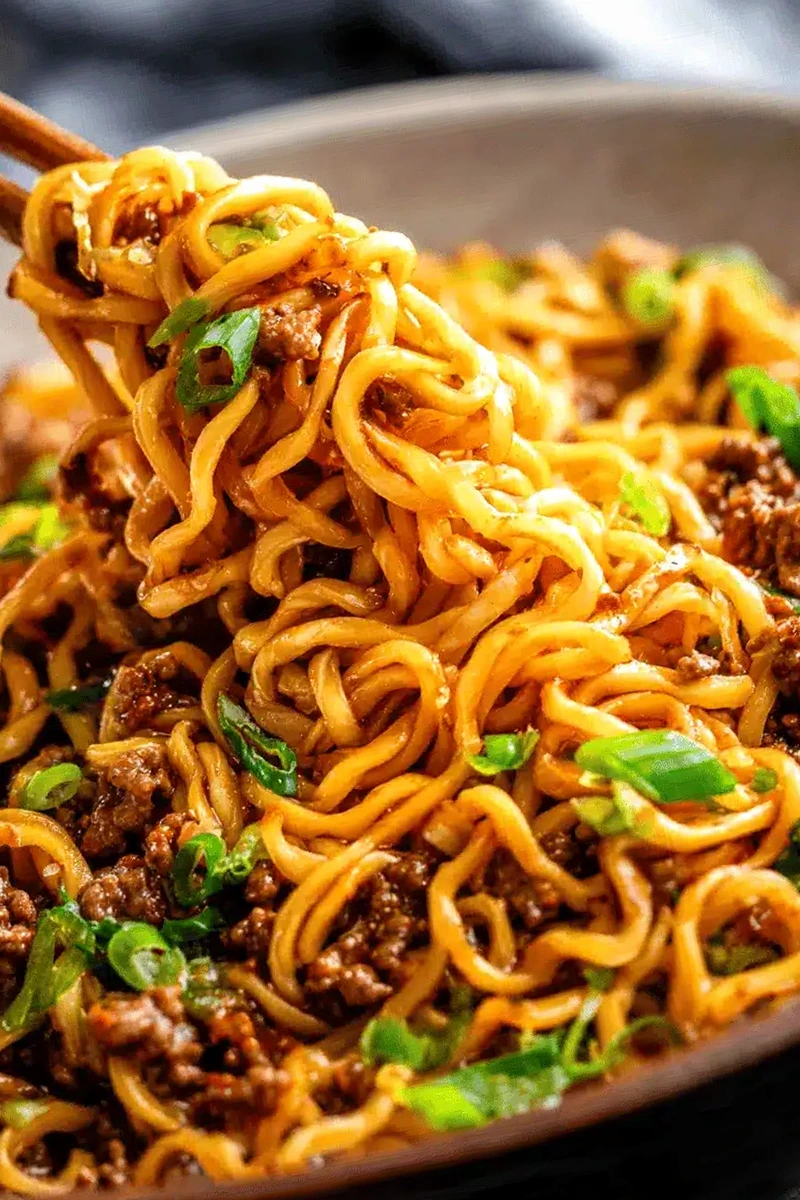
List of ingredients
- 1 tablespoon peanut oil – provides a high smoke point for frying.
- 2 teaspoons sesame oil – adds a toasted, nutty aroma.
- 0.5 pound ground beef – the main protein source.
- 1 teaspoon fresh ginger, grated – provides a zesty, aromatic kick.
- 2 cloves garlic, minced – adds depth and savory flavor.
- 2 tablespoons low sodium soy sauce – for a balanced saltiness.
- 1 tablespoon dark soy sauce – enhances the rich brown color.
- 3 tablespoons oyster sauce – adds umami and thickness to the sauce.
- 1 tablespoon rice vinegar – cuts through the richness with acidity.
- 6 ounces ramen or other instant noodles – the base of the dish.
- 2 green onions, chopped – used for both flavor and fresh garnish.
- 0.5 teaspoon red pepper flakes – adds a mild heat to the finish.
step-by-step instructions
- Prepare the Noodles: Cook the ramen or other noodles according to the package instructions. Drain them well and set aside.
- Brown the Beef: Heat the peanut oil and sesame oil in a large skillet over medium heat. Add the ground beef and cook until slightly browned, breaking it apart with a spatula.
- Sauté the Aromatics: Stir in the grated ginger, minced garlic, low sodium soy sauce, and dark soy sauce. Stir fry for approximately 15 seconds to release the scents.
- Combine and Toss: Add the oyster sauce, rice vinegar, cooked noodles, and chopped green onions. Stir everything together until evenly coated.
- Adjust Consistency: If the mixture appears too dry, stir in 1/4 cup of water to loosen the sauce.
- Finish and Serve: Sprinkle the red pepper flakes over the top and serve immediately.
Protein Alternatives
Using Ground Turkey for a Leaner Option
Ground turkey is an excellent substitute if you prefer a leaner meat. It absorbs the soy and oyster sauces well, though it may require a tiny bit more oil to prevent sticking. Ensure you brown it fully to maintain a hearty texture.
Substituting Ground Chicken for a Milder Taste
Ground chicken offers a neutral flavor that allows the ginger and garlic to stand out more. It cooks quickly and pairs perfectly with the rice vinegar. Use a mix of breast and thigh meat for the best moisture levels.
Going Plant-Based with Extra Firm Tofu
Crumble extra-firm tofu into the skillet to mimic the texture of ground meat. Sauté the tofu until the edges are golden brown before adding the aromatics. This creates a satisfying vegetarian version of the dish.
Utilizing Ground Pork-Style Beef Alternatives
If you want a richer fat content similar to other ground meats, choose a higher fat percentage of ground beef, such as 80/20. The extra fat carries the flavors of the sesame oil and soy sauce more effectively across the noodles.
Vegetable Add-ins for Nutrition
Incorporating Crunchy Bell Peppers
Dice red or yellow bell peppers and sauté them with the ground beef. They add a sweet contrast to the salty soy sauce and a vibrant pop of color. Add them halfway through the browning process so they stay crisp.
Adding Fresh Snap Peas
Snap peas provide a fresh, garden-like taste and a satisfying crunch. Toss them into the skillet just before adding the noodles. This ensures they remain bright green and not overcooked.
Mixing in Bok Choy or Spinach
Chopped bok choy or fresh spinach leaves wilt quickly and integrate well into the sauce. Stir them in at the very end of the cooking process. The residual heat from the noodles is usually enough to cook these greens.
Using Shredded Carrots for Texture
Grated or thinly sliced carrots add a natural sweetness and extra vitamins. Sauté them alongside the garlic and ginger for a few seconds. This blends the carrots seamlessly into the savory beef mixture.
Sauce Variations and Flavor Tweaks
Adding Sweet Chili Sauce for a Glaze
Stir in a tablespoon of sweet chili sauce to create a stickier, sweeter glaze. This pairs exceptionally well with the acidity of the rice vinegar. It transforms the dish into a more balanced sweet-and-savory meal.
Using Hoisin Sauce for Depth
Replace one tablespoon of oyster sauce with hoisin sauce for a thicker, plummier flavor. Hoisin adds a subtle sweetness and a complex aroma of five-spice. This makes the dish feel more like a traditional stir-fry.
Increasing Heat with Sriracha
For those who prefer a spicy kick, drizzle sriracha over the noodles before serving. You can also stir it directly into the sauce for a uniform heat. Balance the spice by adding a few extra chopped green onions.
Creating a Nutty Peanut Sauce Twist
Whisk a tablespoon of peanut butter into the sauce mixture before adding it to the pan. This creates a creamy, satay-style sauce that clings heavily to the noodles. Add a splash of extra water to maintain a smooth consistency.
Noodle Substitutes
Using Thick Udon Noodles
Udon noodles provide a chewy, substantial texture that holds up well to heavy sauces. Boil them separately and rinse with cold water before tossing them in the skillet. They make the meal feel significantly more filling.
Substituting with Rice Noodles
For a gluten-free alternative, use wide rice noodles. Soak them in hot water as directed on the package. Be gentle when stirring, as rice noodles can break more easily than wheat-based ramen.
Trying Soba Noodles for an Earthy Tone
Soba noodles, made from buckwheat, add a nutty, earthy flavor to the dish. They pair perfectly with the sesame oil and ginger. Keep the cooking time short to avoid a mushy texture.
Utilizing Whole Wheat Spaghetti
In a pinch, whole wheat spaghetti works as a sturdy substitute for ramen. Cook the pasta al dente so it doesn’t overcook when sautéed with the beef. This adds a heartier, grain-forward taste to the recipe.
Expert Cooking Techniques
Maximizing Flavor with Fresh Aromatics
Avoid using powdered ginger or garlic for this specific recipe. Freshly grated ginger provides a sharp, clean heat that cannot be replicated. Mincing garlic just before use prevents the flavor from dissipating during the stir-fry.
Preventing Noodle Clumping
Rinse your cooked noodles under cold running water for a few seconds. This removes excess starch that causes noodles to stick together. It ensures each strand is individually coated in the savory beef sauce.
Managing Skillet Temperature
Maintain a consistent medium heat throughout the browning process. If the pan is too hot, the garlic and ginger will burn and become bitter. If it is too low, the beef will steam in its own juices rather than searing.
Balancing the Umami and Acid
Taste the sauce before adding the noodles to ensure the balance is correct. If it feels too salty, add a teaspoon more of rice vinegar. If it is too tart, a pinch of brown sugar can neutralize the acidity.
Storage and Reheating Guide
Optimal Refrigeration Methods
Place leftover noodles in an airtight glass container to maintain freshness. They will stay safe to eat for up to four days in the refrigerator. Keep the garnish, like extra green onions, separate until you are ready to serve.
Preventing Dryness During Reheating
Noodles tend to absorb sauce as they sit in the fridge. When reheating, sprinkle one to two tablespoons of water over the dish. This re-emulsifies the sauce and restores the glossy texture.
Microwave vs Stovetop Reheating
The stovetop is the best method for maintaining texture; heat on medium with a splash of water. For a quicker option, use the microwave on medium power in 30-second intervals. Stir frequently to ensure even heating.
Serving and Pairing Ideas
Plating for Visual Appeal
Use tongs to swirl the noodles into a high mound in the center of a shallow bowl. This creates a professional look and keeps the heat trapped inside. Garnish with a generous amount of fresh green onions and red pepper flakes.
Pairing with Steamed Broccoli
Steamed broccoli provides a fresh, crisp contrast to the richness of the beef. The florets act like sponges, soaking up any extra sauce left on the plate. Lightly season the broccoli with salt and pepper.
Serving with a Zesty Cucumber Salad
A chilled cucumber salad with rice vinegar and sesame seeds cleanses the palate. The coolness of the cucumber balances the heat from the red pepper flakes. It adds a refreshing element to the heavy noodle dish.
Complementing with Crispy Spring Rolls
Serve the noodles alongside vegetable spring rolls for added texture. The crunch of the fried wrapper complements the softness of the ramen. This transforms a simple dinner into a complete Asian-inspired feast.
Common Troubleshooting
Dealing with an Overly Salty Sauce
If the soy and oyster sauces make the dish too salty, add a squeeze of fresh lime juice. The citric acid helps mask the saltiness. Alternatively, stir in a handful of unsalted steamed vegetables to dilute the concentration.
Fixing Mushy Noodles
Mushy noodles usually result from overcooking during the boiling phase. To prevent this, cook them for one minute less than the package suggests. They will finish cooking and firm up while tossing in the hot skillet.
Addressing a Sauce that is Too Thin
If the sauce is too watery and won’t cling to the noodles, simmer it for an extra minute before adding the pasta. You can also stir in a small slurry of cornstarch and water. This creates a thick, glossy coating instantly.
Handling Beef that is Too Greasy
If the ground beef releases too much fat, carefully spoon out the excess oil before adding the ginger and garlic. Leave about one tablespoon of fat for flavor. This prevents the noodles from becoming oily and heavy.
Frequently Asked Questions
Can I substitute the beef with another protein?
Yes, ground turkey, ground chicken, or crumbled extra-firm tofu work well. These proteins absorb the flavors of the soy and oyster sauce effectively while offering different nutritional profiles.
What is the best way to add more vegetables?
Sauté hardy vegetables like carrots and peppers with the beef. Add softer vegetables like spinach or bok choy at the very end to prevent them from overcooking.
How can I make this dish gluten-free?
Swap the soy sauce and dark soy sauce for tamari or coconut aminos. Ensure you use certified gluten-free rice noodles or corn-based noodles instead of wheat ramen.
Can I use dried garlic and ginger instead of fresh?
While possible, the flavor will be significantly less vibrant. Use 1/3 of the amount of dried spices compared to fresh, as dried versions are more concentrated but lack the aromatic depth.
Print
Quick Asian Ground Beef Noodles
- Total Time: 20 minutes
- Yield: 2 servings 1x
- Diet: General
Description
These Asian Ground Beef Noodles are quick and easy with a delicious sauce bursting with flavor, perfect for a weeknight meal.
Ingredients
- 1 tablespoon peanut oil
- 2 teaspoons sesame oil
- 0.5 pound ground beef
- 1 teaspoon fresh ginger, grated
- 2 cloves garlic, minced
- 2 tablespoons low sodium soy sauce
- 1 tablespoon dark soy sauce
- 3 tablespoons oyster sauce
- 1 tablespoon rice vinegar
- 6 ounces ramen or other instant noodles
- 2 green onions, chopped
- 0.5 teaspoon red pepper flakes
Instructions
- Step 1: Cook the ramen or other noodles according to package instructions.
- Step 2: Heat the peanut oil and sesame oil in a large skillet over medium heat. Add the ground beef and cook until slightly browned, breaking it apart.
- Step 3: Add the grated ginger, minced garlic, soy sauce and dark soy sauce to the skillet and stir fry for another 15 seconds.
- Step 4: Add the oyster sauce, rice vinegar, cooked noodles and green onions. Stir everything together, if too dry add ¼ cup of water.
- Step 5: Sprinkle with red pepper flakes and serve.
Notes
No wok required; just use a large skillet. Use fresh ginger and garlic for best flavor. Store in an airtight container in the fridge for up to 4 days.
- Prep Time: 10 minutes
- Cook Time: 10 minutes
- Category: Dinner
- Method: Stir Fry
- Cuisine: Asian
Nutrition
- Serving Size: 1 serving
- Calories: 796 kcal
- Sugar: 2 g
- Sodium: 3634 mg
- Fat: 47 g
- Saturated Fat: 17 g
- Unsaturated Fat: 26 g
- Trans Fat: 1 g
- Carbohydrates: 61 g
- Fiber: 3 g
- Protein: 32 g
- Cholesterol: 81 mg