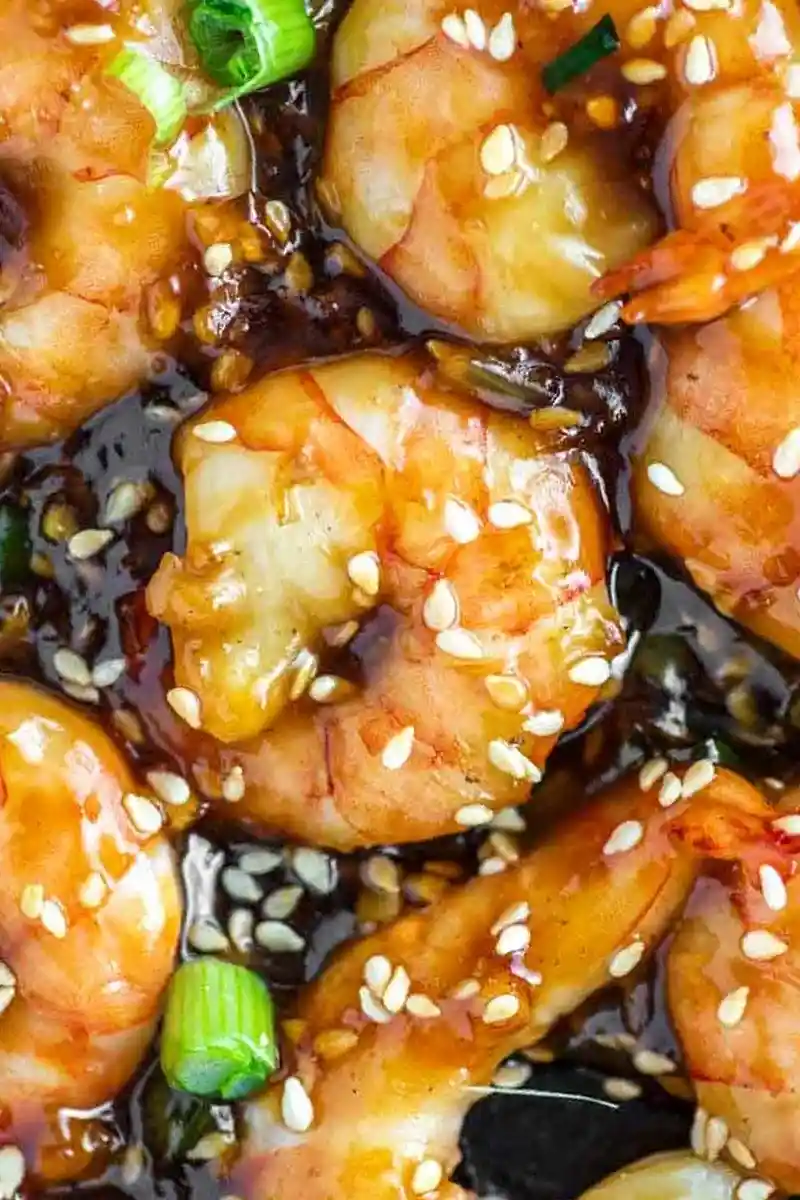
This teriyaki shrimp recipe is a fast and flavorful meal that takes only 15 minutes to prepare. It is an excellent choice for a healthy weeknight dinner that pairs well with rice or vegetables.
List of ingredients
- 1 tbsp olive oil – used for searing the shrimp.
- 1 lb medium to large shrimp – peeled and deveined.
- 1/4 cup low-sodium soy sauce – the base for the savory sauce.
- 2 tbsp water – to thin the sauce base.
- 2 tbsp light brown sugar – adds a rich sweetness.
- 1 tbsp honey – provides a glossy finish and extra sweetness.
- 1 tbsp rice vinegar – adds a necessary tangy balance.
- 1 tsp sesame oil – for a distinct nutty aroma.
- 3 garlic cloves, minced – for pungent savory flavor.
- 1 tsp fresh ginger, grated – adds a bright, zesty note.
- 1 green onion, diced – used for flavor and texture.
- 1 tbsp toasted sesame seeds – for added crunch.
- 1 tbsp water – used specifically for the cornstarch slurry.
- 1 tbsp cornstarch – used to thicken the final glaze.
step-by-step instructions
- Prepare the Sauce: In a small bowl, mix together the soy sauce, 2 tablespoons of water, brown sugar, honey, rice vinegar, sesame oil, garlic, ginger, green onion, and sesame seeds. Stir until the sugar is mostly dissolved.
- Sear the Shrimp: Heat olive oil in a large skillet over medium-high heat. Add the shrimp and cook for 1-2 minutes per side until they turn pink. Avoid overcooking to keep them tender.
- Boil the Sauce: Remove the cooked shrimp from the pan and set them aside. Pour the prepared teriyaki sauce into the skillet and bring it to a boil.
- Thicken the Glaze: In a small separate bowl, whisk together 1 tablespoon of water and the cornstarch until smooth. Pour this slurry into the boiling sauce and simmer for 1-2 minutes until the liquid thickens.
- Coat and Serve: Return the shrimp to the skillet and toss them until they are evenly coated in the thick glaze. Serve immediately over steamed rice or with a side of vegetables.
Sauce Ingredient Alternatives
Use Tamari for a Gluten-Free Option
Tamari is an excellent substitute for soy sauce if you need a gluten-free version of this recipe. It has a similar salty profile but is made without wheat. The taste remains nearly identical in a cooked glaze.
Coconut Aminos for Lower Sodium
For a lower-sodium alternative, use coconut aminos instead of soy sauce. Coconut aminos are naturally sweeter, so you may want to slightly reduce the amount of brown sugar. This option is also soy-free.
Maple Syrup as a Sugar Substitute
If you do not have brown sugar or honey, pure maple syrup is a great alternative. It provides a different kind of sweetness with a hint of maple flavor. Use it in a 1:1 ratio with the honey.
Apple Cider Vinegar for Acidity
Rice vinegar provides a mild tang, but apple cider vinegar can be used if it is unavailable. It has a slightly stronger flavor, so start with a small amount. Lemon juice is another effective acidic substitute.
Arrowroot Powder as a Thickener
Arrowroot powder can replace cornstarch to achieve a similar thickening effect. It often results in a clearer glaze and is a good alternative for those avoiding corn. Mix it with cold water first to avoid lumps.
Expert Shrimp Preparation Tips
Prioritize Wild-Caught Shrimp
Wild-caught shrimp often have a more robust flavor and a firmer texture than farm-raised varieties. They typically contain fewer additives and a better omega-3 profile. Always check the labels for sustainability certifications.
Thaw Frozen Shrimp Safely
If using frozen shrimp, thaw them in the refrigerator overnight for the best results. For a faster method, place them in a sealed bag and submerge them in cold water. Never thaw shrimp in warm water as this affects the texture.
Handle Pre-Cooked Shrimp with Care
When using shrimp that are already cooked, reduce the searing time to just 30 seconds per side. Their only purpose in the pan is to warm through and brown slightly. Overcooking pre-cooked shrimp makes them rubbery.
Identify When Shrimp is Perfectly Cooked
Shrimp are done when they curl into a ‘C’ shape and the flesh becomes opaque. If they curl tightly into an ‘O’ shape, they are likely overcooked. The exterior should be pink with a white interior.
Best Side Dish Pairings
Serve Over Steamed Jasmine Rice
Jasmine rice is an ideal base because its slightly floral aroma complements the teriyaki glaze. The grains soak up the excess sauce, ensuring no flavor is wasted. Brown rice is a good whole-grain alternative.
Pair with Stir-Fried Broccoli
Broccoli florets provide a crisp texture and a slight bitterness that balances the sweetness of the sauce. Stir-fry them quickly in the same pan before adding the shrimp. This keeps the vegetables vibrant and crunchy.
Incorporate Fresh Snap Peas
Snap peas add a fresh, sweet crunch to the meal. Toss them in during the last two minutes of the sauce thickening process. This ensures they are cooked but still retain their snap.
Try Quinoa for Extra Protein
Quinoa is a nutrient-dense alternative to rice that adds a nutty flavor. It provides more protein and fiber, making the meal more filling. Simply steam it according to package directions before serving.
Flavor Customization Ideas
Add Red Pepper Flakes for Heat
If you prefer a spicy kick, stir in 1/4 to 1/2 teaspoon of crushed red pepper flakes. Add them to the sauce during the boiling phase to infuse the heat. This creates a spicy-sweet contrast.
Using Dried Ginger Instead of Fresh
If fresh ginger is not available, you can use ground dried ginger. Use 1/2 teaspoon of dried ginger for every 1 teaspoon of fresh ginger required. Note that the flavor will be less bright.
Balance Sweetness with Fresh Lime
A squeeze of fresh lime juice over the finished dish can brighten the flavors. The acidity cuts through the richness of the honey and brown sugar. Use a lime wedge for a professional presentation.
Enhance Aroma with Extra Sesame Oil
Drizzling a tiny amount of fresh sesame oil over the shrimp just before serving enhances the nutty aroma. This is a common technique in Asian cuisine to heighten the sensory experience. Do not cook the final drizzle as the oil can burn.
Storage and Reheating Guide
Store in Airtight Containers
Place leftover shrimp and sauce in a glass airtight container. Ensure the shrimp are fully coated in sauce to prevent them from drying out in the fridge. This keeps the moisture sealed in.
Follow Refrigeration Timelines
Cooked shrimp should be consumed within three days when stored in the refrigerator. After this period, the texture begins to degrade and the risk of spoilage increases. Label your containers with the date of preparation.
Reheat Using Low Heat
Avoid using a high-power microwave setting, which can make shrimp rubbery. Instead, reheat them in a skillet over low heat. Stir gently until the sauce liquefies and the shrimp are warmed through.
Restore Sauce Consistency
If the sauce has thickened too much in the fridge, add a teaspoon of water during reheating. This loosens the glaze and restores its glossy appearance. Stir constantly to ensure even heating.
Troubleshooting and FAQs
What is Teriyaki Sauce?
Teriyaki is a Japanese-style glaze made primarily from soy sauce, a sweetener like sugar or honey, and aromatics like ginger and garlic. It is characterized by its sweet and salty flavor profile and thick, glossy consistency.
How Do I Peel and Devein Shrimp?
Use your fingers or kitchen shears to remove the shell, leaving the tail on for presentation. Use a small knife to make a shallow slit along the back and remove the dark vein. This ensures a cleaner taste and better texture.
How Do I Know When the Shrimp is Cooked?
Shrimp are fully cooked when the flesh changes from translucent to an opaque white and the outside is pink. This usually takes about 2 minutes per side in a hot pan. Use a meat thermometer to check for an internal temperature of 145 degrees Fahrenheit.
Can I Grill the Shrimp?
Yes, you can grill the shrimp by threading them onto skewers. Brush them with the teriyaki sauce and grill for 2-3 minutes per side. This adds a smoky char that complements the sweet glaze.
How to Fix a Sauce That Is Too Thin?
If your sauce is too runny, mix an additional teaspoon of cornstarch with a teaspoon of cold water. Stir this slurry into the simmering sauce and cook for another minute. The heat will activate the starch and thicken the liquid.
What to Do if the Sauce Is Too Salty?
If the sauce is overly salty, add a small amount of water or an extra teaspoon of honey. You can also add a squeeze of lemon juice to balance the sodium. Stir well and taste again before adding the shrimp back in.
Print
Quick and Savory Teriyaki Shrimp
- Total Time: 15 minutes
- Yield: 4 servings 1x
- Diet: Dairy-Free
Description
This teriyaki shrimp recipe takes just 15 minutes to prepare but is loaded with flavor, making it a tasty and easy weeknight meal.
Ingredients
- 1 tbsp olive oil
- 1 lb medium to large shrimp, peeled and deveined
- 1/4 cup low-sodium soy sauce
- 2 tbsp water
- 2 tbsp light brown sugar
- 1 tbsp honey
- 1 tbsp rice vinegar
- 1 tsp sesame oil
- 3 garlic cloves, minced
- 1 tsp fresh ginger, grated
- 1 green onion, diced
- 1 tbsp toasted sesame seeds
- 1 tbsp water
- 1 tbsp cornstarch
Instructions
- Step 1: In a small bowl, mix together the soy sauce, water, brown sugar, honey, rice vinegar, sesame oil, garlic, ginger, green onion and sesame seeds.
- Step 2: Heat oil in large skillet over medium-high heat. Add the shrimp and cook for 1-2 minutes per side or until pink.
- Step 3: Remove shrimp from pan and add teriyaki sauce, bringing to a boil.
- Step 4: In a small bowl, whisk together the tbsp of water and cornstarch until smooth and add to sauce. Simmer for 1-2 minutes or until thick.
- Step 5: Return the shrimp to coat evenly with the sauce. Serve over some rice and veggies if desired.
Notes
Choose wild shrimp for better flavor; frozen shrimp work if thawed. If using pre-cooked shrimp, sear for only 30 seconds per side. Substitute fresh ginger with 1/2 teaspoon dried ginger. Add 1/4 to 1/2 teaspoon crushed red pepper flakes for heat. Let the sauce thicken before adding shrimp back to the pan.
- Prep Time: 5 minutes
- Cook Time: 10 minutes
- Category: Main Course
- Method: Stir-fry
- Cuisine: Japanese
Nutrition
- Serving Size: 1 serving
- Calories: 228 kcal
- Sugar: 4 g
- Sodium: 663 mg
- Fat: 5 g
- Saturated Fat: 1 g
- Unsaturated Fat: 4 g
- Trans Fat: 0 g
- Carbohydrates: 15 g
- Fiber: 1 g
- Protein: 22 g
- Cholesterol: 42 mg