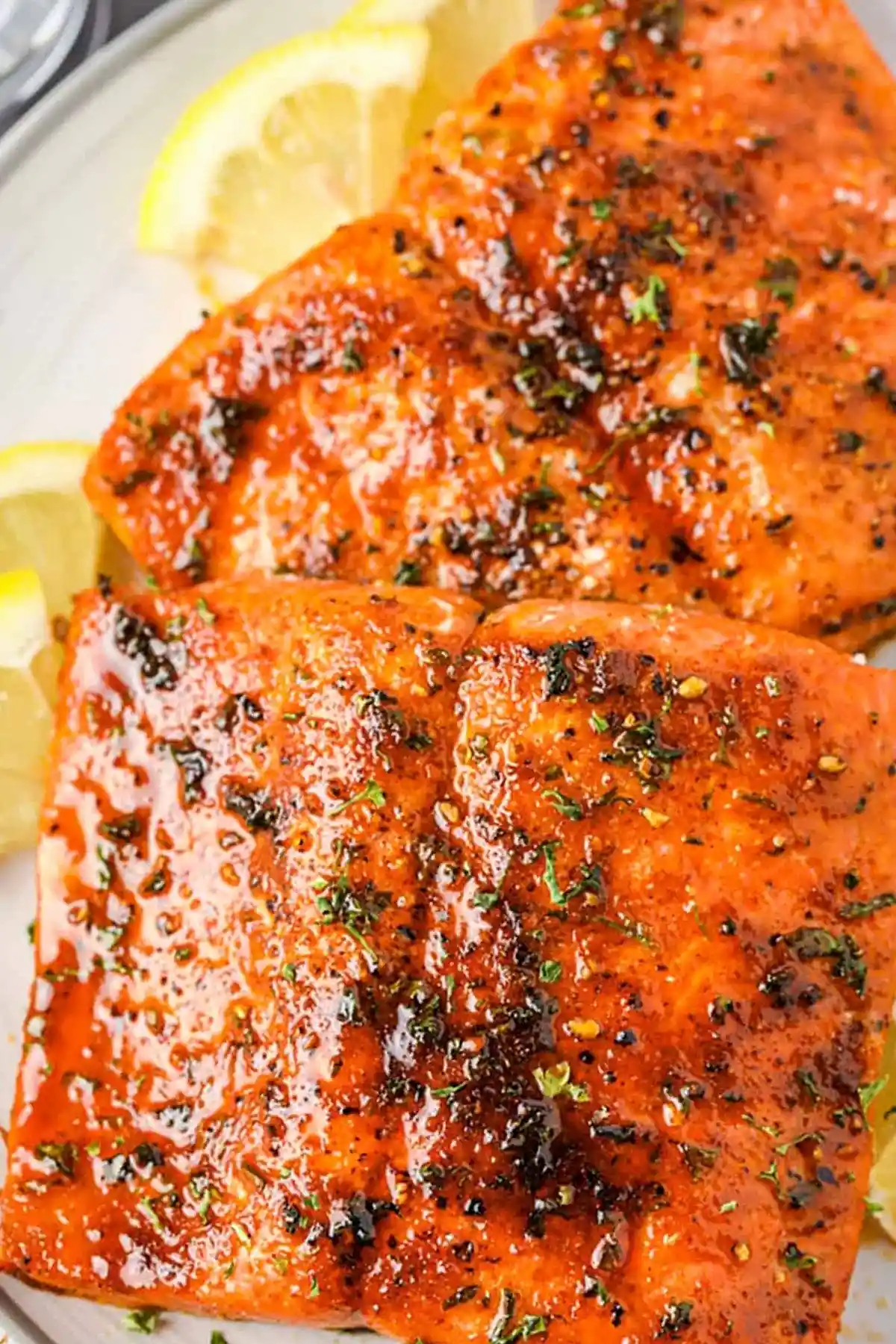
Prepare tender and flaky salmon fillets in just a few minutes using your air fryer. This method creates a caramelized exterior while keeping the inside moist and succulent.
List of ingredients
- 2 salmon filets (about 6 ounces each) – use similar sizes for even cooking.
- 2 teaspoons olive oil – helps the seasoning adhere and prevents sticking.
- 2 teaspoons brown sugar – creates a sweet, caramelized crust.
- ⅛ teaspoon garlic powder – adds a savory, aromatic depth.
- ¼ teaspoon lemon pepper seasoning – provides a zesty, citrusy flavor.
- ¼ teaspoon salt – adjust according to your taste preferences.
- ⅛ teaspoon black pepper – add more if you prefer a bolder spice.
- 1 lemon (sliced, plus extra for serving) – slices act as a rack and infuse flavor.
step-by-step instructions
- Preheat: Set the air fryer to 400°F to ensure the fish sears immediately upon contact.
- Oil: Brush the surface of the salmon filets evenly with olive oil.
- Season: In a small bowl, combine the brown sugar, garlic powder, and lemon pepper seasoning, then sprinkle the mixture evenly over the filets.
- Arrange: Place the lemon slices in the air fryer basket and set the salmon filets directly on top of the slices.
- Cook: Air fry for 6 to 9 minutes or until the salmon is cooked through, being careful not to overcook the fish.
Advanced Techniques for Perfect Results
Pat the Salmon Dry Before Oiling
Use a clean paper towel to remove all surface moisture from the fish. This step ensures that the olive oil and seasoning stick better to the flesh. It also prevents the salmon from steaming, which allows for a better caramelized crust.
Use a Digital Meat Thermometer
The only way to ensure precision is to check the internal temperature. Insert the probe into the thickest part of the fillet. Remove the salmon from the air fryer as soon as it reaches 145°F to avoid toughness.
Avoid Overcrowding the Basket
Leave ample space between the salmon fillets for air to circulate. If the basket is too full, the air cannot flow around the fish, leading to uneven cooking. This may result in some areas being raw while others are overdone.
Remove Fillets Immediately After Cooking
The residual heat of the air fryer basket will continue to cook the fish. Transfer the salmon to a plate or serving platter as soon as the timer goes off. This prevents the proteins from tightening and becoming dry.
Select High-Quality Fillets
Look for salmon with a vibrant, consistent color and no soft spots. Ensure the fillets are of similar thickness to ensure they finish cooking at the same time. Thicker cuts will require the full 9 minutes or slightly more.
Keep the Skin Intact
Leave the skin on the salmon during the cooking process. The skin protects the delicate meat from the direct heat of the air fryer. This results in a more moist interior and a crispier bottom.
Ingredient Substitutions and Alternatives
Sugar-Free Brown Sugar Replacements
For a low-carb or keto version, use a brown sugar substitute made from monk fruit or erythritol. These alternatives maintain the caramelized effect without the added glucose. Ensure the substitute is heat-stable to avoid a bitter aftertaste.
Alternative Cooking Oils
Avocado oil is an excellent substitute for olive oil due to its higher smoke point. Grapeseed oil is another neutral option that works well. Avoid using butter for the initial brush, as it can burn at 400°F.
Variations for Garlic Powder
If you prefer a fresher taste, use finely minced fresh garlic. Spread it in a thin layer across the oil-brushed surface. Be cautious, as fresh garlic can burn more quickly than the powdered version in an air fryer.
Replacing Lemon Pepper Seasoning
If you lack lemon pepper, combine a pinch of citric acid or lemon zest with extra black pepper. A small amount of sumac can also provide a similar tangy, citrus-like profile. Adjust the salt levels accordingly.
Using Different Salts
Kosher salt is preferred for its larger grains, which provide a better texture on the crust. Sea salt is also a great option for a cleaner flavor. Avoid using table salt in large quantities as it can be overly salty.
Substitute for Brown Sugar
Maple syrup can be brushed on the salmon instead of using brown sugar. This creates a different kind of glaze that is slightly more fluid. It provides a rich, woody sweetness that pairs perfectly with fish.
Flavor Variations and Customizations
Cajun-Style Salmon
Replace the brown sugar and lemon pepper with a bold Cajun seasoning blend. Include smoked paprika, cayenne, and onion powder for a spicy kick. This version pairs exceptionally well with a side of corn or dirty rice.
Asian-Inspired Soy and Ginger Glaze
Skip the brown sugar mix and marinate the salmon in a mixture of soy sauce, grated ginger, and a drop of sesame oil. This creates a savory, umami-rich crust. Air fry as usual, but check for doneness sooner due to the sugar in the soy sauce.
Honey Mustard Topping
Mix equal parts honey and Dijon mustard to create a thick glaze. Spread this over the oiled salmon before placing it in the air fryer. The mustard provides a sharp contrast to the sweetness of the honey.
Everything Bagel Seasoning Crust
Use everything bagel seasoning instead of the lemon-sugar rub. This adds a crunchy texture with toasted sesame seeds and dried onion. It transforms the salmon into a savory, brunch-style dish.
Pesto-Crusted Salmon
Spread a thin layer of basil pesto over the top of each fillet. The oil in the pesto keeps the fish moist while the basil and parmesan create a fragrant crust. Reduce the cooking time by one minute as pesto can brown quickly.
Maple and Smoked Paprika Rub
Combine maple sugar with a teaspoon of smoked paprika for a woody, smoky flavor. This combination mimics the taste of grilled salmon. It works particularly well with wild-caught sockeye salmon.
Serving Suggestions and Side Pairings
Fluffy Grains and Rice
Serve the salmon over a bed of wild rice pilaf or quinoa. These grains absorb the lemon juice and oil from the fish. Adding a bit of parsley to the rice enhances the visual presentation.
Fresh Green Salads
Place the warm salmon fillets on top of a bed of mixed baby greens. Use a light lemon-vinaigrette to complement the brown sugar glaze. Add sliced cucumbers and cherry tomatoes for a refreshing crunch.
Quick-Cooking Vegetables
Air fry asparagus or sliced zucchini along with the salmon during the last 5 minutes. This ensures all components of the meal are hot at the same time. Broccoli florets are also an excellent, nutrient-dense choice.
Creamy Pasta Dishes
Serve the glazed salmon over fettuccine with a light garlic cream sauce. The acidity of the lemon in the salmon cuts through the richness of the pasta. Garnish with fresh chives or dill.
Citrusy Cabbage Slaw
Pair the fish with a cold slaw made from shredded red cabbage, lime juice, and cilantro. The acidity and crunch of the slaw balance the sweetness of the brown sugar glaze. This is a great option for a lighter lunch.
Roasted Root Vegetables
Complement the salmon with honey-glazed carrots or roasted parsnips. The earthy sweetness of root vegetables mirrors the caramelized top of the fish. Ensure the vegetables are roasted before the salmon is finished.
Storage, Reheating, and Make-Ahead Advice
Proper Refrigeration Methods
Store leftover salmon in an airtight glass container or a sealed zippered bag. Keep it in the coldest part of the refrigerator for up to 3 to 4 days. This prevents the fish from picking up other odors in the fridge.
The Best Way to Reheat
To maintain the texture, reheat the salmon in the air fryer at 350°F for 2 to 3 minutes. Avoid using a microwave, as it often makes the fish rubbery and dries out the center. A light spray of oil can refresh the crust.
Cold Salmon Applications
Cold air fryer salmon is excellent when flaked into a salad. You can also mix it with Greek yogurt, lemon juice, and fresh dill to make a healthy salmon salad sandwich. Use whole-grain bread for added texture.
Make-Ahead Preparation
You can season the salmon fillets and store them in the fridge for up to 24 hours before cooking. This allows the flavors to penetrate deeper into the meat. Do not add the lemon slices until you are ready to air fry.
Troubleshooting Common Issues
Preventing the Salmon from Sticking
If the salmon sticks to the basket, ensure you are using enough olive oil. Using lemon slices as a base is the most effective way to prevent sticking. Alternatively, you can use a small piece of perforated parchment paper.
Fixing Dry or Overcooked Salmon
Dry salmon is usually a result of cooking for too long. If this happens, serve the fish with a side of tartar sauce or a lemon-butter drizzle to add moisture. In the future, reduce the cooking time by one minute.
Addressing Bland Flavor
If the salmon lacks punch, squeeze fresh lemon juice over the fillets immediately after they leave the air fryer. The fresh acid awakens the salt and sugar. A sprinkle of fresh parsley also adds a bright, clean note.
Managing Air Fryer Smoke
Smoke is often caused by the brown sugar dripping onto the heating element. Use a drip tray or a layer of lemon slices to catch the glaze. Ensure your air fryer is clean and free of old oil residue.
Handling Undercooked Centers
If the outside is caramelized but the center is raw, your fillets may be too thick. Increase the cooking time by 2 minutes. You can also lower the temperature to 375°F and cook for a slightly longer duration.
Dealing with Burnt Glaze
If the brown sugar burns before the fish is done, check your preheat temperature. If the air fryer is too hot, the sugar will char. Try reducing the sugar slightly or adding a bit more oil to the rub.
Frequently Asked Questions
Can I use frozen salmon fillets?
Yes, but they must be completely thawed before cooking. Cooking salmon from frozen leads to an uneven texture and an undercooked center. Thaw them slowly in the refrigerator overnight for the best results.
Which side of the salmon should face up?
Always place the skin side down in the air fryer. This allows the heat to crisp the skin and ensures the seasoned top gets the most exposure to the circulating air for a perfect glaze.
How do I know when the salmon is perfectly done?
The salmon should flake easily when pressed with a fork. The internal temperature should reach 145°F. The color should change from translucent pink to an opaque, pale pink.
Can I cook vegetables at the same time as the salmon?
Yes, provided there is enough room for air to circulate. Add thin asparagus or small broccoli florets to the basket during the final 5 minutes of the salmon’s cooking time.
Is it necessary to preheat the air fryer?
Preheating is highly recommended. It ensures that the cooking time is accurate and that the salmon begins searing immediately, which helps lock in the moisture and caramelize the sugar.
Can I use this recipe for salmon patties?
Yes, you can apply the same seasoning and temperature. However, patties may require an additional 2 to 3 minutes of cooking time depending on their thickness and density.
Print
Quick Air Fryer Salmon with Brown Sugar Glaze
- Total Time: 13 minutes
- Yield: 2 servings 1x
- Diet: General
Description
This Air Fryer Salmon is tender, flaky, and cooked to perfection!
Ingredients
- 2 salmon filets (about 6 ounces each)
- 2 teaspoons olive oil
- 2 teaspoons brown sugar
- ⅛ teaspoon garlic powder
- ¼ teaspoon lemon pepper seasoning
- ¼ teaspoon salt
- ⅛ teaspoon black pepper
- 1 lemon (sliced, plus extra for serving)
Instructions
- Preheat: Preheat the air fryer to 400°F.
- Brush: Brush salmon with olive oil.
- Season: In a small bowl, combine brown sugar, garlic powder, and lemon pepper. Sprinkle over salmon filets.
- Arrange: Place lemon slices in the air fryer basket and place the salmon filets on top.
- Cook: Cook 6 to 9 minutes* or just until cooked through. Do not overcook.
Notes
Do not overcook. Salmon thickness varies; thinner filets may need 6-7 minutes while thicker filets may need 9-11 minutes. Remove when internal temperature reaches 145°F and remove from the basket immediately to stop the cooking process.
- Prep Time: 5 minutes
- Cook Time: 8 minutes
- Category: Dinner
- Method: Air Frying
- Cuisine: American
Nutrition
- Serving Size: 1 fillet
- Calories: 338 kcal
- Sugar: 6 g
- Sodium: 77 mg
- Fat: 18 g
- Saturated Fat: 3 g
- Unsaturated Fat: 15 g
- Trans Fat: 0 g
- Carbohydrates: 10 g
- Fiber: 2 g
- Protein: 34 g
- Cholesterol: 94 mg