This vibrant pesto pasta salad is a refreshing dish that combines fresh garden vegetables with a creamy, herbaceous sauce. It is an ideal choice for summer gatherings or meal-prepping healthy lunches for the week.

List of ingredients
- 1 lb. dry rotini pasta – provides a great texture for holding sauce.
- 2 cups cherry tomatoes, sliced – adds sweetness and color.
- 8 oz. fresh mozzarella pearls – small, bite-sized cheese pieces.
- 1/4 of a red onion, sliced thin – provides a sharp contrast.
- 2 Tbsp fresh basil, sliced – used for mixing in and garnish.
- Shredded parmesan cheese – for the final topping.
- 1 cup kale leaves, chopped – a nutritious base for the pesto.
- 1 cup fresh basil leaves, packed – the primary herb for the sauce.
- 1/2 cup olive oil – creates a smooth emulsion.
- 1/4 cup shredded parmesan cheese – adds saltiness to the pesto.
- 1/4 cup pine nuts, toasted – provides a nutty depth.
- 2 garlic cloves – adds pungent flavor.
- 2 1/2 Tbsp lemon juice – provides necessary acidity.
- 1/2 tsp salt – enhances all flavors.
- 1/4 tsp black pepper – adds a mild spice.
step-by-step instructions
- Make the pesto: If using homemade pesto, add the kale, packed basil, olive oil, shredded parmesan, toasted pine nuts, garlic, lemon juice, salt, and black pepper to a food processor. Blend until the mixture is smooth and set it aside.
- Cook the pasta: Boil the dry rotini pasta in a pot of salted water according to the package directions. Once cooked, drain the pasta and rinse it thoroughly under cold water to stop the cooking process and cool it down.
- Toss the salad: Place the cooled pasta in a large mixing bowl. Add the sliced cherry tomatoes, mozzarella pearls, thinly sliced red onion, and sliced basil. Pour the prepared pesto over the ingredients and toss until everything is fully and evenly coated.
- Serve: Divide the salad into individual bowls. Sprinkle each portion with shredded parmesan cheese and additional fresh basil leaves. Serve immediately or cover and refrigerate until ready to eat.
Optimal Ingredient Selection
Choosing the Best Pasta Shapes
While rotini is recommended, any short pasta with ridges or curls works well. Shapes like fusilli, farfalle, or cavatappi are effective because their surface area allows the pesto to cling to the pasta. Avoid long noodles like spaghetti, as they are difficult to toss and serve in a salad format.
Selecting Fresh Mozzarella Pearls
Mozzarella pearls are ideal because they are pre-sized for pasta salads. If you cannot find pearls, purchase a ball of fresh mozzarella and cut it into small, uniform cubes. Ensure the cheese is drained of excess brine to prevent the salad from becoming watery.
Picking the Best Cherry Tomatoes
Use a mix of red and yellow cherry or grape tomatoes to add visual appeal. Look for tomatoes that are firm but give slightly when pressed, indicating ripeness. Slicing them into halves or quarters ensures they distribute evenly throughout the bowl.
Slicing Red Onion for Balance
Slice the red onion as thinly as possible to avoid an overpowering raw onion taste. Thin slivers provide a crisp texture and a mild bite without dominating the fresh basil and garlic flavors. Soaking the slices in cold water for ten minutes can further mellow the sharpness if desired.
Pesto Customization and Alternatives
Substituting Pine Nuts for Budget Options
Pine nuts can be expensive or hard to find in some regions. You can replace them with toasted walnuts, pecans, or pepitas for a similar crunch. Each substitute changes the flavor slightly, with walnuts offering a more earthy tone and pepitas providing a lighter taste.
Swapping Kale for Other Leafy Greens
Kale adds a nutritional boost and a deep green color, but you can use other greens instead. Fresh baby spinach or arugula are excellent alternatives that blend easily in a food processor. Using more basil will result in a more traditional Genovese-style pesto flavor.
Adjusting the Pesto Consistency
If the pesto seems too thick to coat the pasta, add olive oil one tablespoon at a time while blending. If it is too thin, add a small amount of additional parmesan cheese or a few more pine nuts. The goal is a creamy sauce that clings to the rotini without pooling at the bottom of the bowl.
Balancing Garlic and Lemon Acidity
The amount of garlic can be adjusted based on personal preference. For a milder taste, use one large clove; for a punchier flavor, use three. Similarly, increase the lemon juice if you prefer a brighter, more zesty profile that cuts through the richness of the cheese.
Adding Proteins and Extra Vegetables
Incorporating Grilled Chicken Breast
To turn this side dish into a main meal, add diced grilled chicken. Season the chicken simply with salt and pepper so it does not clash with the pesto. Fold the cooked chicken into the salad just before serving to keep the meat tender.
Mixing in Seared Shrimp
Sautéed shrimp pairs exceptionally well with lemon and basil. Pat the shrimp dry, sear them in a pan with a little olive oil, and let them cool before adding them to the pasta. This adds a sophisticated protein element to the dish.
Adding Flaked Salmon
Freshly grilled or baked salmon can be flaked into the salad for a hearty omega-3 boost. The richness of the salmon complements the acidity of the lemon juice in the pesto. Ensure the salmon is cooled completely to maintain the salad’s chilled temperature.
Integrating Summer Squash and Zucchini
Sautéed or raw thinly sliced zucchini and summer squash add more volume and nutrients. If sautéing, cook them quickly over high heat to maintain a slight crunch. Toss them in with the tomatoes and mozzarella for extra texture.
Adding Roasted Asparagus Tips
Blanched or roasted asparagus tips provide a sophisticated earthy flavor. Cut the asparagus into one-inch pieces to match the size of the pasta. This addition works particularly well during the spring season when asparagus is at its peak.
Preparation and Storage Advice
Rinsing Pasta to Prevent Clumping
Rinsing the pasta under cold water is a critical step for pasta salads. This removes the surface starch that would otherwise make the noodles stick together as they cool. It also ensures the pasta does not continue cooking, which prevents it from becoming mushy.
Using Airtight Containers for Storage
Store the assembled salad in a glass or BPA-free plastic airtight container. This prevents the pasta from absorbing smells from the refrigerator and keeps the vegetables crisp. Dividing the salad into individual meal-prep containers is a great way to organize lunches.
Maximum Refrigeration Time
This pasta salad keeps well for three to five days in the refrigerator. Because it contains fresh mozzarella and vegetables, it is best consumed within this window. The flavors often meld and improve after 24 hours of chilling.
Refreshing the Salad Before Serving
Pasta tends to absorb the sauce over time, which can leave the salad feeling dry. Before serving leftovers, stir in a teaspoon of olive oil or a squeeze of fresh lemon juice. This reactivates the pesto and restores the creamy texture.
Troubleshooting Common Issues
Fixing a Dry Pasta Salad
If the pasta has absorbed too much pesto, do not add more salt. Instead, whisk together a small amount of olive oil and lemon juice and stir it into the salad. This adds moisture and brightness without altering the core flavor profile.
Preventing Pesto from Browning
Exposure to air can cause the basil in the pesto to oxidize and turn brown. To prevent this, ensure the pesto is fully blended and the lemon juice is well-integrated. You can also press a piece of plastic wrap directly onto the surface of the pesto if storing it separately.
Managing Strong Onion Tastes
If the red onion is too pungent, you can rinse the sliced onions under cold water and pat them dry before adding them. This removes some of the sulfur compounds. Alternatively, sauté the onions briefly to soften their flavor profile.
Preventing Watery Tomatoes
Cherry tomatoes can release water once salt is added. To avoid a watery salad, slice the tomatoes just before tossing them with the other ingredients. Ensure the pasta is completely cooled before mixing to prevent the heat from drawing moisture out of the vegetables.
Frequently Asked Questions
Can I use store-bought pesto instead?
Yes, you can use 3/4 to 1 cup of your favorite store-bought pesto. If the store-bought version is too salty, add a little extra lemon juice to balance the flavor. Homemade pesto generally offers a fresher taste and more control over the ingredients.
How do I toast pine nuts?
Spread the pine nuts on a parchment-lined baking sheet. Toast them in the oven at 375 degrees Fahrenheit for 5 to 6 minutes. Keep a close eye on them and remove them as soon as they turn slightly golden brown, as they burn very quickly.
Which pasta is best for this salad?
Rotini is the best choice because its spirals trap the pesto effectively. Other great options include fusilli, cavatappi, or bowtie (farfalle) pasta. Avoid smooth pastas like penne if you want maximum sauce coverage.
Can this be made gluten-free?
Yes, simply replace the dry rotini with your favorite gluten-free pasta alternative. Be careful not to overcook gluten-free pasta, as it can break apart more easily than wheat-based pasta. Rinse it thoroughly under cold water as instructed.
Print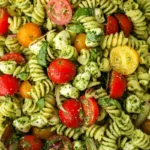
Pesto Pasta Salad with Tomatoes and Mozzarella
- Total Time: 26 minutes
- Yield: 6 servings 1x
- Diet: Vegetarian
Description
This easy pesto pasta salad comes together in minutes & is packed with flavor! Made with fresh tomatoes & mozzarella all tossed in a homemade pesto & topped with shredded parmesan!
Ingredients
- 1 lb. dry rotini pasta
- 2 cups cherry tomatoes, sliced
- 8 oz. fresh mozzarella pearls
- ¼ of a red onion, sliced thin
- 2 Tbsp fresh basil, sliced
- Shredded parmesan cheese, for serving
- 1 cup kale leaves, chopped
- 1 cup fresh basil leaves, packed
- ½ cup olive oil
- ¼ cup shredded parmesan cheese
- ¼ cup pine nuts, toasted
- 2 garlic cloves
- 2½ Tbsp lemon juice
- ½ tsp salt
- ¼ tsp black pepper
Instructions
- Make the pesto: Add the pesto ingredients to a food processor and blend until smooth. Set it aside while you prepare the pasta salad.
- Cook the pasta: Boil the pasta according to the package’s directions. Then drain and rinse the pasta under cold water. Set it aside to cool.
- Toss: Once the pasta has cooled, add it to a large bowl with your tomatoes, mozzarella, sliced onion and basil. Pour your desired amount of pesto over the top and toss until it’s fully coated.
- Serve: Sprinkle each individual bowl with shredded parmesan cheese and extra basil. Serve immediately or cover the salad and let it chill in the refrigerator until you’re ready to eat.
Notes
To toast the pine nuts: Spread the pine nuts out on a baking sheet lined with parchment paper. Toast them in the oven at 375 degrees 5-6 minutes. If using store-bought pesto: Use ¾ cup – 1 cup of your favorite pesto. Replace the kale with spinach, arugula or more basil.
- Prep Time: 15 minutes
- Cook Time: 11 minutes
- Category: Salad
- Method: Mixing
- Cuisine: Italian
Nutrition
- Serving Size: 1 serving
- Calories: 627 kcal
- Sugar: 8 g
- Sodium: 850 mg
- Fat: 30 g
- Saturated Fat: 10 g
- Unsaturated Fat: 20 g
- Trans Fat: 0 g
- Carbohydrates: 57 g
- Fiber: 4 g
- Protein: 20 g
- Cholesterol: 45 mg