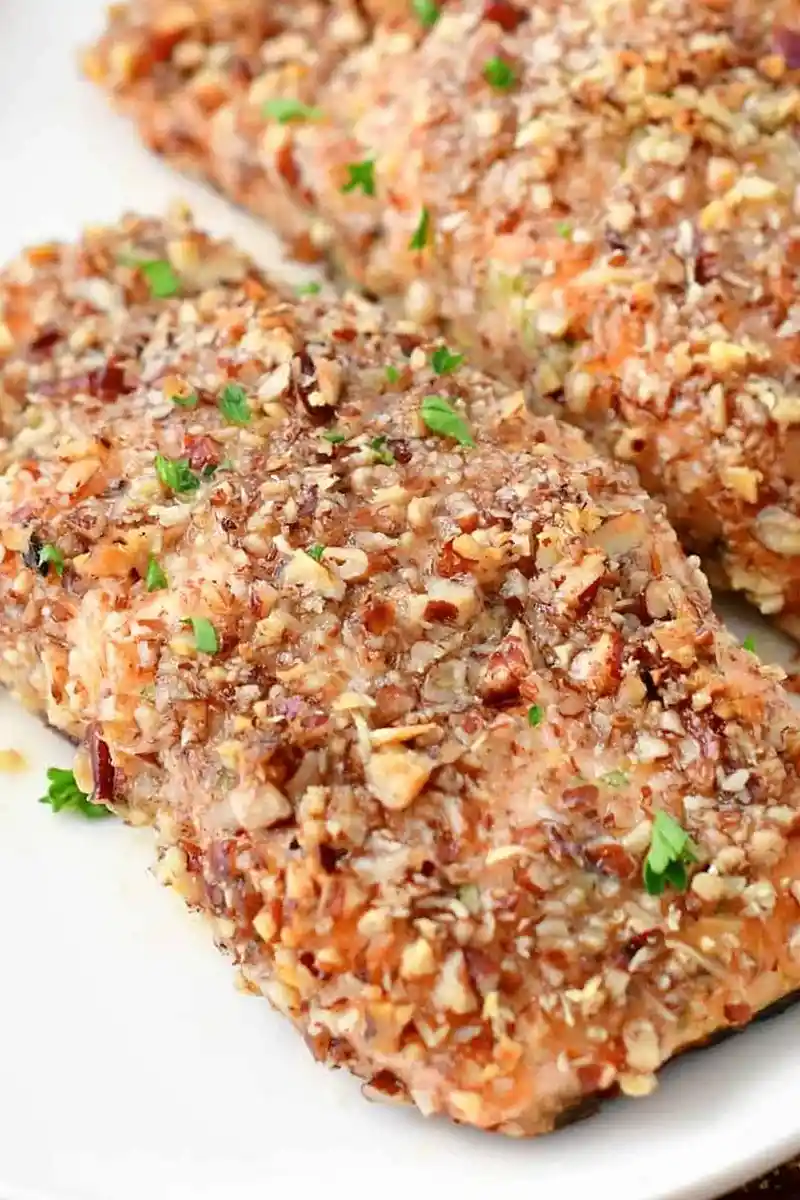
This baked salmon dish combines a nutty pecan crunch with a savory Parmesan finish for a sophisticated yet easy dinner. It is a naturally gluten-free recipe that delivers juicy fish and a golden crust in about 35 minutes.
List of ingredients
- 4 skin-on salmon filets (6-8 oz each) – skin protects the fish from drying.
- 1/4 cup mayonnaise – acts as the binder and adds moisture.
- 1 lemon – use the zest only for a bright citrus note.
- 1 tbsp fresh minced parsley – adds a hint of herbal freshness.
- 1/2 cup grated Parmesan cheese – provides a salty, savory depth.
- 2/3 cup crushed pecans – creates the signature nutty crust.
- salt – for seasoning the fish and crust.
- black pepper – for adding a subtle spicy kick.
step-by-step instructions
- Prepare Oven: Preheat your oven to 425°F and line a rimmed baking sheet with parchment paper to ensure the skin does not stick.
- Process Nuts and Cheese: Pulse pecans in a blender until they are coarse crumbles; avoid over-processing them into a fine powder. Grate your Parmesan cheese from a block if you are not using pre-grated.
- Make Mayo Mixture: In a small bowl, stir together the mayonnaise, lemon zest, minced parsley, salt, and black pepper until well combined.
- Prepare Crust Mix: In a wide, shallow bowl, combine the crushed pecans, grated Parmesan, salt, and black pepper.
- Prep Salmon: Use a paper towel to pat the salmon filets dry, then lightly rub the skin side with oil.
- Apply Binder: Season the salmon flesh with a small amount of salt, then spread the mayo mixture on the top and sides, leaving the skin side clean.
- Apply Crust: Press each mayo-coated filet into the pecan and Parmesan mixture on three sides, patting firmly to ensure the crust adheres evenly.
- Bake: Place the crusted salmon skin-side down on the baking sheet and bake for 18-22 minutes. Adjust time based on thickness; thin filets may need only 15 minutes, while thicker cuts may require 25 minutes.
Professional Cooking Tips for Better Results
Use a Digital Instant-Read Thermometer
Relying on time alone can lead to overcooked fish because filet thickness varies. Use a thermometer to check the thickest part of the fish, aiming for 145°F for fully cooked or 125-135°F for a medium texture.
Ensure Salmon is Perfectly Dry
Moisture on the surface of the fish can prevent the mayonnaise from sticking and may cause the crust to slide off during baking. Pat the filets thoroughly with paper towels before applying any seasonings or binders.
Avoid Over-Processing the Pecans
The goal is a coarse, pebbly texture that provides a distinct crunch. If you pulse the nuts too long in the blender, they will release too much oil and turn into a paste, which ruins the crust’s texture.
Ingredient Substitutions and Modifications
Swap Pecans for Almonds or Walnuts
If pecans are unavailable or you prefer a different flavor, slivered almonds or crushed walnuts work well. Almonds provide a lighter crunch, while walnuts offer a slightly more bitter and earthy profile.
Use Pecorino or Grana Padano Cheese
While Parmesan is the standard choice, other hard Italian cheeses like Pecorino Romano or Grana Padano are excellent alternatives. Pecorino is saltier and tangier, so you may want to reduce the added salt in the crust.
Alternative Binders for Mayo
If you prefer not to use mayonnaise, a thin layer of Dijon mustard can act as an effective binder. This will shift the flavor profile to be more piquant and sharp while still helping the nut mixture stick.
Alternative Cooking Methods
Using an Air Fryer
For a faster cook time, place the crusted filets in a single layer in the air fryer basket with space between them. Cook at 375°F for approximately 10-12 minutes, depending on the thickness of the fillets.
Broiling for Extra Crispness
If the salmon is cooked through but the crust is not as golden as you like, switch the oven to the broiler setting for the last 1-2 minutes. Watch the fish closely to prevent the nuts or cheese from burning.
Determining if Salmon is Fully Cooked
The Flake Test Method
Carefully press the top of the filet with a fork or your finger. When the fish is cooked, the muscle fibers will separate easily along the white fat lines, known as flaking.
Analyzing the Opacity
Raw salmon is translucent and deep pink. As it cooks, the flesh becomes opaque and lighter in color; the center should still have a slight shine, but the exterior must be fully opaque.
Checking the Texture
The center of the filet should feel firm to the touch with just a slight amount of give. If the fish feels squishy or soft in the middle, it needs a few more minutes in the oven.
Serving Ideas and Pairings
Hearty Root Vegetable Sides
Pair this nutty salmon with homemade mashed potatoes or oven-roasted fingerling potatoes. The creamy texture of the potatoes complements the crunch of the pecan crust perfectly.
Fresh Green Vegetable Accompaniments
Roasted green beans, sautéed mushrooms, or Italian-style roasted asparagus provide a fresh contrast to the rich fish. These vegetables can often be cooked on the same baking sheet if there is enough room.
Low-Carb Cauliflower Options
For a lighter meal, serve the salmon with roasted cauliflower florets or a smooth cauliflower puree. This keeps the meal gluten-free and low-carb while maintaining a satisfying volume.
Storage and Reheating Guidelines
Refrigerator Storage
Place leftover salmon in an airtight container and store it in the refrigerator for up to 2-3 days. Ensure the container is sealed tightly to prevent the fish from absorbing other odors in the fridge.
Gentle Oven Reheating
To maintain the best texture, reheat the salmon in the oven at 300°F until heated through. This slow warming process prevents the fish from becoming rubbery and keeps the crust from burning.
Microwave Reheating Tips
If using a microwave, heat the salmon in short 30-second intervals at medium power. Be aware that microwaving will soften the pecan crust, removing some of the original crunch.
Troubleshooting the Nut Crust
Preventing Crust Slippage
If the crust falls off, it is usually because the salmon was too wet or the mayo layer was too thick. Ensure the fish is patted dry and apply a thin, even layer of mayonnaise as a glue.
Managing Excess Oil
Some nuts release oil when heated, which can make the crust greasy. Using a parchment-lined sheet helps manage this oil and prevents the fish from sticking to the pan.
Balancing Salt Levels
Between the Parmesan cheese and the added salt, it is easy to overseason the dish. Taste your crust mixture before applying it; if the cheese is very salty, omit the extra salt in the nut bowl.
Frequently Asked Questions
Why should I keep the skin on the salmon?
The skin acts as a protective barrier that prevents the delicate flesh from sticking to the pan and drying out. It also preserves the healthy fats located between the skin and the meat, keeping the fish moist.
How much salmon should I serve per person?
A standard dinner portion is approximately 1/2 lb (8 oz) per person. You can adjust this based on the number of side dishes being served or individual appetite preferences.
Can I use dried parsley instead of fresh?
Yes, you can use dried parsley, but use a smaller amount since dried herbs are more concentrated in flavor. Fresh parsley is recommended for a brighter, more vibrant taste.
Print
Pecan Crusted Salmon
- Total Time: 35 minutes
- Yield: 4 servings 1x
- Diet: Gluten Free
Description
Pecan Crusted Salmon is an easy gluten free dinner recipe. This tasty, juicy baked salmon is coated in a thin layer of flavored mayo and encrusted in a mixture of crushed pecans and freshly grated Parmesan cheese.
Ingredients
- 4 skin on salmon filets 6-8 oz. each
- 1/4 cup mayonnaise
- 1 lemon – zest only
- 1 tbsp fresh minced Parsley
- 1/2 cup grated Parmesan Cheese
- 2/3 cup crushed pecans
- salt
- black pepper
Instructions
- Step: Preheat the oven to 425°F and line a rimmed baking sheet with parchment paper to prevent salmon skin from sticking.
- Step: Pulse pecans in a blender until they look like coarse crumbles but not until it looks like dust. Grate Parmesan cheese off the block if needed.
- Step: In one small bowl, combine mayonnaise, lemon zest, minced parsley, and some salt and pepper. Mix well.
- Step: In another bowl, that is wide and shallow, combine pecans, grated Parmesan cheese, and some salt and pepper.
- Step: Pat salmon filets dry with a paper towel and rub the skin with some oil.
- Step: Season salmon with a little salt and rub the filets with mayo mixture on three sides but not on the bottom.
- Step: Dip each mayo coated salmon filet into the pecan and Parmesan mixture on three sides, patting it down to crust it evenly.
- Step: Place crusted salmon onto the baking sheet, skin down, and bake for 18-22 minutes.
Notes
Store leftover salmon in an airtight container in the refrigerator for up to 2-3 days. Reheat gently in the oven at 300°F. For the best result, use a digital instant read thermometer; salmon is fully cooked at 145°F, but for a medium to medium-well texture, aim for 125-135°F.
- Prep Time: 15 minutes
- Cook Time: 20 minutes
- Category: Main Course
- Method: Baking
- Cuisine: American
Nutrition
- Serving Size: 1 filet
- Calories: 517 kcal
- Sugar: 1 g
- Sodium: 355 mg
- Fat: 38 g
- Saturated Fat: 7 g
- Unsaturated Fat: 29 g
- Trans Fat: 1 g
- Carbohydrates: 3 g
- Fiber: 2 g
- Protein: 40 g
- Cholesterol: 110 mg