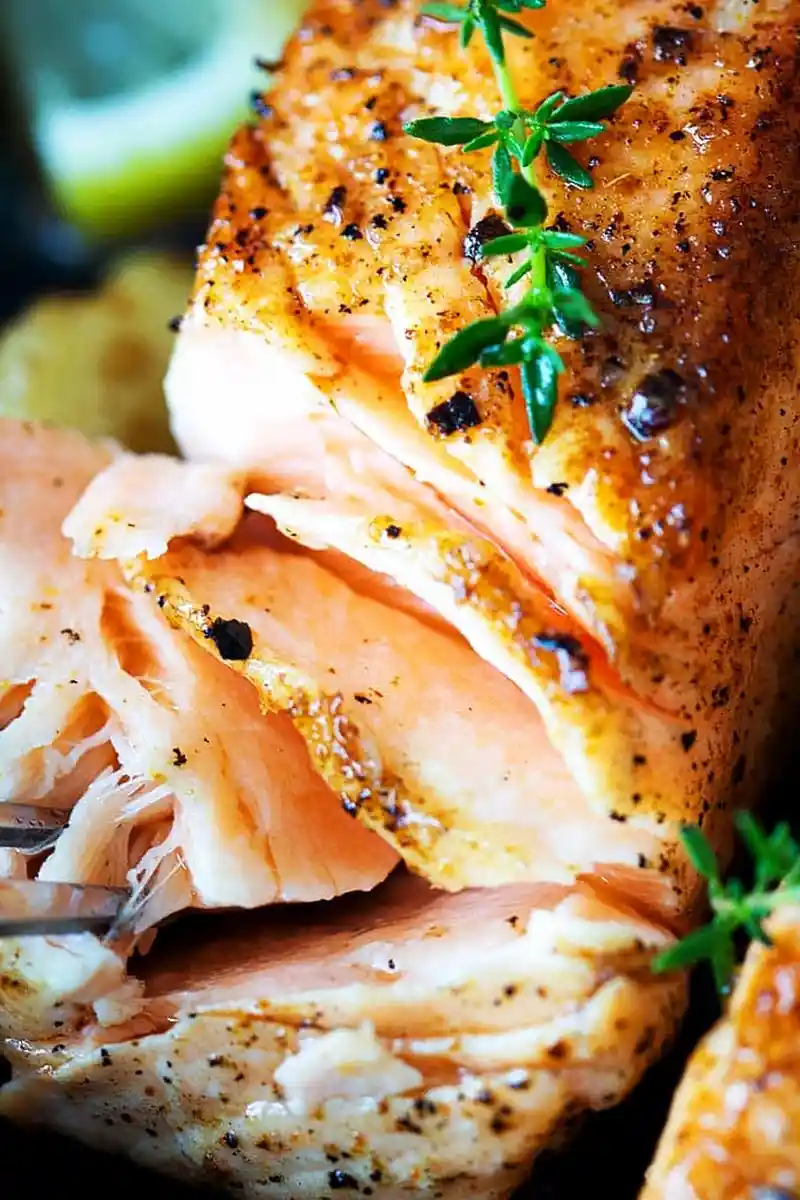
This method produces a restaurant-quality salmon fillet with a perfectly crispy skin and a buttery, garlic-infused interior. It is an efficient high-heat cooking technique that ensures the fish remains moist while developing a rich crust. This dish is ideal for a quick yet sophisticated weeknight dinner.
List of ingredients
- 10 oz salmon – skin-on fillets for maximum crispiness.
- Salt – for seasoning and drawing out moisture.
- Ground black pepper – provides a mild spicy base.
- 2 tablespoons unsalted butter – room temperature for easier melting and basting.
- 4 cloves garlic – peeled and left whole to infuse the butter.
- 4 sprigs of thyme – fresh herbs to add earthy aromatics.
- 3 dashes cayenne pepper – for a subtle kick of heat.
- Lemon juice – fresh squeeze to balance the richness of the butter.
- Salt (to taste) – for final seasoning adjustment.
step-by-step instructions
- Prepare the fish: Rinse the salmon under water and pat dry thoroughly with paper towels. Season both sides with salt and pepper.
- Heat the pan: Heat a skillet, preferably cast iron, over medium heat. Add the butter and let it melt completely before placing the salmon in the pan, skin side down. Add the garlic cloves and thyme sprigs to the butter.
- Initial sear: Pan-sear the salmon uninterrupted for about 1 minute to set the crust. Flip the salmon and sear the other side for another minute, turning the garlic cloves simultaneously to prevent them from burning. Use a spoon to continuously pour the melted butter over the fish.
- Final touch: Flip the salmon back to the skin side. Sprinkle the cayenne pepper on top, add a squirt of fresh lemon juice, and a pinch of salt to taste. Turn off the heat and serve immediately.
Optimizing Your Cooking Equipment
The Benefits of Cast Iron Skillets
Cast iron is the superior choice for searing salmon because of its high thermal mass. It retains heat much more effectively than thin aluminum or stainless steel pans, preventing the temperature from dropping when the cold fish hits the surface. This ensures a consistent Maillard reaction, resulting in a deeper brown color and crispier skin.
Using Stainless Steel Pans
If you do not have cast iron, a heavy-bottomed stainless steel pan is a viable alternative. Stainless steel allows for excellent heat conduction, though it is more prone to sticking if the pan is not sufficiently hot. Ensure the butter is shimmering and slightly bubbling before adding the fish to create a natural non-stick barrier.
Non-Stick Pan Limitations
Avoid using non-stick pans for high-heat searing when possible. Many non-stick coatings cannot withstand the temperatures required for a professional-grade sear and may release fumes. Additionally, the surface often prevents the fish from developing the same level of caramelization found in cast iron or steel.
Preparing the Salmon for the Best Sear
The Importance of Patting the Skin Dry
Moisture is the enemy of a crispy sear. When the salmon skin is wet, the heat of the pan first evaporates the water into steam, which prevents the skin from reaching the temperature needed for browning. Using paper towels to remove every trace of surface moisture ensures the fish sears immediately upon contact.
Bringing Salmon to Room Temperature
Taking the salmon out of the refrigerator about 15 to 20 minutes before cooking helps it cook more evenly. Cold fillets often suffer from the “cold center” effect, where the outside is overcooked by the time the interior reaches the desired temperature. Room temperature fish allows for a more uniform heat distribution.
Proper Seasoning Timing
Season the fish immediately before placing it in the pan. Salt draws moisture out of the flesh via osmosis; if you salt the salmon too early and let it sit, the surface will become wet again. This extra moisture will interfere with the searing process and lead to steaming rather than frying.
Mastering the Searing Process
Managing Pan Temperature
Maintain a steady medium heat to avoid burning the butter before the fish is cooked. If the butter begins to smoke excessively, the temperature is too high and the milk solids will burn, creating a bitter taste. A gentle sizzle upon contact is the ideal indicator that the pan is ready.
Achieving Maximum Skin Crispiness
When you first place the salmon skin-side down, press it lightly with a spatula for a few seconds. Salmon skin tends to curl as it heats up, which can lift the edges away from the pan. Pressing it down ensures maximum surface contact and a uniformly golden-brown crust.
The Art of Butter Basting
Basting is the process of spooning hot, flavored butter over the fish as it cooks. This technique, often used in professional kitchens, cooks the top of the fillet while it is still searing on the bottom. It also infuses the flesh with the aromatic oils from the garlic and thyme.
Preventing Garlic from Burning
Garlic has a very low burn point compared to the salmon. By turning the garlic cloves frequently in the butter, you distribute the heat and prevent the edges from charring. This ensures the garlic imparts a mellow, nutty flavor rather than a bitter, burnt one.
Flavor Enhancements and Substitutions
Using Rosemary Instead of Thyme
Fresh rosemary is a strong alternative to thyme and pairs exceptionally well with the richness of salmon. Because rosemary is more potent, use two sprigs instead of four to avoid overpowering the fish. It provides a piney, woodsy aroma that cuts through the fat of the salmon.
Substituting Smoked Paprika for Cayenne
If you prefer a smokier flavor over a spicy kick, substitute the cayenne pepper with smoked paprika. Smoked paprika adds a deep red color and a woody depth that complements the charred edges of the seared fish. This is a great option for those who are sensitive to heat.
Alternative Fats for Searing
While unsalted butter provides the best flavor, you can use a combination of olive oil and butter. Olive oil has a higher smoke point than butter, which allows you to get the pan hotter without burning the milk solids. Add the butter toward the end of the process for the flavor benefits of basting.
Serving and Pairing Ideas
Pairing with Grains and Starches
Serve the salmon alongside fluffy jasmine rice or a wild rice blend to absorb the leftover garlic butter from the pan. For a more classic approach, a bed of buttery mashed potatoes or a light quinoa salad provides a balanced texture. Pasta with a simple lemon-garlic sauce is also a complementary choice.
Adding Fresh Green Vegetables
Steamed asparagus or sautéed spinach are ideal sides because their freshness balances the richness of the butter-seared fish. Roasted Brussels sprouts with a drizzle of balsamic glaze add a tangy contrast. For a low-carb option, grilled zucchini ribbons are highly recommended.
Complementary Sauce Options
While the pan butter is sufficient, a side of tartar sauce or a dollop of pesto can add extra dimension. A simple reduction of lemon juice and capers can provide a bright, acidic contrast to the fish. Avoid heavy cream sauces that might mask the delicate flavor of the seared salmon.
Storage and Reheating Guidelines
Safe Refrigerator Storage
Store leftover salmon in an airtight container in the refrigerator for up to three days. Ensure the fish is completely cooled before sealing the lid to prevent condensation, which can make the skin soggy. Place the fish on a piece of parchment paper to maintain some structure.
Best Methods for Reheating
Avoid the microwave, as it often overcooks salmon and makes the texture rubbery. The best method is to use an oven or toaster oven at 275°F (135°C) for about 10-15 minutes. This gently warms the fish through without drying out the interior.
Maintaining Quality During Reheating
To keep the fish moist during reheating, place a small pat of butter on top of the fillet before putting it in the oven. If you have a skillet, you can reheat it on low heat with a teaspoon of oil, though the skin will not be as crispy as the first time.
Troubleshooting Common Issues
Solving the Problem of Sticking Skin
If the skin sticks to the pan, it is usually because the pan wasn’t hot enough or the fish was added too early. Do not force the fish off the pan; wait another 30 seconds. Once a proper crust has formed, the salmon will naturally release from the surface of the skillet.
Fixing Overcooked Dry Salmon
If the salmon becomes too dry, it is likely due to overcooking the interior. To salvage a dry fillet, serve it with a moisture-rich accompaniment like avocado or a lemon-butter sauce. In the future, use a meat thermometer to pull the fish at 125°F for medium-rare.
Dealing with Uneven Cooking
Uneven cooking often happens when fillets vary in thickness. Use a knife to gently press the thicker part of the fillet to flatten it slightly before cooking. This ensures that the thin tail end does not overcook while the center remains raw.
Frequently Asked Questions
How can I tell when the salmon is perfectly cooked?
The salmon is done when the flesh turns from translucent to an opaque pink and flakes easily with a fork. For precision, use an instant-read thermometer to check for an internal temperature of 125-135°F for medium.
Can I use frozen salmon for this recipe?
Yes, but you must thaw it completely in the refrigerator overnight before cooking. Cooking salmon from frozen will release too much water, making it impossible to achieve a crispy skin and resulting in a steamed texture.
Is it necessary to keep the skin on?
While you can cook skinless fillets, the skin acts as a protective barrier that prevents the flesh from overcooking. It also provides a significant textural contrast and contains healthy omega-3 fatty acids.
What is the best way to prevent the garlic from tasting bitter?
Keep the garlic cloves whole rather than mincing them. Whole cloves cook more slowly and release their flavor gradually into the butter, whereas minced garlic burns almost instantly at searing temperatures.
Print
Pan Seared Salmon with Garlic and Thyme
- Total Time: 15 minutes
- Yield: 2 servings 1x
- Diet: Gluten-free
Description
The best pan seared salmon with butter, garlic and thyme. The salmon fillet with skin is crispy but moist and tender on the inside.
Ingredients
- 10 oz salmon
- Salt
- Ground black pepper
- 2 tablespoons unsalted butter, room temperature
- 4 cloves garlic, peeled
- 4 sprigs of thyme
- 3 dashes cayenne pepper
- Lemon juice
- Salt, to taste
Instructions
- Step 1: Rinse the salmon under water and pat dry with paper towels. Season with salt and pepper.
- Step 2: Heat a skillet (cast iron preferred) over medium heat. Add the butter and let it melt before adding the salmon, skin side down. Add the garlic and thyme.
- Step 3: Pan-sear the salmon, uninterrupted, for about 1 minute. Flip the salmon and sear the other side for another minute, turning the garlic as well to prevent burning. Spoon the melted butter over the salmon while it cooks.
- Step 4: Flip the salmon back to skin side down and sprinkle cayenne pepper on top. Add a squirt of fresh lemon juice and a pinch of salt to taste. Turn off the heat and serve immediately.
Notes
Use a well-seasoned cast-iron skillet for best results to ensure the salmon cooks evenly. The butter will turn into brown butter during cooking, adding an earthy note to the dish.
- Prep Time: 5 minutes
- Cook Time: 10 minutes
- Category: Salmon
- Method: Pan-searing
- Cuisine: American
Nutrition
- Serving Size: 1 fillet
- Calories: 317 kcal
- Sugar: 0.2 g
- Sodium: 66 mg
- Fat: 21 g
- Saturated Fat: 9 g
- Unsaturated Fat: 10 g
- Trans Fat: 0.5 g
- Carbohydrates: 3 g
- Fiber: 1 g
- Protein: 29 g
- Cholesterol: 108 mg