This quick meal combines tender pan-seared salmon with linguine in a rich, citrus-infused cream sauce. It takes only 30 minutes to prepare, making it an ideal option for a fast weeknight dinner.
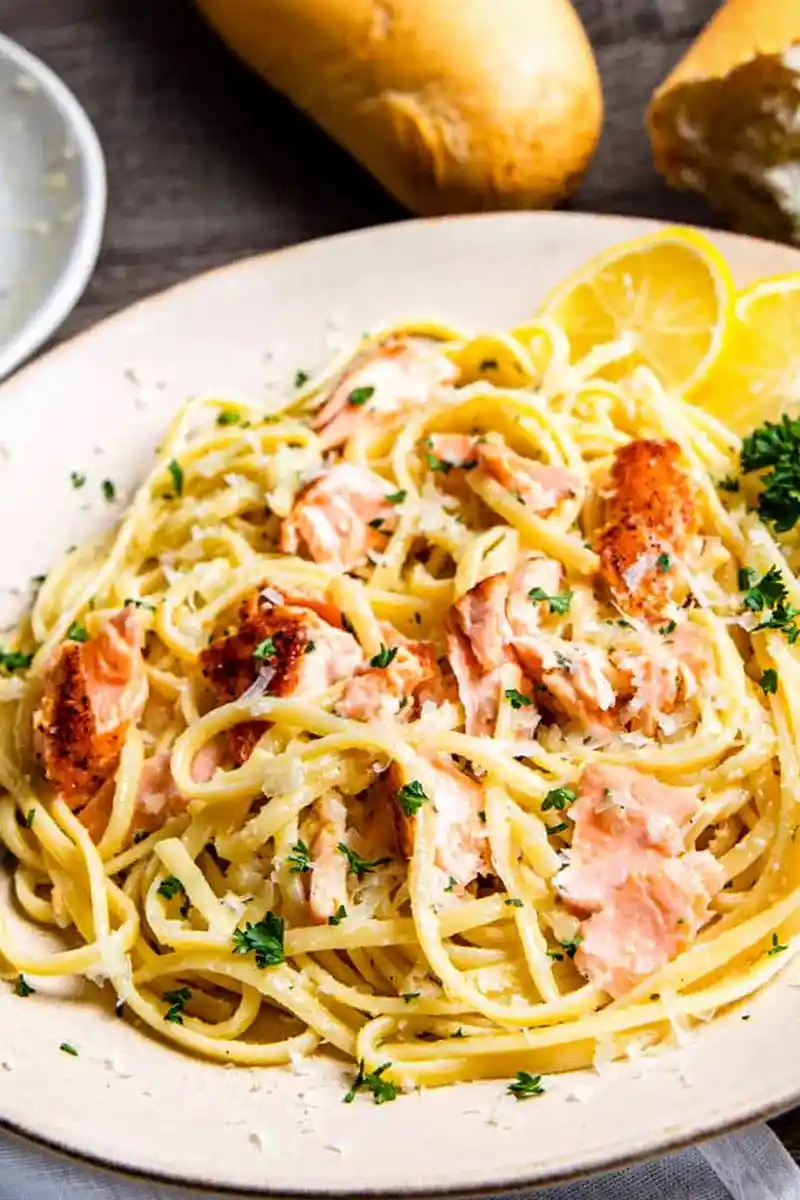
List of ingredients
- 16 oz linguine pasta – long noodles that hold the cream sauce well.
- 1 pound salmon filet – Atlantic or King salmon is recommended for moisture.
- 1 Tablespoon olive oil – used for searing the fish.
- 1 teaspoon kosher salt – divided for seasoning the fish and the sauce.
- ½ teaspoon fresh ground black pepper – divided for seasoning.
- 2 Tablespoons unsalted butter – used for sautéing the garlic.
- 2 cloves garlic – minced finely.
- 1 cup heavy cream – provides richness and prevents curdling.
- ½ cup chicken broth – adds depth and balances the cream.
- 1 Tablespoon fresh lemon juice – approximately half a lemon for brightness.
- ½ cup Parmesan cheese – finely shredded, plus extra for garnish.
- 1 Tablespoon chopped parsley – plus more for the final presentation.
step-by-step instructions
- Boil the Pasta: Cook the linguine in a large pot of boiling water following the package instructions. Drain the pasta and set it aside.
- Sear the Salmon: Heat one tablespoon of olive oil in a large skillet over medium heat. Season the salmon with ½ teaspoon salt and ¼ teaspoon pepper, then place it in the pan skin side up. Sear for 5 minutes until browned, then flip and cook for another 12-15 minutes until fully cooked. Remove the salmon from the pan and set it aside.
- Prepare the Sauce: Melt two tablespoons of butter in the same pan and sauté the minced garlic for 30-45 seconds until fragrant. Stir in the heavy cream, chicken broth, and lemon juice, bringing the mixture to a low simmer.
- Thicken and Season: Stir in the Parmesan cheese and one teaspoon of chopped parsley. Continue cooking for 1-2 minutes until the sauce is thick enough to coat a spoon, then season with the remaining salt and pepper.
- Combine and Serve: Remove the pan from the heat and stir in the cooked pasta until well-coated. Use two forks to break the salmon into chunks, discarding the skin. Divide the pasta into bowls and top with salmon chunks, additional cheese, and fresh parsley.
Choosing the Best Ingredients
Select High-Fat Salmon Varieties
Atlantic or King salmon are the best choices for this recipe. These varieties have a higher fat content than Sockeye salmon, which helps the fish remain moist and tender during the searing process. If you prefer a leaner option, you can use skinless fillets, though they may cook slightly faster.
Use Freshly Grated Parmesan Cheese
Grate your Parmesan cheese from a block rather than using pre-shredded options. Pre-shredded cheeses are coated in anti-clumping agents like potato starch or cellulose. These additives can cause the sauce to become grainy or lumpy instead of smooth.
Opt for Heavy Cream over Milk
Heavy cream is essential for the stability of the sauce. Its high fat content prevents the dairy from curdling when it reacts with the acidic lemon juice. Using milk or half-and-half increases the risk of the sauce separating during the simmering process.
Pick the Right Pasta Shape
Linguine is the traditional choice because its flat, narrow surface area allows the cream sauce to cling effectively. However, spaghetti or fettuccine are excellent alternatives. If you use a shorter pasta like penne, the sauce will pool inside the tubes, which also tastes great but changes the texture.
Flavor Enhancements and Variations
Adding a Cajun Spice Profile
For a spicier version, replace the salt and pepper on the salmon with a Cajun seasoning blend. This creates a blackened effect on the fish. To carry the flavor through the dish, stir 2-3 teaspoons of Cajun seasoning directly into the cream sauce while it simmers.
Tuscan Style Modifications
Transform this into a Tuscan-inspired dish by adding chopped sun-dried tomatoes and fresh baby spinach. Stir these ingredients in at the same time you add the Parmesan cheese. Cook just until the spinach wilts before tossing in the pasta.
Incorporating Fresh Vegetables
You can increase the nutritional value by adding green vegetables like frozen peas, steamed broccoli, or sautéed asparagus. Add these during the last two minutes of the sauce simmering process to ensure they are heated through without becoming overcooked.
Alternative Protein Options
While salmon is the star, this lemon cream sauce works well with other proteins. Sautéed shrimp or sliced grilled chicken breast are great substitutes. If using shrimp, sear them quickly for 2 minutes per side and add them back at the very end to avoid toughness.
Professional Cooking Techniques
Mastering the Salmon Sear
To achieve a golden-brown crust, ensure the olive oil is shimmering before adding the fish. Press the salmon down gently with a spatula for the first 30 seconds to ensure full contact with the pan. Avoid flipping the fish too often, as it will naturally release from the pan once a proper crust has formed.
Controlling Sauce Temperature
Keep the sauce at a low simmer rather than a rolling boil. Excessive heat can cause the cream to break or the cheese to clump. A gentle simmer allows the flavors to meld and the sauce to thicken gradually through reduction.
Achieving the Perfect Pasta Texture
Cook your pasta until it is just shy of al dente. Since the pasta is stirred into the hot sauce at the end, it will continue to cook for another minute. This prevents the noodles from becoming mushy and ensures they maintain a firm bite.
Emulsifying the Cream and Cheese
Stir the Parmesan cheese in slowly and constantly. This helps the cheese melt evenly into the cream and broth, creating a smooth emulsion. If the sauce seems too thick, you can add a tablespoon of the reserved pasta water to loosen it up.
Serving and Pairing Ideas
Pairing with Acidic Side Salads
Because the pasta and sauce are very rich, pair the meal with a side salad that has a sharp vinaigrette. An apple walnut salad or a shaved Brussels sprouts salad provides a tangy contrast that cuts through the heaviness of the cream.
Choosing the Right Bread
Serve this dish with a side of toasted sourdough or warm garlic bread. The crusty bread is perfect for soaking up any leftover lemon cream sauce on the plate. Brush the bread with olive oil and garlic salt before toasting for extra flavor.
Non-Alcoholic Beverage Pairings
A sparkling water with a twist of lime or a chilled white grape juice pairs well with the citrus notes of the dish. These options provide a refreshing palate cleanser between bites of the rich salmon and cream.
Storage and Reheating Guide
Refrigeration and Shelf Life
Store any leftover salmon pasta in an airtight container in the refrigerator. It will remain fresh and safe to eat for up to 4 days. Keep the salmon chunks on top of the pasta to prevent them from breaking down further during storage.
Best Method for Reheating
To avoid drying out the pasta, reheat leftovers in a baking dish in the oven at 300°F for 10-15 minutes. Add 1-2 tablespoons of fresh heavy cream or water to the dish before heating to restore the sauce’s creaminess. For smaller portions, use a microwave on medium power, stirring halfway through.
Why Freezing is Not Recommended
This dish does not freeze well because of the high dairy content in the sauce. When frozen and thawed, the cream and lemon juice often separate, resulting in a grainy or watery texture. The salmon also tends to become rubbery after being frozen and reheated.
Troubleshooting and FAQs
Can I use milk instead of heavy cream?
It is not recommended to use milk or half-and-half. Lower-fat dairy is much more likely to curdle when exposed to the acidity of the lemon juice. Heavy cream provides the necessary fat to keep the sauce stable and smooth.
What should I do if the sauce is too thin?
If the sauce has not thickened enough to coat the spoon, simmer it for an additional 2-3 minutes. You can also stir in an extra tablespoon of grated Parmesan cheese, as the protein and fat in the cheese act as a natural thickener.
How can I tell if the salmon is fully cooked?
The salmon is done when it reaches an internal temperature of 145°F. Visually, the flesh should change from translucent pink to an opaque light pink and should flake easily when pressed with a fork.
Can I bake the salmon instead of searing it?
Yes, you can bake the salmon at 400°F for approximately 20 minutes. While you lose the browned crust from the pan, the fish will be very tender. If you bake it, you will need to sauté the garlic in butter in a separate pan to start your sauce.
How do I prevent the garlic from burning?
Sauté the garlic only until it becomes fragrant, which usually takes 30 to 45 seconds. If the garlic turns dark brown or black, it will taste bitter. Have your cream and broth ready to pour in immediately to stop the garlic from overcooking.
What if I don’t have linguine?
Any long pasta like spaghetti or fettuccine is a perfect substitute. Short pastas like penne or farfalle also work, though you may need a slightly thinner sauce to ensure it penetrates the larger shapes.
Can I use bottled lemon juice?
Freshly squeezed lemon juice is highly recommended for the best flavor. Bottled juice often has a metallic or overly acidic taste that can overpower the delicate flavor of the salmon.
Print
Pan-Seared Salmon Pasta with Lemon Cream Sauce
- Total Time: 30 minutes
- Yield: 4 servings 1x
- Diet: General
Description
This salmon pasta recipe features chunks of tender pan-seared salmon with linguine pasta tossed in a delicious lemon cream sauce. And at just 30 minutes from start to finish, it’s a perfect choice for a weeknight dinner.
Ingredients
- 16 oz linguine pasta
- 1 pound salmon filet
- 1 Tablespoon olive oil
- 1 teaspoon kosher salt (divided)
- ½ teaspoon fresh ground black pepper (divided)
- 2 Tablespoons unsalted butter
- 2 cloves garlic (minced)
- 1 cup heavy cream
- ½ cup chicken broth
- 1 Tablespoon fresh lemon juice (half a lemon)
- ½ cup Parmesan cheese (finely shredded, plus more for garnish)
- 1 Tablespoon chopped parsley (plus more for garnish)
Instructions
- Step: Cook the pasta in a large pot of boiling water according to the package directions. Then drain and set aside.
- Step: While the pasta cooks set a large skillet or saucepan over medium heat and add one tablespoon of olive oil. Season the salmon with ½ teaspoon salt and ¼ teaspoon of pepper, then add to the pan skin side up. Sear for 5 minutes until well browned. Then flip and continue cooking for 12-15 minutes, until cooked through. Remove the salmon and set it aside.
- Step: Melt two tablespoons of butter in the pan then add the minced garlic and sauté for 30-45 seconds until fragrant. Add the cream, chicken broth, and lemon juice then stir together and bring to a low simmer. Stir in the parmesan cheese and one teaspoon of chopped parsley. Cook for another 1-2 minutes until thickened enough to coat a spoon. Season with the remaining salt and pepper to taste.
- Step: Remove from the heat, then add the pasta and stir until well-coated. Using two forks, break up the salmon into chunks and discard the skin.
- Step: Transfer the pasta to a serving bowl, platter, or individual plates. Top the pasta with the salmon, additional cheese, and chopped parsley, then serve.
Notes
I recommend using Atlantic or King salmon in this dish. The higher fat content will help ensure a moist and tender result. You can bake the salmon at 400°F for 20 minutes instead of pan searing if preferred.
- Prep Time: 10 minutes
- Cook Time: 20 minutes
- Category: Main Course
- Method: Pan-searing
- Cuisine: Italian
Nutrition
- Serving Size: 1 serving
- Calories: 635 kcal
- Sugar: 1 g
- Sodium: 1200 mg
- Fat: 38 g
- Saturated Fat: 18 g
- Unsaturated Fat: 20 g
- Trans Fat: 0 g
- Carbohydrates: 29 g
- Fiber: 1 g
- Protein: 43 g
- Cholesterol: 115 mg