This dish combines protein-packed salmon patties with a fresh, zesty arugula salad. It is a nutritious meal that balances savory seafood with crisp garden greens.

List of ingredients
- 1 pound salmon, preferably wild, skinned – ensures a clean, hearty flavor.
- 2 tablespoons lemon juice, divided – adds acidity to both the fish and the dressing.
- 2 teaspoons Dijon mustard, divided – provides a sharp, tangy binder.
- 0.5 cup finely chopped yellow bell pepper – adds color and mild sweetness.
- 1 tablespoon finely chopped shallot – adds a delicate onion flavor.
- 0.5 teaspoon ground pepper, divided – for basic seasoning.
- 0.5 cup panko breadcrumbs – helps bind the patties and adds crunch.
- 0.5 cup crème fraîche or sour cream – creates a rich, creamy base for the sauce.
- 0.25 cup buttermilk – thins the dressing and adds tang.
- 3 tablespoons chopped fresh dill – provides a classic herbal pairing for salmon.
- 0.5 teaspoon salt, divided – enhances all the flavors.
- 2 tablespoons extra-virgin olive oil – used for searing the cakes.
- 1 (5 ounce) package arugula – the peppery base for the salad.
- 1 cup sliced radishes – adds a crisp, spicy bite.
step-by-step instructions
- Prepare the Salmon Base: Coarsely chop salmon and place half in a food processor. Add 1 tablespoon lemon juice and 1 teaspoon mustard. Process, scraping down the sides as necessary, until smooth.
- Combine Ingredients: Add the remaining salmon, bell pepper, shallot and 1/4 teaspoon pepper and pulse until the mixture is combined but still chunky.
- Form and Chill: Transfer the salmon mixture to a medium bowl. Add breadcrumbs and stir until combined. Form the salmon into 4 patties, about 4 inches wide each, and place on a plate. Freeze for 5 minutes.
- Mix the Dressing: Meanwhile, whisk crème fraîche (or sour cream), buttermilk, dill and 1/4 teaspoon salt with the remaining 1 tablespoon lemon juice, 1 teaspoon mustard and 1/4 teaspoon pepper in a large bowl. Set aside 1/4 cup of the dressing for drizzling.
- Sear the Cakes: Heat oil in a large cast-iron or nonstick skillet over medium-high heat. Add the salmon cakes and cook, flipping once, until well browned and cooked through, 2 to 3 minutes per side.
- Finish and Plate: Transfer to a clean plate and sprinkle with the remaining 1/4 teaspoon salt. Add arugula and radishes to the dressing in the large bowl and toss to coat. Serve the salmon cakes on top of the salad, drizzled with the reserved 1/4 cup dressing.
Professional Techniques for Perfect Salmon Cakes
Chilling Patties to Prevent Falling Apart
Freezing the formed patties for five minutes is a critical step. This process firms up the fats and binders in the salmon mixture. It ensures that the cakes hold their shape when they hit the hot oil, preventing them from flattening or breaking.
Achieving the Right Texture with a Food Processor
Using the food processor for only half of the salmon creates a hybrid texture. The processed portion acts as a natural adhesive, while the coarsely chopped portion provides a meaty, chunky bite. Avoid over-processing the entire batch to prevent the cakes from becoming mushy.
Managing Pan Temperature for Even Browning
Use medium-high heat to ensure the olive oil is shimmering before adding the cakes. This creates an immediate sear, locking in moisture and forming a golden-brown crust. If the pan is too cool, the salmon will absorb the oil and become greasy.
Preventing Overcooking the Fish
Salmon cooks quickly and can become dry if left too long. Stick to the 2-3 minute window per side. The cakes should be browned on the exterior and just opaque in the center to maintain a moist interior.
Using the Right Skillet for Searing
A cast-iron skillet is ideal for this recipe because it retains heat consistently. If you do not have one, a heavy-bottomed nonstick pan works well to ensure the patties release easily without tearing the delicate crust.
Ingredient Substitutions and Swaps
Using Canned Salmon Instead of Fresh
Canned salmon is a budget-friendly and pantry-stable alternative. Ensure you drain the liquid thoroughly and remove any large bones or skin. Flake the salmon with a fork before following the processing steps to keep the texture consistent.
Gluten-Free Panko Alternatives
To make this recipe gluten-free, replace panko breadcrumbs with almond meal or certified gluten-free breadcrumbs. Almond meal adds a slightly nuttier flavor and a denser texture, while GF breadcrumbs mimic the original crunch.
Dairy-Free Creamy Dressing Options
For a dairy-free version, replace crème fraîche and buttermilk with a mixture of Greek-style soy yogurt and a splash of lemon juice. This maintains the thickness and tanginess of the original dressing without the animal dairy.
Replacing Arugula with Other Greens
If you find arugula too peppery, substitute it with baby spinach or a spring mix. Spinach provides a milder flavor, while a mixed green salad offers a variety of textures that pair well with the rich salmon.
Substituting Shallots for Red Onion
If shallots are unavailable, finely minced red onion is a suitable replacement. Red onion has a sharper bite, so you may want to soak the minced pieces in cold water for a few minutes to mellow the flavor before adding them to the salmon.
Creative Flavor Variations
Adding Spicy Elements to the Salmon Mix
For a kick of heat, fold in one finely diced jalapeño or a teaspoon of Sriracha into the salmon mixture. This spicy contrast cuts through the richness of the crème fraîche dressing.
Incorporating Zesty Citrus Zest
Add the zest of one lemon to the salmon patties for a more intense citrus aroma. You can also use lime zest for a brighter, more tropical flavor profile that pairs exceptionally well with the fresh dill.
Adding Fresh Herbs for Different Profiles
While dill is traditional, adding chopped parsley or chives can change the flavor profile. Parsley adds a clean, grassy note, while chives provide a mild, onion-like sweetness that complements the shallots.
Swapping Yellow Pepper for Other Colors
Red or orange bell peppers can be used instead of yellow. Red peppers offer a slightly sweeter taste and a more vibrant color, making the patties look more visually appealing on the plate.
Best Serving and Pairing Ideas
Complementary Side Dishes
While the arugula salad is refreshing, you can serve these cakes alongside a scoop of quinoa or wild rice for a more filling meal. Roasted asparagus or steamed broccoli also provide a great nutritional balance.
Alcohol-Free Beverage Pairings
Pair this meal with a chilled sparkling water infused with fresh cucumber and lime. The bubbles and citrus notes cleanse the palate between bites of the rich salmon and creamy dressing.
Plating for a Formal Presentation
To present this dish professionally, place a neat bed of dressed arugula and radishes in the center of the plate. Stack two salmon cakes slightly offset on top and drizzle the reserved dressing in a thin line across the top.
Storage and Preservation
Storing Uncooked Salmon Patties
If you are prepping in advance, place the formed patties on a parchment-lined tray and freeze until solid. Transfer them to an airtight freezer bag for up to two weeks. Thaw them in the refrigerator overnight before searing.
Refrigerating Cooked Salmon Cakes
Place cooled cooked cakes in a sealed container and store them in the fridge for up to three days. Keep them separate from the salad and dressing to prevent the cakes from becoming soggy.
Freezing Cooked Patties for Long-Term Use
You can flash-freeze cooked patties on a tray before transferring them to a vacuum-sealed bag. This allows you to store them for up to a month, making them a convenient option for quick lunches.
Reheating Instructions for Fresh Taste
Using an Oven for Crispy Texture
To reheat cooked cakes without losing the crunch, place them on a wire rack in an oven preheated to 350°F (175°C). Heat for 5-8 minutes until warmed through and the edges are crisp again.
Quick Reheating in a Skillet
Heat a small amount of olive oil in a pan over medium heat. Add the cakes and sear for 1-2 minutes per side. This is the fastest way to restore the original texture and flavor.
Avoiding the Microwave for Fish
Avoid using a microwave to reheat salmon cakes. Microwaves heat the moisture unevenly, which often results in a rubbery texture and a loss of the crisp exterior.
Make-Ahead Preparation Guide
Preparing the Dressing in Advance
The dressing can be whisked and stored in a jar for up to 48 hours. Keep it refrigerated and give it a vigorous shake or whisk before serving to re-emulsify the buttermilk and crème fraîche.
Prepping Vegetables Early
You can chop the bell peppers, shallots, and radishes a day in advance. Store them in separate airtight containers with a damp paper towel to keep the vegetables crisp and fresh.
Forming Patties the Night Before
Form the patties and store them on a plate covered with plastic wrap in the refrigerator. This naturally chills the cakes, eliminating the need for the 5-minute freezer step on the day of cooking.
Troubleshooting Common Issues
Fixing Salmon Cakes That Are Too Wet
If the salmon mixture feels too loose to form into patties, add one tablespoon of panko breadcrumbs at a time. Stir gently and wait a minute for the crumbs to absorb the moisture before adding more.
Preventing the Dressing from Separating
If the dressing looks split, it is likely due to temperature differences between the buttermilk and crème fraîche. Whisk vigorously by hand or use a small immersion blender to bring the emulsion back together.
Stopping Patties from Sticking to the Pan
Ensure the pan is fully heated before adding the oil. If the patties stick, avoid forcing them; let them cook for another 30-60 seconds, as they will naturally release from the pan once a proper crust has formed.
Frequently Asked Questions
Can I bake these instead of frying?
Yes, you can bake these at 400°F (200°C) for about 12-15 minutes. Flip them halfway through the cooking time to ensure both sides are browned, though they will be slightly less crisp than pan-seared versions.
How long do these stay fresh in the fridge?
Cooked salmon cakes remain fresh for up to three days when stored in an airtight container. The arugula salad should be dressed immediately before eating to avoid wilting.
Which type of mustard works best?
Dijon mustard is recommended for its sharp, pungent flavor and smooth texture. You can use whole-grain mustard for a more rustic look and a milder, seedier taste.
Can I use Greek yogurt instead of crème fraîche?
Yes, plain Greek yogurt is a great substitute. It provides a similar thickness and tang, although it is slightly more acidic and less rich than crème fraîche.
Print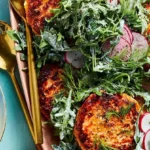
Pan-Seared Salmon Cakes with Peppery Arugula Salad
- Total Time: 35 minutes
- Yield: 4 servings 1x
- Diet: Low-Carb
Description
After making the salmon cakes, we firm them up for 5 minutes in the freezer before cooking so they don’t fall apart when they hit the hot oil. You can also make these salmon cakes with canned salmon to make them pantry- and budget-friendly.
Ingredients
- 1 pound salmon, preferably wild, skinned
- 2 tablespoons lemon juice, divided
- 2 teaspoons Dijon mustard, divided
- 0.5 cup finely chopped yellow bell pepper
- 1 tablespoon finely chopped shallot
- 0.5 teaspoon ground pepper, divided
- 0.5 cup panko breadcrumbs
- 0.5 cup crème fraîche or sour cream
- 0.25 cup buttermilk
- 3 tablespoons chopped fresh dill
- 0.5 teaspoon salt, divided
- 2 tablespoons extra-virgin olive oil
- 1 (5 ounce) package arugula
- 1 cup sliced radishes
Instructions
- Step: Coarsely chop salmon and place half in a food processor. Add 1 tablespoon lemon juice and 1 teaspoon mustard. Process until smooth. Add the remaining salmon, bell pepper, shallot and 1/4 teaspoon pepper and pulse until combined but still chunky.
- Step: Transfer the salmon mixture to a medium bowl. Add breadcrumbs and stir until combined. Form the salmon into 4 patties, about 4 inches wide each, and place on a plate. Freeze for 5 minutes.
- Step: Whisk crème fraîche (or sour cream), buttermilk, dill and 1/4 teaspoon salt with the remaining 1 tablespoon lemon juice, 1 teaspoon mustard and 1/4 teaspoon pepper in a large bowl. Set aside 1/4 cup of the dressing for drizzling.
- Step: Heat oil in a large cast-iron or nonstick skillet over medium-high heat. Add the salmon cakes and cook, flipping once, until well browned and cooked through, 2 to 3 minutes per side. Transfer to a clean plate and sprinkle with the remaining 1/4 teaspoon salt.
- Step: Add arugula and radishes to the dressing in the large bowl. Toss to coat. Serve the salmon cakes on top of the salad, drizzled with the reserved 1/4 cup dressing.
Notes
Crème fraîche is a French fermented cream; sour cream is a suitable substitute. Canned salmon can be used for a budget-friendly version.
- Prep Time: 29 minutes
- Cook Time: 6 minutes
- Category: Lunch
- Method: Pan-frying
- Cuisine: American
Nutrition
- Serving Size: 1 salmon patty & 1 1/2 cups salad
- Calories: 424 kcal
- Sugar: 4 g
- Sodium: 494 mg
- Fat: 27 g
- Saturated Fat: 9 g
- Unsaturated Fat: 18 g
- Trans Fat: 0 g
- Carbohydrates: 14 g
- Fiber: 2 g
- Protein: 30 g
- Cholesterol: 97 mg