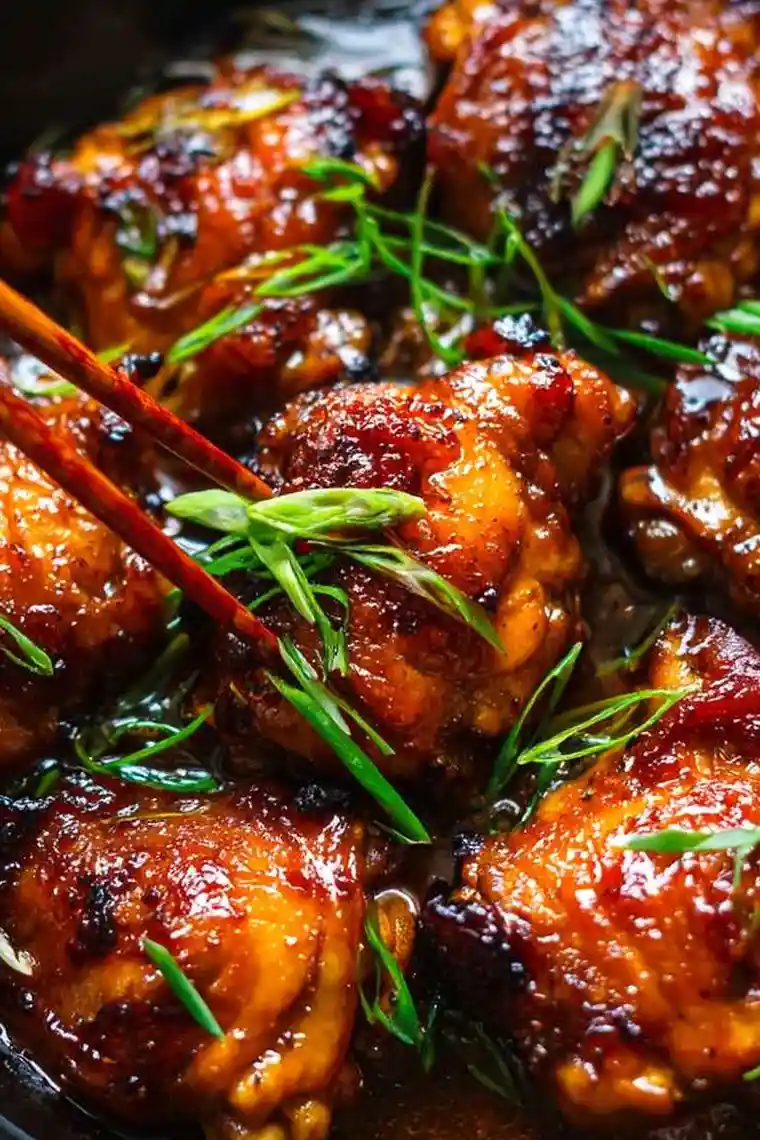
This pan-seared shoyu chicken features a rich, savory glaze made from soy sauce and brown sugar. It is a practical one-pan meal that delivers deep umami flavors and a glossy finish in about an hour.
List of ingredients
- 2 pounds bone-in, skin-on chicken thighs – provide depth and prevent drying.
- 0.5 cup soy sauce – the primary salty and savory base.
- 0.5 cup brown sugar, packed – creates the sticky, caramelized glaze.
- 0.25 cup water – balances the salinity and helps the sauce simmer.
- 3 cloves garlic, finely minced – adds aromatic pungency.
- 1 tablespoon fresh ginger, grated – provides a sharp, spicy contrast.
- 1 tablespoon neutral oil – used for high-heat searing.
- 1 teaspoon black pepper – adds a subtle woody heat.
- 2 green onions, thinly sliced – used for a fresh, crisp garnish.
step-by-step instructions
- Prepare the sauce: In a mixing bowl, combine the soy sauce, brown sugar, water, minced garlic, grated ginger, and black pepper. Stir vigorously until the sugar is completely dissolved and the mixture is smooth.
- Sear the chicken: Heat the neutral oil in a large skillet over medium-high heat. Once the oil shimmers, place the chicken thighs skin-side down and sear without moving them until the skin is deeply browned and crisp.
- Flip and deglaze: Flip the chicken pieces briefly to sear the other side, then immediately pour the prepared shoyu sauce mixture into the pan.
- Simmer and glaze: Lower the heat to medium and let the sauce simmer. Regularly spoon the bubbling liquid over the chicken to baste the meat until the sauce thickens into a glossy lacquer that coats the chicken.
- Finish and rest: Remove the pan from the heat and sprinkle the sliced green onions over the top. Let the chicken rest for five minutes to allow the glaze to set before serving.
Pro Techniques for Perfect Searing
Patting Chicken Dry for Maximum Browning
Use paper towels to remove all surface moisture from the chicken skin before cooking. Moisture creates steam in the pan, which prevents the skin from crisping and inhibits the Maillard reaction. Dry skin ensures a deep golden color and a professional texture.
Identifying the Correct Oil Temperature
Wait until the neutral oil begins to shimmer or shows slight ripples before adding the meat. If the oil is too cold, the skin will absorb the fat and become greasy. If it is too hot, the skin will burn before the fat renders out of the chicken.
Avoiding Pan Crowding
Ensure there is a small gap between each chicken thigh in the skillet. Crowding the pan drops the temperature and traps steam, which boils the meat instead of searing it. Work in batches if your pan is too small to maintain high heat.
Managing the Searing Time
Leave the chicken undisturbed for several minutes during the first sear. Moving the meat too early prevents the skin from developing a crust and can cause the skin to tear. The chicken will naturally release from the pan once the browning is complete.
Sauce Consistency and Control
Preventing Sugar Scorching
Brown sugar can burn quickly once the water evaporates. Keep the heat at a steady medium and stir the sauce frequently as it reduces. If you notice the edges darkening too fast, add a tablespoon of water to lower the temperature.
Achieving the Glossy Lacquer Finish
The sauce is ready when it leaves a clear trail for a second after you drag a spoon through it. This indicates the sugars have concentrated enough to cling to the meat. Remove the pan from the heat just before it becomes too thick to avoid a burnt taste.
The Importance of Basting
Spoon the simmering sauce over the chicken repeatedly during the final stages of cooking. This process ensures the meat is evenly coated and the glaze penetrates the surface. Basting also helps cook the top side of the chicken while the bottom simmers.
Balancing Salt and Sweetness
The reduction process intensifies both the soy and the sugar. If the sauce tastes too salty, stir in a small amount of additional brown sugar. If it is too sweet, a splash of water or a pinch more black pepper can balance the profile.
Ingredient Substitutions
Using Low Sodium Soy Sauce
If you prefer a less salty dish, substitute regular soy sauce with low-sodium soy sauce. Because the sauce reduces significantly, the salt becomes more concentrated. Using a low-sodium version prevents the dish from becoming overwhelming.
Substituting Honey for Brown Sugar
Honey can be used as a direct replacement for brown sugar for a different type of sweetness. Honey creates a slightly thicker, more floral glaze. Be aware that honey burns faster than brown sugar, so monitor the heat closely.
Using Ginger Paste
If fresh ginger is unavailable, use a high-quality ginger paste in equal measure. Ensure the paste does not contain excessive additives or oils. Freshly grated ginger provides a sharper bite, but paste is a practical time-saver.
Alternative Neutral Oils
Canola, grapeseed, or avocado oil are excellent choices for this recipe. These oils have high smoke points, which are necessary for searing chicken skin. Avoid using extra virgin olive oil, as it can smoke and turn bitter at high temperatures.
Flavor Variations
Adding Pineapple Juice for Tropical Notes
Replace two tablespoons of the water with pineapple juice to add a bright, acidic sweetness. This mimics the flavor profiles often found in island-style cuisine. The acidity also helps tenderize the chicken during the simmering process.
Introducing Heat with Red Pepper Flakes
Stir in a half-teaspoon of crushed red pepper flakes into the sauce mixture for a spicy kick. The heat cuts through the richness of the chicken fat and the sweetness of the sugar. This creates a more complex, balanced flavor profile.
Incorporating Toasted Sesame Seeds
Garnish the final dish with toasted sesame seeds along with the green onions. The seeds add a nutty flavor and a slight crunch to the soft glaze. Toast them in a dry pan for two minutes before adding them to the meat.
Adding Extra Garlic Depth
For a more pungent flavor, increase the garlic to five cloves or add a pinch of garlic powder to the initial sear. Garlic powder provides a base layer of flavor, while minced fresh garlic adds bright, aromatic notes.
Serving Suggestions
Pairing with Steamed Jasmine Rice
Serve the chicken over a bed of steamed jasmine or short-grain white rice. The rice acts as a neutral base that absorbs the excess shoyu glaze. This prevents the sauce from going to waste and balances the saltiness of the dish.
Adding Steamed Bok Choy
Steamed or sautéed bok choy provides a fresh, bitter contrast to the sweet glaze. Lightly steam the greens with a drop of sesame oil and salt. Place the chicken directly on top of the greens to let the sauce flavor the vegetables.
Fresh Cucumber Salad Side
A chilled cucumber salad with rice vinegar and sesame oil cleanses the palate between bites. The acidity and coolness of the cucumber cut through the heavy, sticky nature of the chicken. Slice the cucumbers thinly for the best texture.
Alternative Garnish Options
While green onions are traditional, you can also use thinly sliced red chilies for color and heat. A drizzle of toasted sesame oil at the end adds a rich aroma. Fresh cilantro leaves also provide a bright, herbal contrast.
Storage and Reheating
Refrigeration Guidelines
Store leftover chicken in an airtight container in the refrigerator for up to three days. Keep the remaining sauce in the same container to prevent the chicken from drying out. Ensure the meat is completely cooled before sealing the lid.
Freezing Cooked Shoyu Chicken
This dish can be frozen for up to two months. Place the chicken and sauce in a freezer-safe bag, removing as much air as possible. Thaw the meat in the refrigerator overnight before reheating to maintain the best texture.
Maintaining Sauce Consistency During Storage
The sauce will thicken significantly as it cools in the fridge, sometimes becoming jelly-like. This is normal due to the sugar content. The glaze will liquefy again once heat is reapplied during the reheating process.
Stovetop Reheating Method
Reheat the chicken in a skillet over low to medium heat. Add a tablespoon of water to the pan to loosen the thickened sauce. Cover the pan with a lid to trap steam, which keeps the meat moist while the glaze warms through.
Oven Warming Instructions
Place the chicken in an oven-safe dish and cover it tightly with foil. Warm at 325°F (160°C) for about 10-15 minutes. This method is better for larger quantities and prevents the skin from becoming too soft.
Microwave Quick Heat
Heat the chicken in short 30-second bursts to avoid overcooking the meat. Use a microwave-safe cover to keep the moisture inside. Stir the sauce occasionally to ensure it heats evenly without creating hot spots.
Meal Prep Advice
Pre-Mixing the Shoyu Base
You can prepare the sauce mixture up to 24 hours in advance. Store it in a sealed jar in the refrigerator. Shake the jar well before using to ensure the brown sugar has fully integrated with the soy sauce.
Pre-Searing for Faster Weeknight Meals
Sear the chicken thighs and store them in the fridge for one day. When ready to eat, place them in the pan and add the sauce. This reduces the active cooking time during the week while preserving the browned skin.
Batch Cooking and Portioning
Double the recipe to cook four pounds of chicken at once. Portion the cooked meat and sauce into individual containers for easy lunches. This dish holds its flavor well, making it ideal for meal prep.
Troubleshooting Common Issues
What to do if the sauce is too thin
If the sauce hasn’t thickened enough, continue simmering without the lid. Increase the heat slightly to speed up evaporation. Ensure you are basting the chicken, as this helps the sugar concentrate on the meat’s surface.
How to fix a sauce that is too thick
If the glaze becomes too sticky or starts to burn, immediately stir in a tablespoon of water. Continue doing this until the sauce reaches a syrupy consistency. Lower the heat to prevent further over-reduction.
Handling skin that won’t brown
If the skin is not browning, check if the pan is too crowded or the heat is too low. Remove excess fat from the pan if it is boiling the meat. Ensure the chicken was patted dry before it hit the oil.
Ensuring the chicken is cooked through
Use a meat thermometer to check that the thickest part of the thigh reaches 165°F (74°C). If the sauce is too thick but the meat is raw, add water and cover the pan to steam the chicken through.
Frequently Asked Questions
Why use bone-in chicken thighs?
Bone-in thighs remain juicy under high heat and long simmering times. The bone adds depth to the sauce, and the skin provides the necessary fat for a rich, caramelized glaze.
Can I use chicken breasts instead?
Yes, but breasts cook much faster and dry out easily. Reduce the simmer time significantly and baste more frequently to keep the lean meat moist.
Is this dish very salty?
The saltiness depends on the soy sauce used. The brown sugar balances the salt, but using low-sodium soy sauce is recommended for those sensitive to salt.
Can this be made ahead of time?
Yes, the flavors often deepen and improve after a day in the refrigerator. Reheat gently on the stove to restore the glossy texture of the glaze.
Print
Pan Seared Hawaii Shoyu Chicken
- Total Time: 70 minutes
- Yield: 4 servings 1x
- Diet: General
Description
A bold and savory Hawaii-style shoyu chicken featuring bone-in chicken thighs seared to perfection and glazed in a sticky, sweet, and salty soy reduction.
Ingredients
- 2 pounds bone in, skin on chicken thighs
- 0.5 cup soy sauce
- 0.5 cup brown sugar
- 0.25 cup water
- 3 cloves garlic
- 1 tablespoon fresh ginger
- 1 tablespoon neutral oil
- 1 teaspoon black pepper
- 2 green onions
Instructions
- Mix: Mix soy sauce, brown sugar, water, garlic, ginger, and black pepper.
- Sear: Sear chicken skin side down in hot oil until deeply browned.
- Flip: Flip briefly, then add sauce to pan.
- Simmer: Simmer and baste until sauce thickens and coats chicken.
- Finish: Finish with green onions and rest before serving.
Notes
Pat the chicken thighs completely dry with paper towels before searing to ensure maximum browning. Avoid crowding the pan to prevent steaming.
- Prep Time: 30 minutes
- Cook Time: 40 minutes
- Category: Main Course
- Method: Pan Searing
- Cuisine: Hawaiian
Nutrition
- Serving Size: 1 serving
- Calories: 300 kcal
- Sugar: 25 g
- Sodium: 2000 mg
- Fat: 12 g
- Saturated Fat: 3 g
- Unsaturated Fat: 9 g
- Trans Fat: 0 g
- Carbohydrates: 30 g
- Fiber: 1 g
- Protein: 25 g
- Cholesterol: 80 mg