Preparing salmon steaks in the oven is a foolproof method that ensures a moist, flaky texture with minimal effort. This straightforward approach uses a fragrant garlic-butter base and a balanced spice rub to elevate the fish into a restaurant-quality main course. You can have this nourishing dinner ready for the table in less than thirty minutes with very little cleanup.
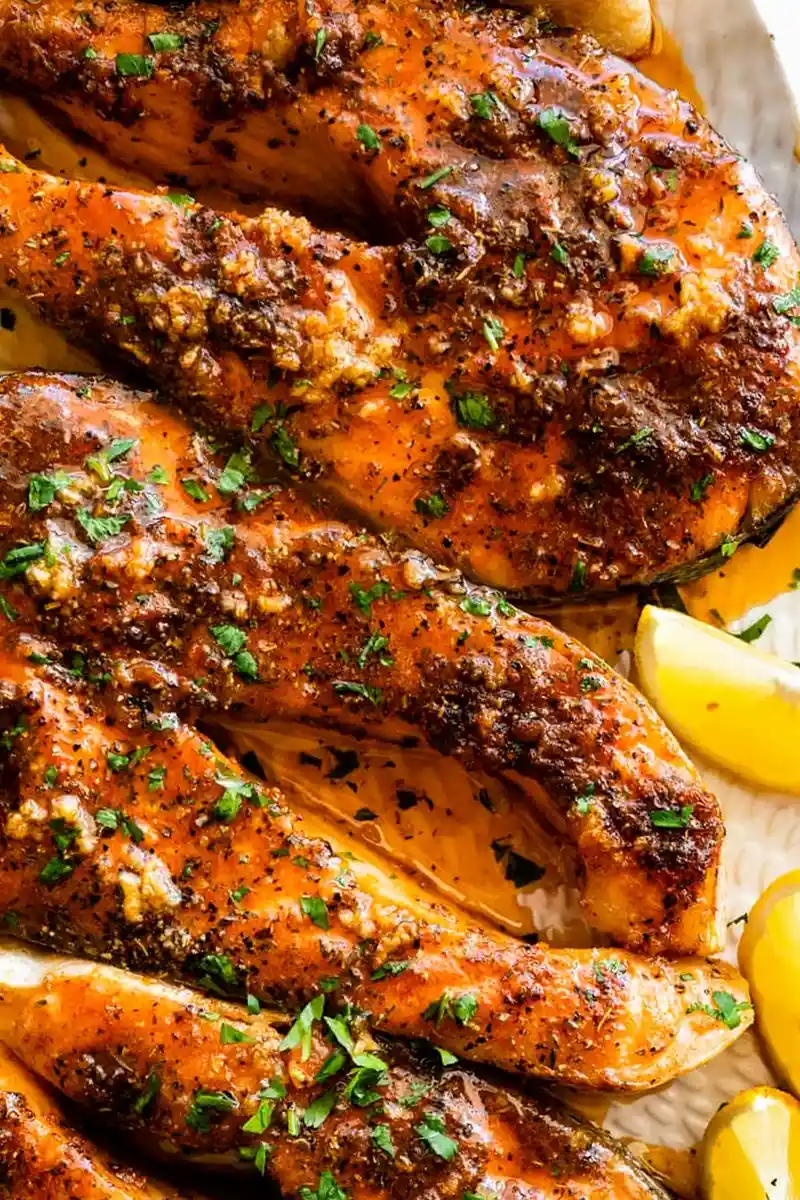
List of ingredients
- 3-4 salmon steaks (about 1½ inch thick; or use salmon fillets)
- 4 tablespoons melted butter (or olive oil)
- 2 cloves garlic (minced)
- 1 tablespoon brown sugar
- 1 teaspoon Italian seasoning
- ½ teaspoon ground paprika
- ¾ teaspoon salt
- ground black pepper (to taste)
- fresh parsley (finely chopped for garnish)
- lemon slices (for garnish)
step-by-step instructions
- Step: Preheat the oven to 400°F. Line a rimmed baking sheet with aluminum foil or parchment paper and grease with a little cooking spray or oil. You can also use a large baking dish.
- Step: Pat salmon steaks dry with a clean paper towel.
- Step: In a small bowl, combine melted butter or olive oil with minced garlic. Use half of this mixture to baste the salmon steaks, making sure to coat all sides of the salmon.
- Step: In a separate bowl, mix brown sugar, Italian seasoning, ground paprika, salt, and ground black pepper. Rub this mixture onto the top of the salmon steaks.
- Step: Drizzle the remaining half of the olive oil and garlic mixture over the salmon steaks.
- Step: Place the salmon steaks on the prepared baking sheet or oven-safe baking pan.
- Step: Bake in the oven for 15-22 minutes, or until the salmon is cooked and flakes easily with a fork.
- Step: Once baked, remove the salmon from the oven and let it rest for 5 minutes before serving. Spoon any extra sauce over the salmon. Enjoy!
Refining your baking technique
Checking for internal doneness
The most reliable way to ensure your salmon is cooked correctly is by using an instant-read meat thermometer inserted into the thickest part of the steak. By removing the fish from the oven when it reaches 140°F, the residual heat will carry the temperature to the perfect level while the fish rests. This prevents the proteins from tightening too quickly, which is what leads to dry, chalky fish.
Ensuring consistent texture
Dryness is usually the result of overcooking, which is why monitoring the thickness of your steaks is so important. If your steaks vary significantly in size, tuck the thinner, pointed ends inward or group them in the center of the pan. This adjustment ensures that the thinner sections do not become overdone before the thicker center portion reaches the desired consistency.
Achieving better browning
If you prefer a deeper golden color on the top of your salmon, you can briefly switch your oven to the broiler setting for the final two minutes of cooking. Keep a very close eye on the fish during this time, as the sugar in the seasoning blend can transition from caramelized to burnt very quickly under direct heat. Removing the pan as soon as the top is bubbly and golden ensures the most attractive presentation.
Choosing and preparing ingredients
Selecting the right salmon cut
Salmon steaks provide a unique dining experience because they are cut crosswise, which keeps a portion of the central bone intact. This bone acts as a heat conductor that helps the fish stay moist during the cooking process. If your local fishmonger is out of steaks, fillets are a perfectly acceptable substitute, though you may need to reduce your total baking time by a few minutes since they are typically thinner.
Adapting the flavor profile
The brown sugar in this recipe is specifically included to create a subtle glaze that contrasts with the salt and garlic. If you are looking for a slightly more floral sweetness, raw honey works exceptionally well as a substitute and blends beautifully with the Italian herbs. For a deeper, more molasses-forward flavor, dark brown sugar is a fantastic alternative that holds up well against the richness of the salmon fat.
Managing leftovers and storage
Optimal storage methods
If you have leftover salmon, move it into an airtight glass or plastic container within two hours of cooking. Kept in the coldest part of your refrigerator, the fish will remain delicious for up to three days. It is important to avoid letting the fish sit out at room temperature for extended periods, as this negatively impacts both the safety and the final texture when you go to reheat it later.
Gentle reheating techniques
When you are ready to enjoy your leftovers, avoid the high power of the microwave, which can make the proteins rubbery. Instead, place the salmon in a small skillet over low heat with a tiny splash of water or broth and cover it with a lid. This gentle steam-warming method revives the moisture of the fish, making it taste almost as fresh as it did when it first came out of the oven.
Frequently asked questions
What makes salmon steak different from a fillet?
A salmon steak is a cross-cut section of the fish that typically includes the backbone, whereas a fillet is sliced lengthwise away from the bone. The presence of the bone in the steak cut helps maintain structural integrity during longer cooking times and often results in a slightly moister end product. Both cuts are excellent for this baking method, though timing will vary slightly based on thickness.
Can I add vegetables to the baking sheet?
Adding vegetables to the tray is an excellent way to turn this into a complete one-pan dinner. Hearty vegetables like broccoli florets, asparagus spears, or cherry tomatoes work well, provided they are tossed in a bit of oil and seasoning first. Ensure that you do not crowd the tray too much, as excess moisture from the vegetables can prevent the salmon from roasting properly.
How do I know if the salmon is sustainably sourced?
When shopping for salmon, look for certifications such as the Marine Stewardship Council (MSC) or Aquaculture Stewardship Council (ASC) labels on the packaging. These indicators confirm that the fish has been harvested according to standards that protect the local ecosystem and the fish population. Choosing transparent sources ensures the best flavor and aligns with responsible food consumption habits.
Is it necessary to remove the skin before baking?
It is generally best to leave the skin on during the baking process because it acts as a protective barrier between the delicate flesh and the hot surface of the pan. The skin helps hold the steak together and prevents the bottom of the fish from becoming too dry. You can easily peel the skin away after the salmon is cooked, or serve it as is if you enjoy a crispier texture.
Print
Oven Baked Salmon Steaks
- Total Time: 25 minutes
- Yield: 4 servings 1x
- Diet: Pescetarian, Gluten Free
Description
These effortless oven baked salmon steaks are a super flavorful, easy, and nutritious dinner that the whole family will love. You’ll never make salmon steaks any other way!
Ingredients
- 3–4 salmon steaks (about 1½ inch thick; or use salmon fillets)
- 4 tablespoons melted butter (or olive oil)
- 2 cloves garlic (minced)
- 1 tablespoon brown sugar
- 1 teaspoon Italian seasoning
- ½ teaspoon ground paprika
- ¾ teaspoon salt
- ground black pepper (to taste)
- fresh parsley (finely chopped for garnish)
- lemon slices (for garnish)
Instructions
- Step: Preheat the oven to 400°F. Line a rimmed baking sheet with aluminum foil or parchment paper and grease with a little cooking spray or oil. You can also use a large baking dish.
- Step: Pat salmon steaks dry with a clean paper towel.
- Step: In a small bowl, combine melted butter or olive oil with minced garlic. Use half of this mixture to baste the salmon steaks, making sure to coat all sides of the salmon.
- Step: In a separate bowl, mix brown sugar, Italian seasoning, ground paprika, salt, and ground black pepper. Rub this mixture onto the top of the salmon steaks.
- Step: Drizzle the remaining half of the olive oil and garlic mixture over the salmon steaks.
- Step: Place the salmon steaks on the prepared baking sheet or oven-safe baking pan.
- Step: Bake in the oven for 15-22 minutes, or until the salmon is cooked and flakes easily with a fork.
- Step: Once baked, remove the salmon from the oven and let it rest for 5 minutes before serving. Spoon any extra sauce over the salmon. Enjoy!
Notes
In the US, you may have to ask your fishmonger to special-cut the salmon into steaks. If you can’t find them, use regular salmon fillets. The FDA recommends cooking fish to an internal temperature of 145°F (63°C). Use a meat thermometer inserted into the thickest part of the salmon to ensure accuracy, accounting for carry-over cooking which raises the temperature slightly after removing from the oven.
- Prep Time: 5 minutes
- Cook Time: 20 minutes
- Category: Main Course
- Method: Baking
- Cuisine: American
Nutrition
- Serving Size: 1 salmon steak
- Calories: 297 kcal
- Sugar: 3 g
- Sodium: 584 mg
- Fat: 20 g
- Saturated Fat: 8 g
- Unsaturated Fat: 10 g
- Trans Fat: 0 g
- Carbohydrates: 4 g
- Fiber: 0.3 g
- Protein: 26 g
- Cholesterol: 100 mg