This recipe delivers juicy, flavorful chicken thighs coated in a tangy mustard glaze that caramelizes beautifully in the oven. It is a streamlined meal that combines searing and roasting to achieve crispy skin and tender meat in under 45 minutes.
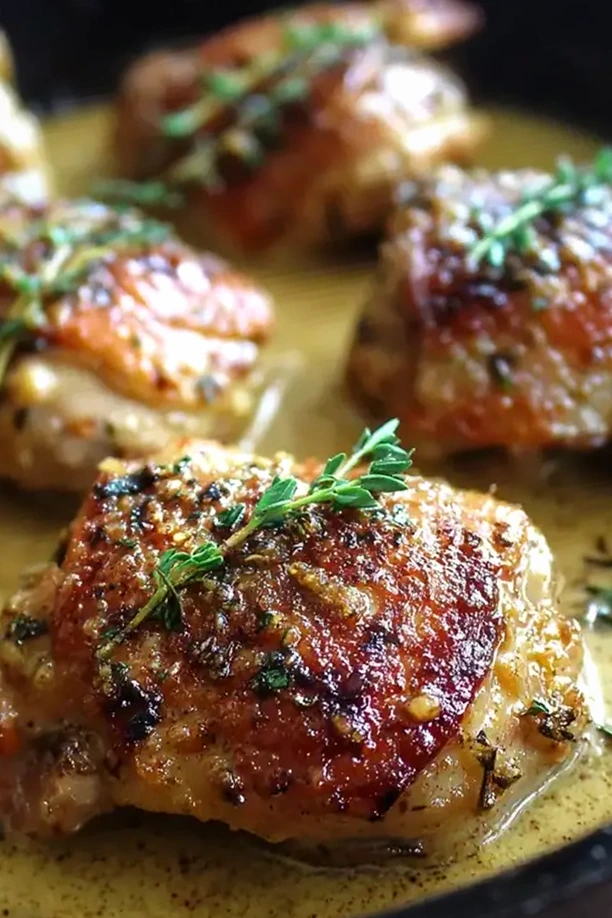
List of ingredients
- 8 bone-in, skin-on chicken thighs – provides maximum juiciness and flavor.
- 3 tbsp Dijon mustard – adds a smooth, tangy base.
- 2 tbsp whole-grain mustard – creates a rustic texture and pops of flavor.
- 3 cloves garlic, minced – provides an aromatic punch.
- 1 tbsp fresh thyme leaves – adds earthy, floral notes.
- 1 tbsp olive oil – helps emulsify the glaze.
- 1 tsp honey or maple syrup – balances the acidity and aids browning.
- 1/2 tsp smoked paprika – gives a hint of wood-fired depth.
- 1/2 tsp black pepper – provides a foundational spice.
- 3/4 tsp fine sea salt – enhances all the other flavors.
- 1 lemon, cut into wedges – adds bright acidity during roasting.
- 1/4 cup chicken broth – used for deglazing the pan for a rich sauce.
- 2 tbsp chopped fresh parsley – used for a fresh finish.
step-by-step instructions
- Prep the Oven and Meat: Preheat your oven to 400°F (200°C). Pat the chicken thighs completely dry with paper towels to ensure the skin crisps up rather than steaming. Season both sides of the meat generously with salt and black pepper.
- Create the Glaze: In a small mixing bowl, whisk together the Dijon mustard, whole-grain mustard, minced garlic, thyme, olive oil, honey, and smoked paprika. Mix until a thick, fragrant paste forms. Set this mixture aside until the chicken is seared.
- Sear the Chicken: Heat an oven-safe skillet over medium-high heat. Place the thighs skin-side down in the hot pan without extra oil, as the skin will render its own fat. Sear undisturbed for 6-8 minutes until the skin is deep golden brown, then flip and cook for another 2 minutes.
- Apply the Coating: Remove the skillet from the heat. Use a spoon or brush to generously apply the mustard glaze to the top and sides of each thigh, ensuring full coverage. Tuck the lemon wedges between the chicken pieces to roast.
- Roast in the Oven: Transfer the skillet to the preheated oven. Roast for 20-25 minutes, or until a meat thermometer reads 165°F (74°C) in the thickest part. The glaze should be darkened and sticky.
- Prepare the Pan Sauce: Remove the skillet from the oven and move the chicken to a platter to rest. Place the skillet back on the stove over medium heat and pour in the chicken broth. Use a wooden spoon to scrape up the browned bits (fond) from the bottom of the pan, simmering for 1-2 minutes.
- Final Touch: Spoon the reduced pan sauce over the rested chicken thighs. Garnish with chopped fresh parsley and serve with a roasted lemon wedge for an extra squeeze of juice.
Mastering the Cooking Process
The Importance of Drying the Skin
Moisture is the enemy of crispiness. When the skin is damp, the heat creates steam, which prevents the fat from rendering and the skin from browning. Patting the meat dry ensures an immediate sear and a professional golden finish.
Managing Pan Temperature
Wait for the skillet to be truly hot before adding the chicken. If the pan is too cool, the skin will stick to the surface and tear when you try to flip it. Once the skin releases naturally, you know the sear is complete.
Avoiding Overcrowded Skillets
If the chicken thighs are packed too closely together, they will release moisture that cannot evaporate, causing the meat to steam. Use a large pan or sear in batches to maintain a high temperature and a proper crust.
Using a Meat Thermometer
Internal temperature is the only reliable way to ensure the chicken is safe and juicy. Bone-in thighs can be deceptive, often appearing done on the outside while remaining raw near the bone. Aim for exactly 165°F to avoid drying out the meat.
Ingredient Substitutions and Variations
Adapting for Chicken Breasts
If using boneless, skinless breasts, pound them to an even thickness of about 3/4 inch. Reduce the oven roasting time to 15-20 minutes to prevent the lean meat from becoming tough. You will lose the crispy skin, but the glaze remains delicious.
Choosing Between Honey and Maple Syrup
Both sweeteners provide the necessary sugars for caramelization and balance the mustard’s tang. Honey offers a more floral, classic profile, while maple syrup adds a slightly woody, autumnal depth to the glaze.
Fresh vs Dried Herbs
Fresh thyme is preferred for its bright, citrusy notes. If using dried thyme, reduce the quantity to 1 teaspoon, as dried herbs are more concentrated in flavor. Stir them into the mustard paste early to allow them to hydrate.
Adjusting the Mustard Blend
You can use only Dijon for a smoother, more pungent sauce, or increase the whole-grain mustard for more texture. If you prefer a milder taste, blend in a tablespoon of mayonnaise or Greek yogurt to soften the sharpness.
Complementary Side Dishes
Creamy Mashed Potatoes
Buttery mashed potatoes are an ideal pairing because they absorb the tangy pan sauce. The contrast between the smooth potatoes and the acidic mustard glaze creates a balanced flavor profile on the plate.
Roasted Asparagus or Broccoli
Toss green vegetables in olive oil and salt and roast them on a separate tray during the last 15 minutes of the chicken’s cooking time. The charred edges of the vegetables complement the smoky paprika in the glaze.
Buttered Egg Noodles or Orzo
Simple starchy bases like orzo or egg noodles provide a neutral foundation that doesn’t compete with the bold mustard. Toss them with a bit of butter and parsley to mirror the garnish on the chicken.
Crispy Smashed Potatoes
Boil small potatoes until tender, smash them flat on a baking sheet, and roast them alongside the chicken. The crispy exterior of the potatoes matches the texture of the seared chicken skin.
Storage and Reheating Advice
Refrigeration Guidelines
Store leftover chicken and sauce in an airtight container in the refrigerator for up to 3 days. Ensure the chicken is cooled slightly before sealing to prevent excessive condensation from making the skin soggy.
Freezing for Later
These thighs can be frozen in a sealed freezer bag for up to 2 months. Thaw them completely in the refrigerator overnight before reheating to ensure the meat warms evenly through to the bone.
Maintaining Texture During Reheating
Avoid the microwave if you want to preserve the crispy skin. Instead, place the chicken in a 350°F (175°C) oven until warmed through, which helps the fat in the skin re-crisp.
Reviving the Pan Sauce
If the sauce has thickened too much in the fridge, add a teaspoon of water or chicken broth when reheating. This restores the glossy consistency and allows it to be spooned over the meat again.
Troubleshooting Common Issues
Preventing the Glaze from Burning
Mustard and honey can burn if the oven is too hot or the rack is too high. If the glaze darkens too quickly, loosely tent the skillet with aluminum foil for the remaining roasting time.
Dealing with Sticky Skin
If the chicken sticks to the pan during searing, it usually means the skin hasn’t formed a crust yet. Resist the urge to flip it and wait another minute for the meat to release naturally.
Correcting a Thin Pan Sauce
If the chicken broth doesn’t reduce enough to form a glaze, simmer it for an additional 2-3 minutes over medium heat. You can also whisk in a small knob of cold butter at the end for a thicker, glossier finish.
Managing Excess Pan Fat
Bone-in thighs render a significant amount of fat. If there is more than two tablespoons of oil in the pan after searing, spoon out the excess before adding the mustard glaze to avoid a greasy sauce.
Frequently Asked Questions
Can I marinate the chicken in the glaze overnight?
Yes, you can coat the chicken in the mustard mixture and refrigerate it for up to 24 hours. This allows the garlic and thyme to penetrate deeper into the meat for more intense flavor.
Is a cast iron skillet the best choice?
A cast iron skillet is ideal due to its superior heat retention, which helps achieve a perfect sear. However, any oven-safe stainless steel or ceramic skillet will work effectively for this recipe.
Can I use a different herb instead of thyme?
Rosemary or sage are excellent alternatives that pair well with mustard. If using rosemary, mince it finely so the needles do not become too woody during the roasting process.
What can I use if I don’t have whole-grain mustard?
You can use only Dijon mustard, or you can add a pinch of coarse black pepper and a teaspoon of mustard seeds to smooth mustard to mimic the texture.
Why did my chicken release so much water in the pan?
This usually happens if the pan was overcrowded or the chicken was added while still very cold. Ensure the thighs are at room temperature and leave space between them during the searing phase.
Print
Oven-Baked Dijon Chicken Thighs
- Total Time: 45 minutes
- Yield: 4 servings 1x
- Diet: General
Description
Make juicy, flavorful Dijon Chicken Thighs with a tangy mustard glaze in under 45 minutes. Perfect for an easy weeknight dinner.
Ingredients
- 8 bone-in, skin-on chicken thighs
- 3 tbsp Dijon mustard
- 2 tbsp whole-grain mustard
- 3 cloves garlic, minced
- 1 tbsp fresh thyme leaves
- 1 tbsp olive oil
- 1 tsp honey or maple syrup
- 1/2 tsp smoked paprika
- 1/2 tsp black pepper
- 3/4 tsp fine sea salt
- 1 lemon, cut into wedges
- 1/4 cup chicken broth
- 2 tbsp chopped fresh parsley
Instructions
- Step 1: Preheat your oven to 400°F (200°C). Pat the chicken thighs completely dry with paper towels and season both sides generously with the salt and black pepper.
- Step 2: In a small bowl, whisk together the Dijon mustard, whole-grain mustard, minced garlic, thyme, olive oil, honey, and smoked paprika. Set this mustard mixture aside.
- Step 3: Place your oven-safe skillet over medium-high heat. Add the chicken thighs, skin-side down. Sear, undisturbed, for 6-8 minutes until the skin is a deep golden brown. Flip and cook for 2 more minutes on the other side.
- Step 4: Remove the skillet from the heat. Generously coat the top and sides of each chicken thigh with the mustard mixture. Tuck the lemon wedges in between the thighs.
- Step 5: Transfer the skillet to the preheated oven. Roast for 20-25 minutes, or until the internal temperature registers 165°F (74°C).
- Step 6: Remove the skillet from the oven and transfer the chicken thighs to a serving platter to rest. Place the skillet back on the stovetop over medium heat. Add the chicken broth and scrape up all the browned bits from the bottom of the pan. Simmer and reduce for 1-2 minutes.
- Step 7: Spoon the pan juices over the rested chicken thighs. Garnish with the fresh chopped parsley and serve with an extra roasted lemon wedge.
Notes
Store in an airtight container for up to 3 days. Freeze in a sealed bag for up to 2 months. Reheat in a 350°F oven until warm to maintain crispy skin texture.
- Prep Time: 10 minutes
- Cook Time: 35 minutes
- Category: chicken thigh recipes
- Method: Searing and Roasting
- Cuisine: French, Mediterranean
Nutrition
- Serving Size: 2 chicken thighs
- Calories: 385 kcal
- Sugar: 3 g
- Sodium: 820 mg
- Fat: 25 g
- Saturated Fat: 7 g
- Unsaturated Fat: 15 g
- Trans Fat: 0 g
- Carbohydrates: 5 g
- Fiber: 1 g
- Protein: 35 g
- Cholesterol: 125 mg