This one-pot teriyaki beef and rice meal is a quick dinner solution that takes only 30 minutes to prepare. It combines savory ground beef, fresh vegetables, and fluffy jasmine rice in a single skillet for minimal cleanup.
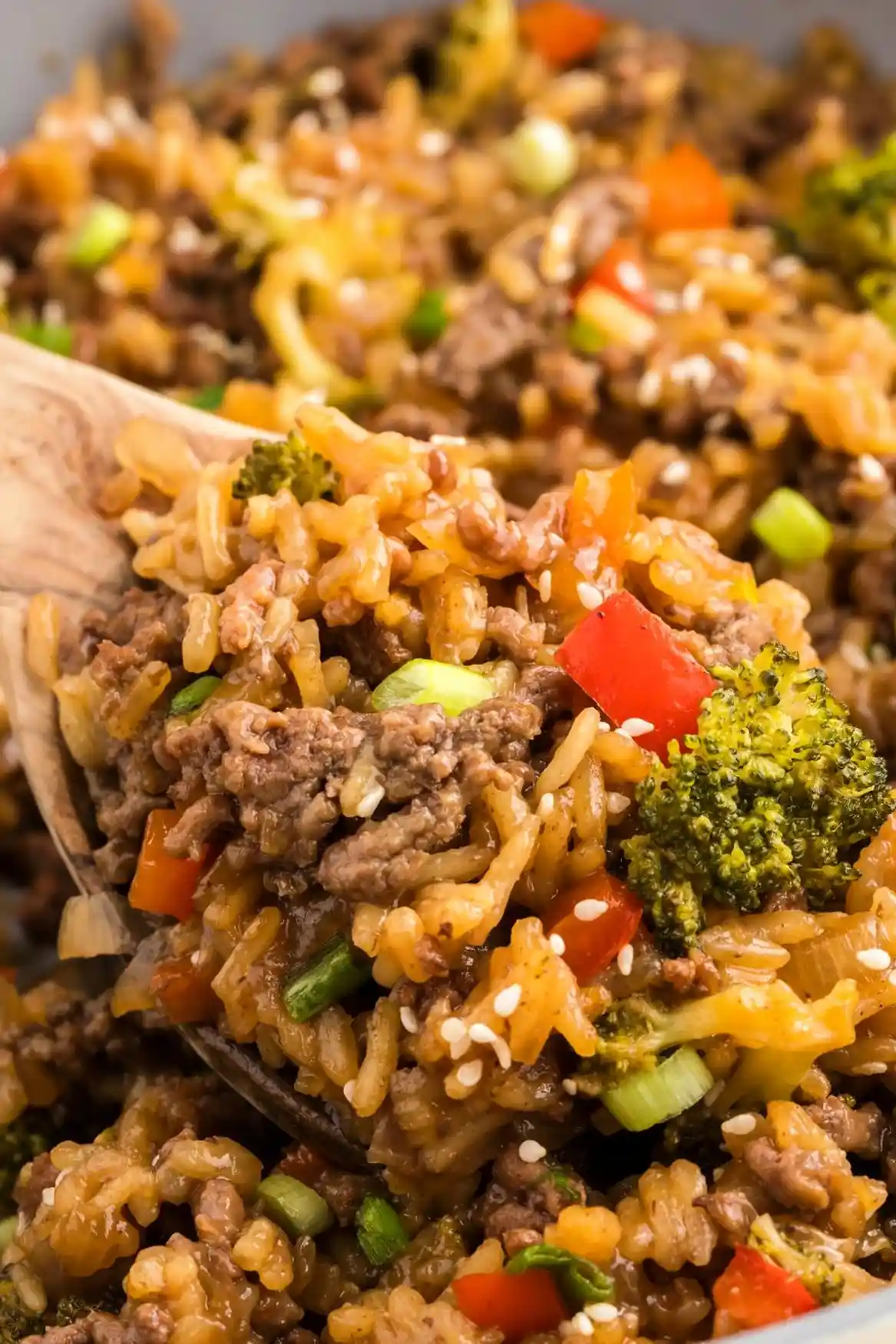
List of ingredients
- 1 lb lean ground beef (93/7 recommended) – provide the protein base.
- 1 yellow or sweet onion, finely diced – adds a sweet aromatic layer.
- 1/4 teaspoon kosher salt – enhances the natural flavors of the meat.
- 1 1/2 cups fresh broccoli, chopped – adds texture and nutrients.
- 1 red bell pepper, chopped – provides color and a mild sweetness.
- 1 1/2 cups beef broth – provides the cooking liquid for the rice.
- 1 cup Jasmine rice, uncooked – ensures a fluffy and fragrant grain.
- 1 cup thick teriyaki sauce – delivers the primary savory-sweet flavor.
- 4 cloves garlic, minced or pressed – adds a pungent, savory depth.
step-by-step instructions
- Brown the Meat: In a large skillet pan with a lid, add the ground beef, finely diced onion, and kosher salt. Cook and crumble over medium-high heat until the beef is no longer pink, then drain the excess grease.
- Combine Ingredients: Add the chopped broccoli, chopped red bell pepper, beef broth, jasmine rice, thick teriyaki sauce, and garlic to the skillet. Stir everything together thoroughly and bring the mixture to a boil.
- Simmer and Steam: Once boiling, reduce the heat to medium-low and cover the pan with a lid. Simmer for 20-25 minutes until all liquid is absorbed and the vegetables and rice are tender.
- Final Adjustments: If your stove runs hot, lower the heat to a low setting during the simmer to prevent the rice from burning at the bottom.
- Garnish and Serve: Top the dish with sliced green onions and sesame seeds. For extra flavor, add a drizzle of spicy mayo or serve as a filling for fresh lettuce cups.
Essential Cooking Techniques for Success
Rinse Your Jasmine Rice Thoroughly
Place the measured Jasmine rice in a fine mesh strainer and run cold water over it until the water runs clear. This process removes excess surface starch, which prevents the rice from becoming overly gummy. It results in a cleaner taste and a fluffier texture in the final dish.
Choose a Thick Teriyaki Glaze
Use a teriyaki sauce or glaze that has a consistency similar to BBQ sauce rather than a thin marinade. Marinades are often too watery and can throw off the liquid ratio needed to cook the rice properly. A thicker sauce clings better to the beef and vegetables, creating a rich coating.
Maintain Precise Broccoli Size
Cut the broccoli florets into very small, bite-sized pieces before adding them to the pan. Because they simmer for the same amount of time as the rice, small pieces ensure they soften completely. Large chunks may remain too firm or take longer than the rice to cook.
Use a Tight-Fitting Lid
Ensure your skillet has a lid that seals well to trap the steam inside the pan. The steaming process is what cooks the Jasmine rice and softens the vegetables. If steam escapes, the rice may remain undercooked or the liquid may evaporate too quickly.
Ingredient Substitutions and Customizations
Swap Ground Beef for Ground Turkey
You can replace the lean ground beef with ground turkey for a lighter protein option. Since turkey is leaner and lacks the fat of beef, add one tablespoon of olive oil or sesame oil to the pan. This prevents the meat from sticking and adds a necessary richness to the dish.
Adjust the Vegetable Mix
While broccoli and red pepper are standard, you can swap them for other hearty vegetables. Carrots, snap peas, or diced zucchini work well in this one-pot method. Ensure that any substitute vegetables are chopped to a similar size for even cooking.
Try Different Rice Varieties
Long-grain white rice is a suitable alternative if Jasmine rice is unavailable. However, avoid using brown rice or wild rice, as these require significantly more liquid and a longer simmering time. If using a different white rice, monitor the liquid levels closely.
Modify the Salt Levels
If you use a reduced-sodium beef broth, you may need to increase the kosher salt slightly. Conversely, if using a full-sodium broth and a very salty teriyaki brand, you can omit the extra salt. Always taste the mixture before the final simmer to adjust the seasoning.
Serving and Presentation Ideas
Create Fresh Lettuce Wraps
Spoon the teriyaki beef and rice mixture into large, crisp lettuce leaves for a refreshing contrast. Bibb, butter, iceberg, or green leaf lettuce are the best choices for this application. The crunch of the cold lettuce pairs perfectly with the soft, savory filling.
Add Flavorful Toppings
Enhance the visual appeal and taste by adding sliced green onions and toasted sesame seeds on top. A drizzle of spicy mayo, made by mixing mayonnaise with sriracha, adds a creamy heat. Some prefer an extra splash of fresh teriyaki sauce for more intensity.
Pair with Traditional Side Dishes
Serve this skillet meal alongside steamed edamame beans for added protein and fiber. Potstickers or vegetable egg rolls also complement the teriyaki flavors well. A side of pickled ginger or a simple cucumber salad can provide a bright, acidic balance to the rich sauce.
Storage and Reheating Guidelines
Store in Airtight Containers
Place any remaining beef and rice in a sealed airtight container and keep it in the refrigerator. This dish stays fresh and safe to eat for 3 to 4 days. Ensure the food is cooled slightly before sealing to prevent excess condensation.
Reheat for Optimal Moisture
When reheating in the microwave, add a small splash of water or beef broth to the portion. Alternatively, cover the bowl with a damp paper towel to trap moisture. This prevents the rice from drying out and restores the original texture of the sauce.
Avoid Overcooking During Reheat
Heat the leftovers in short intervals, stirring between each session. This ensures the center is hot without overcooking the edges of the rice. Overheating can cause the rice to become hard or the vegetables to lose their structure.
Common Troubleshooting and FAQs
Why is my rice still hard after simmering?
Hard rice usually indicates a lack of moisture or a leak in the pan lid. If the rice is undercooked after the recommended time, add a quarter cup of beef broth and simmer for another 5 minutes. Always check that your lid is sealing tightly against the rim of the skillet.
How do I prevent the rice from burning on the bottom?
Burning often occurs on high-heat stoves or with thin-bottomed pans. Reduce the heat to the lowest setting once the mixture begins to simmer. Stirring the beef and onions well at the start prevents charred bits from sticking to the bottom during the steaming phase.
Can I use frozen vegetables instead of fresh?
Yes, frozen broccoli and peppers can be used, but do not thaw them first. Add them directly to the pan to prevent them from releasing too much water, which could make the rice mushy. You may need to reduce the beef broth by a tablespoon or two to compensate for the moisture in frozen vegetables.
Which type of beef broth is best?
Standard beef broth or beef stock works well for this recipe. For a richer flavor, you can use beef bone broth, which also adds more collagen and nutrients. Choose the sodium level based on your dietary preferences, keeping in mind the salt content of the teriyaki sauce.
Can I make this recipe in a slow cooker?
This specific recipe is designed for a skillet to ensure the rice cooks quickly and the vegetables stay crisp. In a slow cooker, the rice may become too soft or mushy over several hours. For the best texture, stick to the stovetop method.
What is the best way to drain the ground beef?
After browning the beef, use a slotted spoon to move the meat to a plate, or carefully tilt the pan and spoon out the excess grease. Removing the fat ensures the final dish is not oily and allows the teriyaki sauce to coat the ingredients more effectively.
Print
One Pot Teriyaki Beef and Rice
- Total Time: 35 minutes
- Yield: 6 servings 1x
- Diet: General
Description
Teriyaki Beef and Rice is a one pot skillet dinner recipe that’s ready in 30 minutes! Ground beef, broccoli, red pepper, and jasmine rice simmer in a simple teriyaki sauce and beef broth base with fresh garlic.
Ingredients
- 1 lb lean ground beef
- 1 yellow or sweet onion, finely diced
- ¼ teaspoon kosher salt
- 1½ cups chopped fresh broccoli
- 1 red bell pepper, chopped
- 1½ cups beef broth
- 1 cup Jasmine rice, uncooked
- 1 cup thick teriyaki sauce
- 4 cloves garlic, minced
Instructions
- Step 1: In a large skillet pan with a lid, add the ground beef, finely diced onion, and kosher salt. Cook and crumble, over medium-high heat, until the beef is no longer pink. Drain the excess grease from the skillet pan.
- Step 2: Add the chopped broccoli, chopped red bell pepper, beef broth, jasmine rice, thick teriyaki sauce, and garlic. Stir to combine everything together and bring it to a boil.
- Step 3: Once boiling, reduce the heat to medium-low and cover the skillet pan with a lid. Simmer for 20-25 minutes or until no liquid remains and the vegetables and rice are soft and tender.
- Step 4: Garnish with sliced green onion, sesame seeds, and if wanted try a drizzle of spicy mayo over top!
Notes
Swap ground beef for ground turkey (add 1 tablespoon of oil). Use a thick teriyaki sauce or glaze rather than a thin marinade. Rinse the Jasmine rice in a fine mesh strainer until the water runs clear for a fluffier texture. Adjust salt based on the sodium content of your beef broth.
- Prep Time: 10 minutes
- Cook Time: 25 minutes
- Category: Dinner
- Method: Skillet
- Cuisine: American
Nutrition
- Serving Size: 1 serving
- Calories: 346 kcal
- Sugar: 9 g
- Sodium: 2221 mg
- Fat: 12 g
- Saturated Fat: 5 g
- Unsaturated Fat: 7 g
- Trans Fat: 0 g
- Carbohydrates: 37 g
- Fiber: 2 g
- Protein: 21 g
- Cholesterol: 51 mg