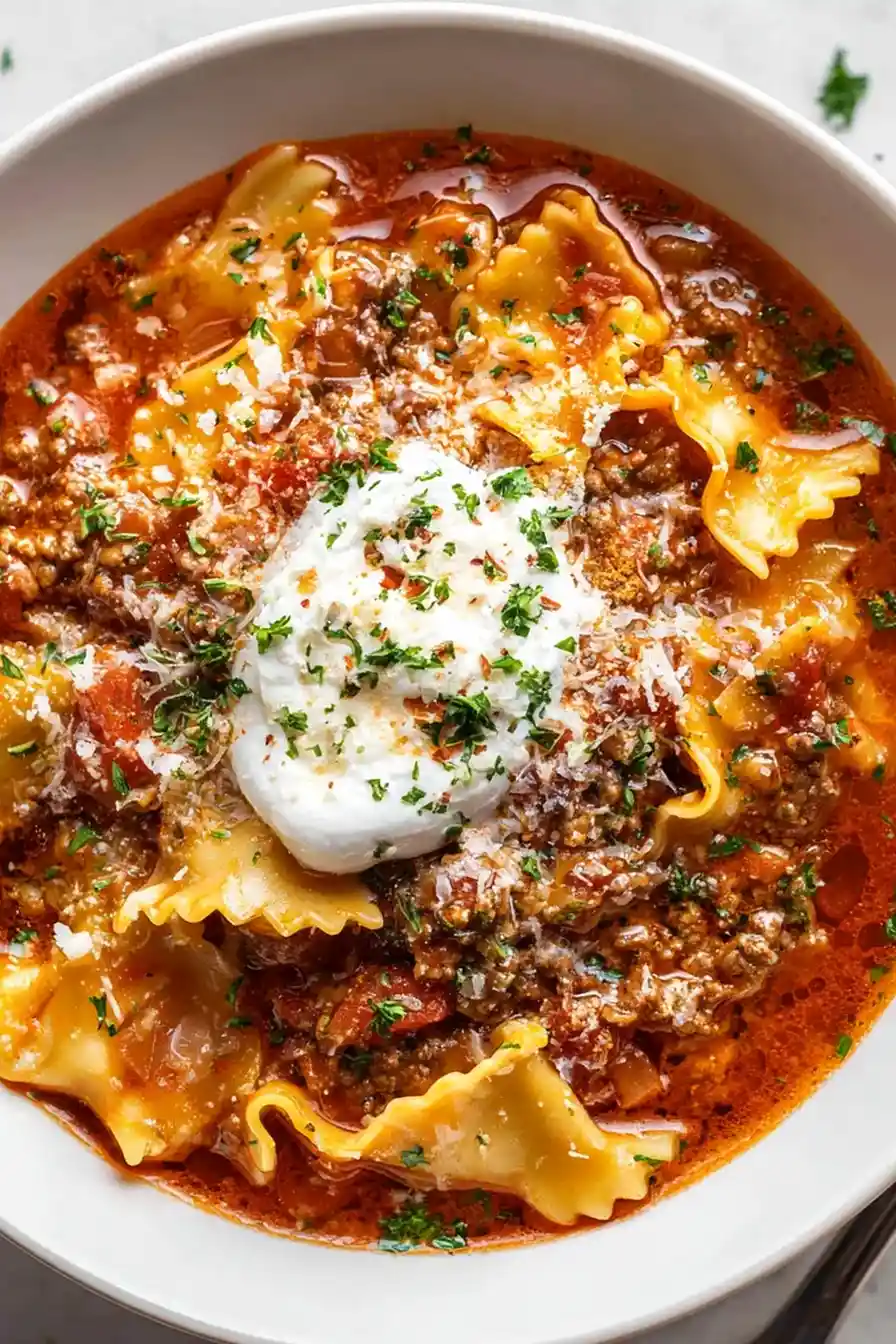
This hearty lasagna soup combines all the classic flavors of a baked pasta dish into a single pot for easier preparation. It is a filling meal that works well for weeknight dinners or cold weather gatherings.
List of ingredients
- 1 tbsp olive oil – used for sautéing the meat and vegetables.
- 1 lb 450 g ground beef or beef-based Italian sausage – provides the savory protein base.
- 1 small onion, finely diced – adds aromatic depth and sweetness.
- 3 cloves garlic, minced – provides a pungent, savory flavor.
- 1 tsp Italian seasoning – a blend of herbs for traditional Italian taste.
- ½ tsp dried basil – adds a sweet, peppery herbal note.
- ½ tsp dried oregano – adds a slightly bitter, earthy flavor.
- ¼ tsp red pepper flakes (optional) – adds a subtle heat to the broth.
- 2 tbsp tomato paste – thickens the soup and concentrates the tomato flavor.
- 1 can (28 oz / 800 g) crushed tomatoes – creates the thick, rich body of the soup.
- 1 can (14.5 oz / 410 g) diced tomatoes – adds chunks of tomato for texture.
- 4 cups chicken or beef broth – the liquid base for the soup.
- 1 cup water – adjusts the consistency of the broth.
- 1 tbsp sugar (optional) – helps balance the acidity of the tomatoes.
- 8 oz 225 g lasagna noodles, broken into bite-size pieces – the main starch component.
- Salt and black pepper to taste – essential for seasoning.
- ½ cup ricotta cheese (for serving) – adds creamy dollops to the top.
- 1 cup shredded mozzarella (for serving) – creates melty cheese pulls.
- ¼ cup grated Parmesan (for serving) – adds a salty, sharp finish.
- Fresh parsley or basil, chopped (for serving) – provides a fresh, aromatic garnish.
step-by-step instructions
- Sauté the beef: Heat the olive oil in a large pot over medium heat. Add the ground beef and cook until browned, breaking it apart with a spoon as it cooks.
- Soften the aromatics: Stir in the finely diced onion and cook for about 3–4 minutes until the onion becomes soft and translucent.
- Add seasonings: Stir in the minced garlic, Italian seasoning, dried basil, dried oregano, and optional red pepper flakes. Cook for 30 seconds until the spices are fragrant.
- Concentrate tomato flavor: Stir in the tomato paste and cook for 1 minute to caramelize the paste slightly.
- Simmer the base: Add the crushed tomatoes, diced tomatoes, broth, water, and sugar if you are using it. Stir well and bring the mixture to a gentle boil.
- Slow cook: Reduce the heat to medium-low and let the soup simmer for 10 minutes to blend the flavors.
- Cook the pasta: Add the broken lasagna noodles and cook for another 10–12 minutes, stirring occasionally, until the noodles reach a tender consistency.
- Final seasoning: Taste the soup and season with salt and black pepper as needed.
- Assemble and serve: Ladle the hot soup into bowls. Top each portion with a scoop of ricotta, a sprinkle of mozzarella, grated Parmesan, and fresh herbs.
Meat Selection and Preparation
Choosing the Right Ground Beef
Use a lean ground beef, such as 90% lean, to prevent the soup from becoming overly greasy. If using a higher fat percentage, ensure you drain the excess fat after browning the meat but before adding the onions.
Using Beef-Based Italian Sausage
For a more complex flavor, substitute ground beef with beef-based Italian sausage. This adds pre-seasoned notes of fennel and garlic that complement the tomato base perfectly.
Proper Browning Technique
Brown the meat over medium-high heat to ensure a good sear, which creates deeper flavor through the Maillard reaction. Avoid overcrowding the pot to prevent the meat from steaming instead of searing.
Breaking the Meat Crumbles
Use a sturdy wooden spoon or a potato masher to break the beef into small, uniform crumbles. Small pieces distribute more evenly throughout the soup and fit better with the broken noodle pieces.
Tomato and Broth Optimization
Managing Tomato Acidity
Canned tomatoes can vary in acidity depending on the brand. Adding a tablespoon of sugar neutralizes the sharp acidic bite, creating a more balanced and rounded flavor profile.
Selecting Quality Crushed Tomatoes
Choose crushed tomatoes with no added preservatives for a cleaner taste. Fire-roasted crushed tomatoes are an excellent alternative if you prefer a smoky undertone in your broth.
Comparing Broth Options
Beef broth results in a deeper, heartier soup that mimics a slow-cooked ragu. Chicken broth provides a lighter, cleaner taste that allows the herbs and cheese to stand out more.
The Role of Tomato Paste
Sautéing the tomato paste for one minute before adding liquids removes the raw metallic taste. This step intensifies the color and adds a rich, savory depth to the overall base.
Pasta Cooking Strategies
Preventing Noodle Clumping
Stir the broken lasagna noodles immediately after adding them to the pot. Continuous stirring for the first two minutes prevents the starch from gluing the noodles together.
Timing for Al Dente Texture
Start checking the noodles two minutes before the recommended cook time ends. Removing them while they still have a slight bite prevents them from becoming mushy during reheating.
Using Alternate Pasta Shapes
If lasagna noodles are unavailable, use mafalda or rigatoni broken into halves. These shapes hold the sauce well and provide a similar mouthfeel to traditional lasagna.
Managing Starch Release
Cooking pasta directly in the soup releases starch, which naturally thickens the broth. If the soup becomes too thick, simply stir in a small amount of extra water or broth.
Cheese and Garnish Details
Preparing the Ricotta Dollop
Whisk the ricotta cheese with a pinch of salt and black pepper before serving. This makes the cheese easier to scoop and ensures it is seasoned consistently throughout the bowl.
Selecting the Best Mozzarella
Use low-moisture mozzarella for the best melt. Fresh mozzarella can release too much water into the soup, potentially thinning the broth around the cheese topping.
Using Aged Parmesan
Grate your own Parmesan from a block to avoid the cornstarch found in pre-shredded versions. Aged Parmesan provides a sharp, salty contrast to the creamy ricotta.
Fresh Herb Integration
Add fresh basil or parsley only at the very end of the process. Heat destroys the delicate volatile oils in fresh herbs, so adding them as a garnish preserves their brightness.
Storage and Preservation
Refrigeration Guidelines
Store leftover soup in an airtight container in the refrigerator for up to four days. Ensure the soup is cooled to room temperature before sealing the lid to prevent condensation.
Freezing the Soup Base
For the best results, freeze the soup without the noodles. Cook the pasta fresh when you reheat the base to avoid the noodles becoming overly soft and disintegrated.
Thawing Process
Thaw frozen soup in the refrigerator overnight for the safest results. Alternatively, defrost it slowly in a pot over low heat, adding a splash of water to loosen the liquid.
Reheating Techniques
Reheat the soup on the stovetop over medium-low heat. Add a small amount of beef or chicken broth during reheating, as the pasta will have absorbed much of the liquid during storage.
Dietary Substitutions
Low Carb Vegetable Swaps
Replace the lasagna noodles with zucchini ribbons or hearts of palm pasta. Add these during the last five minutes of cooking to prevent them from overcooking.
Plant-Based Meat Alternatives
Substitute ground beef with a plant-based meat crumble or finely chopped sautéed mushrooms. Increase the amount of Italian seasoning slightly to compensate for the loss of meat flavor.
Dairy-Free Cheese Options
Use a cashew-based ricotta alternative and a vegan mozzarella shred. These provide the creamy and melty elements without using animal-derived dairy.
Using Vegetable Broth
Swap chicken or beef broth for a high-quality vegetable broth. This makes the base suitable for those avoiding animal-derived liquids while maintaining a savory profile.
Serving Suggestions
Complementary Breads
Serve this soup with toasted garlic bread or a warm piece of focaccia. The crunchy texture of the bread provides a great contrast to the soft noodles and creamy cheese.
Fresh Salad Pairings
A simple arugula salad with lemon vinaigrette balances the richness of the cheese. The bitterness of the greens cuts through the heavy tomato and dairy components.
Roasted Vegetable Sides
Serve alongside roasted broccoli or cauliflower. These vegetables add a nutritional balance to the meal and complement the Italian flavor profile.
Customizing the Toppings
Provide bowls of extra mozzarella and Parmesan on the table. This allows guests to customize the amount of cheese according to their preference.
Troubleshooting Common Issues
Fixing Overly Thick Soup
If the noodles absorb too much liquid, the soup may turn into a stew. Stir in 1/4 cup of broth or water at a time until the desired soup consistency is restored.
Adjusting Excess Saltiness
If the soup is too salty, add a splash of water or a bit more crushed tomatoes. A small amount of additional sugar or a squeeze of lemon juice can also mask excess salt.
Correcting Bland Broth
If the flavor is too mild, increase the amount of Italian seasoning or add a teaspoon of Worcestershire sauce. Simmering for an extra ten minutes can also concentrate the flavors.
Preventing Mushy Noodles
Avoid boiling the noodles on high heat. Keep the soup at a gentle simmer to ensure the pasta cooks evenly without breaking down on the edges.
Frequently Asked Questions
Can I make this ahead of time?
Yes, this soup is excellent for meal prep. It is recommended to store the noodles separately and add them during reheating to maintain the best texture.
Is this an easy recipe for beginners?
Yes, because it is a one-pot meal with straightforward steps. There are no complex techniques required, and the ingredients are readily available.
How do I make this keto-friendly?
Remove the lasagna noodles and replace them with sliced zucchini or spaghetti squash. Be sure to check that your tomato paste has no added sugar.
What other vegetables can I add?
Finely diced carrots and celery can be sautéed with the onion. Sliced mushrooms or spinach added at the end also provide extra nutrients and flavor.
Does this taste like traditional baked lasagna?
Yes, the combination of beef, tomato, ricotta, and mozzarella recreates the flavor profile of a baked lasagna in a convenient soup format.
Print
One-Pot Lasagna Soup
- Total Time: 35 minutes
- Yield: 6 servings 1x
- Diet: General
Description
This Lasagna Soup Recipe is a cozy, hearty twist on classic lasagna made easy in one pot! Loaded with seasoned ground beef, tender pasta, rich tomato broth, and melty cheese, it delivers all the comforting lasagna flavors you love in a warm, satisfying bowl.
Ingredients
- 1 tbsp olive oil
- 1 lb 450 g ground beef (or beef-style Italian sausage)
- 1 small onion (finely diced)
- 3 cloves garlic (minced)
- 1 tsp Italian seasoning
- ½ tsp dried basil
- ½ tsp dried oregano
- ¼ tsp red pepper flakes (optional)
- 2 tbsp tomato paste
- 1 can (28 oz / 800 g) crushed tomatoes
- 1 can (14.5 oz / 410 g) diced tomatoes
- 4 cups chicken or beef broth
- 1 cup water
- 1 tbsp sugar (optional)
- 8 oz 225 g lasagna noodles, broken into bite-size pieces
- Salt and black pepper (to taste)
- ½ cup ricotta cheese
- 1 cup shredded mozzarella
- ¼ cup grated Parmesan
- Fresh parsley or basil (chopped)
Instructions
- Step: Heat the olive oil in a large pot over medium heat.
- Step: Add the ground beef and cook until browned, breaking it apart as it cooks.
- Step: Stir in the onion and cook for about 3–4 minutes, until softened.
- Step: Add the garlic, Italian seasoning, basil, oregano and red pepper flakes; cook for 30 seconds.
- Step: Stir in the tomato paste and cook for 1 minute.
- Step: Add crushed tomatoes, diced tomatoes, broth, water and sugar (if using).
- Step: Stir well and bring to a gentle boil.
- Step: Reduce heat to medium-low and let the soup simmer for 10 minutes.
- Step: Add the broken lasagna noodles and cook for another 10–12 minutes, stirring occasionally, until tender.
- Step: Season with salt and black pepper to taste.
- Step: Serve hot and top each bowl with ricotta, mozzarella, Parmesan and fresh herbs.
Notes
For a low-carb option, replace lasagna noodles with zucchini ribbons or hearts of palm pasta. Store leftovers in an airtight container in the refrigerator for up to 4 days.
- Prep Time: 10 minutes
- Cook Time: 25 minutes
- Category: Main Course
- Method: Stovetop
- Cuisine: Italian-American
Nutrition
- Serving Size: 1 bowl
- Calories: 460 kcal
- Sugar: 8 g
- Sodium: 920 mg
- Fat: 22 g
- Saturated Fat: 11 g
- Unsaturated Fat: 9 g
- Trans Fat: 0 g
- Carbohydrates: 34 g
- Fiber: 4 g
- Protein: 28 g
- Cholesterol: 75 mg