This one-pot ground beef rice comes together in under 30 minutes with simple pantry staples. Seasoned beef, rice, and fresh vegetables cook in one skillet for a filling weeknight meal that minimizes your cleanup time. It is a reliable, balanced dinner that delivers consistent flavor with every bite.
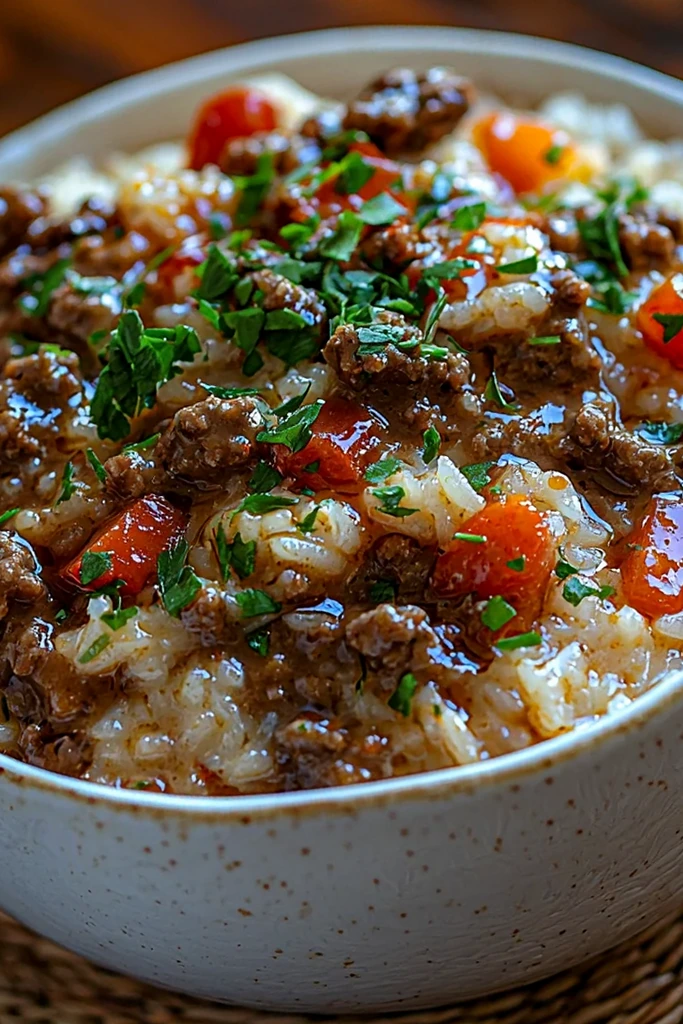
List of ingredients
- 1 lb ground beef
- 1 cup long-grain white rice
- 1 medium onion (diced)
- 2 cloves garlic (minced)
- 1 bell pepper (diced)
- 1 cup frozen peas
- 2 cups beef broth
- 1 tbsp olive oil
- 1 tsp paprika
- 1/2 tsp black pepper
- 1/2 tsp salt
step-by-step instructions
- Step: Heat olive oil in a large skillet or pot over medium heat.
- Step: Add the ground beef and cook until browned, breaking it up with a spoon.
- Step: Stir in the diced onion, garlic, and bell pepper, cooking until softened.
- Step: Add the rice, paprika, salt, and black pepper, stirring to coat the rice in the mixture.
- Step: Pour in the beef broth and bring the mixture to a boil.
- Step: Reduce the heat to low, cover, and simmer for 15 minutes or until the rice is tender.
- Step: Stir in the frozen peas and cook for an additional 2-3 minutes until heated through.
- Step: Remove from heat, let sit for 5 minutes, then fluff with a fork before serving.
Preparation and Cooking Fundamentals
Managing Pan Temperature for Even Browning
Maintaining the right heat level is the foundation of this dish. Start with medium-high heat to achieve a deep sear on the ground beef, which provides the base flavor for the entire meal. Once you add the rice and liquid, drop the heat to low immediately to prevent the bottom from scorching while the steam finishes the cooking process.
The Role of Fond in Deep Flavor
The browned bits stuck to the bottom of your skillet, known as fond, are essential for professional-level results. When you pour in your beef broth, take a moment to gently scrape these bits up with a wooden spoon. This process deglazes the pan and distributes that concentrated savory richness into the cooking liquid, ensuring every grain of rice is perfectly seasoned.
Why Tightly Covering the Pan Matters
The success of one-pot rice depends entirely on steam. Avoid lifting the lid during the 15-minute simmer, as every time you check, precious steam escapes, leading to unevenly cooked grains. A tight-fitting lid keeps the pressure consistent, which is the only way to ensure the rice is perfectly tender rather than crunchy or raw at the center.
Refining Your Technique for Consistent Results
Resting Time for Texture Integrity
Never skip the final resting period after the stove is turned off. Letting the pot sit covered for 5 minutes allows the moisture to redistribute evenly throughout the grains. This prevents the bottom layer from being soggy while keeping the top layer from drying out, resulting in a consistent, fluffy texture across the entire skillet.
Avoiding Common Rice Clumping Issues
Clumping often happens when the rice is not toasted or if the pan is stirred too vigorously after the liquid has been absorbed. Give the rice a brief toast in the fat and spices before adding the broth to create a protective barrier. Once the rice is simmering, keep your hands off the spoon until the very end, as too much agitation releases starches that cause unwanted stickiness.
Versatility and Ingredient Adjustments
Vegetable Integration Strategies
The inclusion of fresh vegetables adds significant nutritional value and texture. Beyond the standard bell pepper and onion, consider adding finely diced carrots or mushrooms early in the cooking process. If you decide to add leafy greens like baby spinach, stir them in during the final minute so they wilt without losing their vibrant color or becoming mushy.
Enhancing Flavor Profiles
If you prefer a bolder flavor profile, consider introducing dried herbs at the same time you add the onion. Dried thyme or oregano pairs exceptionally well with the beef and broth base. A small amount of tomato paste added during the browning phase can also provide a deeper, more robust foundation that mimics a long-simmered stew.
Storage and Planning Ahead
Maximizing Freshness During Storage
To store your leftovers properly, allow the dish to cool to room temperature before transferring it to an airtight container. This prevents excess condensation from forming inside the container, which can lead to soggy rice when reheated. Properly stored, the dish will maintain its quality in the refrigerator for up to three days.
Reheating Methods for Best Texture
When reheating, moisture is your best friend. Add a tablespoon of beef broth or water to your portion before heating it on the stovetop or in the microwave. This extra moisture helps hydrate the rice and prevents the meat from drying out during the warming process. Always heat until the center reaches a consistent, steaming temperature.
Frequently Asked Questions
How can I verify the rice is fully cooked?
The best way to verify is to taste a small amount from the center of the pot. If the rice feels firm or chalky in the middle, it needs a few extra minutes of cooking or a small splash of additional broth. When properly done, the grains should be tender but still hold their distinct shape without turning into a paste.
Is it possible to use different rice varieties?
Different rice types require different liquid ratios and cooking times. Long-grain white rice is the most forgiving for this method, but if you choose to use Basmati or Jasmine, they may require slightly less water. Avoid using instant or minute rice, as these will likely overcook and become mushy before the beef and vegetables have properly developed their flavor.
Why does the bottom of my pan sometimes develop a crust?
A crust can form if the heat remains too high or if the pot is not thick-bottomed. Ensure you are using a skillet or Dutch oven that distributes heat evenly. If you find your stove runs hot, adjust your burner to the lowest possible setting as soon as the broth begins to simmer to protect the bottom layer of the meal.
Can I make this dish without a lid?
Using a lid is critical for this recipe because the rice cooks primarily through steaming. If you do not have a lid that fits your skillet, a heavy-duty sheet of aluminum foil can be used to seal the edges of the pan tightly. Ensure it is crimped around the sides to lock in all the moisture required to hydrate the grains effectively.
How do I handle double batches?
If you choose to double the recipe, ensure you are using a large enough pot so the rice doesn’t sit in a layer deeper than two or three inches. Crowding the pot can lead to uneven cooking, where the bottom layer is soft and the top is still hard. If your pot is too small, it is better to cook in two separate batches to maintain the intended texture.
Print
One-Pot Ground Beef Rice
- Total Time: 30 minutes
- Yield: 4 servings 1x
- Diet: Nut-free
Description
A quick and hearty meal featuring ground beef, rice, and vegetables cooked together in one pot for easy cleanup.
Ingredients
- 1 lb ground beef
- 1 cup long-grain white rice
- 1 medium onion (diced)
- 2 cloves garlic (minced)
- 1 bell pepper (diced)
- 1 cup frozen peas
- 2 cups beef broth
- 1 tbsp olive oil
- 1 tsp paprika
- 1/2 tsp black pepper
- 1/2 tsp salt
Instructions
- Step: Heat olive oil in a large skillet or pot over medium heat.
- Step: Add the ground beef and cook until browned, breaking it up with a spoon.
- Step: Stir in the diced onion, garlic, and bell pepper, cooking until softened.
- Step: Add the rice, paprika, salt, and black pepper, stirring to coat the rice in the mixture.
- Step: Pour in the beef broth and bring the mixture to a boil.
- Step: Reduce the heat to low, cover, and simmer for 15 minutes or until the rice is tender.
- Step: Stir in the frozen peas and cook for an additional 2-3 minutes until heated through.
- Step: Remove from heat, let sit for 5 minutes, then fluff with a fork before serving.
Notes
For a spicier version, add a pinch of cayenne pepper. Store leftovers in an airtight container for up to 3 days.
- Prep Time: 10 minutes
- Cook Time: 20 minutes
- Category: Main Course
- Method: Stovetop
- Cuisine: American
Nutrition
- Serving Size: 1 serving
- Calories: 450 kcal
- Sugar: 3 g
- Sodium: 650 mg
- Fat: 18 g
- Saturated Fat: 6 g
- Unsaturated Fat: 10 g
- Trans Fat: 0 g
- Carbohydrates: 48 g
- Fiber: 3 g
- Protein: 24 g
- Cholesterol: 70 mg