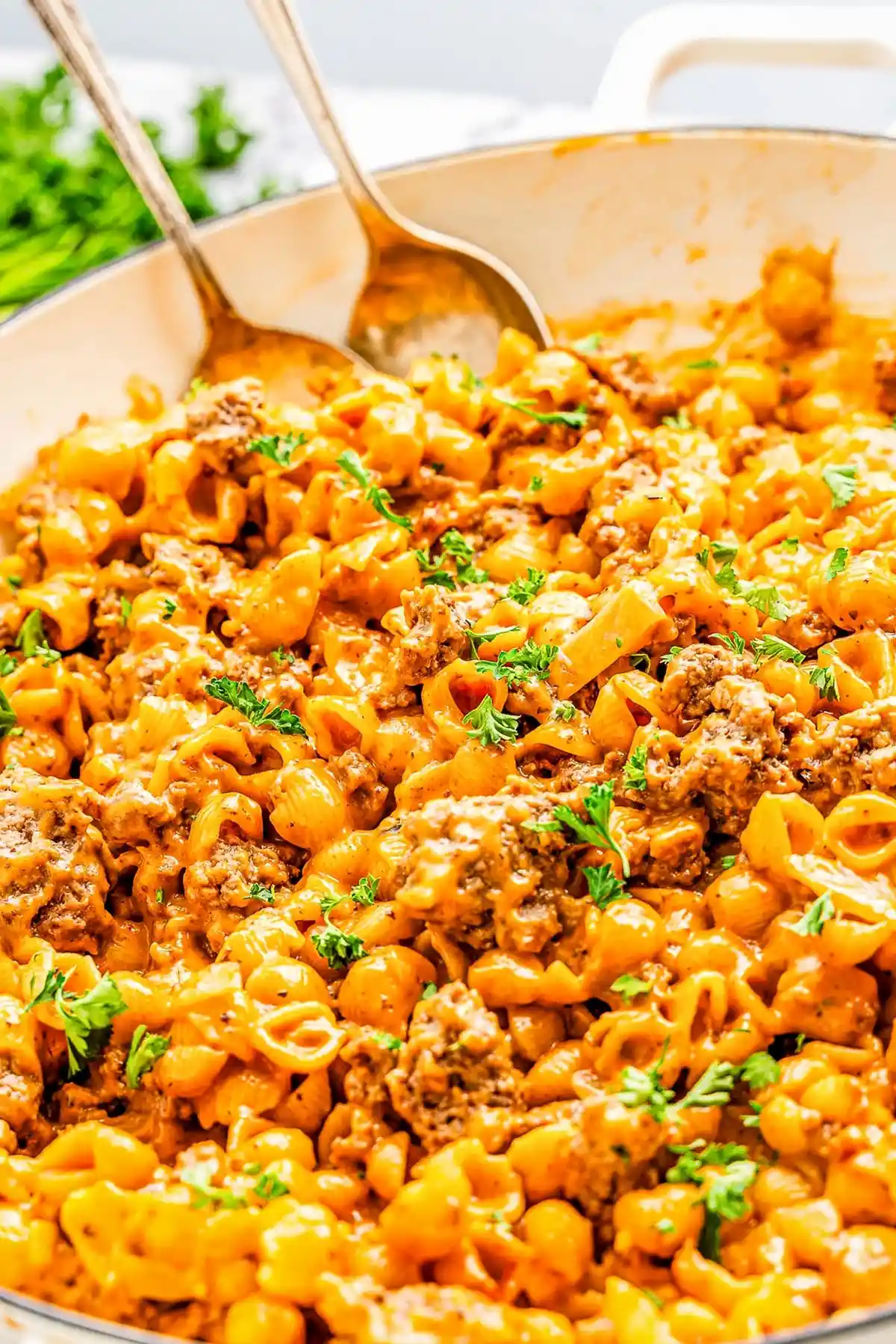
This one-skillet meal combines savory ground beef with tender pasta shells in a rich, velvety cheese sauce, all prepared in under thirty minutes. By cooking the pasta directly in the seasoned beef broth and tomato base, each bite becomes infused with deep, hearty flavors. It is a reliable solution for busy evenings when you need a comforting, family-friendly dinner with minimal cleanup.
List of ingredients
- 1 pound lean ground beef
- 1 large yellow onion, diced small
- 3 garlic cloves, finely minced
- 2 tablespoons all-purpose flour
- 2 cups reduced sodium beef broth
- 8-ounce can tomato sauce
- 1 teaspoon Italian seasoning
- 1 teaspoon paprika
- 1 teaspoon garlic powder
- 1 teaspoon salt
- 1 teaspoon freshly ground black pepper
- 8 ounces small pasta shells
- 1/2 cup heavy cream
- 2 1/2 cups shredded cheddar cheese
- Freshly grated Parmesan cheese and fresh herbs for optional garnish
step-by-step instructions
- Step: To a large skillet, add the ground beef and brown it over medium-high heat. Remove with a slotted spoon and set aside, keeping the rendered fat in the skillet.
- Step: Add the onions to the skillet and sauté for about 4 minutes until soft and translucent.
- Step: Add the minced garlic and cook for 1 minute while stirring constantly.
- Step: Sprinkle the flour over the onions and garlic, stir well, and cook for 1 minute to create a roux.
- Step: Slowly pour in the beef broth while stirring continuously, then increase heat to high and boil for 1-2 minutes until the sauce thickens slightly.
- Step: Add the tomato sauce, Italian seasoning, garlic powder, salt, pepper, and dry pasta shells. Reduce heat to medium-low, cover, and simmer for 10 minutes or until pasta is al dente.
- Step: Stir in the shredded cheese and heavy cream over medium-high heat until melted and combined, about 1-2 minutes.
- Step: Add the cooked beef back into the skillet, stir to incorporate, and cook for 1-2 minutes to rewarm.
- Step: Optionally garnish with extra cheese and fresh herbs before serving.
Refining Your One-Skillet Results
Achieving the Perfect Pasta Texture
If your pasta remains slightly firm after the initial ten-minute simmer, keep the lid on and continue cooking in two-minute increments. Ensure there is enough liquid in the pan to rehydrate the shells; if the skillet appears dry, add an additional half-cup of beef broth or water. Always test a piece of pasta from the center of the skillet, as heat distribution can vary depending on your stove type.
Managing Sauce Consistency
Should you find the skillet is too soupy after the pasta is cooked, increase the heat to medium-high and simmer uncovered. This allows excess moisture to evaporate quickly without overcooking the pasta. Conversely, if you prefer an even creamier texture, stir in an extra handful of cheese during the final stage rather than relying purely on liquid reduction.
Practical Ingredient Adjustments
Selecting the Best Protein Source
Using lean ground beef provides the best balance of fat for flavor without requiring excessive draining. If you prefer to swap the protein, ground turkey or ground chicken are viable options, though they are leaner and may require a tablespoon of olive oil to prevent sticking while sautéing. Ensure your protein is seasoned well, as chicken and turkey do not carry as much inherent richness as beef.
The Role of Flour in Texture
The addition of flour is vital to this recipe because it creates a makeshift roux within the skillet. By coating the onions in flour before adding the broth, you establish the foundation for a thickened, cohesive sauce that clings to the pasta shells. Never skip the minute of cooking the raw flour, as this is essential to developing a refined, professional flavor profile for your dish.
Storage and Planning Ahead
Maintaining Quality in the Refrigerator
This dish stores exceptionally well for busy weeknight meal prep. Keep leftovers in an airtight container for up to five days. Because pasta continues to absorb moisture even after cooking, the sauce may thicken during refrigeration, which is perfectly normal and does not affect the food’s safety.
Freezing Cream-Based Pasta
While dairy-based sauces can sometimes separate, this recipe freezes reliably for up to three months. When freezing, ensure the container is tightly sealed to prevent freezer burn. Thaw the pasta overnight in the refrigerator before reheating to preserve the integrity of the sauce components.
Reheating Techniques
Restoring Texture After Storage
When reheating leftovers, add a splash of beef broth or water before heating to loosen the sauce. Use the microwave in short thirty-second intervals, stirring in between to ensure the heat is evenly distributed. Avoid overheating, as excessive heat can cause the cheese and cream to separate and become oily.
Frequently Asked Questions
Can I substitute other pasta shapes?
While small shells and elbow macaroni are ideal, other shapes like penne or rotini require longer cooking times and more liquid. Using larger shapes risks the pasta remaining undercooked while the liquid evaporates, forcing you to constantly add more broth. Stick to smaller shapes for the most consistent, one-pot experience.
Why should I use heavy cream instead of milk?
Heavy cream contains the necessary fat content to remain stable when combined with acidic tomato sauce and heat. Using milk or half-and-half increases the risk of the dairy curdling, resulting in a grainy sauce rather than a smooth, velvety finish. For the best mouthfeel, stick to heavy cream as the recipe requires.
How do I make this dish more flavorful?
If you desire more intensity, consider adding a dash of smoked paprika instead of standard paprika for a deeper, more robust flavor profile. You can also incorporate a tablespoon of tomato paste during the sauté step with the onions to concentrate the tomato flavor. Fresh herbs like basil, oregano, or parsley added right before serving provide a bright, fresh contrast to the rich, cheesy base.
What should I do if I accidentally overcook the pasta?
If the pasta accidentally reaches a softer stage than intended, remove the skillet from the heat immediately. Adding the cheese and cream quickly will help coat the pasta, which can prevent it from sticking together into a single mass. Serving immediately is crucial once the pasta has reached your preferred level of doneness to avoid further softening from the residual heat of the skillet.
Is freshly grated cheese really necessary?
Pre-shredded cheese is often coated in starch or cellulose to prevent clumping, which can interfere with the way it melts into your sauce. Freshly grating your cheddar cheese from a block ensures a smooth, uniform melt, resulting in the creamy, cohesive sauce that defines this dish. It is a minor step that significantly improves the final texture of your one-skillet meal.
Print
One Pot Cheesy Beef and Shells
- Total Time: 30 minutes
- Yield: 6 servings 1x
- Diet: High Protein
Description
An easy, one-skillet recipe for cheesy beef and pasta shells that is ready in just 30 minutes! Simple and hearty comfort food perfect for busy weeknights.
Ingredients
- 1 pound lean ground beef
- 1 large yellow onion, diced small
- 3 garlic cloves, finely minced
- 2 tablespoons all-purpose flour
- 2 cups reduced sodium beef broth
- 8-ounce can tomato sauce
- 1 teaspoon Italian seasoning
- 1 teaspoon paprika
- 1 teaspoon garlic powder
- 1 teaspoon salt
- 1 teaspoon freshly ground black pepper
- 8 ounces small pasta shells
- 1/2 cup heavy cream
- 2 1/2 cups shredded cheddar cheese
- Freshly grated Parmesan cheese and fresh herbs for optional garnish
Instructions
- Step: To a large skillet, add the ground beef and brown it over medium-high heat. Remove with a slotted spoon and set aside, keeping the rendered fat in the skillet.
- Step: Add the onions to the skillet and sauté for about 4 minutes until soft and translucent.
- Step: Add the minced garlic and cook for 1 minute while stirring constantly.
- Step: Sprinkle the flour over the onions and garlic, stir well, and cook for 1 minute to create a roux.
- Step: Slowly pour in the beef broth while stirring continuously, then increase heat to high and boil for 1-2 minutes until the sauce thickens slightly.
- Step: Add the tomato sauce, Italian seasoning, garlic powder, salt, pepper, and dry pasta shells. Reduce heat to medium-low, cover, and simmer for 10 minutes or until pasta is al dente.
- Step: Stir in the shredded cheese and heavy cream over medium-high heat until melted and combined, about 1-2 minutes.
- Step: Add the cooked beef back into the skillet, stir to incorporate, and cook for 1-2 minutes to rewarm.
- Step: Optionally garnish with extra cheese and fresh herbs before serving.
Notes
Leftovers will keep in an airtight container in the refrigerator for up to 5 days or in the freezer for up to 3 months. Reheat gently in the microwave.
- Prep Time: 10 minutes
- Cook Time: 20 minutes
- Category: Dinner
- Method: Stovetop
- Cuisine: American
Nutrition
- Serving Size: 1 serving
- Calories: 534 kcal
- Sugar: 3 g
- Sodium: 1080 mg
- Fat: 28 g
- Saturated Fat: 15 g
- Unsaturated Fat: 12 g
- Trans Fat: 0.3 g
- Carbohydrates: 36 g
- Fiber: 2 g
- Protein: 35 g
- Cholesterol: 116 mg