This one-pan meal combines ground beef and elbow macaroni in a savory tomato and cheese sauce. It is designed for fast preparation and minimal cleanup, making it a functional choice for weeknight dinners.
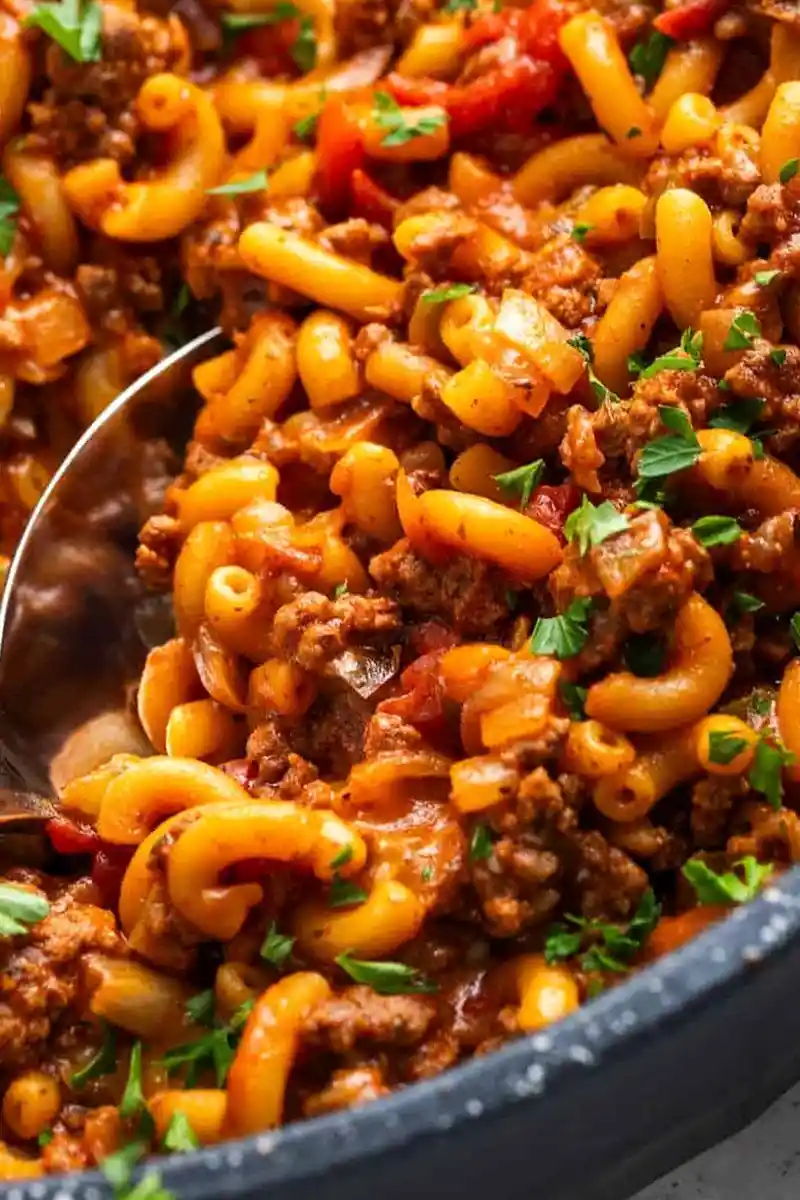
List of ingredients
- 2 teaspoons extra-virgin olive oil – used for sautéing vegetables.
- 1 medium onion, chopped – provides a savory aromatic base.
- 1 medium green bell pepper, chopped – adds a mild pepper flavor and texture.
- 3 cloves garlic, minced – adds pungent flavor to the sauce.
- 1 – 1.5 lbs. ground beef (80% lean) – the primary protein and flavor source.
- 1 1/2 cups low sodium beef broth – creates the cooking liquid for the pasta.
- 1 (15 oz) can tomato sauce – forms the base of the thick sauce.
- 1 (15 oz) can diced tomatoes – adds texture and acidity to the dish.
- 1 tablespoon Worcestershire sauce – provides deep, umami notes.
- 1 tablespoon paprika – gives the dish its characteristic color and warmth.
- 2 teaspoons Italian seasoning – adds a blend of dried herbs.
- 1 teaspoon seasoned salt – ensures consistent seasoning throughout.
- 1/2 teaspoon black pepper – provides a mild spicy contrast.
- 2 cups elbow macaroni, uncooked – the starch that thickens the sauce as it cooks.
- 1 cup shredded cheddar cheese – added at the end for creaminess and richness.
step-by-step instructions
- Sauté Aromatics: Heat olive oil in a large pot over medium heat. Add chopped onion and green pepper, cooking for 5-7 minutes until the vegetables are soft.
- Add Garlic: Stir in the minced garlic and cook for 30 seconds to release the fragrance without burning.
- Brown the Beef: Add the ground beef to the pot. Use a spatula to break the meat into small crumbles and cook until fully browned.
- Combine Ingredients: Pour in the beef broth, tomato sauce, diced tomatoes, Worcestershire sauce, paprika, Italian seasoning, seasoned salt, and black pepper. Stir in the uncooked elbow macaroni.
- Simmer: Increase the heat to bring the liquid to a simmer. Once simmering, reduce the heat to medium or medium-low and cook for approximately 12 minutes until the pasta is al dente.
- Finish with Cheese: Stir in the shredded cheddar cheese until melted and evenly distributed. Serve immediately.
Beef Selection and Preparation
Choosing 80% Lean Ground Beef
Using 80% lean ground beef provides an ideal balance of fat and flavor. The fat renders during the browning process, which helps sauté the vegetables and prevents the macaroni from sticking to the bottom of the pot.
Substituting Ground Turkey
Ground turkey can be used as a leaner protein alternative. Because turkey has less fat, you may need to add an extra teaspoon of olive oil to ensure the onions and peppers sauté properly without sticking.
Properly Browning the Meat
Ensure the beef is broken into small pieces using a spatula. Browning the meat thoroughly creates a Maillard reaction, which develops deeper flavors in the final sauce that cannot be achieved by steaming the meat.
Managing Excess Grease
If using a higher fat percentage of beef, you may find excess grease in the pot after browning. Spoon out the surplus fat before adding the broth and tomato sauce to prevent an oily film from forming on top of the dish.
Vegetable Preparation and Cooking
Consistency of Vegetable Cuts
Dice the onion and green bell pepper into uniform pieces. Consistent sizing ensures that all vegetables soften at the same rate, preventing some pieces from being mushy while others remain raw.
Sautéing for Optimal Texture
Cook the onion and pepper for a full 5-7 minutes before adding garlic. This allows the moisture to evaporate and the vegetables to caramelize slightly, which enhances the base flavor of the goulash.
Preventing Garlic Burn
Garlic burns much faster than onions and peppers. Adding it only for the final 30 seconds of the sauté phase ensures the garlic becomes fragrant without turning bitter from overcooking.
Pasta Management and Texture
The Role of Starch in One-Pan Cooking
Cooking the macaroni directly in the sauce allows the pasta to release its starches into the liquid. This naturally thickens the sauce, creating a cohesive glaze that clings to the beef and noodles.
Using Alternative Pasta Shapes
While elbow macaroni is traditional, small shells or rotini can be used. If using a denser pasta shape, you may need to increase the beef broth by a quarter cup and extend the simmering time by 2-3 minutes.
Achieving Al Dente Pasta
Monitor the pasta closely during the final minutes of simmering. Remove the pot from the heat while the pasta still has a slight bite, as it will continue to cook in the residual heat of the sauce.
Liquid and Sauce Adjustments
Controlling Sodium Levels
Using low-sodium beef broth allows you to control the salt content. This is particularly important when using seasoned salt, as the combination of canned tomatoes and broth can quickly become overly salty.
Using Fire-Roasted Tomatoes
For a deeper, smokier flavor profile, replace the regular diced tomatoes with fire-roasted diced tomatoes. This adds a charred note that complements the paprika and browned beef.
Adjusting Sauce Thickness
If the sauce is too thick after the pasta is cooked, stir in a small amount of additional beef broth. If it is too thin, simmer for an additional 2-3 minutes without a lid to allow more liquid to evaporate.
Seasoning and Flavor Profiles
The Impact of Paprika
Paprika provides the signature warmth and red color of goulash. Using a high-quality sweet paprika yields a traditional taste, while smoked paprika can be used for a more robust, woody flavor.
Balancing Italian Seasoning
Italian seasoning typically contains oregano, basil, and thyme. These herbs cut through the richness of the beef and cheese, providing a bright, aromatic contrast to the heavy tomato base.
Optimizing the Umami Component
Worcestershire sauce adds a complex layer of acidity and savoriness. This ingredient enhances the natural flavors of the beef and helps balance the sweetness of the canned tomato sauce.
Cheese and Final Touches
Shredding Cheese from a Block
Shredding cheddar cheese from a block is preferable to using pre-shredded bags. Block cheese lacks the anti-caking agents found in pre-shredded varieties, allowing it to melt more smoothly into the sauce.
Incorporating Cheese for Creaminess
Stirring the cheese directly into the pot creates a creamy, emulsified sauce. For a different texture, you can sprinkle the cheese on top of individual servings and let it melt naturally.
Adding Fresh Green Onions
Slicing green onions thinly and adding them as a garnish provides a fresh, sharp contrast to the rich sauce. This adds a visual pop of color and a crisp texture to the finished meal.
Using Diced Avocado for Richness
Adding diced avocado on top of the served goulash introduces a cool, creamy element. The healthy fats in the avocado balance the acidity of the tomato sauce.
Storage and Preservation
Refrigeration Guidelines
Store leftover goulash in an airtight container in the refrigerator. It will remain safe to eat for 4-5 days, provided the container is sealed to prevent the pasta from drying out.
Freezing for Long-Term Storage
Goulash can be frozen for up to 4-5 months. Use freezer-safe bags or containers and leave a small amount of headspace to allow for expansion during the freezing process.
Safe Thawing Procedures
Thaw frozen goulash in the refrigerator overnight. This gradual thawing process maintains the integrity of the pasta and prevents the sauce from separating.
Reheating Methods
Microwave Reheating Tips
Heat individual portions in the microwave on medium power. Stir the goulash halfway through the heating process to ensure the center is hot and the cheese is remelted.
Stovetop Reheating for Quality
For the best texture, reheat larger portions in a skillet over medium-low heat. This method prevents the pasta from becoming rubbery, which can happen with high-heat microwaving.
Adding Moisture During Reheating
Pasta absorbs liquid over time, meaning leftovers may appear dry. Add a tablespoon of beef broth or water during the reheating process to restore the original saucy consistency.
Troubleshooting Common Issues
Solving Mushy Pasta
Mushy pasta usually results from overcooking or over-stirring. To avoid this, set a timer for 12 minutes and avoid stirring the pot excessively once the macaroni has been added.
Fixing an Overly Thick Sauce
If the sauce becomes too thick, it is likely because the pasta absorbed too much liquid. Stir in beef broth one tablespoon at a time until the desired consistency is reached.
Removing Excess Grease
If the final dish looks oily, you can skim the surface with a wide spoon. Alternatively, stirring in a small amount of extra cheese or a pinch of cornstarch slurry can help emulsify the fat.
Correcting Over-Salted Sauce
If the dish is too salty, add a small amount of unsalted diced tomatoes or a splash of water. A teaspoon of sugar or a squeeze of lemon juice can also help neutralize the perception of excess salt.
Frequently Asked Questions
Can I make this in a slow cooker?
This recipe is optimized for the stovetop to ensure the pasta cooks correctly. For a slow cooker version, cook the beef and sauce on low for 6-8 hours, then stir in pre-cooked macaroni during the last 30 minutes.
What is the difference between this and Hungarian goulash?
American goulash is a pasta-based dish using ground beef and macaroni. Traditional Hungarian goulash is a slow-cooked meat stew featuring chunks of beef, onions, and potatoes without any pasta.
How do I make this dish spicier?
Add a teaspoon of crushed red pepper flakes during the browning of the beef. You can also stir in a tablespoon of sriracha or chopped jalapeños during the sautéing phase for a more intense heat.
Can I add other vegetables?
Yes, diced carrots and celery can be added with the onions. Frozen peas or spinach can be stirred in during the last 2 minutes of simmering to add color and nutrition without overcooking.
Print
One-Pan American Goulash
- Total Time: 35 minutes
- Yield: 4–6 servings 1x
- Diet: General
Description
This American-style Goulash is a quick and easy one-pan dinner with ground beef and elbow macaroni in a richly flavored cheesy tomato sauce.
Ingredients
- 2 teaspoons extra-virgin olive oil
- 1 medium onion, chopped
- 1 medium green bell pepper, chopped
- 3 cloves garlic, minced
- 1 – 1.5 lbs. ground beef (80% lean)
- 1 1/2 cups low sodium beef broth
- 1 (15 oz) can tomato sauce
- 1 (15 oz) can diced tomatoes
- 1 tablespoon Worcestershire sauce
- 1 tablespoon paprika
- 2 teaspoons Italian seasoning
- 1 teaspoon seasoned salt
- 1/2 teaspoon black pepper
- 2 cups elbow macaroni (uncooked)
- 1 cup shredded cheddar cheese
Instructions
- Step: Heat the olive oil in a large pot over medium heat. Add the onion and pepper and sauté for 5-7 minutes, until softened. Add garlic and cook an additional 30 seconds, until fragrant.
- Step: Add the ground beef and cook, breaking up with a spatula, until browned and cooked through.
- Step: Add the broth, tomato sauce, diced tomatoes, Worcestershire sauce, paprika, Italian seasoning, seasoned salt, black pepper and macaroni pasta. Stir well to combine.
- Step: Increase the heat to bring to a simmer then reduce the heat to medium/medium low to maintain a simmer. Cook for about 12 minutes, until the pasta is al dente.
- Step: Stir the cheese into the pot and serve hot.
Notes
Beef: 80% lean ground beef is recommended for fat and flavor; ground turkey can be substituted. Broth: Low-sodium broth is recommended for sodium control. Tomatoes: Regular, petit, or fire-roasted diced tomatoes can be used. Pasta: Elbow macaroni is traditional, but other small pasta shapes can be used (adjust cook time accordingly). Leftovers: Store in the refrigerator for 4-5 days or freeze for 4-5 months.
- Prep Time: 5 minutes
- Cook Time: 30 minutes
- Category: Main Dishes
- Method: One-pot
- Cuisine: American
Nutrition
- Serving Size: 1 serving
- Calories: 497 kcal
- Sugar: 4 g
- Sodium: 766 mg
- Fat: 28 g
- Saturated Fat: 11 g
- Unsaturated Fat: 13 g
- Trans Fat: 1 g
- Carbohydrates: 20 g
- Fiber: 3 g
- Protein: 39 g
- Cholesterol: 120 mg