This hearty, old-fashioned vegetable beef soup is the ultimate comfort dish, featuring tender chunks of beef, vibrant garden vegetables, and a savory, slow-simmered broth. It is a timeless, stick-to-your-ribs meal that perfectly balances rustic flavors with wholesome, nourishing ingredients. Whether you are preparing a large batch for meal prep or looking for a cozy dinner to warm you up on a cold night, this classic recipe is sure to become a staple in your kitchen.
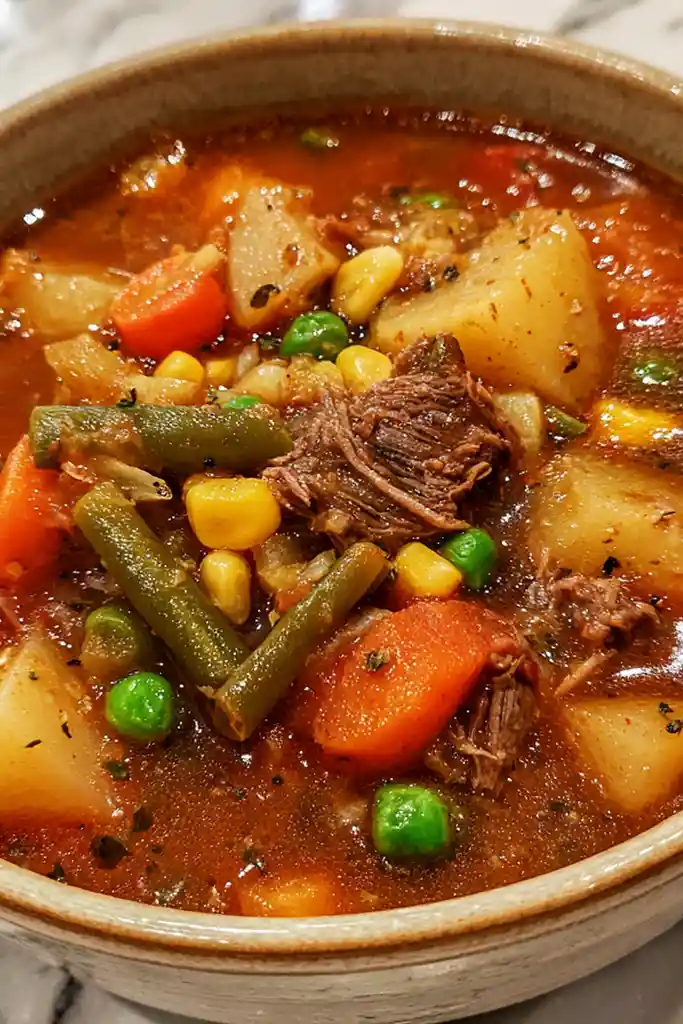
List of ingredients
- 1 ½ pounds beef stew meat, cut into bite-sized cubes
- 8 cups low-sodium beef broth
- 1 tablespoon Worcestershire sauce
- 1 bay leaf
- 2 tablespoons olive oil
- 1 large yellow onion, diced
- 3 cloves garlic, minced
- 3 medium carrots, peeled and chopped
- 3 celery stalks, diced
- 3 medium russet potatoes, peeled and chopped
- 1 ½ cups frozen peas
- 1 cup green beans, trimmed and cut into 1-inch pieces
- 1 cup corn kernels
- 1 15-ounce can diced tomatoes with juice
- 2 tablespoons tomato paste
- 1 teaspoon dried thyme
- 1 teaspoon dried basil
- Salt and black pepper to taste
step-by-step instructions
- Sear the Beef: Heat olive oil in a Dutch oven over medium-high heat. Season beef with salt and pepper, then brown on all sides. Remove and set aside.
- Build the Flavor Base: Reduce heat to medium. Sauté onions, carrots, and celery until softened. Stir in garlic and tomato paste for 1 minute.
- Deglaze and Simmer: Pour in beef broth, scraping the bottom of the pot. Add tomatoes, Worcestershire sauce, bay leaf, thyme, basil, and the browned beef. Bring to a gentle boil.
- Long, Slow Simmer: Reduce heat to low, cover partially, and simmer for 1 hour.
- Add Potatoes and Green Beans: Stir in potatoes and green beans. Simmer for an additional 30 minutes until potatoes are fork-tender.
- Stir in Final Veggies: Add peas and corn during the final 5–10 minutes of cooking.
- Season and Serve: Remove the bay leaf, adjust seasoning to taste, and serve hot.
Refining your cooking technique
Developing depth through browning
Never rush the searing process of the beef cubes. Creating a dark, caramelized crust on the meat adds significant depth of flavor to the entire soup base that cannot be replicated later. If the pot seems too dry, add a tiny bit more oil, but focus on getting that deep, golden-brown color on each piece.
Achieving the perfect potato texture
The key to perfect potatoes is ensuring they are cut into uniform, bite-sized pieces so they cook evenly throughout the simmer. If you cut them too small, they may fall apart and turn mushy, so aim for cubes about one inch in size to maintain their structure in the broth.
Balancing the acidity of the broth
The tomato paste and canned tomatoes add a necessary brightness to the rich beef broth. If you find the soup tastes too acidic, add a tiny pinch of sugar or a splash of water to mellow the profile. Taste the broth frequently during the final stages of cooking to ensure the balance of savory and sweet remains consistent.
Effective ingredient substitutions
Selecting alternative protein cuts
While chuck roast is the gold standard for stewing due to its marbling, you can also use round steak or even top sirloin. Keep in mind that leaner cuts will require slightly less cooking time to reach tenderness, so monitor the texture of the meat after the first 45 minutes of the long simmer.
Customizing the vegetable medley
This soup is a versatile canvas that works well with seasonal produce. Feel free to swap green beans for sliced zucchini or add hearty greens like kale or spinach during the final two minutes of cooking. If you enjoy extra texture, consider adding sliced leeks or parsnips alongside the carrots and celery.
Using fresh versus dried herbs
If you have access to fresh herbs, they provide a wonderful brightness, but be aware that they are less potent than dried ones. Use three times the amount of fresh herbs as you would dried, and add them at the end of the cooking process to preserve their delicate essential oils and vibrant appearance.
Storage and reheating strategies
Proper cooling for food safety
Before refrigerating or freezing, ensure the soup has cooled down significantly. To speed up the process, place the pot in a clean sink filled with a small amount of ice water, stirring occasionally. This helps bring the temperature down quickly, which is critical for maintaining the safety and quality of the beef.
Optimizing the freezer shelf life
When freezing this soup, use heavy-duty, airtight freezer bags or containers and leave about an inch of headspace to allow for expansion. For the best flavor, try to consume the frozen soup within three months. Always label your containers with the date so you can keep track of freshness.
Restoring texture after reheating
When reheating, do so slowly over medium-low heat on the stove, stirring occasionally to prevent the vegetables at the bottom from scorching. If the soup has thickened too much during storage, add a splash of beef broth or water to return it to the desired consistency. Avoid boiling the soup aggressively during reheating, as this can break down the tender vegetables and meat.
Practical troubleshooting and FAQ
Why does the broth look thin?
If your broth lacks body, consider mashing a few of the cooked potatoes directly against the side of the pot. The starch released from the potatoes will naturally thicken the soup, creating a heartier, more comforting texture without needing added thickeners like flour or cornstarch.
Can I prepare this in a slow cooker?
Yes, simply sear the beef and sauté the aromatics in a skillet first to develop the flavor. Transfer everything to the slow cooker along with the broth, seasonings, and root vegetables, cooking on low for seven to eight hours. Add the more delicate vegetables, like peas and corn, during the final 30 minutes.
How do I prevent the garlic from burning?
Garlic has a tendency to turn bitter if cooked too long or at too high a heat. Always add your minced garlic toward the very end of the vegetable sautéing step, stirring constantly for only about 60 seconds until fragrant, just before you deglaze the pot with the broth.
What is the best way to handle leftovers?
Leftover soup often tastes even better the next day as the herbs and spices continue to meld. Keep it stored in an airtight container in the refrigerator for up to four days. Reheat only the amount you plan to serve at once to keep the remaining portion fresh for later in the week.
Can I make this dairy-free?
The current recipe is naturally dairy-free as it relies on olive oil for sautéing and beef broth for the liquid base. If you choose to serve it with crusty bread, just ensure the bread is prepared without butter, or reach for a high-quality vegan spread to maintain the dish’s dairy-free status.
Print
Old-Fashioned Vegetable Beef Soup with Potatoes and Peas
- Total Time: 120 minutes
- Yield: 6 generous bowls 1x
- Diet: High Protein
Description
A comforting, old-fashioned vegetable beef soup loaded with tender beef, hearty potatoes, and a medley of garden vegetables in a rich, tomato-infused broth. Perfect for chilly days.
Ingredients
- 1 ½ pounds beef stew meat, cut into bite-sized cubes
- 8 cups low-sodium beef broth
- 1 tablespoon Worcestershire sauce
- 1 bay leaf
- 2 tablespoons olive oil
- 1 large yellow onion, diced
- 3 cloves garlic, minced
- 3 medium carrots, peeled and chopped
- 3 celery stalks, diced
- 3 medium russet potatoes, peeled and chopped
- 1 ½ cups frozen peas
- 1 cup green beans, trimmed and cut into 1-inch pieces
- 1 cup corn kernels
- 1 15-ounce can diced tomatoes with juice
- 2 tablespoons tomato paste
- 1 teaspoon dried thyme
- 1 teaspoon dried basil
- Salt and black pepper to taste
Instructions
- Sear the Beef: Heat olive oil in a Dutch oven over medium-high heat. Season beef with salt and pepper, then brown on all sides. Remove and set aside.
- Build the Flavor Base: Reduce heat to medium. Sauté onions, carrots, and celery until softened. Stir in garlic and tomato paste for 1 minute.
- Deglaze and Simmer: Pour in beef broth, scraping the bottom of the pot. Add tomatoes, Worcestershire sauce, bay leaf, thyme, basil, and the browned beef. Bring to a gentle boil.
- Long, Slow Simmer: Reduce heat to low, cover partially, and simmer for 1 hour.
- Add Potatoes and Green Beans: Stir in potatoes and green beans. Simmer for an additional 30 minutes until potatoes are fork-tender.
- Stir in Final Veggies: Add peas and corn during the final 5–10 minutes of cooking.
- Season and Serve: Remove the bay leaf, adjust seasoning to taste, and serve hot.
Notes
Store leftovers in airtight containers in the refrigerator for up to 3 days, or freeze for up to 3 months. Reheat gently on the stove.
- Prep Time: 20 minutes
- Cook Time: 100 minutes
- Category: Main Course
- Method: Simmering
- Cuisine: American
Nutrition
- Serving Size: 1 bowl
- Calories: 420 kcal
- Sugar: 8 g
- Sodium: 750 mg
- Fat: 16 g
- Saturated Fat: 5 g
- Unsaturated Fat: 9 g
- Trans Fat: 0 g
- Carbohydrates: 38 g
- Fiber: 7 g
- Protein: 32 g
- Cholesterol: 85 mg