This vibrant Mediterranean-inspired salmon orzo salad serves as an ideal solution for busy professionals and families needing a quick, nourishing meal. By utilizing shelf-stable pantry items like pre-cooked salmon pouches and dried pasta, you can assemble a wholesome, protein-rich dish in under ten minutes. It is perfectly suited for batch cooking, ensuring your weekday lunches are handled with ease and satisfying flavor.
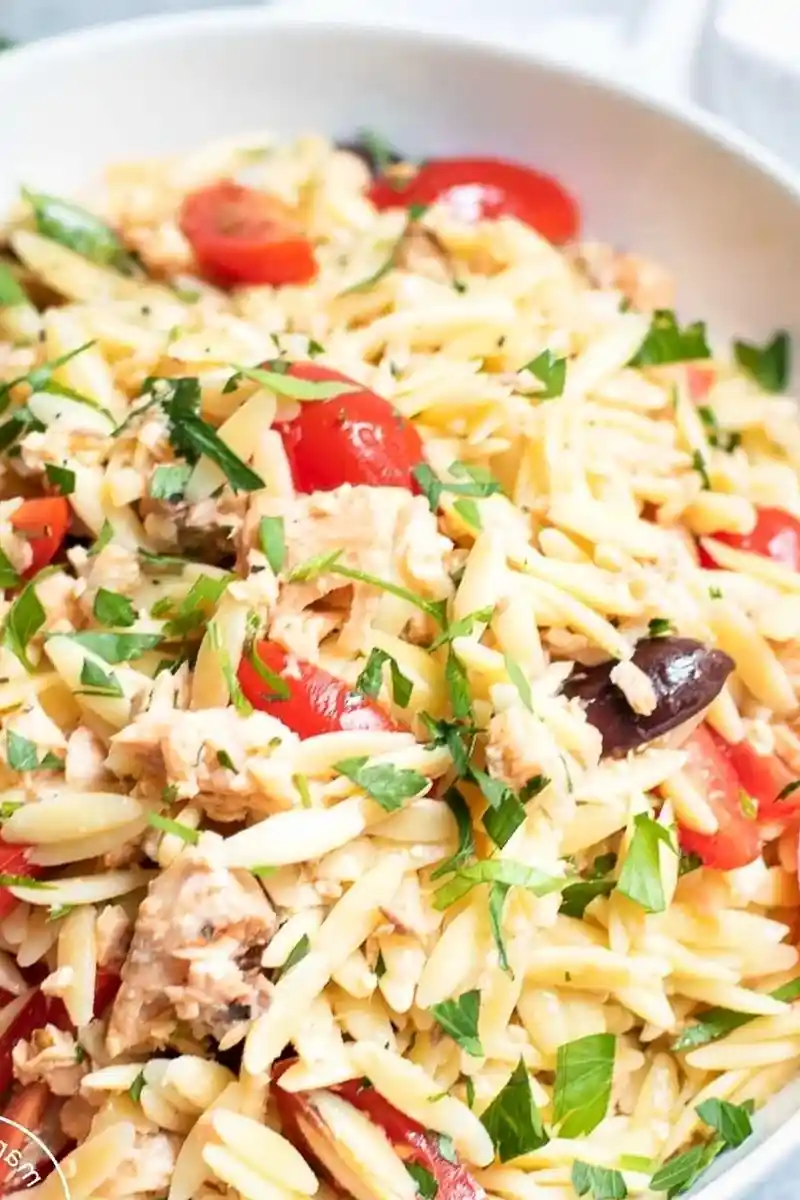
List of ingredients
- ½ lb. orzo or gluten-free pasta
- 1 lemon, juiced
- ½ cup extra virgin olive oil
- 2 cloves garlic, minced or grated
- ¼ tsp fresh cracked black pepper
- 1 tsp coarse salt
- 2 – 5 oz. salmon pouches (skinless and boneless)
- 1 cup grape tomatoes, halved
- ¼ cup pitted black olives, drained and sliced
- ½ cup roughly chopped fresh parsley
step-by-step instructions
- Step: Cook the orzo according to package directions using salted water.
- Step: While the pasta cooks, whisk the lemon juice, olive oil, garlic, salt, and pepper in a large bowl or shake in a jar until well blended.
- Step: Drain the pasta. Add to the bowl with the salmon, tomatoes, olives, and parsley. Toss to combine. Serve warm or chilled.
Refining your flavor profile
Enhancing the garlic intensity
For those who prefer a more pungent garlic note, allow the minced garlic to sit in the lemon juice for five minutes before whisking in the olive oil. This simple technique macerates the garlic, softening its sharp edge while intensifying its overall presence throughout the dressing. It creates a much smoother integration with the other Mediterranean elements.
Achieving the perfect pasta texture
To keep the orzo from becoming mushy, check the pasta for doneness one minute before the package directions suggest. Since you will be combining the hot pasta with the dressing, the residual heat will continue to soften the orzo slightly after draining. Aiming for a firm, al dente texture ensures the salad retains a satisfying bite even after it sits in the refrigerator.
Balancing the acidity
If the salad tastes too sharp, add an extra tablespoon of olive oil to emulsify the dressing further and mellow the lemon juice. Conversely, if you prefer a sharper profile, add a splash of lemon zest along with the juice. The oils in the zest provide a fragrant, floral aroma that complements the fresh parsley exceptionally well.
Creative variations for variety
Incorporating additional fresh vegetables
While the classic recipe focuses on tomatoes and olives, you can significantly boost the nutritional profile by folding in diced cucumber, finely chopped red bell pepper, or blanched asparagus spears. These additions provide a delightful crunch and extra hydration, making the salad feel even more substantial during warmer months. Ensure you remove the watery seeds from the cucumbers before adding them to keep the dressing consistency intact.
Adjusting the protein source
While salmon is the star, you can substitute the fish with canned tuna or even shredded rotisserie chicken if you have leftovers in the fridge. For a strictly plant-based iteration, swap the salmon for chickpeas or white cannellini beans. These legumes provide a similar protein density and absorb the bright lemon-garlic dressing beautifully, making them a fantastic alternative for those reducing their animal product intake.
Adding creamy textures
To introduce a contrasting creamy element, try incorporating a handful of crumbled feta cheese or cubed avocado. The saltiness of the feta highlights the sweetness of the tomatoes, while avocado creates a velvety mouthfeel that pairs perfectly with the tender orzo. If using avocado, add it immediately before serving to prevent oxidation and ensure the best appearance.
Practical storage and preparation advice
Maximizing freshness during storage
This salad is remarkably resilient and holds its texture well in the refrigerator for up to three days. To keep the ingredients tasting their best, store the salad in an airtight glass container, which prevents flavor transfer from other items in your fridge. If the orzo absorbs too much of the dressing over time, drizzle a small amount of extra olive oil over the top and toss again before eating.
Mastering the art of make-ahead lunches
When preparing this for the work week, store the parsley separately if possible, or stir it in just before you head out the door. Fresh herbs tend to wilt when submerged in acidic dressing for extended periods. By keeping the herbs fresh and crisp, you ensure that every bite feels like it was just prepared in your own kitchen.
Handling chilled vs warm service
This dish is highly versatile and transitions well from a warm side dish at dinner to a cold lunch the next day. If serving chilled, take the salad out of the refrigerator twenty minutes before your meal to allow the olive oil to return to room temperature. This simple step significantly enhances the flavor release of the garlic and herbs, ensuring the dish doesn’t taste flat when cold.
Common culinary questions
Can I use dried herbs instead of fresh?
You certainly can, although the flavor profile will shift. If using dried parsley, reduce the amount by half as the potency is higher, and stir the dried herbs into the dressing at the beginning of the preparation process. Allowing the dried herbs to rehydrate in the lemon juice and olive oil ensures they are soft and well-distributed by the time the salad is served.
Is this recipe suitable for freezing?
Freezing is not recommended for this specific salad. The texture of orzo pasta and fresh vegetables like tomatoes will break down significantly during the freezing and thawing process, resulting in a watery, undesirable consistency. Because the recipe is so fast to assemble, it is best enjoyed fresh or from a short refrigeration period.
Why is my dressing separating?
Dressings made primarily of oil and acid will naturally separate when standing. To emulsify them effectively, whisk the lemon juice and minced garlic together until the salt has fully dissolved before slowly drizzling in the olive oil. If the dressing sits for a long time, simply shake the container or stir the bowl vigorously to recombine the ingredients before tossing the salad.
What if I do not have a lemon?
If fresh lemons are unavailable, you can substitute with light-colored vinegars such as apple cider vinegar or white balsamic vinegar. These offer a similar bright acidity, though you may want to start with a smaller quantity and taste as you go to ensure the balance remains pleasant. These vinegars provide a deeper, slightly more complex tang that can be a refreshing change of pace for this recipe.
Print
Mediterranean Salmon Orzo Salad
- Total Time: 15 minutes
- Yield: 6 1x
- Diet: Pescatarian
Description
This Mediterranean inspired salmon orzo salad is an easy make-ahead healthy lunch option for the busy back to school and work season.
Ingredients
- ½ lb. orzo or gluten-free pasta
- 1 lemon, juiced
- ½ cup extra virgin olive oil
- 2 cloves garlic, minced or grated
- ¼ tsp fresh cracked black pepper
- 1 tsp coarse salt
- 2 – 5 oz. salmon pouches (skinless and boneless)
- 1 cup grape tomatoes, halved
- ¼ cup pitted black olives, drained and sliced
- ½ cup roughly chopped fresh parsley
Instructions
- Step: Cook the orzo according to package directions using salted water.
- Step: While the pasta cooks, whisk the lemon juice, olive oil, garlic, salt, and pepper in a large bowl or shake in a jar until well blended.
- Step: Drain the pasta. Add to the bowl with the salmon, tomatoes, olives, and parsley. Toss to combine. Serve warm or chilled.
Notes
Storage tips: This salmon orzo salad will last a few days in the refrigerator, making it perfect for weekday lunch meal prep.
- Prep Time: 5 minutes
- Cook Time: 10 minutes
- Category: Salad
- Method: Boiling
- Cuisine: American, Mediterranean
Nutrition
- Serving Size: 1 bowl
- Calories: 350 kcal
- Sugar: 2 g
- Sodium: 450 mg
- Fat: 18 g
- Saturated Fat: 3 g
- Unsaturated Fat: 14 g
- Trans Fat: 0 g
- Carbohydrates: 30 g
- Fiber: 2 g
- Protein: 16 g
- Cholesterol: 39 mg