This baked salmon dish combines a crisp panko crust with the bright flavor of fresh lemon and savory Parmesan cheese. It is a quick, 30-minute meal that provides a perfect balance of textures and tastes for a healthy dinner.
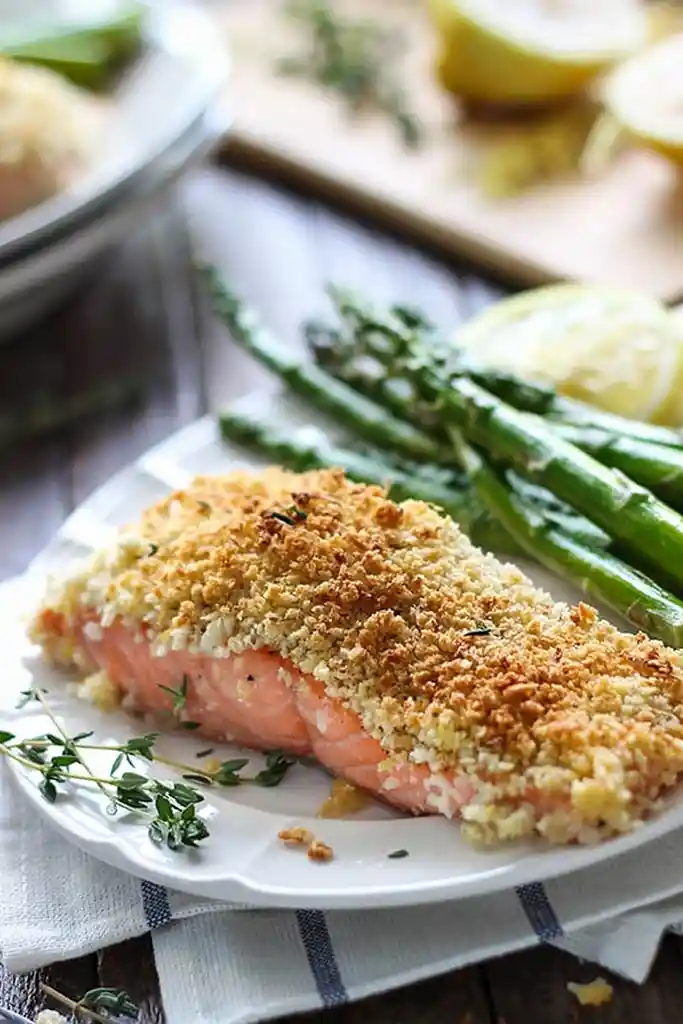
List of ingredients
- 1 lb. salmon fillet – fresh or thawed
- 2 tablespoons butter, melted and divided – used for brushing and binding
- Salt and pepper to taste – for basic seasoning
- 3/4 cup panko breadcrumbs – provides a crunchier texture than regular crumbs
- 1/4 cup Parmesan cheese, grated – adds a salty, savory depth
- 2 teaspoons lemon zest – adds bright citrus notes
- 1/4 teaspoon dried thyme – provides an earthy herbal aroma
- Red pepper flakes to taste (optional) – for a hint of spicy heat
step-by-step instructions
- Season the fish: Generously season the salmon fillets with salt and pepper on both sides.
- Prepare the base: Place the salmon skin side down on a greased baking dish and brush the tops of the fillets with half of the melted butter.
- Mix the crust: In a small bowl, combine the panko breadcrumbs, grated Parmesan cheese, lemon zest, dried thyme, and the remaining half of the melted butter.
- Apply the topping: Use a spoon to heap the crumb mixture onto the salmon tops, then gently pat them in with your fingers to ensure the crust stays in place.
- Bake: Place in the oven at 375°F and bake for 15 to 20 minutes, depending on the thickness of your fillets.
- Finish and serve: Remove from the oven, dish onto plates, and serve while hot.
Expert Preparation Advice
Selecting the Right Salmon Cut
Choose fillets that are consistent in thickness to ensure they cook evenly across the tray. Center-cut fillets are generally the most uniform and provide a professional presentation. Look for a vibrant color and a firm texture that springs back when lightly pressed.
Safe Thawing Methods for Frozen Fish
If using frozen salmon, thaw it slowly in the refrigerator overnight to maintain the cellular structure of the fish. For a faster method, place the vacuum-sealed fillet in a bowl of cold water, changing the water every 30 minutes. Never thaw salmon at room temperature or in warm water to avoid bacterial growth.
Choosing the Best Baking Surface
A greased baking dish works well, but lining the pan with parchment paper or aluminum foil makes cleanup significantly easier. Parchment paper is particularly effective as it prevents the skin from sticking to the metal. Ensure the pan is large enough that the fillets are not crowded, allowing air to circulate.
Flavor Customization Options
Adding Fresh Lemon Slices for Aroma
For a more intense citrus profile, place thin slices of fresh lemon directly underneath the salmon fillets before baking. This creates a fragrant bed for the fish and prevents the bottom from sticking to the pan. The heat releases the lemon oils, which infuse the salmon from the bottom up.
Substituting Dried Thyme with Fresh
If you prefer the taste of fresh herbs, replace the dried thyme with a larger quantity of fresh thyme leaves. Use about one tablespoon of fresh thyme to match the potency of 1/4 teaspoon of dried thyme. Fresh thyme adds a more nuanced, grassy flavor to the crust.
Controlling Heat with Red Pepper Flakes
Adjust the amount of red pepper flakes based on your tolerance for spice. A small pinch provides a subtle warmth that cuts through the richness of the butter and salmon. For a bolder kick, increase the amount to 1/4 teaspoon mixed directly into the breadcrumb topping.
Achieving the Perfect Texture
Why Panko Breadcrumbs are Superior
Panko breadcrumbs are processed differently than traditional breadcrumbs, resulting in larger, airier flakes. This structure allows them to crisp up more effectively in the oven without absorbing too much fat. The result is a distinct crunch that contrasts beautifully with the tender salmon.
The Role of the Broiler in Browning
If the salmon is cooked through but the crust is not golden brown, turn on the oven broiler for 2 to 3 minutes. Watch the fish closely during this stage as the butter and cheese can burn quickly. This high-heat finish creates a professional, toasted appearance and enhanced flavor.
Optimizing Toaster Oven Settings
Toaster ovens heat up faster and are closer to the food, which can lead to quicker browning. Place the salmon on the middle rack to avoid burning the crust before the center is cooked. Monitor the internal temperature closely as cooking times may be slightly shorter than in a full-sized oven.
Ingredient Substitutions
Using Almond Flour for Low-Carb Crusts
For a ketogenic or gluten-free version, replace the panko breadcrumbs with almond flour or crushed pork-free crackers. Almond flour provides a nuttier flavor and a softer crunch but still adheres well to the buttered salmon. You may need to increase the Parmesan cheese slightly to help the crust bind.
Exploring Hard Cheese Alternatives
While Parmesan is traditional, Pecorino Romano offers a saltier, tangier alternative that pairs well with lemon. Asiago cheese provides a slightly milder, nuttier taste that complements the thyme. Ensure the cheese is finely grated so it integrates evenly with the breadcrumbs.
Swapping Butter for Olive Oil
To make the recipe dairy-free (excluding the cheese), substitute the melted butter with extra virgin olive oil. Olive oil provides a cleaner taste and a heart-healthy fat profile. The oil will still act as an effective adhesive for the breadcrumb mixture.
Recommended Side Pairings
Pairing with Garlic Sauteed Asparagus
Asparagus is a classic companion for salmon because its earthy flavor balances the citrusy crust. Sauté fresh asparagus spears in a pan with minced garlic and a drizzle of olive oil. A final squeeze of fresh lemon juice over the greens ties the whole meal together.
Complementary Grain Side Dishes
Serve this salmon over a bed of fluffy quinoa or wild rice for a filling and nutritious meal. The grains absorb any butter or juices released by the salmon during plating. For a lighter option, a side of steamed cauliflower rice works well for low-carb diets.
Best Garnishes for Visual Appeal
Garnish the plated salmon with a sprinkle of fresh chopped parsley or a wedge of lemon. The bright green of the parsley contrasts with the golden-brown crust, making the dish look more appetizing. A fresh lemon wedge allows guests to add more acidity to their liking.
Storage and Preservation
Proper Refrigeration for Leftovers
Store leftover salmon in an airtight container in the refrigerator for up to three days. Keep the salmon separate from other foods to prevent the strong fish aroma from transferring. Ensure the fish is completely cooled before sealing the container to avoid condensation.
Reheating Without Losing Crunch
Avoid using a microwave to reheat crusted salmon, as this will make the breadcrumbs soggy. Instead, place the fillets in a 325°F oven for 10 minutes or use an air fryer at 350°F for 3-5 minutes. This method restores the crispness of the Parmesan crust.
Avoiding Freezer Burn for Prepped Salmon
If you prepare the crust in advance, wrap the fillets tightly in plastic wrap and then place them in a freezer-safe bag. Remove as much air as possible to prevent freezer burn. Thaw the salmon in the refrigerator before baking to ensure the crust doesn’t separate from the fish.
Troubleshooting Guide
Ensuring the Crust Adheres Correctly
If your crust is falling off, ensure you are using enough melted butter as a binding agent. Press the crumb mixture firmly into the fish using your fingertips rather than just spooning it on. Let the salmon sit for a few minutes before putting it in the oven to allow the butter to set.
Identifying and Fixing Overcooked Salmon
Overcooked salmon becomes dry, chalky, and develops a white substance called albumin on the surface. To prevent this, use a meat thermometer to pull the fish at 135-140°F for medium. If the fish is already dry, serve it with a dollop of Greek yogurt or a lemon-butter sauce to add moisture.
Managing the Salmon Skin During Baking
The skin serves as a protective barrier that prevents the bottom of the fillet from overcooking. Always bake the salmon skin-side down to keep the meat moist. If you prefer not to eat the skin, it can be easily slid off after the fish has rested for five minutes.
Frequently Asked Questions
How do I zest a lemon without the bitter pith?
Use a fine microplane or a small grater to remove only the bright yellow outer layer of the skin. Stop as soon as you reach the white pith, which contains the bitter flavors. Zesting the lemon before juicing it makes the process much easier.
Can I use this recipe for salmon steaks?
Yes, you can use salmon steaks, but they may require a longer baking time due to their density. Increase the cook time by 5 to 10 minutes and use a thermometer to ensure the center reaches the desired temperature. The crust application remains the same.
How long does cooked salmon stay fresh in the fridge?
Cooked salmon is best consumed within 2 to 3 days when stored at 40°F or below. Beyond this window, the quality of the oils in the fish begins to degrade, and the texture may become rubbery. Always check for a strong off-odor before reheating.
Print
Lemon and Parmesan Crusted Salmon
- Total Time: 30 minutes
- Yield: 2 servings 1x
- Diet: General
Description
Flaky, crumbly, crunchy topped lemon and Parmesan crusted salmon. This 30-minute recipe brings out the best in salmon!
Ingredients
- 1 lb. salmon fillet
- 2 tablespoons butter, melted and divided
- Salt and pepper to taste
- 3/4 cup panko breadcrumbs
- 1/4 cup Parmesan cheese, grated
- 2 teaspoons lemon zest
- 1/4 teaspoon dried thyme
- Red pepper flakes to taste (optional)
Instructions
- Season: Season salmon fillets with salt and pepper.
- Prepare: Place the salmon skin side down on a greased baking dish and brush the tops with half of the melted butter.
- Combine: Combine panko breadcrumbs, Parmesan cheese, zest, thyme and the remaining butter.
- Crust: Press the crumb mixture evenly onto the tops of the salmon.
- Bake: Bake at 375°F for 15 to 20 minutes, depending on the thickness of your fillet.
- Serve: Dish and serve hot.
Notes
For extra crunch, use panko breadcrumbs. To enhance lemon flavor, place thin lemon slices under the salmon before baking or squeeze fresh lemon juice over the cooked fillets.
- Prep Time: 10 minutes
- Cook Time: 20 minutes
- Category: Main Course
- Method: Baking
- Cuisine: American
Nutrition
- Serving Size: 1 fillet
- Calories: 480 kcal
- Sugar: 3 g
- Sodium: 620 mg
- Fat: 31 g
- Saturated Fat: 13 g
- Unsaturated Fat: 18 g
- Trans Fat: 0 g
- Carbohydrates: 21 g
- Fiber: 2 g
- Protein: 42 g
- Cholesterol: 115 mg