This recipe provides a simple method for achieving juicy, flavorful chicken breasts using a homemade spice rub. By following a specific roasting temperature and prep technique, you can avoid the common problem of dry meat.
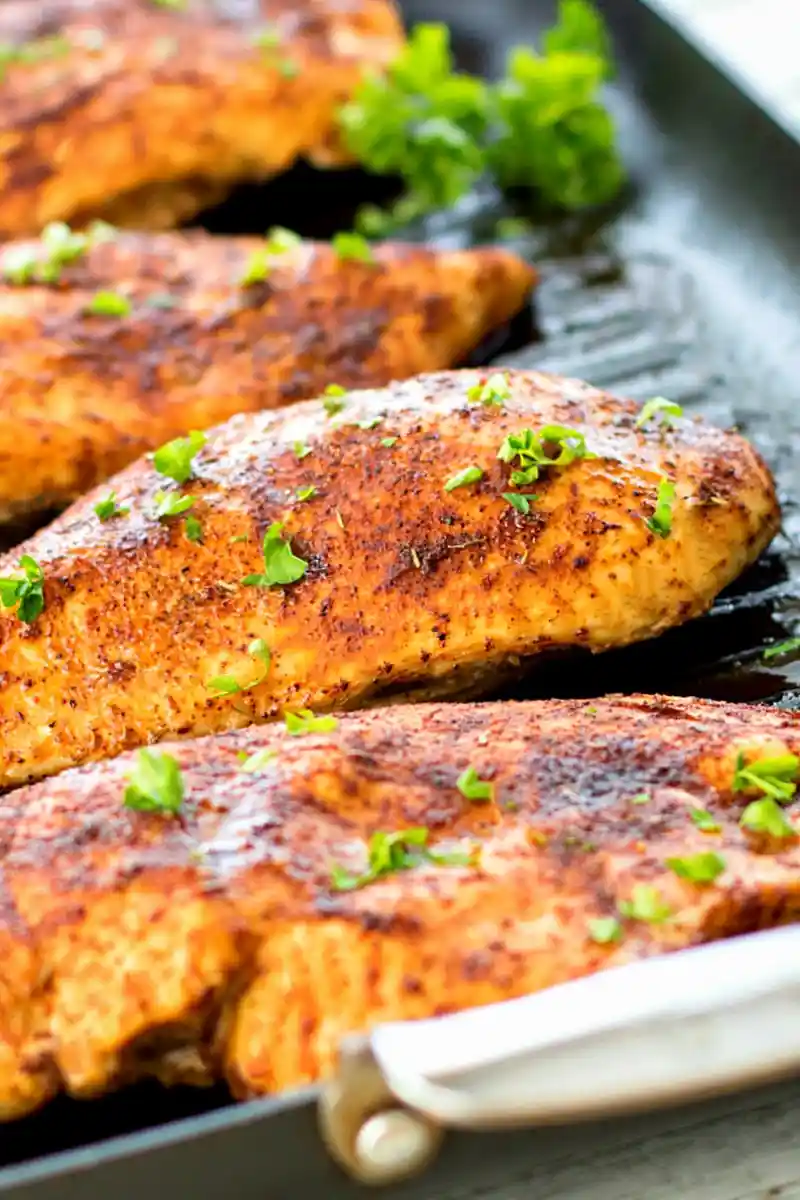
List of ingredients
- 4 8 oz boneless skinless chicken breasts – ensure they are similar in size.
- 1 1/2 Tbsp light brown sugar – adds a hint of sweetness and helps with charring.
- 1 tsp dark chili powder – provides a deep, smoky base flavor.
- 1 tsp salt or seasoned salt – enhances all other spices.
- 1 tsp lemon pepper – adds a bright, citrusy tang.
- 1 tsp granulated garlic or garlic powder – provides a savory punch.
- 1 tsp paprika – adds color and a mild sweetness.
- 1 tsp dried thyme, oregano or tarragon – adds earthy herbal notes.
- 1/2 tsp onion powder – rounds out the savory profile.
- 1/4-1/2 tsp cayenne – adjust based on your preferred heat level.
- 1 Tbsp olive oil – used to bind the rub and add moisture (plus more if needed).
step-by-step instructions
- Prepare Oven and Pan: Preheat your oven to 425°F. Prepare an oven-safe grill pan, broiler pan, or a baking sheet lined with foil, and spray it liberally with cooking spray.
- Prep the Meat: Use a meat mallet to pound the thickest portion of each chicken breast until they are an even thickness. This step is crucial for ensuring the chicken cooks evenly. Pat the meat dry with paper towels.
- Mix the Rub: In a small bowl, whisk together the brown sugar, chili powder, salt, lemon pepper, garlic powder, paprika, dried herbs, onion powder, and cayenne.
- Season the Chicken: Drizzle olive oil on both sides of the chicken pieces. Sprinkle the seasoning rub evenly over both sides, rubbing it into the meat, then place them on the prepared pan.
- Bake: Bake uncovered for 18-20 minutes. Cook until the juices run clear and the internal temperature reaches 165°F.
- Rest and Serve: Let the chicken rest for 5 minutes before slicing to allow juices to redistribute. Slice and serve immediately.
Enhancing the Spice Blend
Controlling the Heat Level
The amount of cayenne pepper used in this rub determines the final spice level of the dish. For a mild flavor, stick to 1/4 teaspoon, but increase it to 1/2 teaspoon or more if you prefer a bolder kick. You can also swap the dark chili powder for a smoked paprika blend to change the type of heat.
Selecting Your Dried Herbs
While dried thyme is a classic choice, you can customize the flavor by using oregano or tarragon. Oregano provides a more Mediterranean feel, whereas tarragon offers a subtle anise-like sweetness. Fresh herbs can also be used, but you should double the quantity to match the potency of dried herbs.
Using Seasoned Salt Alternatives
Using a seasoned salt like Lawry’s instead of plain table salt adds an extra layer of complexity to the rub. Seasoned salts often contain a blend of paprika and garlic, which complements the other ingredients. If using a highly seasoned salt, taste your rub first to ensure it isn’t overly salty.
Mastering the Cooking Process
The Importance of Pounding Meat
Using a meat mallet to pound the thickest part of the chicken breast ensures that the entire piece of meat reaches the target temperature at the same time. Without this step, the thinner edges often overcook and become dry before the center is safely cooked through. Aim for a uniform thickness across the entire breast to maintain maximum juiciness.
Managing Oven Temperature
Cooking at 425°F allows the chicken to sear on the outside while remaining tender on the inside. This high heat activates the brown sugar in the rub, creating a caramelized crust that locks in moisture. Avoid lowering the temperature, as this can lead to longer cook times and drier meat.
Utilizing a Meat Thermometer
An instant-read thermometer is the most reliable way to prevent overcooking. Remove the chicken from the oven exactly when it hits 165°F in the thickest part of the breast. Relying solely on time can be risky since oven calibrations and chicken sizes vary significantly.
Choosing the Right Bakeware
A grill pan or broiler pan is ideal because it allows air to circulate and lets excess fat drip away from the meat. If using a standard baking sheet, lining it with foil makes cleanup easier and prevents the sugar from sticking. Ensure the pan is well-greased to prevent the chicken from adhering to the surface.
Recommended Side Dish Pairings
Fresh Green Salads
Pair this savory chicken with a fresh spinach salad topped with apples, bleu cheese, and toasted pecans. Use a honey Dijon vinaigrette to balance the spices of the rub with sweetness and acidity. Replace traditional bacon bits with smoked sun-dried tomatoes for a rich, savory alternative.
Hearty Potato Sides
Parmesan smashed potatoes provide a comforting, salty contrast to the zesty chicken. Boil baby potatoes until tender, smash them flat, and bake with parmesan and garlic until crispy. These can be prepared in advance and popped in the oven right before the chicken finishes.
Vegetable Accompaniments
Honey garlic carrots or stovetop green beans and potatoes are excellent options for adding nutrients to the meal. The sweetness of honey-glazed carrots complements the brown sugar in the chicken rub. Sautéing green beans with a touch of butter and garlic keeps the meal balanced and colorful.
Grain-Based Options
A Teriyaki rice pilaf with peas and mushrooms offers a savory, umami-rich base for the sliced chicken. The sweetness of the teriyaki sauce pairs well with the chili powder and paprika. You can also serve the chicken over a bed of quinoa or wild rice for a healthier alternative.
Comfort Food Classics
For a more indulgent dinner, serve the roasted breasts alongside broccoli macaroni and cheese. The creamy cheese sauce and tender broccoli provide a rich counterpoint to the lean chicken protein. This combination is especially popular with children and makes for a filling family meal.
Storage and Freshness
Proper Refrigeration
Store leftover chicken breasts in an airtight container or wrap them tightly in aluminum foil to prevent them from drying out. Chilled chicken will remain safe and flavorful in the refrigerator for up to 3 days. Keep the container in the coldest part of the fridge to maintain quality.
Long-Term Freezing
Cooked chicken breasts can be frozen for up to 2 months without a significant loss in quality. Wrap each piece individually in plastic wrap and then place them in a heavy-duty freezer bag to avoid freezer burn. Label the bags with the date of preparation for easy tracking.
Safe Thawing Procedures
The best way to thaw frozen chicken is to move it from the freezer to the refrigerator 24 hours before you plan to eat it. This slow thaw preserves the texture of the meat better than rapid thawing methods. Avoid thawing meat on the counter to prevent bacterial growth.
Effective Reheating Methods
Air Fryer Precision
To maintain the exterior crust, reheat the chicken in an air fryer at 350°F for 3-5 minutes. This method crisps the seasoned coating without drying out the interior. It is the fastest way to get the chicken back to its original roasted texture.
Quick Microwave Heating
When using a microwave, slice the chicken first and arrange the pieces on a plate. Cover them with a damp paper towel and heat on medium power in 30-second intervals. This prevents the meat from becoming rubbery or overcooked in the center.
Traditional Oven Warming
For larger quantities, reheat the chicken in the oven at 300°F. Place the pieces in a baking dish and add a tablespoon of water or broth to create steam. Cover the dish with foil to lock in moisture while the chicken warms through.
Advanced Meal Planning
Pre-Seasoning and Marinating
You can prep the chicken and apply the dry rub several hours or even one day in advance. Store the seasoned breasts in an airtight container in the refrigerator until you are ready to bake. This allows the spices to penetrate deeper into the meat for a more intense flavor.
Batch Cooking for the Week
Prepare multiple batches of these chicken breasts on a Sunday to use as a protein source for the week. Once cooked and cooled, they can be sliced for salads, used in wraps, or added to grain bowls. This reduces daily cooking time and encourages healthier eating habits.
Organizing Your Mise en Place
To streamline the process, measure all your spices into a single bowl before preparing the meat. Having your oil, mallet, and pan ready before you start handling the raw chicken prevents cross-contamination. This organized approach ensures the cooking process is stress-free.
Troubleshooting Common Issues
Fixing Dry Chicken Breasts
If your chicken often turns out dry, you may be overcooking it or skipping the resting phase. Always pull the meat from the oven at 165°F and let it rest for at least 5 minutes. Resting allows the internal juices to settle, ensuring every bite is moist.
Preventing Burnt Sugar
Because the rub contains brown sugar, there is a risk of burning if the oven is too hot or the chicken is left too long. Ensure the rub is spread evenly and not clumped in one area. If you notice the edges darkening too quickly, move the pan to a lower rack.
Handling Uneven Doneness
If the edges are overcooked while the center is raw, it is a sign that the breasts were not pounded to an even thickness. Use a meat mallet more firmly on the thickest part of the meat. This ensures a uniform shape that cooks at a consistent rate.
Improving Rub Adhesion
If the spice rub falls off the chicken during baking, you may not be using enough olive oil. The oil acts as a binder that holds the spices to the surface of the meat. Rub the oil thoroughly into both sides of the chicken before applying the dry seasoning.
Common Questions
Can I use chicken thighs instead?
Yes, boneless skinless chicken thighs work very well with this spice rub. However, thighs have a different fat content and may require an additional 5-10 minutes of cooking time to reach a safe internal temperature. They are generally more forgiving and harder to overcook than breasts.
Can I use bone-in breasts?
This specific recipe is designed for boneless breasts to ensure quick and even cooking. Bone-in breasts require significantly more time in the oven and a lower temperature to avoid burning the rub. For bone-in meat, consider a slower roast at 375°F for 35-45 minutes.
Which oil works best for roasting?
Olive oil is recommended for its flavor and health benefits, but any oil with a high smoke point will work. Avocado oil is an excellent alternative if you prefer a neutral taste. Avoid using butter for this high-temperature roast, as the milk solids can burn at 425°F.
Print
Juicy Oven Roasted Chicken Breasts
- Total Time: 30 minutes
- Yield: 4 servings 1x
- Diet: General
Description
Juicy, oven-baked chicken breasts seasoned to perfection and roasted until tender and flavorful. An easy, healthy dinner for any night of the week.
Ingredients
- 4 8 oz boneless skinless chicken breasts
- 1 1/2 Tbsp light brown sugar
- 1 tsp dark chili powder
- 1 tsp salt (or seasoned salt)
- 1 tsp lemon pepper
- 1 tsp granulated garlic or garlic powder
- 1 tsp paprika
- 1 tsp dried thyme, oregano or tarragon
- 1/2 tsp onion powder
- 1/4–1/2 tsp cayenne
- 1 Tbsp olive oil
Instructions
- Step: Preheat oven to 425°F. Using an oven safe grill pan, broiler pan or line a baking sheet with foil. Spray liberally with cooking spray.
- Step: Use a meat mallet to pound the thickest portion of each chicken breasts into even thickness. Pat dry with a paper towel.
- Step: In a small bowl, whisk together brown sugar, chili, salt, lemon pepper, garlic, paprika, thyme, onion powder and cayenne.
- Step: Drizzle chicken pieces on both sides with oil. Sprinkle both sides evenly with seasoning rubbing into the chicken pieces. Place on prepared pan.
- Step: Bake uncovered for 18-20 minutes or until juices run clear. (Internal temperature of 165°F)
- Step: Rest for 5 minutes, slice and serve.
Notes
You can use boneless skinless chicken thighs as a substitute. The spice rub can be customized to taste; for example, using seasoned salt instead of plain salt or adding fresh herbs like rosemary or oregano.
- Prep Time: 5 minutes
- Cook Time: 20 minutes
- Category: Main Course
- Method: Baking
- Cuisine: American
Nutrition
- Serving Size: 1 serving
- Calories: 306 kcal
- Sugar: 5 g
- Sodium: 732 mg
- Fat: 7 g
- Saturated Fat: 2 g
- Unsaturated Fat: 5 g
- Trans Fat: 0 g
- Carbohydrates: 6 g
- Fiber: 1 g
- Protein: 50 g
- Cholesterol: 130 mg